
The Island
What remains at the end of the world?


There was nothing left to do but wander. It had been over a year since the last patient died and at least two since the ferries left the island, never returning and taking with them all the news of the dying world outside. A few months ago, two of the final three survivors had taken a pair of orange kayaks and left in search of others and hope, though Iris was sure they would find neither. As she watched them fade into orange slivers on the horizon, she prayed they would find a swift death at sea. It seemed less cruel than the disappointment that awaited them on the mainland. The only way to live in the world now was without expectation.
Still, she stared at the sound for a week before she started walking. There was no purpose to her walks yet; she followed her feet to the quiet coves and woods of her childhood as if in a dream. It had been a long time since she had really seen the island. As an adult she had actively avoided it, spent years in the city hiding from its memories, living by the creed of all small town escapees: if you ever get out, do not look back. Only a plague could drive me home, she had once joked. And she was right.
Today her feet brought her to the field outside the abandoned high school. It was a barren swatch of dead grass that had once swarmed with horny teens and exasperated teachers and later in the summertime, families. On cool summer evenings, parents desperate for the return of the school year would abandon their teens and preteens for a few hours at the field. The older kids skateboarded and smoked shitty weed in the ruins of the old playground behind the school, while the youngest played tag and duck-duck-goose in the field and harassed everyone freely because they were too fast for an ass kicking. Later it became a field hospital.
The virus spread through the town like gossip. At first they basked in the unearned hope that they had escaped the sickness ravaging the mainland. Iris and others lucky enough to beat the quarantine returned from the cities they had fled to so many years ago and sought refuge in their childhood homes. For a moment, the islanders watched with smug horror as the outside world imploded around them and felt that perhaps they were special. And like every small town that thinks it’s special, suddenly it wasn’t. Soon the telltale cough could no longer be confused with allergies, and families that cancelled weekends plans because of a head cold were found dead in their homes the next day, with ballooned lymph nodes and mouths full of phlegm.
Iris worked the field hospital those first few months, tending to her high school bully, her old dentist, her childhood friends, her own father and she watched them die, clutching desperately to life as they clawed at their swollen throats. Stores shuttered their windows forever, and the world she once disdained so bitterly in her youth crumbled before her eyes. The heartache was unbearable.
So many died all at once, and then the next cruel year slowly picked off the remaining survivors. The field hospital closed so instead Iris made hospice rounds on an old bike she’d found abandoned in a yard. On the weekends she and the only other healthy survivors, Todd and Beryl, would sweep the island homes for dead bodies and, if they found any, bury them and clean the home. When they had time, they would search for things of sentimental value, a family photo, a heart shaped locket, a child’s teddy bear, and toss them into the graves as a sort of offering. Soon there was no more hospice, only the house sweeps. In the early morning and evening they would farm.
That final year marked the quiet end of the world, and Iris began to settle into its routine and found her heartache slightly eased. Todd and Beryl had difficulty accepting its stillness and they continued to speak of a new world and rebuilding as if saying those words would manifest them. At night, they wondered openly if it was a gift or a curse to be the last people alive. It was this agonizing question that launched their kayaks into the sea in search of an answer. Come with us, they begged before the leaving the shore, but Iris only smiled and waved goodbye. She understood she was meant to stay, her purpose was not to rebuild but to wander, and to live forever on the island as the steward of its memories.
About the Creator
Genevieve Ferrari
Queer comedian and horror writer from the Pacific Northwest
Keep reading
More stories from Genevieve Ferrari and writers in Fiction and other communities.
The Keeping Hour
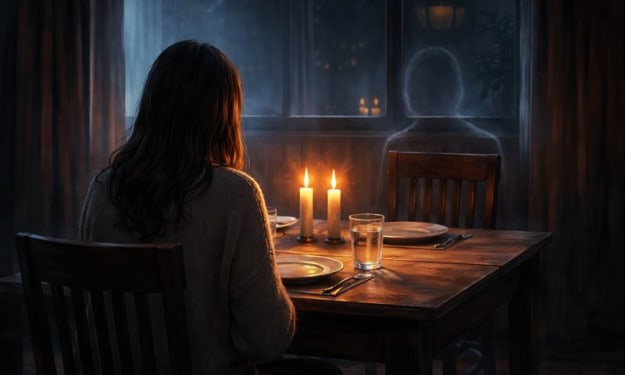
The Keeping Hour Every evening at 8:17, Miriam set the table for two. The time was not arbitrary. She had tried, once, to move it—8:15, then 8:20—but something in the apartment resisted. The kettle took longer to boil. The light above the sink flickered. Her own hands shook, as if she were attempting to write with the wrong name. At 8:17, everything settled. The air found its balance.
By Muhammad Irfan Afzalabout 15 hours ago in Fiction



Comments
There are no comments for this story
Be the first to respond and start the conversation.