
The House That Waited for Her
She left at sixteen with a suitcase full of dreams. Forty years later, the front porch light was still on.

The House That Waited for Her
Written by Mirza
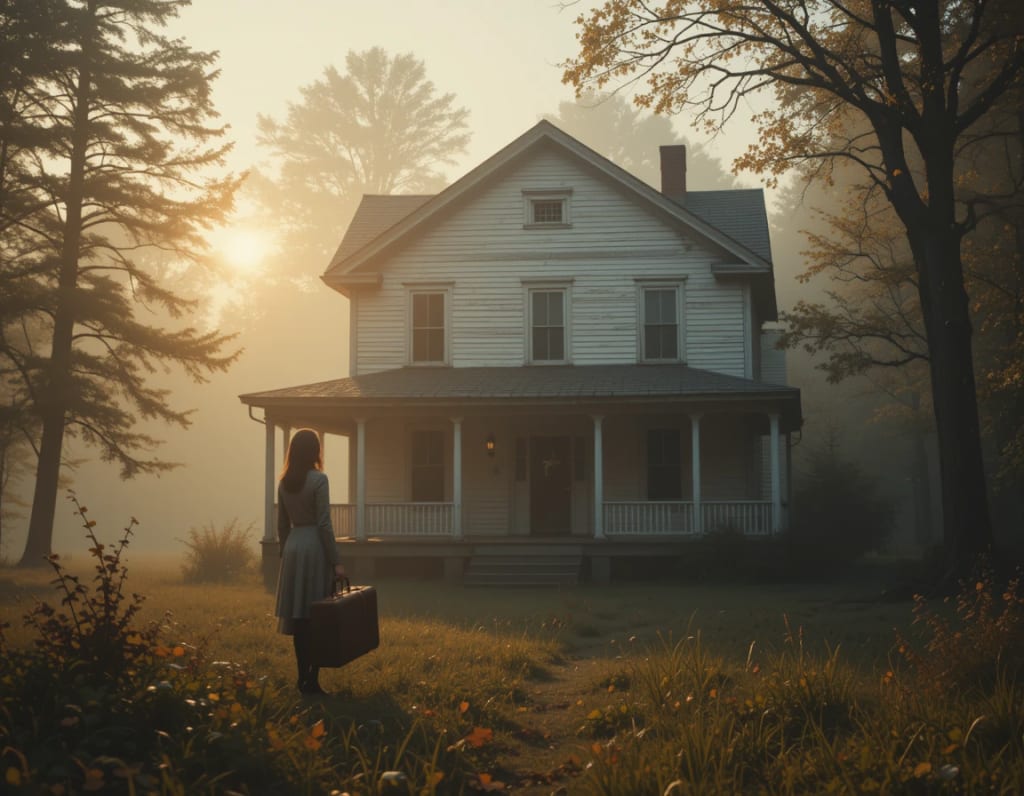
The house sat at the edge of a forgotten road, with white paint peeling like old memories and vines growing over the porch railings like stubborn thoughts no one had trimmed back. For forty years, it had waited — quietly, patiently — for her to return.
To the rest of the town, it was just the “old Barlow house,” the one people drove by without really seeing. No one lived in it. Not since Ellie left. They said Mr. Barlow never moved a single piece of furniture after she ran away. The curtains remained drawn, her bedroom untouched, and the porch light — it stayed on, every night, like a lighthouse in case she ever came home.
Ellie Barlow had been a spark in a quiet town, a girl with fire in her voice and wildness in her heart. She talked about New York, Paris, and places most people only read about. She wanted more than her small town could give.
So on a humid July morning in 1985, just sixteen, Ellie packed a bag, left a note on the kitchen table, and boarded a bus that didn’t stop for goodbyes.
And she never looked back.
She became Eleanor Barlow in the city. Dropped the southern lilt, the denim jackets, and the scent of honeysuckle. She wore blazers and heels and built a life out of ambition. Editor. Director. Then, finally, her name in the corner of a hardcover book jacket — a memoir of someone else's life, written in her own words.
But she never wrote about herself.
She told friends she was an only child, that her parents were dead, and that she didn’t miss the place she came from. She told herself the same lies, until they became easier to carry than the truth.
But on her 56th birthday, a letter arrived. A real one, with a crooked stamp and shaky handwriting she hadn’t seen in decades.
> "Dear Ellie,
If you’re reading this, it means I’m gone.
The porch light is still on.
You can come home now.
— Dad."
The house smelled like old wood, dust, and the faintest trace of lemon soap. Ellie stood in the foyer, her hands trembling as they used to when she was five and had knocked over her mother’s vase. Nothing had changed — not the photos on the wall, not the grandfather clock frozen at 3:17, not even the tiny pencil mark that still measured her height on the kitchen doorframe.
The dining table still held the lace runner. Her chair still wobbled at the leg. And on the fridge was the last thing she ever drew — a crayon sketch of a girl flying a kite.
Her father's shoes were still by the door.
She found the note on her old bed:
> “Thought you might come one day. Bedroom’s still yours. Welcome home, little star.”
She didn’t cry. Not at first. She made coffee in the same chipped kettle. She sat on the porch and listened to crickets. She looked across the field where she used to chase fireflies and remembered the night her father built a campfire and promised her the stars would wait for her.
They had.
The neighbors were older. A few recognized her. Most didn’t. She didn’t explain. She helped Mrs. Heller carry groceries and fixed the swing in the old park. She walked past the school and stared at the empty lot where her best friend’s house once stood.
One afternoon, she sat down at the same wooden desk in her old room. And for the first time in decades, she wrote about herself. About the girl who left. And the woman who came back.
She stayed for a month.
The house whispered to her, each room unlocking a version of herself she had buried. The girl who used to sing into hairbrushes. The teenager who kissed a boy named Luke under the bridge. The daughter who once believed her father didn’t understand her dreams.
But he had.
He had left the light on for 40 years.
And when she opened the attic, she found a box labeled “For Ellie.” Inside, were postcards she had never sent, old newspaper clippings of her achievements, and a small tape recorder. She played it.
> “You don’t have to forgive me. I just hope you find peace.
Wherever you go, you’ll always have a place here.
Love you forever, Dad.”
Ellie didn’t sell the house.
She returned to the city, but she visited every summer. Eventually, she wrote a second book: “The House That Waited for Me.” It wasn’t a bestseller.
But readers loved it.
Because it was real. And it made them remember their own unfinished stories.
About the Creator
Keep reading
More stories from Moonlit Letters and writers in Fiction and other communities.
Becca
"Everything is so... flat." Denille said stupidly as she looked around her new neighborhood. She looked around at the muted desert where even the smallest sign of life seemed to have given up. The plant life was shrubs that were half cooked by the heat and where there should have been a lawn, a mess of white rocks laid glistening in the sun. Even the sky looked stretched thin, like the sun had ironed it smooth. She’d moved from Riverside, where at least there were hills, but here in Barstow, everything felt baked and brittle.
By Sara Wilson7 days ago in Fiction
A More Human Vocal
When we launched Vocal nearly a decade ago, the world was a very different place. LLMs did not exist, and stories were created one at a time by people sitting down to write, revise, and share something personal. Many of our assumptions about publishing, trust, and participation were built for a world where effort and output were inseparable.
By Justin @ Vocal7 days ago in Resources



Comments
There are no comments for this story
Be the first to respond and start the conversation.