
The House That Waited
A woman returns to her abandoned childhood home after 30 years. But everything is exactly as she left it—tea still warm, radio playing, calendar frozen. The house has been waiting.

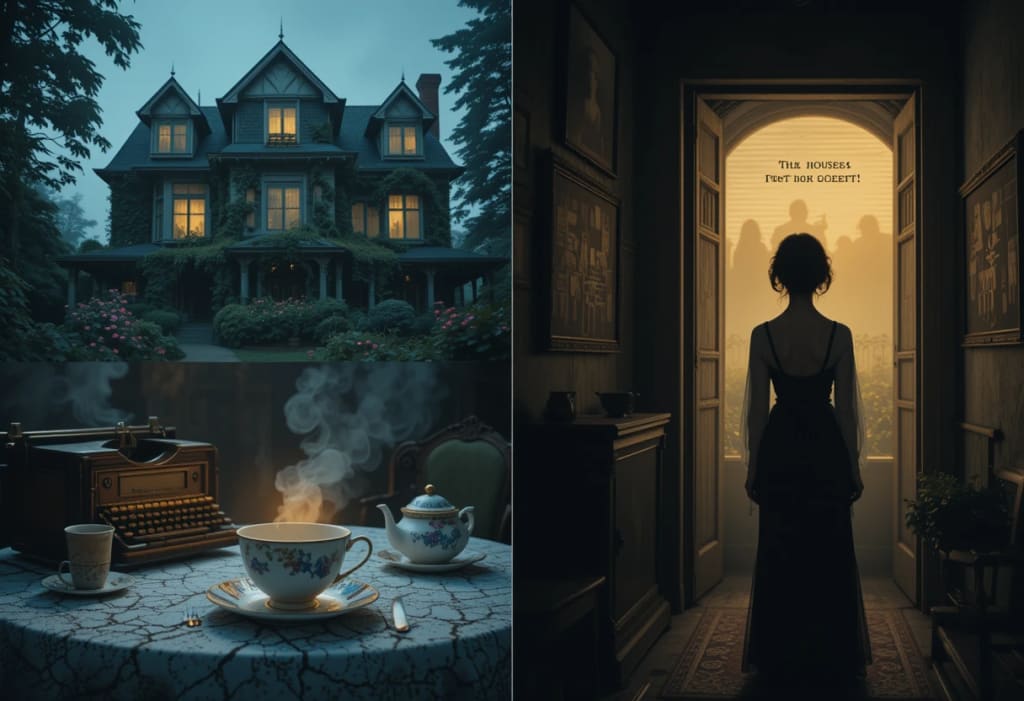
The House That Waited
It had been thirty years since Evelyn had last stepped foot on the porch of the house on Windmere Lane. The gravel crunched beneath her boots the same way it had when she was nine years old, clutching her father’s hand as they left in the dead of night. She’d always believed the memory was distorted by fear and sleep, but now, as her fingers brushed the flaking paint of the porch railing, she realized—some memories didn’t fade. They only waited.
The key was still beneath the chipped flowerpot. She hesitated before picking it up. Her reflection in the dusty glass of the front door looked unfamiliar—gray threads in her dark hair, fine lines around her eyes—but the house had not aged. Not really. Not in the way things should when left alone.
She turned the key
The door creaked open with a groan, as if in protest or welcome—she couldn’t tell which. The scent of lavender tea and wood polish enveloped her, making her eyes sting. The air was still, but not stale. It was as though the house had been... holding its breath.
Evelyn stepped inside.
The table in the parlor was set. Her mother’s blue teapot sat at the center, steam curling gently from the spout. The delicate porcelain cups—one with a chip on the rim, the one her brother had always refused to use—were filled, untouched.
The grandfather clock ticked solemnly, hands stuck at 9:43. A radio on the windowsill murmured soft jazz from a station that surely hadn’t existed in decades. On the wall, the calendar read October 14, 1995.
That was the day they’d left.
She moved through the rooms slowly, barely daring to breathe. Dust should have blanketed everything. But the carpet was clean, the cushions fluffed, the curtains drawn exactly how her mother had liked them—just enough sunlight, but not too much. A forgotten scarf lay on the stair rail. Her mother’s perfume still lingered in the hall.
She paused at the stairs. Her heart, steady until now, beat like a wild drum.
“Hello?” she called
No answer. But the house seemed to listen.
Her room was just as she’d left it. The stuffed rabbit she’d cried over losing sat neatly on the pillow. Her sketchbook lay open on her desk, the unfinished drawing of a treehouse half-colored in. The pencils were sharpened, ready.
Evelyn sat on the edge of the bed. It didn’t creak. She touched the blanket, soft with age but warm—too warm. Like someone had just risen from it.
Her fingers trembled.
She whispered, “How?”
The house didn’t answer, but something in the air shifted. A hum, low and patient, thrummed through the floorboards. Not threatening. Not welcoming either. Just... aware.
She walked to the attic, drawn by some invisible tether.
The attic door, once always locked, opened easily. Dust floated in golden shafts of light from the gabled windows. Her father’s typewriter sat on the old oak desk, a fresh sheet rolled in. One sentence typed:
“Some houses remember.”
Evelyn shivered.
She sat. The keys were cold. She stared at the sentence until her eyes blurred, and then typed beneath it:
“Some never forget.”
The typewriter dinged, even though she hadn’t hit return.
Downstairs, the radio skipped, crackled, and changed to a voice she hadn’t heard in decades.
Her brother’s laugh
Evelyn gasped and ran downstairs. The hallway lights flickered on, one by one, guiding her to the back room.
A slide projector whirred to life. Images appeared on the far wall: her family, picnicking by the lake. Her mother brushing her hair. Her father asleep in his armchair, newspaper over his chest. Her younger self, caught mid-laugh, her hand in her brother’s.
Each photo shimmered and vanished, giving way to another.
Then—blank.
Evelyn stood alone in the silence, tears trailing down her cheeks.
The house was trying to speak.
She walked to the kitchen. Her mother’s apron hung by the stove. The back door creaked open in the breeze.
She could leave.
But then again, she had left—and the house had waited.
She reached for the teapot. The tea was still warm. She poured herself a cup, hands steady now, and sat at the table.
“I’m here,” she said softly, not knowing to whom.
The house creaked gently in reply, like old bones sighing with relief.
About the Creator
Keep reading
More stories from waseem khan and writers in Fiction and other communities.
Second Shadow
I noticed it by accident, which is how most bad ideas introduce themselves. I was cutting through the square at lunch, phone in one hand, iced coffee sweating down my wrist. The sun was a bully, straight up, no cloud cover, every edge of everything carved into the pavement. I walked past the sundial because I like proof that time is meaningful in more than one medium.
By Milan Milic7 days ago in Fiction


Comments
There are no comments for this story
Be the first to respond and start the conversation.