
The House That Kept Its Lights On.
“When an abandoned house in the neighborhood refuses to go dark, Anna decides to find out why.”

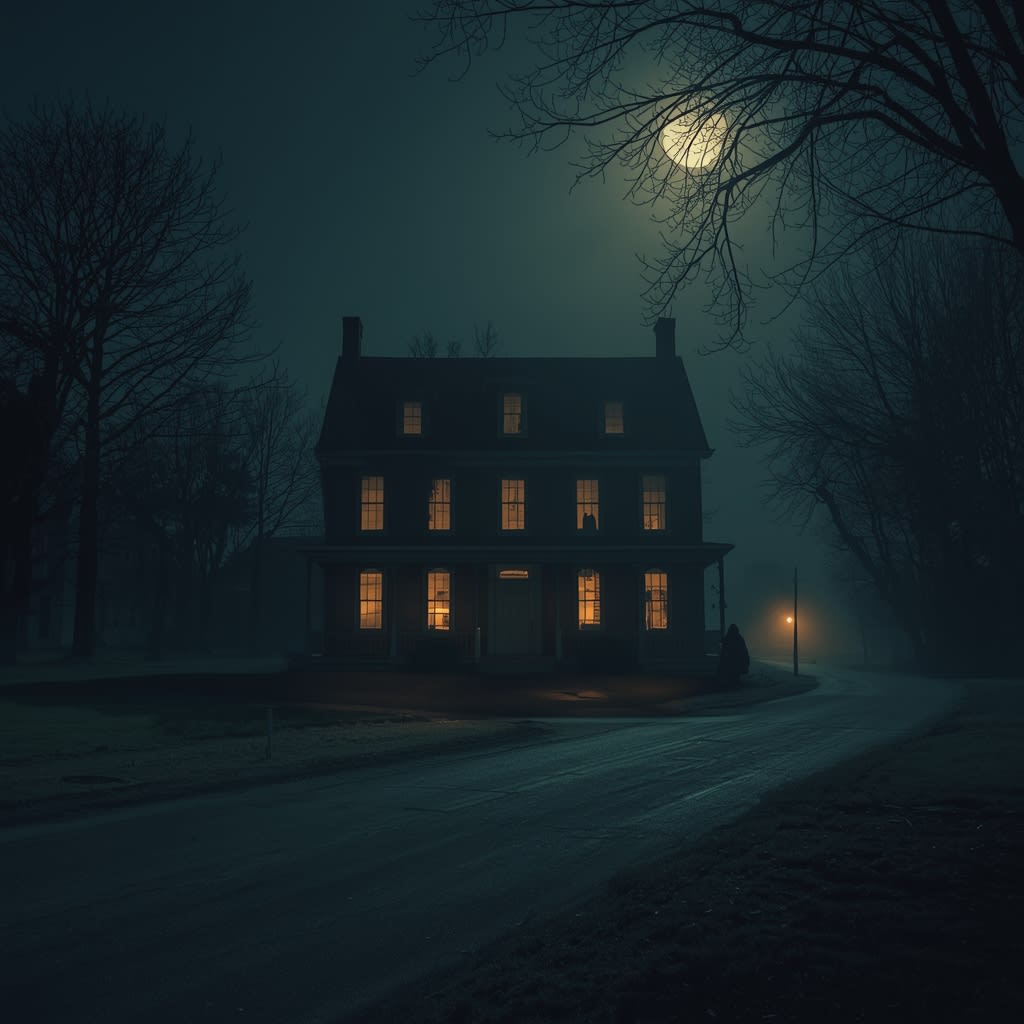
Every neighborhood has that house folks are talking about. With Anna, that house was the one at the end of Mulberry Street—the one whose lights were never extinguished.
It wasn't lived in. At least, not the usual manner. The "For Sale" sign had oxidized into its pole, ivy creeping the wooden stake until it dissolved into obscurity. No vehicles in the driveway. No mail on the porch. No kids playing in the backyard.
But every evening, when the sun set and the street lamps hummed to brightness, the windows of the house glowed with a party inside. The curtains would flutter occasionally, but nobody dropped by.
Anna saw it at the age of twelve, riding home from school on her bicycle after dark. She'd been coasting along, glancing at the windows that shone too brightly, and almost skidded into the ditch when she could have sworn she caught a glimpse of someone in the upstairs bedroom—a woman in a light blue dress, standing stock-still, hands folded in front of her.
She never forgot that flash.
Years went by. She went to college, left town, lived other lives. But when Anna returned to Mulberry Street after her mother became sick, the house remained, the same golden light in the windows.
She was twenty-nine herself. She wasn't a kid who frightened easily. And yet, night after night, driving by with groceries or running by, she slowed, looked, lingered.
Her next-door neighbor, Mrs. Crane, sat on the porch shelling peas one evening when Anna questioned her.
"Who lives there?" Anna asked, her head tilted in the direction of the lighted house.
"Nobody," Mrs. Crane answered curtly.
"But the lights—"
"They're always on. Since I've lived here, and I've lived here thirty years. Don't bother with it."
Anna scowled. "That doesn't make sense. Somebody's paying the bill."
Mrs. Crane cracked open a pea pod, eyes never meeting up. "Not everything has to make sense, Anna."
But Anna could not let it go.
The evening she murdered her mother, grief-stricken and agitated, Anna walked along Mulberry Street at 3 a.m. The house was a golden light in the fog. Her legs took her to the porch before she even realized what she was doing.
The floor creaked under her step, but the door was open a little.
Scent of dust and something florally sweet, like lilies had been in water too long. The light was not bulbs, but lamps that emitted a flame-oil type of light, soft flickers. The shadows writhed on the yellowed paper wall covering.
"Hello?" she said, her voice shaking.
No answer.
Her prints made impressions in the dust on the wooden floor. There were no footprints on it except hers.
And then she heard it—music. The piano, light and gentle, from the parlor.
She threw open the door.
The parlor was spotless—shiny floors, velvet curtains, a piano that had just been tuned. The pale blue dress-clad woman was seated on the bench with her back to Anna, hands moving over keys skillfully.
Anna's mouth was dry. "Who are you?
The woman did not turn. Her voice, when she finally spoke, was distant and breathy. "We've been waiting for you."
Anna stepped back. "No—there's a mistake. I don't even know where I am."
The piano softened. The woman turned, at last. Her face was luminous and odd, like a half-sunned photograph.
"You walked by us every day as a child," she said. "You saw me then. That was the invitation."
Anna shook her head wildly. "I never—"
But her memory had deceived her. She had seen her. Dreamed of her. For years.
"What do you want?" Anna breathed.
The woman stood up, smoothing down her dress. The lamps that ringed the room blazed out new light. Out of the walls, the outline of figures coalesced—men in stained suits, children in Sunday clothes, women in parasols—all spectral, all regarding.
"You," she said coldly.
The figures pressed closer, their faces solemn, almost sorrowful.
Anna’s chest constricted. “No. No, I’m not—I’m not staying here.”
The woman’s head tilted gently. “It’s not about staying. It’s about remembering.”
She reached out and touched Anna's arm. Frostfire burned down her arm, and suddenly Anna saw—shards of lives not her own. A wedding in the parlor, laughter spilling down the stairs, a soldier not coming home from war, a baby crying upstairs in the bedroom, a long sickness in the master bed, the gradual draining of the house until no one was there.
But the lights—they remained on.
Anna staggered back, gasping. "Why me?"
The woman's gray eyes flashed. "Because you noticed."
The room blacked out. The golden light extinguished. The house was empty for the first time.
Anna ran back, beating heart, into the chill of the night.
When she spun around, the windows were dark. The house had darkened for the first time in her life.
The neighbors materialized on Mulberry Street the next morning, pointing, whispering. The house was gray and still, dead.
Only Anna understood what occurred. And only she noticed, passing by outside afterwards in the evening, a single lamp's gentle light burning in the upper window—such a sentinel eye, watching patiently.
About the Creator
Alexander Mind
Latest Stories
Keep reading
More stories from Alexander Mind and writers in Fiction and other communities.
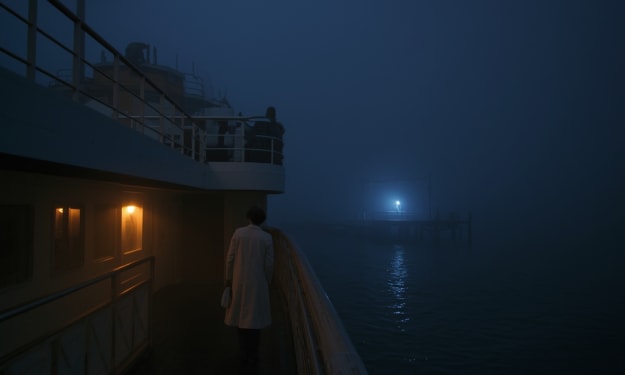
Whispers at the Midnight Ferry
The first time Eli saw her, the fog was so thick he couldn’t see the dock’s end. Midnight runs on the Baybridge Ferry were usually empty except for a few drunks, shift workers, or sleepless souls. But that night, a girl in a cream-colored coat stood at the edge of the gangway, hands clasped like she was praying.
By Alexander Mind5 months ago in Fiction
The Mundane Murders
It was a small town in Massachuttes, named Seaside, where the waves broke on the shores of this coastal town which was nestled between two larger cities. It seemed quiet for the most part, but there was darkness looming in the salty air, of this otherwise righteous town.
By Susan Payton4 days ago in Fiction
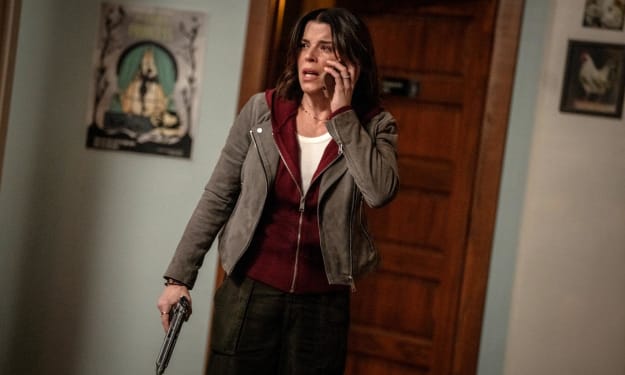
"Scream 7" (2026): Running out of Fresh Screams
This is the seventh time we’ve had a Ghostface crisis. Scream 7 is the latest edition of the Scream franchise. Sydney Prescott and her family are under attack by another anonymous killer dressed in a Ghostface costume. While having issues with her daughter, Tatum, they run from the bloody murders, trying to determine who is behind it all.
By Marielle Sabbag5 days ago in Horror


Comments
There are no comments for this story
Be the first to respond and start the conversation.