

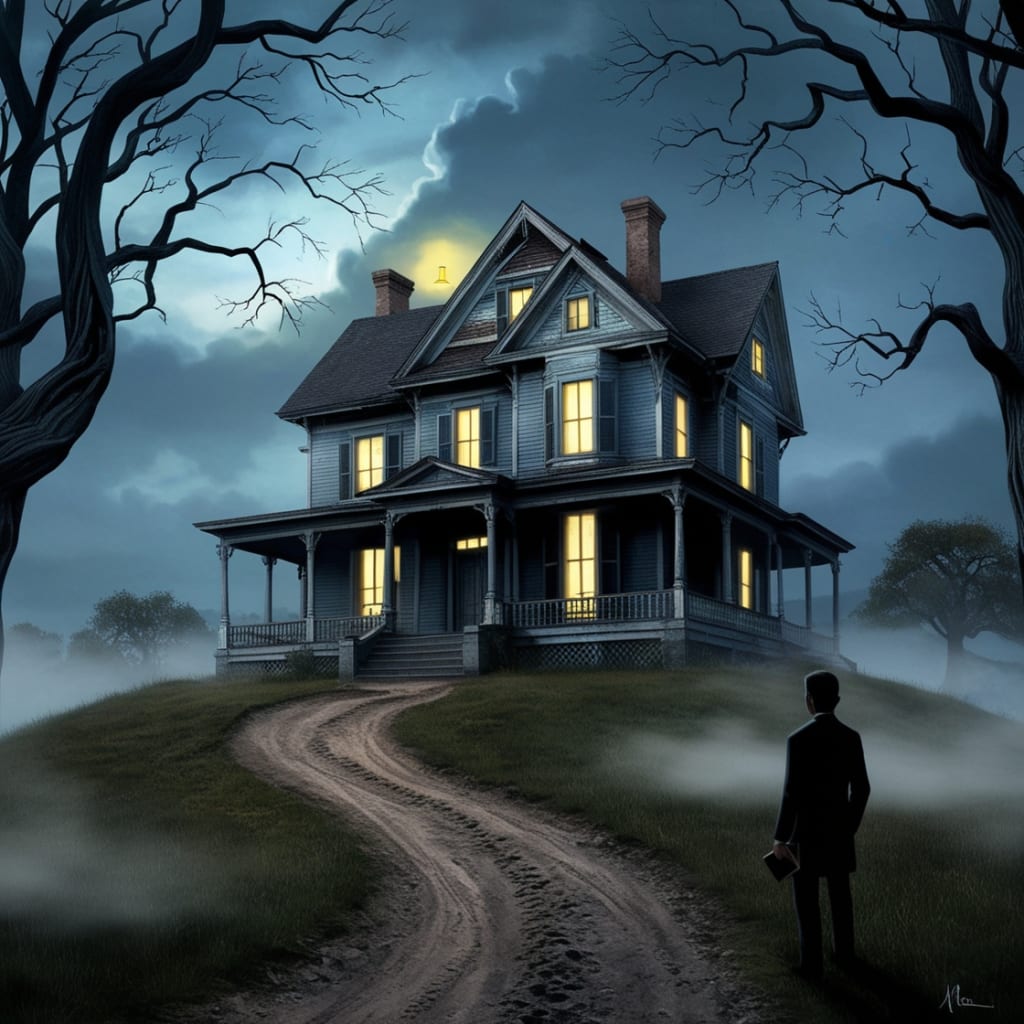
They told me the house on Sycamore Hill had a history, but no one ever told me what kind. Not in detail. The locals spoke of it the way people mention bad weather—unavoidable and better not dwelled upon. It stood at the end of a winding road just past the tree line, its paint peeled in long strips like curling parchment, windows fogged from the inside as if the house itself were holding its breath. I wasn’t looking for trouble, just quiet. After years of working a dead-end job and living in a city that never gave me space to think, I inherited the place from a distant aunt I never knew. It felt like a strange gift from someone who had once seen me from afar and decided I deserved something of my own. So I moved in, ready to start over. Or so I thought.
The first week was uneventful—peaceful, even. I spent the days scrubbing grime from the walls and airing out old books that smelled like they’d been soaked in time. It wasn’t until the third night that things started to shift. It began subtly. I would close a door, only to find it wide open in the morning. The kettle would whistle though I hadn’t filled it. I heard footsteps above me, slow and deliberate, but the upstairs was empty. I told myself it was just the creaks and sighs of an old house settling around me. That’s what they all say, isn’t it?
But the air grew heavier with each passing day, and the shadows started to stretch farther than they should. Mirrors didn’t reflect quite what they were supposed to. I caught glimpses of figures just out of frame—faces behind me that vanished when I turned around. I stopped looking in mirrors altogether. That’s when I remembered the attic. I had been avoiding it without realizing. The trapdoor above the hallway always seemed to loom larger than it was, like a blister on the house’s skin. One rainy afternoon, when the sky was bruised with storm clouds, I found myself staring at it, the pull cord swinging gently though no windows were open. I couldn’t stop myself. I climbed the ladder slowly, each step protesting under my weight like it was trying to warn me.
The attic was dark, dust swirling in the light from a single circular window. In the corner sat a trunk. It was locked, but the key was already in it, like someone had just been there. Inside, I found letters bundled in twine, journals filled with frenzied handwriting, and photographs of a girl who looked too much like me. Her eyes, her smile—my features staring back in black and white. She wore the same birthmark I had on my collarbone, shaped like a crescent moon. My breath caught in my throat. One journal entry, dated exactly fifty years before I moved in, ended mid-sentence. “They say I talk to shadows,” it read. “But they talk first. They know me. They said I belong here.” The words bled off the page like they were still fresh.
I began to dream things I hadn’t lived. I saw a woman in white standing at the window, waiting for someone who never came. I felt the weight of betrayal, of loneliness so dense it took on shape. I knew I was dreaming, but when I woke, my hands smelled of lavender and earth. The woman began to appear more often. Sometimes in dreams, sometimes just in the corner of my eye. She never spoke, but her presence felt mournful, not malicious. Like she needed something. Like I was her. And then I heard my name in her voice, whispered on the wind, soft as a lullaby and twice as terrifying. I started locking the bedroom door, but I knew locks didn’t mean anything here.
I did research at the local library, digging through brittle newspapers and yellowed obituaries. I found mention of a young woman named Eleanor who lived in the house during the 1950s. She was said to have died of illness, but there were whispers—rumors of isolation, of hysteria, of a girl talking to things no one else could see. I found no death certificate. No grave. Just a vanished name. And then one night, I found her standing by my bed. Not a shadow, not a dream—Eleanor. Her eyes pleaded with me. She lifted one finger and pointed to the attic. Then she was gone.
I don’t remember climbing the ladder, only standing in the attic again with the trunk open and every letter spread around me like fallen leaves. I read them all, my fingers trembling. In them, Eleanor confessed to things she couldn’t understand. Voices that told her secrets. A presence in the walls. She had tried to banish them, but they had grown quiet only after she sealed something in the attic floor. I found the boards loose beneath where the trunk had been. With a crowbar, I pried them open.
What I found wasn’t a skeleton, though it felt like one. Just a bundle of hair, teeth, nails—ritualistic, deliberate. I didn’t know what to do. So I burned it. I set the whole attic ablaze with salt, sage, and fire. The house moaned like it was in pain. Smoke poured through the floorboards and filled every hallway. I ran outside and watched the top floor burn while the rain poured, doing nothing to smother the flames. When the fire was out, the attic was empty. Nothing remained but ash.
It’s been six months now. The house is quiet again. I still live here. Sometimes, I feel Eleanor watching, but not with sadness anymore. I think she’s at peace. I’m not sure if I believe in ghosts. But I know something happened on Sycamore Hill. Something ancient, unfinished. And somehow, I finished it. Maybe we don’t always choose the homes we inherit, but sometimes, they choose us. To settle a debt. To close a door. Or to remind us that not every haunting is meant to hurt.
About the Creator
Muhammad Asim
Welcome to my space. I share engaging stories across topics like lifestyle, science, tech, and motivation—content that informs, inspires, and connects people from around the world. Let’s explore together!
Keep reading
More stories from Muhammad Asim and writers in Fiction and other communities.
When the Sky Opened
The sky had always been a constant presence—endless, predictable, a backdrop to the rhythm of everyday life. But one ordinary afternoon, everything changed. When the sky opened, it wasn’t just a meteorological phenomenon; it was a profound event that reshaped a community, altered lives, and stirred the deepest questions about our place in the universe.
By Muhammad Asim8 months ago in Fiction
Bomb Scare
It was 2027, and the world never thought it would happen. A missle hit the United States, but it wasn't where they had anticipated. A little town in the northeast was hit by a missile strike, they didn't know why, and they didn't know exactly where it hit, but they did know it was a coastal community, somewhere between Maine and Delaware.
By Gregory Payton6 days ago in Fiction



Comments
There are no comments for this story
Be the first to respond and start the conversation.