
The Hotline
A 92-year-old woman’s phone number is one digit away from that of the local suicide hotline. She could have it changed, but she doesn’t mind.

One call can change everything.
I’ve lived in the same pickled-okra-colored house my whole life – pickled okra, that’s the actual name of the color. I had to scour through countless paint swatches at the Home Depot to figure it out. I got tired of hearing heated debates about it from those passing by. This house was my mama’s house. This house was my grandma’s house – her mama’s house too. And for as long as our house could have a telephone, the number has always been the same. BA-9467 on the switchboard morphed into 436-9467 as the concept of the telephone evolved.
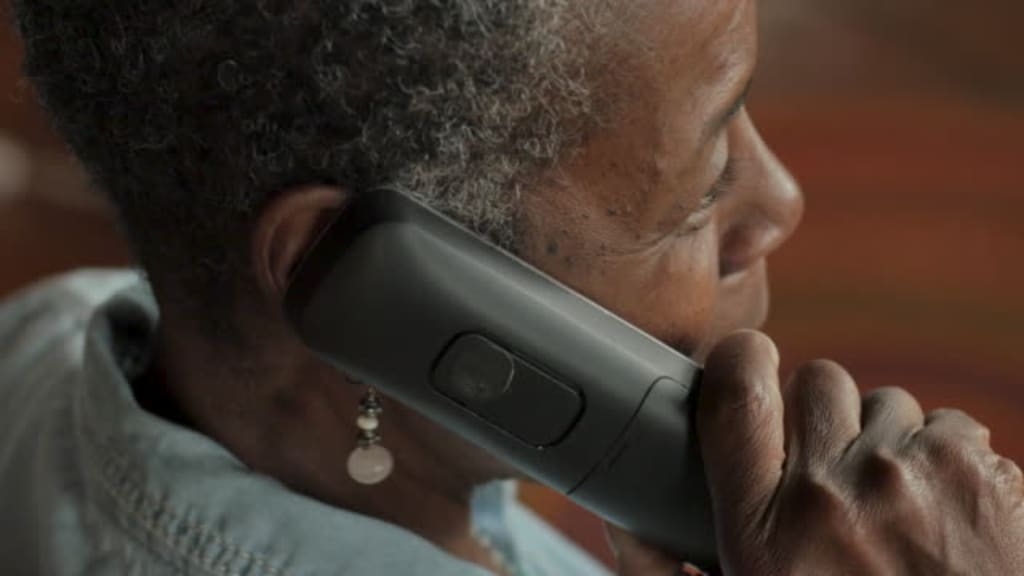
The suicide hotline never provided the 1-800 prefix to their number for their national ad. 436-9467 was all that was provided. So 436-9467 was the number that people called while adding their area code – 215 being mine. I began to receive and take phone calls from all the suicidal beings in Philly – I sometimes wondered if other homes with my same number across the nation experienced these calls as well. If they had, no one reported it to the hotline – or the hotline didn’t choose to fix it. Either way, the calls kept me lively in my older and lonelier years.
I wasn’t such a loner before, I was actually quite sociable. I was an excellent student throughout high school – unlike my brother Harris. And what I wanted more than anything was to go to college and study psychology – I was always fascinated by what pushed certain minds to react in the traumatic ways that they did. But mama and papa worked as hard as they could to be able to provide for my brother and me. And there was no way I could expect them to send us both to school. Not only was Harris the oldest, but he was also the most susceptible to the “wicked ways of this world.” They were assured that a collegiate education would save him. They promised me the house as their best version of a compromise – it served as more of a consolation prize.
But I lived alongside my parents for over half a century in that house. I experienced my first job, my first love and heartbreak, and the first of many rounds of depression. My first and only fiancee cured me of such sinister demons and loved me back to life. My husband lived alongside me in that house for forty-five years, until his passing left me alone. Then those sinister demons, determined to make their temporary visit more permanent, moved into the guest room.
Everyone's experience with depression differs. I can describe it as a deep dark ocean, limitless – the coastline is long gone, the tide has pulled you out too far. The waters get choppy at times and can drag you under. And once you're beneath, your struggles are futile yet necessary. If you don't make it back to the surface, you'll drown – I always equated it to suicide. My bouts with depression always let me buoy back to the top, I was grateful for that.
In those moments where I floated atop my worries, I contemplated my life. I regretted nothing but wondered why I allowed certain aspects of my life to transpire as they did. Why did I never choose to go to school? Even after having my children, who both grew up and moved cross-country for school and the continuation of their new lives, I remained dedicated to ensuring my husband’s happiness. I shrank all of my potential to fit into the standard of what a wife should be. Why did I do that?
It wasn’t Louie’s fault – Louie was my husband. He never demanded that I remain at home. Even after I had the boys, he would always encourage me to join a mothers’ group – like-minded women who needed adult interaction as much as I did during the day while watching our babies. When the boys were old enough to attend school, he suggested a hobby. I could’ve chosen anything that I ever dreamed of doing, Louie was ready to sacrifice whatever was needed for my success. I chose to be the best mother and wife that I could be. I wanted my sons to look at their wives and always remember how lucky their father was to have a partner in life like me – luck that they would never get to fully experience. I made my world about my family, so my life was meaningless when they left. This was all my fault.
The weight of the blame tugged at my ankle, submerging half of my body back into the abyss. Here I was, suffering and barely treading water because of my own self-depreciating decisions. When, look! A life-preserver appeared.
You can change everything. The thought floated towards me, bobbling in the choppy waters. You can still live your dreams. The thought circled me, tempting me to take ahold. The end? This is only the beginning. I snatched the life-preserver, I took the bait and life began again.
I started taking undergraduate classes after scoring highly on a college entrance exam, and I was pretty impressed with myself for a seventy-something-year-old. My thirst for knowledge was reignited and refused to be quenched. My academic achievements did not go unnoticed and most of my professors encouraged me to seriously consider continuing my education. I tried to convince them that I was far too old to do more than the four years for my bachelor’s degree – they knew better and insisted, and I gave in.
The physical and mental stresses of the program felt detrimental, but were important in my journey for self-fulfillment. I knew that I was at a learning disadvantage because of my age, but in those moments I remembered my self-diagnosed panic disorder and I endured. The strain had its consequences, especially on my body. While commuting to campus daily kept me in an active routine, my limbs began to feel the effect of my vigorous lifestyle. My brain instinctively flipped through medical symptoms to match them to psychological conditions, but couldn’t recall what I ate for dinner the previous night. I was so academically accomplished yet mentally spent – I began to spend more and more of my free time alone, cooped up in my pickled-okra sanctum.
I received my master's degree in clinical psychology after a strenuous three years within the program. Although it took an extra year to complete, I felt like I was cram-packing all the learning of my yesteryears into a short period of time.
Friends and neighbors consistently visited to congratulate me on ‘being a master of psychology.’ There were times that I couldn’t seem to get rid of them – all asking me to label their conditions. Maybe they felt as though my diagnosis could cure their crazies. Either way, I bided my time by helping Bertha with her abandonment issues, connecting ol’ Arnold’s fear of commitment to watching his mother deal with infidelity in his youth, and ascertaining that it was Sandra’s narcissism that ruined her marriages – not her 3 ex-husbands.
I became the neighborhood “shrink”, and that purpose in life felt good. The feeling of bringing healing to my neighbors – to black people – was more of an accomplishment to me than receiving the degree. The stigma of black people not needing an psychological outlet was destroyed and replaced by the knowledge that black people deserved a shot at a mentally healthy and mentally sustainable life.
As often as friends and neighbors showed up, I listened and gave my “expert opinion.” But after a while the visits slowed down. Most people took my advice and became better versions of themselves, others didn’t appreciate the accuracy of my diagnosis and chose to continue their destructive behaviors. There were also a fair share of funerals, leaving my patient list nearly empty. But when one door closes, a window opens – and through that window climbed one despondent soul, opening the floodgates for many other sad clients to follow.
I talked to each caller for no particular set amount of time, working alongside them to figure out from where their sadness stemmed. Most times, the calls kept me humble and grateful. I had sad moments in my life, but some of these callers’ experiences made me marvel at how they were still choosing to live – asking for someone’s help to stay alive.
I had a 100% success rate, although no one was keeping count. Sometimes, I thought about calling the hotline’s headquarters to brag about my numbers, ask if their staff achieved such success, maybe ask for a little stipend while I was at it. But I just remained humbly gracious that I saved so many lives, I was good at what I did.
Technically, I had a 97% success rate. It was all due to one call. The call changed everything. A quiet voice crackled on my line, she couldn’t have been more than 25 years old, and asked a very peculiar question, “Would suicide be worth seeing the love of your life again?”
Debra began to weave a tale, from what I understood, about the supernatural appearance of her recently deceased boyfriend at the scene of her ‘almost death.’ Seeing him again, but only for a brief moment, had pushed her grief to an unreconcilable peak and she was ready to give up on life. My confusion came when she insisted that I answered one question.
“I don’t think I understand what you’re asking, Debra.”
“I’m asking if you had the possibility of seeing your loved one again by just attempting suicide, wouldn’t you try? I know it sounds crazy, and I don’t need you to try and convince me that it’s impossible. I just need to know… wouldn’t you try?”
“But what if you die?”
“But what if I don’t?” her words dripped with an excitement that seemed slightly neurotic. “What if I get to see him again? I know it sounds crazy, but… I got this wild feeling that during my passing from this world, he might show up and take my hand while leading me into the next realm. I feel safer just thinking about it.”
I hesitated briefly before barely mustering up the politeness to say, “Chile, you sound crazier than a bucket of nuts, do you understand me? If you try to kill yourself, there’s a 50/50 chance that you will die. The likelihood that you’ll see your dead boyfriend is slim-to-none. I can’t agree with this foolishness, much less sit here and discuss it. It’s a sin.” I hoped she hadn’t felt the brunt of my judgment, but I needed to figure out a way to implore that she choose to live.
“I can understand that you don’t believe or agree with me,” she replied after a lengthy pause. “I’m sure that I sound crazy – I feel crazy! But, what do I have to lose?”
“Your life,” I all but screamed at the telephone receiver.
“Have you ever lost anyone, miss…?”
“Eloise. My name is Eloise. And yes, I have. I’m 92 years old, I’ve lost more loved ones than I care to count. Grieving is hard, Debra, but it’s not impossible to navigate. You’ll probably miss your boyfriend until the day you die, but you’ll find new love.”
“Are you a widow?”
“Yes.”
“Did you find new love?”
“No. Although I was a tad bit too old to get back on the single’s websites after I lost Louie.” My defense was a bust, and I could tell that she saw right through it as she snickered on the phone. It wasn’t my age that prevented me from attempting to love again, I refused to do so because I didn’t want to love again – I just wanted Louie back.
“They have apps for that now, Miss Eloise,” she giggled. Perhaps my oblivion for technology was funnier than my weak excuses. “It’s been really nice talking with you though – I haven’t genuinely laughed in a minute. But I don’t want to waste too much more of your time.”
“It’s not a waste at all, especially if I convinced you to skip the suicide.”
“Mmm,” her lack of response was more telling to me than what she said after. “I do want to live, Miss Eloise.”
“Then do your damnedest to make sure that you do, sweetie.”
“Thanks again for the talk. Hmm… Louie and Louise… it has a ring to it huh? Like you two are fated.”
“Were… fated. Have a good evening.” I hung up before she could say anymore. I had fallen face-first back into depression’s grip.
Congratulations Louie & Louise; that’s how they decorated our simple wedding cake, along with red and pink frosted flowers. Our names were always a play on words for our friends, and they felt it was appropriate to use those names to represent our love on the day of our union.
Although our civil ceremony occurred in Room 415 at Philadelphia’s City Hall, we exchanged vows at Philly’s Rose Garden – standing at the crown of a round fountain as our friends circled the rest of its perimeter. My lace dress stopped right above my knees, but the long sleeves itched relentlessly – what I deemed appropriate courthouse attire was unfit for a park in the middle of spring. But Louie looked effortlessly cool. He unbuttoned the first three black opal buttons on his ivory shirt – opal buttons that I sewed on the week prior. His handkerchief matched the dark red hue of the gorgeous Karma Choc Dahlia waterlilies in my bouquet. They said I was a stunning bride. They said that the garden breathed beauty into our intimate ceremony. I only had eyes for my husband-to-be.
I will protect you from both danger and heartache. I will support you and your dreams until I no longer exist. Our love, from this moment on, will be infinite – eternal, were his sacred vows to me.
I kept those memories locked away for quite some time – I didn’t dare recall them to the present. I refused to remember the bad times as well. As much as I still loved Louie, burying his memory helped me exist without him, it stopped me from constantly wanting to succumb to my weaker parts. But Debra acted as a rogue gravedigger, tormenting my psyche.
I couldn’t shake her question for the rest of the night and I ignored others’ calls throughout the remainder of the evening. Of course, I told Debra that I would never consider suicide, even with the hope of seeing Louie again. But if that statement was once factual, it was now clearly up for debate.
I sat in my favorite armchair, staring at our china cabinet – our finest china that we received as a wedding gift lined the shelves. In the center sat a bottle of Armand de Brignac Ace of Spades, a 40th-anniversary gift from our sons that we swore to open on our 50th wedding anniversary.
The golden year deserves a golden bottle, they chided. It now remained as a reminder that we came up 5 years short and that I was robbed of a lifetime of Louie’s love.
The pop of the cork sounded fresh as the champagne poured smoothly into my mason jar – I would’ve never guessed that the bottle lasted a few decades. The tiny bubbles that floated atop the liquid tickled my nose, but I couldn’t laugh. Memories of our life came pouring back into my mind with every glass. Early-relationship date nights, our daily breakfast chats, the infidelity suspicions, and the births of our sons with him right there by my side flooded the living room. Each recollection raised the waters around me – first soaking my ankles before working its way to to sit upon my lap. My armchair floated upon the choppy waters, but my body felt like a lead block strapped into its seat. What was supposed to be a light, airy, and celebratory drink felt more like an anchor dragging me to the bottom of the dark sea. The more I drank, the deeper I sank into depression’s hold.
Evidently alcohol affected me much more in my older age, and why wouldn’t it? Being 92 years old meant that my liver didn’t detox my body as fast or as efficiently as it once did. I slid from the chair and began my slow descent to the subsurface. For the first time, in a long time, I knew that I was losing this battle against despair. My feeble attempts to fight back were met with heavy breathing, a quickened and erratic heartbeat, and extreme vertigo. I squeezed my eyes tightly to ignore all of the overwhelming sensations. I was drowning, but couldn’t move my arms to fight back against the tide. I had reached new territory within these depths – I could clearly distinguish the sea floor. I was all-but-willing to accept defeat when I saw him, sitting at the bottom, smiling and waving at me – beckoning me.
I worked against the lifelessness of my arms, determined to get to him. I willingly swam in his direction and he stood and reached to touch my fingertips. Had he always been there, deep down below the surface, watching my attempts to save myself after his death? Had he known that when it all became too much, we would once again be united? At any point before, I would’ve tried to justify what was happening to me. My extensive knowledge of the human brain and its psychological flaws would’ve helped me to provide a rationale and to conquer this latest bout against the sadness that consumed me. But all of my studies no longer mattered, Louie awaited me at the bottom.
With every breaststroke my heart felt as if it would explode – excitement from the possibility of touching Louie again, or lack of oxygen? I couldn’t tell you, all I know is that when I reached the bottom and grasped Louie’s hands into mine, I heard him finally whisper, “Well, we’ve made it back to each other’s arms.”
I was home.
About the Creator
Enjonai Jenkins
Avid and passionate narrator, who’s anxious but ready to share her stories with the world.
Keep reading
More stories from Enjonai Jenkins and writers in Fiction and other communities.
Risky Reunion
Whenever I imagined looking over a cliff, I always thought that there were small ridges along the sides to break your fall – or break all of your bones – on the way down. But this cliff, aside from its obvious erosion, was smooth to the bottom. The boulders that jutted out from the crashing waters revealed where the true danger lies. But it was the waves that made the climb worth it. Emerald waters foamed as its tide offered water to the cliff’s base before pulling it back – the undertow would pull any challenger under immediately. This wasn’t a jumper’s cliff, and I knew that. I also knew that during the small moments, when the waves stopped crashing, the water was clear to the bottom – it brought me immense peace, and so I jumped.
By Enjonai Jenkins4 years ago in Fiction
TUS NUA - ch 49
TUS NUA – ch 49 New Beginnings – Mia and Midnight (*)(*)(*) As Mia spoke on the phone to Ali’s sister, Ellen, Finola slipped quietly away and walked to the stream behind Tus Nua. Carefully, she put a block on her family so no one could know what she was about to do.
By Margaret Brennan2 days ago in Fiction
One Hard Thing
Stop me if you’ve heard this one before: You have the number, you know your schedule- you’ve even picked out the perfect day and time to make this appointment. Shoot, you’ve even picked out alternative days and times just in case their schedules can’t accommodate you!
By Taylor Rigsbya day ago in Motivation



Comments
There are no comments for this story
Be the first to respond and start the conversation.