
The Haunted Asylum
Madness and Malevolence Behind Locked Doors

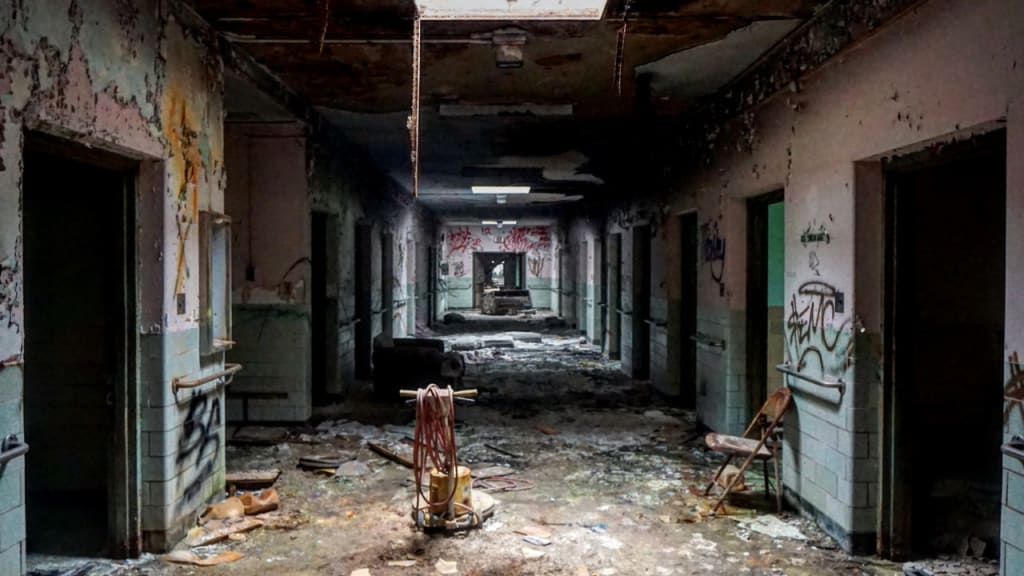
The ancient asylum was always a source of fear and sorrow. Its enormous, deteriorating structure stood like a melancholy sentinel of the past on the outskirts of town. For years, the townspeople had whispered about it, telling stories of the madness that had transpired beyond its guarded walls. The asylum, however, was supposed to be deserted, abandoned for decades, its sad past left to accumulate dust and cobwebs.
Amelia, a young paranormal investigator, has heard tales of the asylum's terrible past and the lingering spirits rumored to haunt its hallways. Curiosity and a craving for the unknown pushed her to the abandoned building one fateful evening, camera in hand, ready to document evidence of the otherworldly.
She couldn't shake the uneasy feeling that the asylum itself was watching her as she approached the entrance. The moon shone an eerie light on its disintegrating exterior, while the wind whispered through shattered windows, producing a melancholy tune. She took a big breath and entered.
The aroma of decay and the weight of despair filled the air. Amelia's footsteps echoed in the night as she made her way through the maze of halls, her flashlight making dancing shadows on the peeling walls. The silence was broken only by her racing heart as she felt the eyes of a thousand lost souls on her.
Amelia discovered an ancient patient logbook in a dark, dimly lighted chamber. Its pages tell of misery and pain, of people imprisoned against their will, their calls for freedom falling on deaf ears. Charlotte Whittaker, a lady committed for unclear reasons, her history cloaked in mystery, attracted her interest.
Amelia resumed her exploration, filming her travels. She sensed a sudden dip in temperature and heard the faint strains of a melancholy music performed on an unseen piano in a room on the second floor. Her camera captured only the empty room, but the music remained, reverberating through the corridors.
The lines between past and present began to blur as she traveled deeper inside the asylum. Shadows moved as if they had their own life, and disembodied voices and cries filled the air. She came across a mirror in one of the rooms, its glass coated with age. When she looked into it, she saw short images of deformed and tormented faces, as if the mirror housed the asylum's tormented memories.
Amelia's research brought her to a room at the far end of a lonesome corridor. It was modest and unassuming, but the darkness surrounded it. She got an overwhelming sense that this room held the key to the asylum's mysteries.
When she opened the door, she was met with a vision that would stay with her for the rest of her life. Charlotte Whittaker sat in the center of the room in a ragged white robe, her raven-black hair matted and untamed. She stared into space, her eyes lifeless but emanating an ethereal aura.
Amelia approached slowly, her anxiety mixed with an odd desire to reach out to this suffering ghost. A wave of energy raced through her as her hand brushed across Charlotte's She found herself engrossed in the woman's memories.
Charlotte's tragic story—the loss of her family, her unlawful admission to the asylum, and the suffering she faced within its walls—was observed by Amelia. She could feel Charlotte's need for justice, for her narrative to be told and her name to be cleared.
Charlotte's spirit appeared to gain clarity as Amelia's vision returned to the present. Her gaze met Amelia's, and she mumbled, "Help me."
Amelia went into the history records, uncovering evidence of the injustice done to Charlotte Whittaker, determined to give voice to the asylum's lost souls. They cleared her name posthumously with the assistance of local authorities, recognizing her unlawful detention.
As the truth became clear, the spirits who had long haunted the asylum seemed to find some rest. Charlotte, in particular, seems to have been liberated from her torturous existence. Her apparition, once imprisoned in grief, now wore a calm expression, and the sinister songs that had filled the facility had been turned into pleasant lullabies.
Amelia's narrative became a symbol of the enduring power of justice and the ability to repair the past. Once a site of sorrow, the haunted institution acquired new life as a symbol of redemption, where the voices of the forgotten may finally rest in peace. Amelia continued her work as a storyteller, not as a paranormal investigator, giving voice to the silenced and allowing the echoes of history to be heard once more.
About the Creator
Keep reading
More stories from Destiny Diamond and writers in Fiction and other communities.
The Abandoned Schoolhouse
A remnant of a bygone era, the abandoned schoolhouse stood at the periphery of the community. Its windows gaped like empty eye sockets, and its aged wooden boards groaned. People in the town hardly ever talked about it since the memories it contained were just as eerie as the structure itself.
By Destiny Diamond2 years ago in Horror
Bomb Scare
It was 2027, and the world never thought it would happen. A missle hit the United States, but it wasn't where they had anticipated. A little town in the northeast was hit by a missile strike, they didn't know why, and they didn't know exactly where it hit, but they did know it was a coastal community, somewhere between Maine and Delaware.
By Gregory Payton8 days ago in Fiction
My First Time Skiing and I Got Lost, Alone, in the French Alps
Looking back, I can trace some of my life’s biggest adventures to a simple action from my sister. She’d introduced me to Tommy (a very long time ago), a colleague of hers, who had overshared his penchant for Italian-looking women, and I ticked that box.
By Chantal Christie Weissabout 3 hours ago in Humans



Comments
There are no comments for this story
Be the first to respond and start the conversation.