
The Harbor of Painted Dreams
A Journey Through Tides of Memory and Wonder

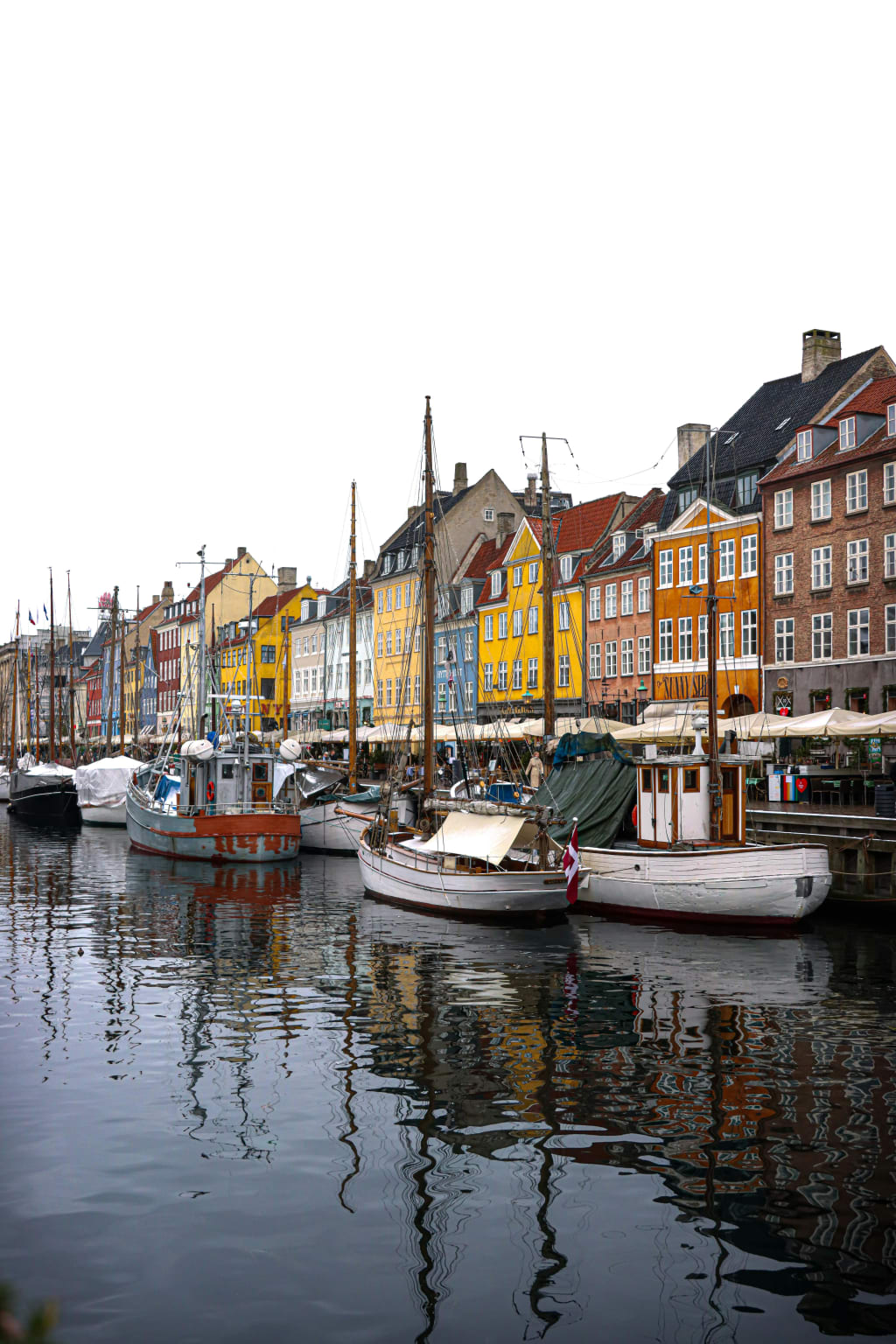
A cold breeze brushed past my cheeks the moment I stepped onto the old cobblestone street, echoing the quiet murmur of distant waves. The harbor stretched out before me, as though it were a painting come to life. Rows of brightly colored buildings—saffron yellow, pale blue, and warm terracotta—lined the water’s edge, their reflections dancing gently on the surface. Old wooden boats with tall masts and crisp sails bobbed in place, each vessel a silent testament to journeys taken, storms weathered, and adventures found. Seagulls circled overhead, their calls punctuating the crisp seaside air. It was in that vibrant but slightly melancholy scene that our story truly began.
Arda, I recall how we had heard legends of this mysterious coastal enclave, tucked away from modern highways by miles of fog-laden farmland and serpentine canals. Old sailors called it the Harbor of Painted Dreams, though no one seemed entirely sure why. Some said it was because the buildings sparkled with colors so vivid they seemed plucked straight from an artist’s palette; others claimed the real reason was far more peculiar: at night, when moonlight touched the rippling surface of the canal, the harbor came alive with echoes of a past that refused to fade. That whisper of enchantment called to us, and so we arrived here, eager to set foot in a place that seemed both real and unreal.
Chapter I: First Impressions
We arrived at dawn, stepping off a rickety bus that had taken us through fog-soaked valleys and over rustic stone bridges. The driver—a middle-aged local who spoke in a lilting accent—wished us luck with an odd smile, as though he knew something we did not. As he drove away, we found ourselves virtually alone, save for the occasional fisherman hauling nets from the calm water. The sun was only just breaking through the morning mist, illuminating the vibrant houses one by one. Some of the shutters were still closed, while in others, you could see warm lights from within—small cafes preparing to greet the day.
I was immediately struck by the sense that the harbor was a place suspended in time. The architecture of the buildings, with their steep gables and wooden façades, harkened back to an older era, perhaps the late 18th or early 19th century. Each house had a unique hue, as if the town had collectively decided that monotony was its sworn enemy. Even the small boats rocked in slow unison, as if lulled by an ancient lullaby that only the sea knew. For someone like us, hungry for stories and mysteries, it was the perfect setting—a living tapestry of color and reflection, waiting for us to peel back each layer.
Chapter II: The Old Harbor Inn
Naturally, our first stop was to secure lodging. A short walk along the waterfront brought us to a large timber-framed building painted a subdued olive green. A faded sign read, in ornate golden lettering, “The Old Harbor Inn.” A little bell tinkled overhead as we opened the door, stepping into a cozy foyer with old wooden floors and walls adorned with nautical memorabilia—ship wheels, rusted anchors, and hand-drawn maps. The faint smell of salted air and a comforting aroma of warm bread drifted in the hallway.
An elderly woman greeted us at the reception desk. Her kind eyes and lined face suggested she had lived here all her life. She introduced herself as Mette, the innkeeper and unofficial historian of the harbor. With a broad smile, she handed us a copper key tied to a small piece of driftwood. Our room was on the second floor, overlooking the water. She also mentioned that breakfast would be served at sunrise in the common room, where guests often shared stories about their travels or about the harbor itself. We had only been in town for an hour, but I already felt a magnetic pull—like this place might hold more stories than even its colorful exteriors could reveal.
Chapter III: Whispers in the Café
Arda, you remember that little café we stumbled upon? A quaint spot nestled between two bright yellow buildings, each façade reflecting golden light onto the table umbrellas that lined the harbor. A cheerful chalkboard outside advertised fresh pastries and strong coffee. Intrigued, we settled at a small round table with wrought-iron chairs. The waitress, a young woman named Lisbet, was quick to bring us steaming mugs and flaky, sugar-dusted pastries.
Before long, an old fisherman ambled over, carefully balancing a mug of coffee in his gnarled hands. He introduced himself simply as Henrik. Perhaps he sensed we were outsiders, or maybe the harbor’s peculiar aura simply made people more open to conversation. He sat down without waiting for an invitation and began speaking in a low, gravelly voice:
“You’ve come to see if the tales are true, haven’t you?” he asked, eyes gleaming with equal parts humor and caution.
We exchanged glances. “What tales?” you probed, even though we suspected he meant the harbor’s ghostly reputation.
“Ah,” he said, tapping a finger on the table, “the Painted Dreams, of course. The illusions. Sometimes, on certain nights, the reflections in that water show you more than just your own face. They show you your memories—or even your future.”
I felt a chill run through me, despite the warmth of my coffee. Henrik proceeded to tell us about local legends: apparitions in the waves, the flicker of phantom lights in the windows after midnight, and how a handful of travelers claimed the harbor itself guided them to hidden truths about their own lives.
Lisbet, returning to refill our coffee cups, couldn’t help but overhear. She gave Henrik a gentle nudge on the shoulder. “Don’t spook them,” she teased. “We like visitors around here; we don’t need you chasing them off with talk of ghosts.”
Yet, we were anything but deterred. For us, Henrik’s tale was precisely the reason we had come. The notion that these waters could act as a mirror—not just for the vibrantly painted buildings, but for the echoes of one’s own soul—was too tempting to ignore. We decided that evening we would wander the harbor after dark, letting the moonlight guide us.
Chapter IV: A Tour Through History
Determined to gather context, we spent the afternoon exploring the winding streets behind the main row of colorful houses. Cobblestone alleys led to secret courtyards, hidden gardens, and small workshops where artisans shaped pottery or painted sea-themed murals. The crisp salt air was ever-present, imbuing the entire town with a briny perfume.
We stumbled upon a modest museum, housed in what appeared to be an old warehouse. The sign above the door read: “Maritime and Local History Exhibition.” Inside, dimly lit corridors showcased dusty glass cases filled with artifacts—harpoons, compasses, maps of trade routes. Each item told a story of seafaring families who once made this harbor a bustling port. At the far end, an entire section was dedicated to local lore, complete with water-stained journals and black-and-white photographs from decades past.
One photograph drew our attention immediately. It showed a group of men and women standing on the quay, behind them the very same line of colorful buildings we had admired that morning. Though the photo was old and faded, the colors of those buildings seemed to pop in an almost uncanny way. Each person wore an expression that was somewhere between reverence and awe, as if they knew a secret the camera could never capture. A small brass plaque beneath the photograph read: “The Painted Dreams Society—1937.”
We made a note to ask Mette or anyone else we might run into about this ‘Painted Dreams Society.’ It sounded grandiose and mysterious, promising a deeper connection to the harbor’s esoteric reputation.
Chapter V: Twilight Stroll
As the sun lowered and dusk set in, the harbor transformed. Lamps along the quayside flickered to life, casting warm glows that danced with the lengthening shadows. The once-bustling waterfront grew quiet, save for the distant murmur of soft conversation spilling from taverns. We decided it was the perfect time to observe the water, to see if the rumors of strange reflections held any truth.
Walking side by side, we passed moored fishing vessels and small yachts that rocked gently in the gentle current. Every so often, we paused to gaze into the rippling water. The reflections of the brightly painted buildings were elongated and distorted, forming a kaleidoscope of color—turquoise next to saffron, orange melting into purple. Yet, nothing appeared supernatural at first glance.
Then, we stopped in front of a particular boat, older than the rest, its peeling paint revealing layers of color beneath—white, then red, then a deep ocean blue. The reflection in the water seemed… different. At first, I dismissed it as a trick of the light or a gust of wind. But looking closer, I swore I caught a fleeting glimpse of a figure standing on the deck, even though the boat was clearly empty.
You spotted it too, Arda. We exchanged looks of astonishment. The figure in the reflection was a woman wearing a long cloak. She raised her hand, as if in greeting—or warning—before she vanished entirely. After a moment of stunned silence, we realized we were holding our breath.
“What was that?” I whispered, my heart hammering in my chest.
You shook your head. “Maybe a trick of the light… or maybe Henrik was right.”
With adrenaline coursing through us, we continued along the quay until we reached a wide clearing, where a small statue of a mermaid perched on a rock near the water’s edge. We stood there for a time, letting the evening breeze and the gentle lap of the water calm us. Whatever we had just witnessed, it was too vivid to dismiss outright. There was magic here—or something akin to it—and we were only beginning to scratch the surface.
Chapter VI: Nighttime Revelations
That night, we returned to our room at The Old Harbor Inn and found ourselves unable to sleep. The image of that cloaked woman on the boat replayed in our minds. Was she a memory from the past? A manifestation of the harbor’s legendary illusions? Or perhaps a specter from some forgotten era? With curiosity as our compass, we crept downstairs to see if Mette was still awake.
Sure enough, she was in the common room, tidying up. She looked up with mild surprise when we entered.
“Couldn’t sleep?” she asked gently.
We told her about the figure we had seen. Her expression shifted from mild surprise to something akin to apprehension—and, if I wasn’t mistaken, a hint of sorrow. She gestured for us to sit by the fireplace. Then, with a deep breath, she began:
“They used to call her Brynja. Long ago, she and her husband were part of the Painted Dreams Society. Legend says they were scholars and dreamers who sought to understand the mysteries of this harbor—why it seemed to hold fragments of people’s memories, why the reflections sometimes showed things that defied reason. Brynja, in particular, was certain that the harbor was a nexus between the waking world and some realm of imagination or spirit.”
Mette took a moment, smoothing the front of her apron. “But then, tragedy struck. One of their experiments went awry. Some said they tried to open a doorway into the harbor’s reflection—maybe quite literally stepping into it. Her husband vanished during that fateful night. Brynja was found on a boat, silent and trembling. She never spoke a word about what happened. Some say she spent the rest of her days appearing and disappearing along the harbor at night, forever searching for him in the water’s reflections.”
A hush settled over the common room. The only sound was the crackling of the fire. Mette folded her hands in her lap, her eyes distant. “I suppose her spirit lingers,” she concluded softly, “as do the spirits of others who lost themselves to the harbor’s illusions. But not every story ends tragically. Some travelers have glimpsed their own futures or the faces of distant loved ones they never would have seen otherwise.”
We thanked Mette for her candor. Although the revelation filled us with a sense of unease, it also intensified our determination to uncover more about this Painted Dreams Society, Brynja, and the harbor’s uncanny power.
Chapter VII: Threads of the Past
Over the next few days, we embarked on a deeper investigation. We pored over old library archives, flipping through dusty ledgers that recorded births, deaths, and marriages in the harbor. The Painted Dreams Society, as it turned out, was more than a collection of eccentric townsfolk. It comprised philosophers, artists, alchemists, and maritime adventurers from all across the region. They believed the harbor possessed a unique confluence of natural energies, a place where reality thinned enough to allow glimpses into other times or states of being.
One name kept surfacing: Leif Gunnarson. He was credited as the founder of the society and Brynja’s husband. An old portrait in the library’s back room revealed a stern-faced man with intense eyes and a braided beard. The scrawled caption read: “Leif Gunnarson, 1875–1937. Seeker of the Harbor’s Secret.” We found scattered references to an unfinished experiment, cryptic mentions of a contraption known as the ‘Aqua Mirror.’ No one seemed to know exactly what it was or how it worked, only that it was central to the society’s attempts at harnessing the harbor’s reflective power.
We also discovered journals belonging to other members, detailing midnight gatherings on the quayside. They wrote of hearing distant voices, seeing shapes in the water that mirrored not just the physical world but an inward realm of dreams and regrets. Some members were enthralled; others grew fearful, warning that meddling with these energies could lead to dire consequences.
Chapter VIII: Beneath the Dock
During our search, we encountered Henrik again. He had just returned from a day’s fishing trip, and we managed to corner him near the old boathouse. When we mentioned Leif Gunnarson and Brynja, a flicker of recognition crossed his weathered face.
“I was just a boy when the old folks whispered about them,” he said, setting down a crate of fish. “They said Brynja never stopped looking for Leif’s reflection in the water. As for the Painted Dreams Society, well, they vanished after that tragedy. But there are still rumors of hidden workshops where they tinkered with contraptions. Last I heard, one of them was right beneath the dock next to the old warehouse. Most folks avoid it. Some say it’s cursed.”
Curiosity piqued, we followed Henrik’s vague directions. The dock in question was old, its planks warped by years of salt and moisture. Waves sloshed gently underneath as we made our way to the far edge. We found a heavy wooden trapdoor, partially concealed by fishing nets and debris. With some effort, we pried it open and descended a short ladder into darkness.
A single beam of light from your flashlight, Arda, cut through the gloom, revealing a cramped space. The walls were damp stone, and the air carried a pungent odor of seaweed and decay. In the corner, partially covered by moldy tarps, lay a series of metallic hoops attached to a rusted frame. We approached cautiously, lifting the tarps away. Even in disrepair, you could sense a certain craftsmanship to it—the arcs of metal were elegantly curved, and faint etchings hinted at symbols or runes. Could this be the long-lost Aqua Mirror?
Tucked beside it was a small leather-bound journal, its pages warped from water damage. With trembling hands, I flipped it open. The entries, written in looping script, appeared to be Brynja’s words:
“Leif believes we can harness the harbor’s reflections. We have seen glimpses of the infinite beyond the watery veil. Tonight, we shall try the final alignment…”
“I am torn between fascination and dread. The energies here are neither benign nor malevolent; they simply are, indifferent to our mortal concerns. What we do now will echo through the harbor’s waters for ages to come.”
The later entries were all blotched with ink and nearly illegible. Clearly, the events of that night had taken a harrowing turn. The final page read:
“If you find this, heed my warning. The Painted Dreams we chase may show us truths, but the price can be high. The water reveals, but it can also consume.”
Our hearts pounded. We had discovered an artifact of local legend and a direct connection to Brynja’s final words. The weight of her warning settled on us like a damp fog.
Chapter IX: A Moonlit Experiment
We didn’t share our find with anyone—not even Mette or Henrik—at least not right away. We wanted to see for ourselves if the Aqua Mirror could still function. Late that night, we returned to the hidden workshop beneath the dock. Equipped with portable lights, we examined the contraption more carefully. It looked like a large, circular frame designed to rest partially in the water, a web of smaller rings inside it, each etched with cryptic markings. With some ingenuity, we managed to reassemble it enough to see how it might stand upright at the water’s edge.
Around midnight, as the moon ascended high in the sky, we carried the contraption outside and set it at the dock’s end, where the water was calm and reflective. The full moon cast an unearthly silver glow on everything. Carefully, we tilted the contraption so that part of its frame dipped into the harbor’s surface. For a moment, nothing happened. Then, as if drawn by unseen forces, the water’s reflection seemed to merge with the metal rings. A faint luminescence began to shimmer along the etched symbols.
Our pulses quickened. It was as if the contraption had awakened. We watched, mesmerized, as the circular frame began to distort the moonlight’s reflection. A vortex-like swirl of silvery water formed at the center. I felt a tug in my mind, a gravitational pull that wasn’t entirely physical. The reflection within the frame shifted, showing something that wasn’t simply the harbor at night. Instead, I saw shapes, fleeting silhouettes—people, perhaps. Some wore old-fashioned clothing. Others were barely distinguishable from shadows.
You gasped, Arda, grabbing my arm. Your eyes were locked on a particular silhouette, a tall figure with intense eyes and a braided beard. Could it be Leif Gunnarson himself? The figure reached out with one hand, as though beckoning. Then, to our shock, another form emerged—a woman in a cloak, matching the description of Brynja. She turned her head, and even in that ghostly reflection, her sorrow was palpable.
Chapter X: Confrontation and Choice
A sudden jolt of energy coursed through the contraption. The metal frame shook violently, the water swirling with greater intensity. We stumbled backward but kept our gaze fixed on the vision. Brynja and Leif seemed to be standing on a boat’s deck, the same old boat we had glimpsed days before. Brynja raised her arms, and it looked as if she was trying to push Leif away—or perhaps pull him back from the edge.
A wave of dizzying emotion washed over me. I felt Brynja’s longing, her heartbreak, and her unwavering determination to save the man she loved. I also felt Leif’s obsession, his drive to explore what lay beyond the Painted Dreams, and his single-minded willingness to risk everything. Their desires clashed like thunder in my mind. Then the swirling reflection brightened, as if the moonlight had burst into a fierce blaze. For a fleeting second, it seemed the watery portal might pull us in.
We faced a choice: step closer or dismantle the device. The seductive idea of crossing into a realm of illusions was powerful, but Brynja’s journal had forewarned the cost. With trembling hands, you reached out to unfasten the main locking mechanism. One by one, the metal rings fell out of alignment. The swirl of water lost its glow, returning to a gentle ripple. The visions of Brynja and Leif flickered and dissolved into the moonlit harbor. We had chosen not to follow in their footsteps, not to risk losing ourselves.
Panting in the cold night air, we realized just how close we’d come to repeating their fateful experiment. Even in disrepair, the Aqua Mirror had nearly lured us in with its shimmering promise of unveiling the unknown. But in that moment, we decided to respect the boundary between our world and the illusions that flickered in the water’s depths.
Chapter XI: Dawn and Reflection
By the time the first hint of dawn painted the horizon pink, we had dragged the dismantled frame back beneath the dock. We placed Brynja’s journal carefully in our pack, determined to keep her words safe. Exhausted but filled with awe, we returned to The Old Harbor Inn. Outside our window, the colorful houses were once again lit by the gentle hues of sunrise, their reflections floating serenely on the still water. It felt like a peaceful contrast to the intense, otherworldly events of the night.
Later that morning, Mette noticed the weary look on our faces. We shared a portion of the truth—enough for her to understand that we had uncovered something of Brynja’s story. She bowed her head in silent acknowledgment. “You were wise to heed the warnings,” she said quietly. “It’s easy to be tempted by the Painted Dreams, but not everyone finds their way back.” We discussed giving the journal and our findings to the local museum, where they might be properly preserved as part of the harbor’s history. She wholeheartedly agreed.
Henrik, too, gave us a gruff nod of respect when we told him we had “seen enough.” He looked almost relieved, as though a burden had been lifted. Perhaps he had feared we would be as reckless as the Painted Dreams Society, diving too far into mysteries that defy logical explanation. We assured him we had no such intention.
Epilogue: Tides of Understanding
On our last day, we walked along the harbor one final time, soaking in the brilliance of the painted buildings and the gentle sway of the old boats. This time, we didn’t search the water’s surface for visions. Instead, we simply appreciated the calm reflection as it was—a mesmerizing union of art and nature. Yet, we could never see the harbor the same way again. We understood now that beneath its charming façade lay an ever-present current of possibilities: a gateway to illusions, memories, and the intangible threads that link past, present, and future.
Arda, you turned to me and said something I’ll never forget: “Just as the paint on these buildings can fade and be refreshed, so too can our perceptions. It’s not always about stepping through the veil; sometimes, it’s enough to know it’s there.” That simple statement encapsulated the essence of our journey. We hadn’t crossed over into some unknown realm, but in acknowledging its existence, we had enriched our own reality.
We left the harbor with hearts both heavy and light—heavy with the knowledge of Brynja and Leif’s tragic tale, but light with the gratitude that we had been granted a glimpse into something extraordinary. The Painted Dreams Society might no longer exist in an official capacity, but their curiosity and daring lingered in every ripple of the water, in every stroke of color on those buildings, and in the stories shared by locals who still dared to wonder about what lurked just beyond reflection.
As the bus rumbled away, carrying us back to the everyday world, I found myself staring at the receding skyline of bright houses one last time. The harbor glowed in the morning sun, a living canvas of color and possibility. And if I squinted hard enough, I could almost see a figure in a cloak, standing on a boat’s deck, her hand raised in a silent farewell. Maybe it was just my imagination—or maybe it was Brynja, forever watching over the Harbor of Painted Dreams, waiting for the day her beloved Leif might find his way home.
About the Creator
Alpha Cortex
As Alpha Cortex, I live for the rhythm of language and the magic of story. I chase tales that linger long after the last line, from raw emotion to boundless imagination. Let's get lost in stories worth remembering.
Keep reading
More stories from Alpha Cortex and writers in Fiction and other communities.
The Forgotten Citadel of Moonridge
Prologue: Into the High Altitudes The journey to the Forgotten Citadel of Moonridge began in the bustling port city of Lorendor. Nestled at the base of towering hills, Lorendor offered the last taste of sprawling civilization before explorers ventured into the labyrinthine roads that curved around mountains and disappeared into swirling fog. I had planned this expedition for nearly a year, poring over fragments of archaic texts and cryptic references in the diaries of travelers long deceased. Those who survived the trek spoke of a monumental complex carved into the slopes—a place rumored to hold relics of an empire that had vanished over a thousand years ago.
By Alpha Cortex12 months ago in Fiction
Silken Chains
Silhouettes of the female form were given flesh and bone. Silken skin glistened under the spotlight. Dry ice rose around our Icons as they danced atop their podiums in the Square. Heralded for their beauty, their movements were slight, powerful, and sensual.
By Paul Stewart6 days ago in Fiction
The Cat in the Box
The humans have a story about one of us. How do I know this? It's because they talk among themselves while they take care of us each day. Sometimes they'll even listen to things through these little white button-like objects they place in their ears. Occasionally they'll take these out and share with each other things that they find fascinating. One of the things I've overheard them talking about is the cat in the box. They never agree about what happened to this cat, which shows just how carefully they were listening.
By Special Little Whiskers Kitten Sanctuary3 days ago in Fiction
Top tipple tricks
Been thinking a lot about drinking, lately. Not least because of a recent episode of over-indulgence and the inevitable after effects. Some readers may recall the earlier articles I wrote about beating the booze. Here I set out an experiment in techniques for cutting down on my alcohol intake. The experiment was successful, the techniques worked, and I have armed myself with an arsenal of weapons in the war against the demon drink. I have yet to fire the first round however. It's all a question of timing (perhaps procrastination).
By Raymond G. Taylor3 days ago in Psyche



Comments
There are no comments for this story
Be the first to respond and start the conversation.