
The Handmaid's Tale
When Fertility Becomes a Weapon: The Cost of Silence in a Dystopian World
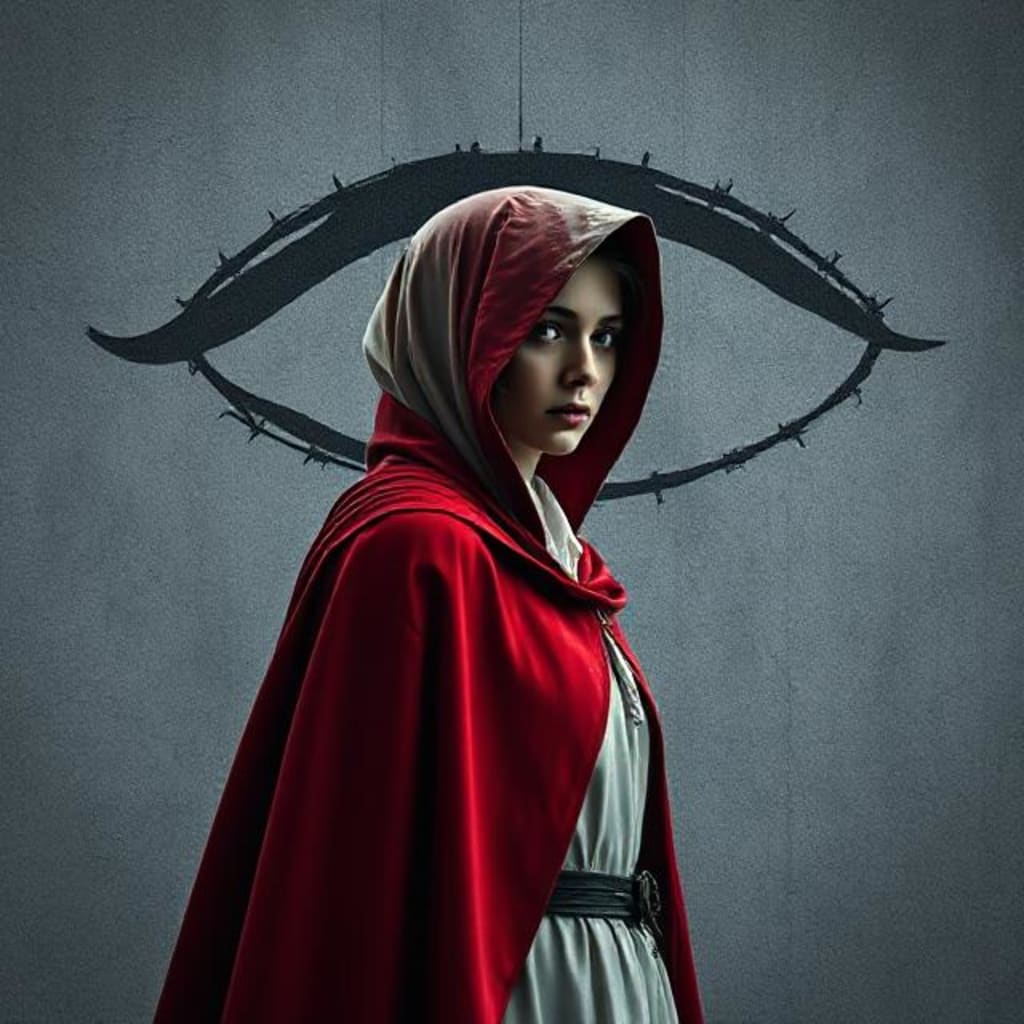
I was not always named Offred.
Once, I had a name.
A job.
A husband.
A daughter.
A choice.
Now, I am property. A vessel. A Handmaid.
I belong to the Republic of Gilead.
Chapter I: The Fall Before the Silence
Before Gilead, we lived freely—or so we thought. My name was June. I worked in publishing. I wore jeans, laughed too loud at coffee shops, and complained about things like slow Wi-Fi and overpriced oat milk lattes. My husband, Luke, and I built a life that felt ordinary and safe. Our daughter, Hannah, was our center.
Then came the change. Slowly. Then all at once.
Terror attacks. Economic crashes. Fertility rates plummeting worldwide. Panic turned into paranoia, and paranoia turned into policy. A movement rose, cloaked in moral purity, wrapped in religion, and obsessed with survival. When they spoke of restoring “order,” many cheered. When they said women needed “protection,” some nodded. By the time they took our jobs, money, and voices, it was too late to scream.
They restructured society overnight. The Constitution was suspended. Women were divided by roles: Wives, Marthas, Aunts, Econowives, and Handmaids—like me.
Chapter II: Red is the Color of Control
I live in a Commander’s house. His Wife—Serena Joy—despises me. She once sang about family values on television. Now she is barren and bitter. I am her humiliation.
Once a month, during “the Ceremony,” I lie between Serena’s knees as the Commander tries to impregnate me. It is not sex. It is not love. It is ritualized rape, performed under scripture. I am not a person. I am a function. A womb with legs.
I dress in red—the color of menstruation, life, blood, and shame. I wear a white bonnet to block my vision, a leash of modesty. I am always watched: by Eyes, by Guardians, by other Handmaids who fear being seen as weak. Trust is a luxury. Words are dangerous.
We greet each other with phrases like:
“Blessed be the fruit.”
“May the Lord open.”
They taste like dust.
Chapter III: A Whisper of Rebellion
Yet beneath the surface, things stir. Whispers pass from hand to hand like contraband. A scratched word inside a closet becomes gospel: Nolite te bastardes carborundorum.
Don’t let the bastards grind you down.
There is a resistance—Mayday—but it is as faint as a rumor and as vital as oxygen. The Commander takes me to secret clubs where men still drink and women are trafficked in lingerie. Hypocrisy is holy here.
Nick, the Commander’s driver, touches my hand longer than he should. With him, I feel human again. Or maybe I’m just using him to survive. In Gilead, love is a risk, but so is apathy.
When the Commander’s previous Handmaid was found hanging from the ceiling, the Aunts said it was suicide. I believe it was rebellion.
Chapter IV: The Cost of Memory
They tried to erase the past. But memory resists.
I remember reading The New Yorker in bed. Teaching my daughter how to ride a bike. Arguing with Luke over burnt toast. Ordinary things have become acts of resistance in my mind.
They took my child. They told me she had a new family. They said I was unfit. She was five. I never saw her again.
That pain—the loss of my name, my child, my autonomy—has become my fire. I write this story, if only in my mind, to keep myself alive. To document the truth in case someone, someday, dares to remember.
Chapter V: When Silence Breaks
One morning, a van arrives. Black. Windowless. Marked by the symbol of the Eye.
Have they discovered Mayday? Or is the Commander discarding me?
Nick finds me in the hallway and whispers, “Go with them. Trust me.”
Every nerve screams as I step inside. Am I saved? Am I dead?
Epilogue: A Future That Questions the Past
[Transcript from the Twelfth Symposium on Gileadean Studies – Year 2195]
“Today, we examine the recently discovered manuscript, presumed to be the recollections of a Handmaid during the Gileadean regime. This account—coded and hidden within a cassette tape—offers a rare, deeply personal glimpse into the moral architecture of a theocracy that weaponized womanhood.
Her story, if authentic, reminds us that oppression rarely shouts—it whispers, builds, and legalizes itself. Gilead fell eventually, as all systems built on cruelty must.
But the real lesson here is not how Gilead ended.
It is how it began. And how quietly we let it.”
— Professor Pieixoto, University of Cambridge Archives
Why This Story Still Haunts Us
The Handmaid’s Tale is not just dystopian fiction. It is a warning.
It speaks to the fragility of rights we take for granted. It shows how a society can slide backward when fear becomes policy, when silence becomes compliance, and when people look the other way.
It reminds us that controlling reproduction is the ultimate form of control.
That language, ritual, and fear can be stronger than bullets.
That erasure begins with words, and ends with identity.
And most importantly—that even in the deepest dark, a single voice can matter.
Let this story be more than a tale. Let it be a mirror.
Because the moment we stop paying attention, Gilead isn't a fiction—
It’s a possibility.
About the Creator
Keep reading
More stories from Hamza Habib and writers in Fiction and other communities.
“Letters to the Ghost Who Lives in My Mirror”
1. The Reflection That Isn’t Mine Every morning, before the world stirs, I face the ghost who lives in my mirror. She’s not like me—at least, not entirely. Her eyes hold stories I don’t remember living. Her lips curl in smiles I never smiled. She wears my face but carries a weight, a sorrow, that feels like a secret tattoo etched beneath my skin.
By Hamza Habib8 months ago in Fiction


Comments
There are no comments for this story
Be the first to respond and start the conversation.