
The Glass Stage
A rising star discovers that fairy tales can shatter louder than glass.

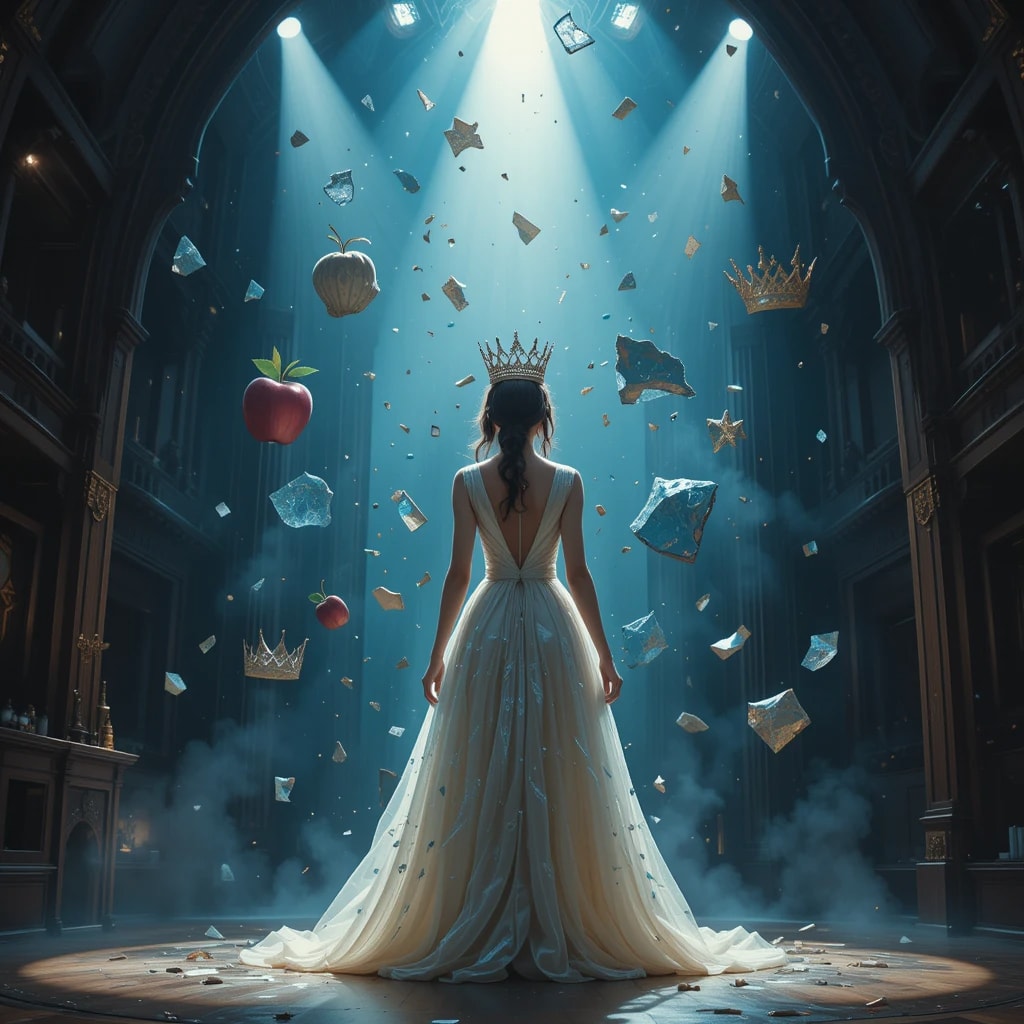
The spotlight had once been her safe place.
When Elara Vale first stepped onto the stage, the world leaned in. She was the girl with the golden voice, the actress who could transform a script into living fire. Every headline called her the future, every studio wanted her face on their posters. And when the kingdom of cinema announced a grand reimagining of its most beloved fairy tale, Elara was chosen to wear the crown.
Snowflower was meant to be her coronation. A glittering budget, a legacy older than her grandparents, and an eager audience waiting to believe again in magic. Elara was the jewel of the project, the princess destined to reign not only on screen but across the industry.
But fairy tales, she would learn, are fragile things.
The first trailer dropped, and instead of applause came thunder. Audiences murmured that something was wrong—too modern, too sharp, too far from the dream they remembered. But the real storm gathered not around the film itself, but around Elara.
Her interviews, meant to charm, turned sour. She dismissed the original story as outdated, questioned the prince’s role, and spoke as though she were rewriting the legend herself. The words spilled like loose jewels, glittering in the moment but impossible to gather once scattered.
And then, politics entered the stage. A careless remark about global conflicts ignited fury far beyond cinema. Alliances fractured, co-stars grew silent, and suddenly the film was no longer a movie but a battlefield.
Behind the scenes, the grand studio panicked. Elara was unpredictable, a flame that refused to stay inside the lantern. They sent mentors, handlers, even the producer himself to guide her words, but she slipped past their grasp every time. To the studio, she was no longer a starlet—they whispered she was a risk.
The film opened with fanfare that died quickly. Numbers tumbled. Reviews scorched. The kingdom that had promised her a crown offered only ridicule instead. For the studio, it was not just a failure—it was humiliation.
And Elara? She tried to smile through it. She leapt into theater, performing in a revival of Eterna, where her voice rose so high and fierce that the audience wept. She bowed to a standing ovation that lasted so long it rattled the rafters. Yet backstage, she trembled. Crew whispered that she had grown fragile, erratic, always asking for her counselor, always afraid the walls might close in.
It was not just whispers anymore. Audiences booed, hecklers hurled insults, and once, rotten fruit rolled across the stage toward her feet. She hired guards just to walk home at night.
And then came the betrayal. Her co-star, the queen to her princess, broke silence in an interview. What began politely soon sharpened into steel: The film failed because of her. No teamwork, no trust, only drama and danger. The queen’s words echoed louder than Elara’s songs ever had.
From there, the unraveling quickened. Roles once promised vanished. Rumors of future projects dissolved into silence. Merchants could not sell even the dolls sculpted in her image—once destined to be collectors’ treasures, now abandoned in clearance bins. The studio began erasing her, pulling posters, shelving screenings, striking her name from whispered plans.
Elara, unwilling to fade, tried to hold the stage on her own terms. She posted online, insisting she was like broken art, beautiful despite the cracks. She filmed herself buying tickets to her own film, trying to laugh as empty seats stretched around her. But the laughter sounded thin, even to her.
Her friends drifted away. Colleagues described her as unpredictable, both kind and furious, both radiant and impossible. She became her own contradiction, adored and mocked, applauded and jeered.
And yet, through all of it, she kept stepping onto the stage.
For even as her fairy tale collapsed, Elara Vale could not stop chasing the light. Perhaps it was pride, perhaps defiance, or perhaps the stubborn hope that somewhere, somehow, an audience still waited for her to speak.
In the end, she stood before a mirror in her dressing room, the applause fading outside. Her crown of glass—once glittering, now cracked—lay on the table. She touched it gently, then lifted it once more onto her head.
Because in the kingdom of stories, a fallen princess still has the right to tell her own.
About the Creator
CelebCast Central
CelebCast Central brings you explosive celebrity scandals, royal drama, Hollywood gossip, and viral stories — unfiltered and uncensored. Follow us for bold takes and trending tales the world is buzzing about!
Keep reading
More stories from CelebCast Central and writers in Fiction and other communities.


Comments
There are no comments for this story
Be the first to respond and start the conversation.