
The Girl Who Waited by the Sea
A True Tale of Red Shoes and Silent Goodbyes

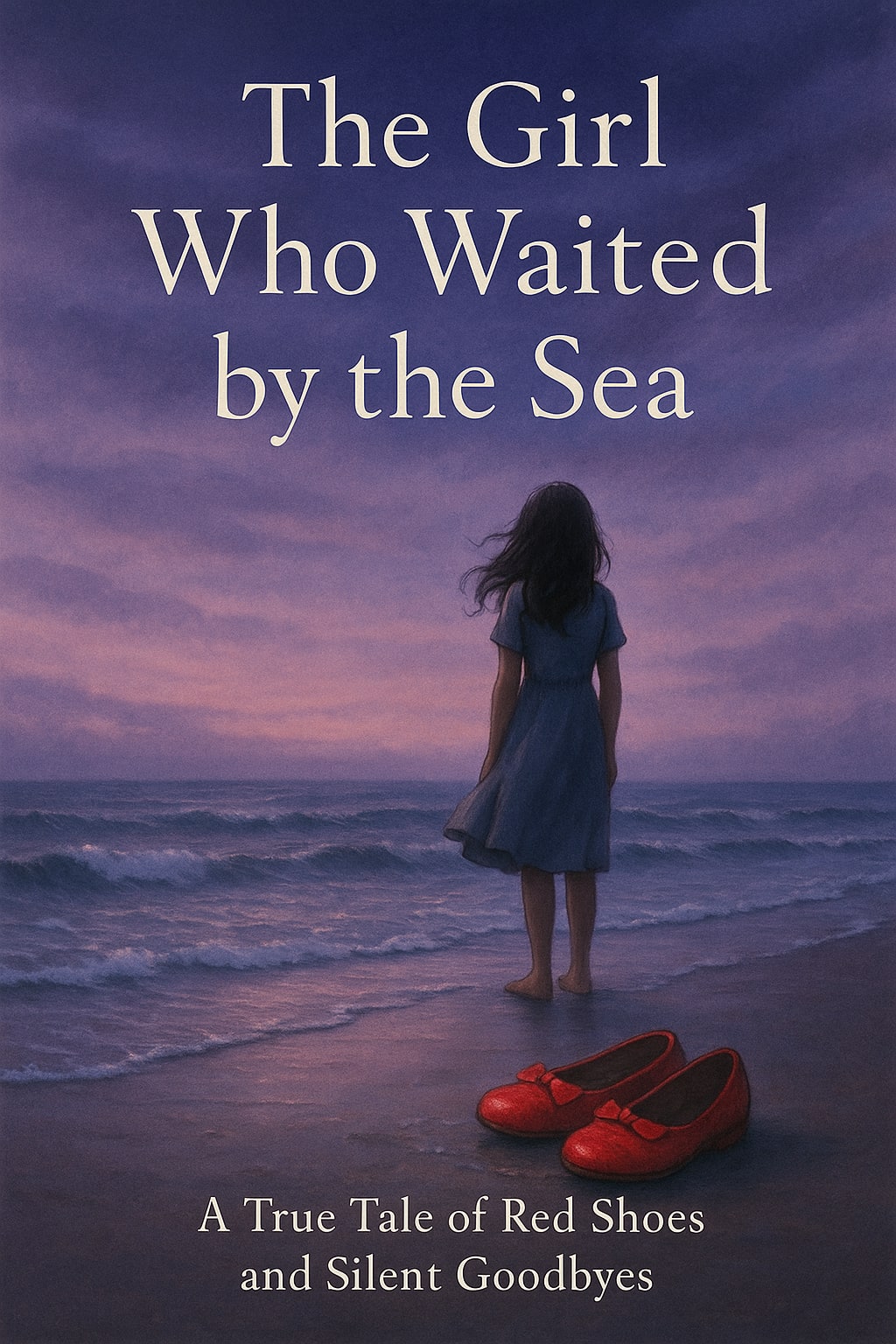
In the soft glow of an early Yokohama morning, where the sea mists dance with cherry blossom petals, a bronze statue quietly watches the waves. She is only a girl—small, delicate, and dressed in a kimono. But what strikes passersby most are her feet: a pair of bright red shoes, polished and untarnished by time.
They call her The Girl Who Waited by the Sea.
But her real name was Kimi Iwasaki—a child whose story has echoed through generations, stitched into the heart of a nation through song, sorrow, and remembrance.
Kimi was born in 1902 in Shizuoka Prefecture, Japan—a time of deep transformation in the country. The Meiji era had ushered in Western influences, progress, and cultural tension. For a young girl like Kimi, none of that mattered. Her world was her mother, Kayo—a single woman fighting to give her daughter a better life in a society that was often unforgiving to women on their own.
When Kimi was just a toddler, her mother made the hardest choice any parent can make: she entrusted her to the care of two American missionaries, Mr. and Mrs. Hewitt. The couple, moved by Kayo’s struggle and devoted to their Christian mission, promised to raise Kimi with love and eventually take her to America, where they believed she’d have opportunities beyond what Japan could offer at the time.
Before they left, they bought her a pair of red leather shoes—something uncommon, almost luxurious. In Japan, red is the color of protection, of life, of childhood innocence. The shoes, tiny and bright, were meant to carry her toward a new future.
But fate intervened in a cruel twist.
As preparations were being made for the journey abroad, Kimi fell ill—struck by tuberculosis. The Hewitts, unable to care for a sick child and fearful of bringing her on the long voyage, left her in the care of a Christian orphanage in Azabu, Tokyo.
She never saw her mother again.
She never left Japan.
And she never wore those red shoes across the sea.
At the orphanage, Kimi's days passed quietly. She watched ships come and go from the distant harbor, unaware that the life promised to her had already slipped away. She died at the age of nine—alone, uncelebrated, and unknown.
But her story didn’t end there.
Yeas later, the poet Ujō Noguchi, who had been close to Kayo Iwasaki, wrote the haunting children’s song “Akai Kutsu” (Red Shoes). The lyrics spoke of a girl taken away by a foreigner, of oceans crossed, and a child never seen again. For most listeners, it was just a lullaby. But for those who knew the truth, it was a whispered eulogy to a child who waited at the harbor for a journey that never came.
In 1989, nearly a century after her death, a statue of Kimi was placed at Yamashita Park in Yokohama, facing the sea. It shows a small girl, standing alone, her eyes fixed on the horizon. On her feet are the famous red shoes—forever clean, forever unworn. Tourists take photos, children leave flowers, and elderly visitors bow their heads in silent remembrance.
No one hears her voice, but everyone feels her presence.
Kimi’s story is not just about loss—it’s about memory.
About how even a small, forgotten life can ripple through time.
About how a mother’s sacrifice, a child’s innocence, and a nation’s song can create a legacy that refuses to fade.
She is more than a statue.
She is a reminder that some goodbyes are silent, but they are never forgotten.
She is the girl who waited by the sea.
And in many ways, she still does.
About the Creator
Syed Umar
"Author | Creative Writer
I craft heartfelt stories and thought-provoking articles from emotional romance and real-life reflections to fiction that lingers in the soul. Writing isn’t just my passion it’s how I connect, heal, and inspire.
Shadows and Light
He grew up in the soft hum of stained glass, where sunlight through colored panes made angels dance on the walls. The church was a fortress, its rituals a rhythm that promised safety. Prayer was a language he learned before he could read, and faith was a comfort as sure as his mother’s hand.
By Sound and Spirita day ago in Fiction



Comments
There are no comments for this story
Be the first to respond and start the conversation.