
The Garden Blooms
Chasing Beauty in a Fleeting Frame
The Garden Blooms
by Kabir Ahmed Chowdury
Flowers have bloomed in the garden. That’s only natural—flowers 'will' bloom in a garden, so what’s there to fuss about? They’ll bloom, spread their fragrance, attract bees, and draw butterflies! Oh, wait—why would bees come? Is there a honeycomb tucked away in the garden for bees to swarm to? Maybe not, but what’s the harm in imagining it? A passing traveler might suddenly pause, struck by the sight.
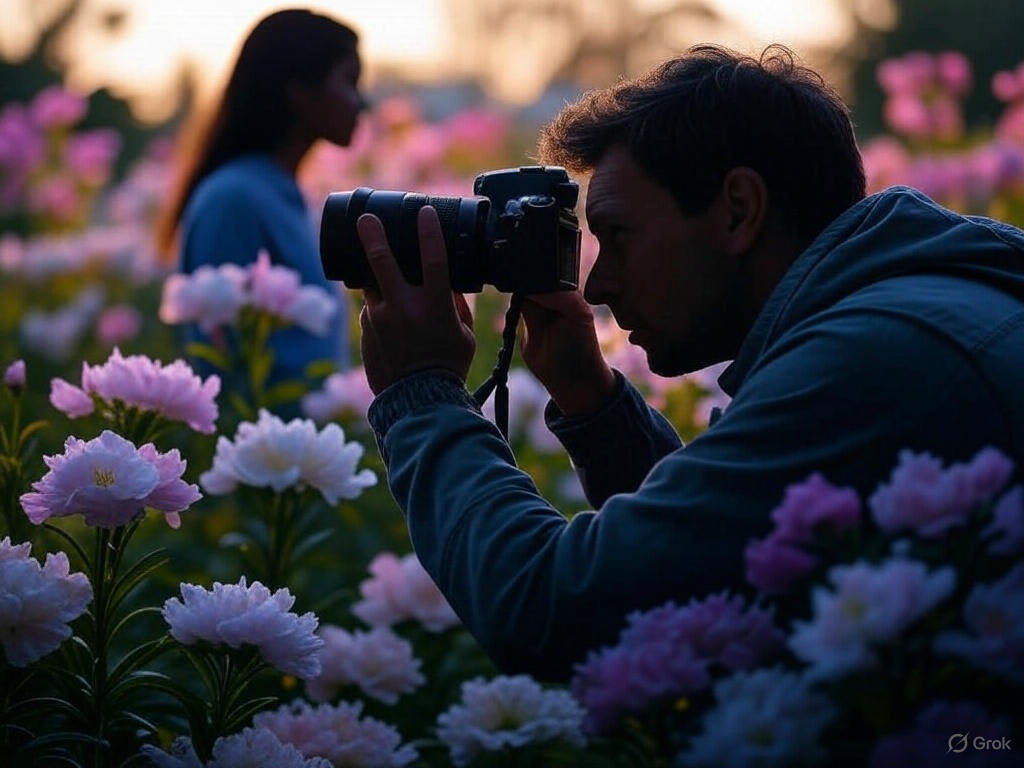
An overzealous wayfarer, with a camera bag slung over their shoulder, roams neighborhood after neighborhood, electrified by the chase. They approach the flower in awe, announcing their presence with a flurry of 'click, click, click'! Then, with a sly smile, they review their discovery—first in a shy, compressed frame, then zooming in from different angles. In their mind, they think, 'No, this won’t do!' So, they aim the camera at the flower again. Twisting their body into odd shapes, sometimes dangling like the letter “D” over an innocent plant, they carry on. The surrounding trees, utterly guileless, can’t protest in human tongue. They endure in silence, registering their dissent in their own quiet way, but the photographer’s ears can’t catch that sound, that protest—not ever. So, ‘click, click’! Another shot! This time, the photographer feels a flicker of satisfaction, glancing at the camera and muttering under their breath, ‘Shah!’—a soft exclamation of triumph. As the photographer’s contented heart revels, the innocent trees return to their original stance. With a joyful grin on their weathered face, the photographer strides toward something new, glancing back at the flower with a sidelong look. Who knows? Perhaps a new image, a fresh metaphor, is being born in that fleeting glance.
This photographer becomes a character in every neighborhood. They seek to elevate themselves to a height they’ve never reached—perhaps a pinnacle even their predecessors never touched. Yet their relentless pursuit stretches from the moment they wake to the instant they sleep. Who knows if, in the haze of dreams, they still chase that summit?
It’s said this photographer has a life, too, one with its own story. In that story, they can’t recall when they last spoke to someone close. Maybe it wasn’t long ago, or perhaps it’s been ages—so long that time’s accounting has slipped away. It feels strange sometimes. Strange, not in the sense of ghosts lurking—why would the word “strange” carry a ghostly presence, and why should it spark such fantastical tales? Perhaps the word ‘strange’ is truly strange because it ‘does’ hint at ghosts!
For the story’s sake, a character needs a name. Naming is tricky—sifting through countless names to find one that fits is no small task. Naming a character is like shaping their very form. Like a high school math problem, let’s say the character’s name is Mithila. Mithila—what a lovely name! The story will flow well with it. The name alone will spark dreams in young readers. Everyone’s greedy for the young! They’re always eager to pull them into their fold, standing on one leg to do so. The young carry a bazaar of dreams, and amidst their kaleidoscope of aspirations, Mithila will surely claim a vast space. One can be fairly certain of that! Halfway through their dreams, these young ones will startle at the scent of romance, thinking, ‘If only I could linger in this dream for a few more seconds!’ So much could be gained in the lonely midnight hours. They’d see Mithila up close! But that’s not to be. If readers got hold of Mithila, what would become of the story? It would end in a single night. The young would lose the day’s worth of musings, left with only sighs of ‘Oh’ and ‘Uff’ echoing in their hearts. Someone, hidden in the shadows, ensures their sleep is broken, as if by rule—to spare them, perhaps, and to show a shred of sympathy for the photographer.
Let’s assume Mithila isn’t strikingly beautiful. Her figure isn’t particularly captivating. But we can’t make her plump—that might enrage the young readers. They mustn’t be provoked, for they are the lifeblood of this story. They’ll dream all day, waiting for night. Mithila will visit them in their dreams, picking up where the last night’s dream left off, perhaps a few minutes earlier. Their plan is precise: last night’s dream will restart a few minutes before its beginning and stretch a few minutes past its end. Thousands of youths, thousands of dreams, millions of thoughts. They’re readers, dream-thirsty wayfarers. In their dreams, a pang rises in their chests, spreading to their stomachs, their lower bellies.
The young dream endlessly of Mithila. By day, they dream; by night, they seek new discoveries in her ever-changing form. They adorn their lives with their own essence, but they’ve yet to find a shore, a resolution. They fail daily to draw her near, yet their fervor doesn’t wane. Their zeal is sudden, perhaps laced with the fleeting allure of youthful desire.
Like anyone else, the photographer, too, falls in love with Mithila one day. Though not old, they’re older than the young dreamers. The photographer knows that at twenty-five, maturity sets in. Few at that age fall headlong into love. But the photographer had no choice. It might seem they were forced into loving Mithila, but no coercion came from her or anyone else. Unknowingly, they grew consumed by her, and when that preoccupation turned to attraction, there was nothing they could do. Was there truly nothing to be done? Some might whisper that question in the shadows, but the answer remains elusive, deliberately veiled in mist.
The photographer’s bond with Mithila begins through the lens. In the camera’s frame, Mithila is far more enchanting than in reality, and the photographer’s heart falls captive to her image. Alongside flowers and birds, Mithila appears to them in a different light. So, at the end of a day’s work, in the quiet of midnight, the photographer gently touches her form in photographs. When she appears in a tender, ethereal guise, their twenty-five-year-old heart can’t resist its own vigor. Night after night, they surrender to their youth, their passion. Then, one night, like the young dreamers, they discover Mithila in a dream. An unmarried man’s mental and physical desires surface in the midnight dreamscape, revealing a Mithila they never imagined in waking hours. Startled, they wake in the dead of night, having glimpsed her in a dream. The dream presses on: Mithila draws near, sits beside them, extends her hand toward theirs. The photographer’s bluish eyes gleam with longing. Mithila places her hand on their left hand. Like winter’s chill, their hand trembles. They imagine themselves an old man, past seventy. Mithila smiles softly. Desperately, they strive to regain composure. To still their trembling left hand, they grit their teeth. To steady themselves, they reach with their right hand to clasp their left, trying to quell the shaking. Slowly, they recover. After an exchange of smiles, they hurriedly reach for Mithila’s hand—but at that moment, their sleep shatters, like a young dreamer’s. They thrash in bed, stunned by the shift in their mind and body. Why, at this age, does this happen? They’re no youth, chasing novel dreams each night, heralding physical changes. But then, they reflect—they, too, are an unmarried youth.
Thus it begins. By day, the photographer throws themselves into work. Like always, they chase flowers and birds. When they aim the camera at a flower, Mithila sometimes appears. When they focus on a bird soaring in the sky, Mithila emerges. With zeal, they snap photos from various angles, pouring their heart’s sweetness into the task. But when they peer at the camera’s tiny screen, they’re stunned—Mithila isn’t there. Instead, it’s the usual flowers, birds, and other familiar sights. The same subjects they’ve photographed countless times, the ones that once earned them accolades and a prize from the nation’s highest dignitary at a grand event. Though surprised, the photographer isn’t disheartened this time.
They realize they’re enthralled by Mithila. So, under various pretexts, they seek her out. Mithila doesn’t disappoint. From casual closeness, they grow nearer. The photographer longs to translate their dream’s story into reality, to fulfill what the dream left incomplete. Mastering their sudden physical urges, they recount the dream’s aftermath to Mithila. The first day, she leaves in a huff, mildly annoyed. But the next day, when they weave the tale with fresh embellishments, Mithila feels drawn in. She listens intently, her face flushing with shy delight. The photographer reads her eyes, sensing they’ve sparked some attraction. When Mithila feigns surprise, she, too, grows intrigued. Something stirs within her, rippling through her very cells. But she doesn’t reveal it, restrained by her sense of femininity—a restraint she never learned but one nature taught her in its subtle way.
The photographer senses the shift in Mithila’s heart. So, they repeat the same story, over and over. Mithila listens but fears stepping into reality. Society looms large, as do fragmented thoughts of the future. The photographer speaks of life’s fleeting pleasures, of how everything ends with death. Mithila nods, a faint smile curling the photographer’s lips.
For photo sessions, Mithila has visited the photographer’s home a few times—alone, in the truest sense. The photographer has captured her in their own style, indoors and out. Mithila is thrilled to be their subject, and the photographer is delighted to craft her image. They want to go far with Mithila, just as she, too, wishes to venture forward.
The photographer dreams of swimming with Mithila in the river that flows by the city. When they discuss it, Mithila can’t say no. But the plan falters: the river beside the city is no place for swimming. What passes for water is a heap of filth. So, their plan falls apart. They turn to other paths, dreaming of losing themselves somewhere far off, in the unknown. Their thoughts take wing, unbidden. Day by day, new ideas emerge, but as plans grow aimless, action falters. In dreams, they dream on. No river sees them swim together. No sky sees them soar, save in the idle bazaar of their thoughts.
One day, Mithila insists on walking miles along the railway tracks. The photographer is stunned to learn she’s never ridden a train. They start to share the joys of train travel, but Mithila, listening in wonder, declares that walking miles on the tracks’ sleepers would fulfill her train-riding dream. When she childishly asks why trains move so slowly, the photographer replies that trains mirror life. Just as life moves slowly toward its destination, a train creeps mile after mile toward its own. Life, inevitably, reaches its final stop, and so does a train, halting precisely at its endpoint. Mithila is struck by the photographer’s confident, philosophical reply.
A railway line runs parallel to the photographer’s home, stretching far into the distance. They don’t know its destination but have walked its path many times—for photos or to keep someone company. Among those companions were a few women, but those connections remained just that—connections, never deepening into personal bonds. This is the first time they’re walking the tracks with a woman whose bond transcends the soul, reaching far beyond. Though the tracks’ narrow sleepers burn under the scorching sun, an inner breeze tempers the heat. The photographer wants to hold Mithila’s hand in the blazing light. She doesn’t refuse, eagerly offering her hand. Her yellow-hued hand finds shelter in the photographer’s brown one. Whether passersby notice or not, the photographer doesn’t care. With her yellow hand in theirs, they sway along the tracks’ sleepers.
The photographer marvels that Mithila’s face shows no fatigue despite panting in the fierce April sun. They realize this is the play of love—love makes it so. So, they invite her for another such adventure. Mithila nods in agreement. With a satisfied heart, the photographer points to the sky, where the sun’s rays pour onto the tracks. The sandy soil below glimmers, soaking up the sunlight. While the heat overwhelms others, the ground fuels the weary travelers’ exhaustion. To others’ eyes, Mithila and the photographer are just another pair of wayfarers. But in their belief, they are far more. The railway sets them apart, uniting them in their own world.
Like birds bickering, one day a spat flares between the photographer and Mithila. Like birds abandoning their nest, they part ways. The photographer buries themselves in flowers and birds, while Mithila retreats to her own world. Lately, the photographer doesn’t dream at midnight. Their sleep doesn’t break. They no longer marvel at their own surrender. Perhaps it’s age or overuse—who knows? But their mind brims only with flowers, birds, and trees. Unknowingly, they drift from Mithila.
One day, alone, Mithila comes to the photographer, hoping to be their subject again. They turn her away, citing a lack of time. Her stunned eyes compose themselves, and she walks away. The photographer focuses on tangible images, convincing themselves they have much to gain from flowers, birds, and trees.
Night falls. Day breaks. The photographer’s busyness grows. Sleepless nights become their companion. Sometimes, they sleep only at dawn; sometimes, dawn arrives at midnight. They lose themselves in images, like a lifelong mute. One night, a forgotten dream peeks through. A yellow hand grasps their left one. Their entire being trembles. Unable to steady themselves, they jolt awake. Their throat parches unseasonably.
Like a young dreamer, the photographer rediscovers themselves, just as before.
----
Author's Note for The STORY
In crafting The Garden Blooms, I sought to explore the delicate interplay between passion, dreams, and the fleeting nature of human connection. The photographer, Mithila, and the vibrant garden serve as metaphors for the pursuit of beauty and meaning in a world that often feels transient. This story draws inspiration from the quiet moments of observation in everyday life—moments where a single glance or a captured image can spark profound emotions and unfulfilled desires.
The narrative deliberately blurs the lines between reality and dreams, reflecting how our aspirations and loves can shape our perceptions. Mithila, as a character, embodies both the muse and the unattainable, while the photographer represents the relentless pursuit of something greater, whether through art or love. The garden, ever-blooming yet indifferent, mirrors the constancy of nature against the ephemerality of human experience.
Writing this piece for Vocal Media allowed me to experiment with a lyrical, almost impressionistic style, inviting readers to linger in the sensory details and emotional undercurrents. I hope this story resonates with those who have ever chased a dream, loved deeply, or found themselves captivated by the beauty of a single, fleeting moment.
Thank you for reading, and I invite you to share your thoughts and interpretations—what blooms in your own garden?
About the Creator
Chowdhury Kabir
Meet Kabir — a Bangladeshi poet, journalist, and editor. His work blends lyrical depth with social insight, exploring themes of love, identity, and humanity across poetry and prose.
Keep reading
More stories from Chowdhury Kabir and writers in Fiction and other communities.
Flower Bloom 369
FLOWER Bloom 2/25/26 Wednesday By Mariann Carroll Karen had been with Tony for 7 years. Tony started acting strangely after her surgery. He would mow the lawn in the rain and be on his cellphone. He started pushing Karen away. Tony came clean about seeing someone. Karen moved out two months later. Karen moved in with a friend. She felt betrayed.
By Mariann Carroll6 days ago in Fiction
The Stowaways
The cabin was narrow: a dark world that smelled of wood and polish. For Silas, it was a palace of endless bounty, every corner revealing something new and wonderful. He pressed his body against the side, feeling the rhythmic vibration of the great vessel’s heart.
By Sam H Arnold2 days ago in Fiction




Comments (1)
Mind blowing story