
The Fox Who Wanted to Be Ordinary
A clever fox grows weary of her reputation and longs for the simple joys of ordinary life in the forest.

By Ubaid Published 4 months ago • 3 min read
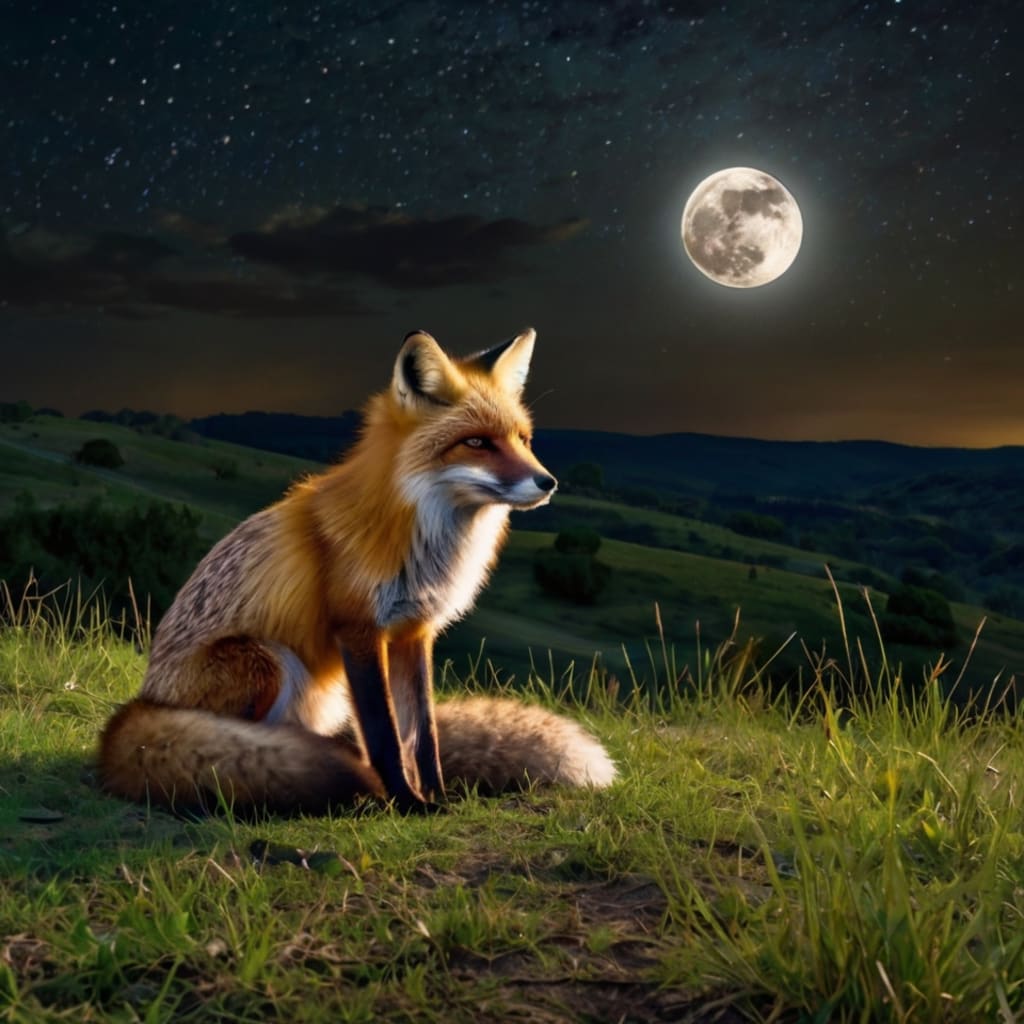
- The Fox Who Longed to Be Ordinary
- BY:Ubaid
High on a hill, a fox sat quietly, gazing down at the lush green meadow below. The forest was alive with activity. Deer grazed on fresh grass, predators lurked in the shadows, and some animals feasted on their hard-earned prey. Birds darted across the sky in flocks, their wings glinting in the sunlight. The gentle river sparkled as animals stopped by to drink.
It was a cheerful day in the forest—but the fox was not cheerful. A heaviness rested on her heart.
In the forest, she held an important position. She was the trusted advisor of the lion—the undisputed king. Every decision the lion made carried her wisdom behind it. Other animals looked at her with respect and praised her cleverness. Her reputation stretched beyond the forest; even humans had coined the phrase “as cunning as a fox.”
Yet, the fox felt no joy in this.
At first, she had been proud of this honor. She strutted about with her head held high, reveling in the attention and dignity her role brought. But over time, the weight of this image became a burden.
When she saw the other animals laughing freely, playing tricks on each other, and rolling about in the grass without care, her heart ached. She, too, longed to laugh loudly at silly jokes, to tumble in the fields, or to tug playfully at the bear’s long fur and run away. But the moment she tried to join in, the animals would stop and stare at her with surprise, as though such behavior was beneath her. Their judgment made her withdraw in shame.
She did not see herself as extraordinary—she only wanted to be like them. But her reputation, built on a few chance incidents, kept her trapped in a role she no longer wanted.
She thought of those famous moments that made her “wise.”
There was the time she, the lion, and the wolf had hunted together. When the lion asked the wolf how the catch should be divided, the wolf naively suggested sharing it equally. The lion killed him instantly for his insolence. When the same question was turned to the fox, she quickly declared, “All three belong to the lion.” The lion was pleased, and the fox was praised as shrewd and clever. Yet in her heart, she knew it was pure luck—the wolf had simply answered first.
Another time, she had spotted a crow holding a piece of cheese in its beak. She had flattered the bird with sweet words until it, puffed up with pride, opened its mouth to caw and dropped the cheese. She had enjoyed the meal, but deep down, she knew it wasn’t intelligence—just the crow’s foolishness.
And then there was the incident in the vineyard. The ripe grapes looked delicious, but she could not reach them no matter how hard she tried. Embarrassed by her failure, she muttered, “Those grapes must be sour,” and walked away. Luckily, no one was there to see her defeat, otherwise her clever image might have been tarnished.
All of this weighed on her now. She was tired of being admired for accidents and half-truths.
That day, she sat hungry and alone on the hill, refusing to hunt. Night fell, and the animals gathered under the glowing full moon. The meadow was bathed in silver light, while soft clouds drifted across the sky. The wolves howled restlessly, earning irritated glares from the lion, who ignored them only because his belly was full.
Amid the chatter, a debate broke out. Some animals claimed that the moon was moving across the sky, while others insisted that the clouds were the ones drifting past. Voices rose, tempers flared, and soon the argument turned into a quarrel.
The lion roared mightily, silencing them all.
“Who are you to decide? This is a matter for the wise one!” he declared.
Every eye turned to the fox.
Her heart sank. She knew nothing about the movements of the moon or clouds. Anger welled up inside her—she was trapped again in the role she despised. Then, an idea struck her. Perhaps this was her chance to free herself. If she gave an utterly foolish answer, maybe they would stop looking to her for wisdom.
She stood up and said, “Brothers and sisters! If the moon is still, then surely the clouds are moving. But if the clouds are still, then surely the moon is moving.”
The meadow fell silent. The animals looked at one another, confused. The answer made no sense. But because it came from the fox—whose words they always believed—they erupted in applause. Even the lion nodded in approval, impressed once again by her “cleverness.”
The fox felt no pride. Quietly, she turned away and slipped into the shadows of the forest. She walked toward an unknown place, leaving behind the applause, the burden of her reputation, and perhaps her role as the forest’s so-called wisest creature.
She no longer wished to be clever. She only wished to be free.
About the Creator
The devolution of the genteel ideal into a glorification of drunkenness🥂
In Primshire, the inhabitants prided themselves on their genteel manners and dignified demeanor. Tea parties, poetry recitations, and ballroom dances were the lifeblood of social gatherings. The Primshire gentry held their heads high, for they were the epitome of refinement and decorum.
By Antoni De'Leon7 days ago in Fiction
A Dart at Dusk
Seconds ago, the sullen sun set on the two of us… my exuberant furry companion and me. A fresh breeze embraces us, delivering welcome relief from the day’s oppressive heat. His typical stumbling and staggering along — apace with a sloth — has turned into trip-trapping, high-stepping, almost skipping along.
By Angie the Archivist 📚🪶a day ago in Petlife




Comments
There are no comments for this story
Be the first to respond and start the conversation.