
The Forgotten Kingdom of Mohenjo-Daro
The First City of Human Civilization

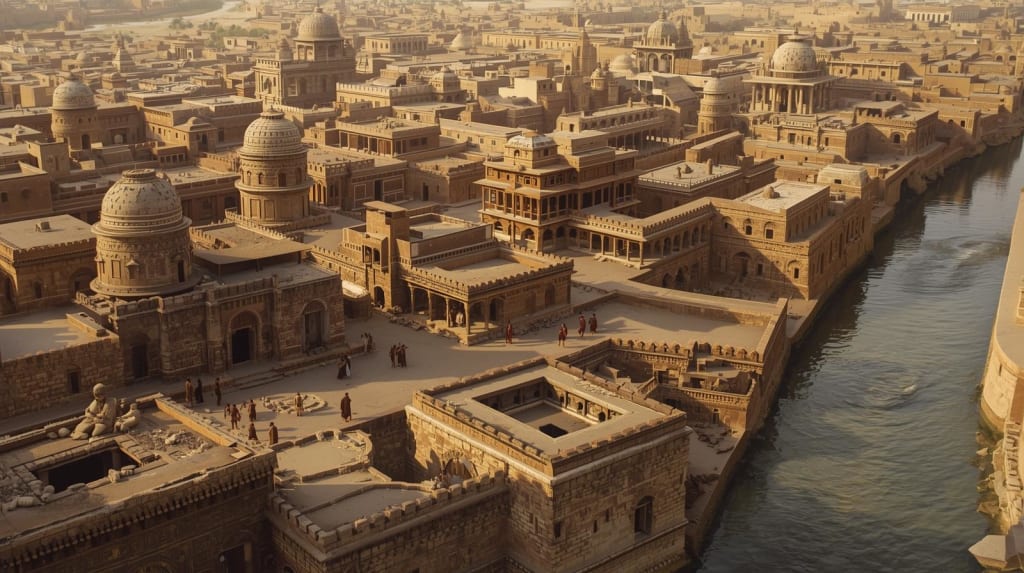
Long before Rome, before Egypt’s pyramids, and even before the Great Wall of China — there stood a city so advanced that its secrets still amaze scientists today. That city was Mohenjo-Daro, the “Mound of the Dead.”
More than 4,500 years ago, along the banks of the mighty Indus River in what is now Pakistan, a great civilization flourished. It was one of the world’s first urban societies, built with astonishing skill and intelligence. Streets were straight, houses were made of baked bricks, and every neighborhood had a drainage system — something even medieval Europe would not develop for thousands of years.
Mohenjo-Daro was part of the Indus Valley Civilization, home to over 40,000 people. Archaeologists have found evidence of carefully planned roads, public baths, and even water wells in nearly every home. The famous Great Bath, a massive public pool made of brick and bitumen, may have been used for spiritual cleansing — showing how early people already valued both hygiene and ritual purity.
There were no kings, no grand palaces, and no massive statues. Unlike Egypt or Mesopotamia, the people of Mohenjo-Daro lived as equals — a society based on order, trade, and cooperation rather than conquest. They were farmers, traders, craftsmen, and artists who used a still-undeciphered script — the Indus Script — carved into seals and pottery.
They traded as far as Mesopotamia, sending goods like cotton, beads, and precious stones by river and sea. The city thrived for centuries, but suddenly — around 1900 BCE — it was abandoned.
Why?
No one knows for sure. Some scientists believe the Indus River changed course, flooding or drying the region. Others think climate change caused famine, or that invaders destroyed the city. But no battle marks, no burnt layers, no mass graves were ever found. It simply... disappeared.
Today, Mohenjo-Daro lies silent under the sun — its crumbling bricks whispering stories of the people who lived, loved, and dreamed there. A civilization so advanced, yet so humble, that it reminds us how fragile human progress can be.
The ruins still stand, surrounded by desert winds — a timeless reminder that even the greatest cities can vanish, but their legacy never truly dies.
About the Creator
Shohel Rana
As a professional article writer for Vocal Media, I craft engaging, high-quality content tailored to diverse audiences. My expertise ensures well-researched, compelling articles that inform, inspire, and captivate readers effectively.
Keep reading
More stories from Shohel Rana and writers in Fiction and other communities.
The Lost City Beneath the Sea
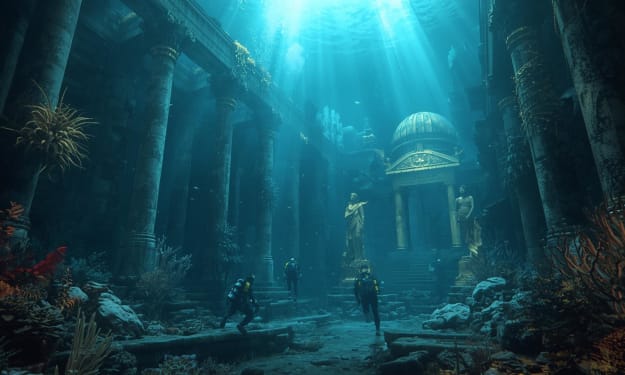
The Lost City Beneath the Sea For thousands of years, people have spoken of a city more beautiful, more powerful, and more advanced than any that came after it — Atlantis. A kingdom said to have vanished beneath the waves in a single day and night. Was it real, or only a legend?
By Shohel Rana5 months ago in Fiction
Bomb Scare
It was 2027, and the world never thought it would happen. A missle hit the United States, but it wasn't where they had anticipated. A little town in the northeast was hit by a missile strike, they didn't know why, and they didn't know exactly where it hit, but they did know it was a coastal community, somewhere between Maine and Delaware.
By Gregory Payton7 days ago in Fiction
Worth the Wait: Puerto Viejo, Costa Rica
Beach bumming in a small Caribbean beach town sounded like a perfect way to end our 6-month trip through Mexico and Central America. Or so we thought. The foul, fishy stench of rotten seaweed hit our nostrils as we stepped from the cramped bus and looked out at a rather depressing, empty, and underwhelming black sand beach. It was pouring with rain, and we had to quickly fish out our ponchos. We thought, this couldn’t be it, could it?
By Sh*t Happens - Lost Girl Travel6 days ago in Wander


Comments
There are no comments for this story
Be the first to respond and start the conversation.