

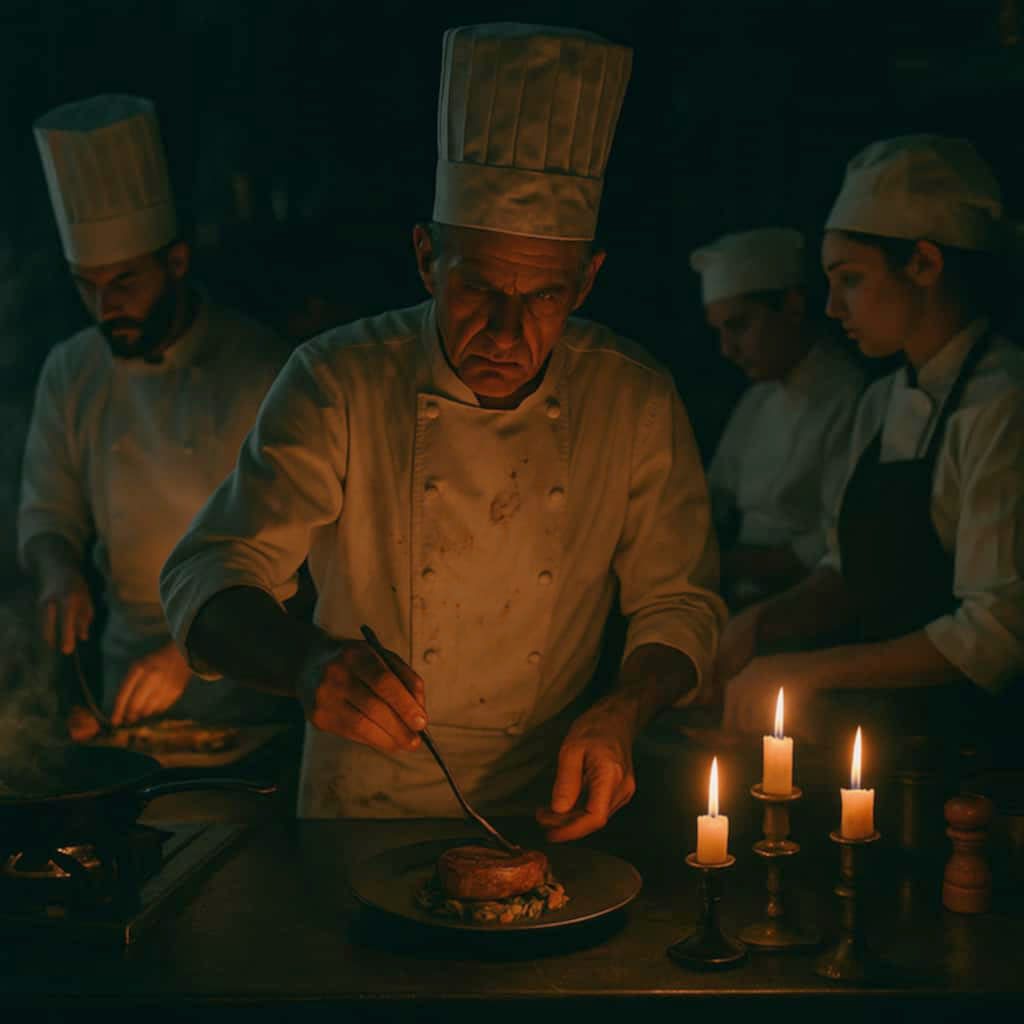
Michel Ardoin was a culinary maestro.
His restaurant, La Dernière Bouchée—The Last Bite—sat on a cobbled Parisian street, tucked like a dark gem beneath flowering iron balconies. Celebrities, presidents, royalty—people came from every corner of the globe to taste his creations. His plates were art, his flavors symphonic, his meats... unparalleled.
What no one knew was that they had tasted a different kind of rarity. One not listed on the menu.
Behind the velvet-draped dining room, past the immaculate kitchen, there was a steel door. No guests ever saw it. Only Michel’s most trusted staff had the key—his sous-chef Henri, the butcher Claudine, and the silent, skeletal dishwasher simply known as Luc.
The meat came in crates marked as “exotic imports.” But inside were not rare deer or jungle fowl. They were people.
It started decades ago, during Michel’s years as a war cook. He’d prepared meals for soldiers stationed at makeshift camps. One harsh winter, cut off from supplies and surrounded by death, he had made a choice. A horrifying, unforgettable choice. He served what was available. And the men ate. And lived.
But something stayed with Michel—not the guilt, but the flavor.
Years later, with the Michelin stars glittering above his name and the critics licking his boots, Michel found ways to procure what he called “l’essence humaine.” The flesh of the lost, the unwanted, the anonymous. Runaways, drifters, and even guests who visited alone and never returned. The team was careful. Clinical. Efficient.
The secret to his signature dish—Tartare de Minuit—was in the cut: thigh muscle, aged in saffron brine, seared for four seconds each side. It melted on the tongue.
People wept when they ate it.
---
Trouble started on a Tuesday.
A food critic from Japan, Yuki Tanaka, had made an unannounced visit. She didn’t speak, didn’t photograph, didn’t take notes—just ate with a kind of cold intensity. Afterward, she slipped out without a word.
Michel’s instincts prickled.
The next day, a new inspector from the Paris health department arrived. Routine, he said. But he lingered near the meat lockers, asked too many questions about sourcing, and raised an eyebrow at Claudine’s nervous smile.
Henri suggested moving operations to their backup site in Marseille. Michel disagreed.
Why? Because of his arrogance and pride. He considered himself a culinary artist, and his current restaurant in Paris was his masterpiece. In his mind, abandoning it would be like a painter fleeing their own gallery. He believed his fame and charm made him untouchable—and that the world would forgive any “indulgence” in the name of art.
“We're not street vendors,” he growled. “We are art. The world will always forgive art.”
---
By Friday, the air in the kitchen felt thick. Tense. Luc dropped a plate for the first time in ten years.
That night, a waiter named Theo disappeared.
“He quit,” Michel said flatly. But Claudine found blood on the floor near the steel door. Henri noticed the new tartare had a different texture.
No one said anything.
But someone else did.
---
On Sunday morning, dozens of customers stood in line before dawn—more than ever before. Inside, undercover journalists occupied three tables. Hidden cameras blinked softly from between the folds of napkins.
Michel didn’t notice.
He was perfecting the night’s pièce de résistance: Ragout de l’Oublié—a slow-cooked stew served with bone marrow foam. It was made from a man who had wandered into the back alley three days ago asking for water.
---
Dinner service began like a symphony.
Michel orchestrated the plates with a maestro’s hand. Guests moaned in delight. Laughter bubbled from the wine-fueled conversations. In the kitchen, however, sweat ran cold.
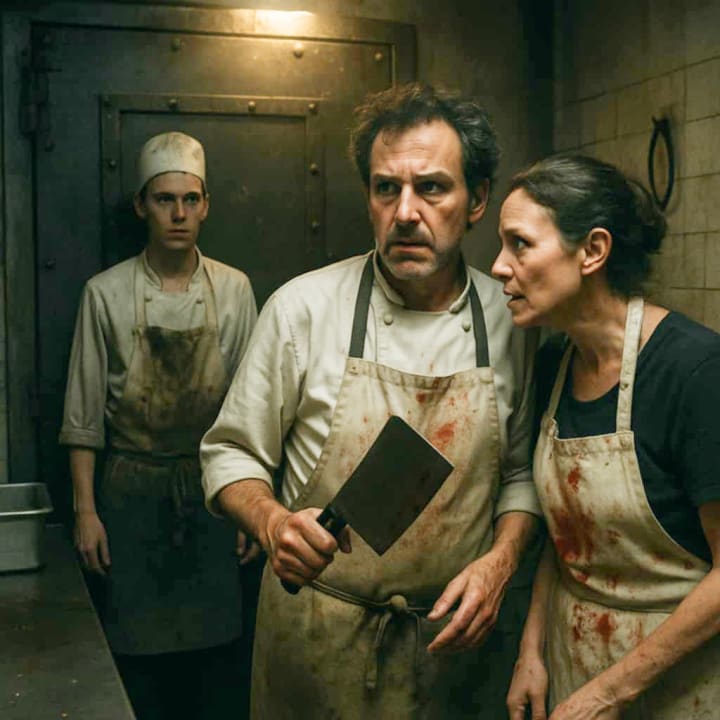
At 9:17 p.m., the steel door was opened. And this time, the smell was off. Luc looked pale. Henri’s hands shook. Claudine whispered, “This isn’t sustainable.”
Then, flashing lights painted the walls red and blue.
Police. Dozens. Swarming the dining room.
They’d raided the Marseille site the day before. Found bones. Teeth. Clothing.
Tonight, they came for the crown jewel.
---
Michel didn’t resist. He simply set down his knife and folded his hands. Claudine burst into tears. Luc didn’t move. Henri tried to run—but was caught before he reached the alley.
In the freezer, they found the remains of at least fourteen individuals. Some still whole. Others vacuum-sealed, tagged, and dated like fine cheese.
A couple reporters, other guests vomited.
Michel was handcuffed while still wearing his pristine chef’s jacket.
---
The world exploded.
Headlines screamed:
“Culinary Cannibal Exposed!”
“Last Bite: The Gourmet Butcher of Paris!”
“Michel Ardoin: Monster in White.”
TV specials aired interviews with former guests. Some sobbed. Others defended him.
“It was the best meal of my life,” said a Hollywood director. “I don’t regret it.”
The trial lasted six months. Every plate served was cataloged. Hundreds of families demanded to know if their missing loved ones had been… consumed.
Michel’s only defense?
“They tasted joy.”
He was sentenced to life without parole. Claudine and Henri received twenty years. Luc was declared legally insane and sent to an asylum for life.
---
Years later, a new restaurant opened across the street from the shuttered La Dernière Bouchée. It was vegan.
Michel died in prison, alone. natural death. painless?
But somewhere, a black-market recipe book with a crimson leather cover is whispered about in underground circles. Its title?
“The Final Course.”
And its author?
M.A.
About the Creator
E. hasan
An aspiring engineer who once wanted to be a writer .
Lightning Never Strikes Twice
The distant rumble, the sudden deluge, the crescendo of sound, the flash of light, the explosive energy — it never gets old. I became an amateur storm chaser about two years ago. My wife, Cindy suggested it. Sort of. She said, "Alex, you know this cancer is killing me. I've come to terms with that, but you're smothering me. Go join a band, write a book, or become a storm chaser, for all I care. I love you, but you need a hobby."
By Julie Lacksonen3 days ago in Fiction
A Historic Declaration
We the People of the Husbands of the United States of America, in Order to form a more perfect Union, and I mean you...with me...establish Justice, insure domestic Tranquility, provide for the common defence, promote the general Welfare, and secure the Blessings of Liberty to ourselves, after Puberty, do ordain and establish this Declaration of Co-Dependence.
By Gerard DiLeo5 days ago in Humans



Comments
There are no comments for this story
Be the first to respond and start the conversation.