
The Farmer Who Spoke the Language of Animals
,When a wise farmer overhears his bull and horse talking, he decides to teach one of them a life-changing lesson about honesty and deceit.

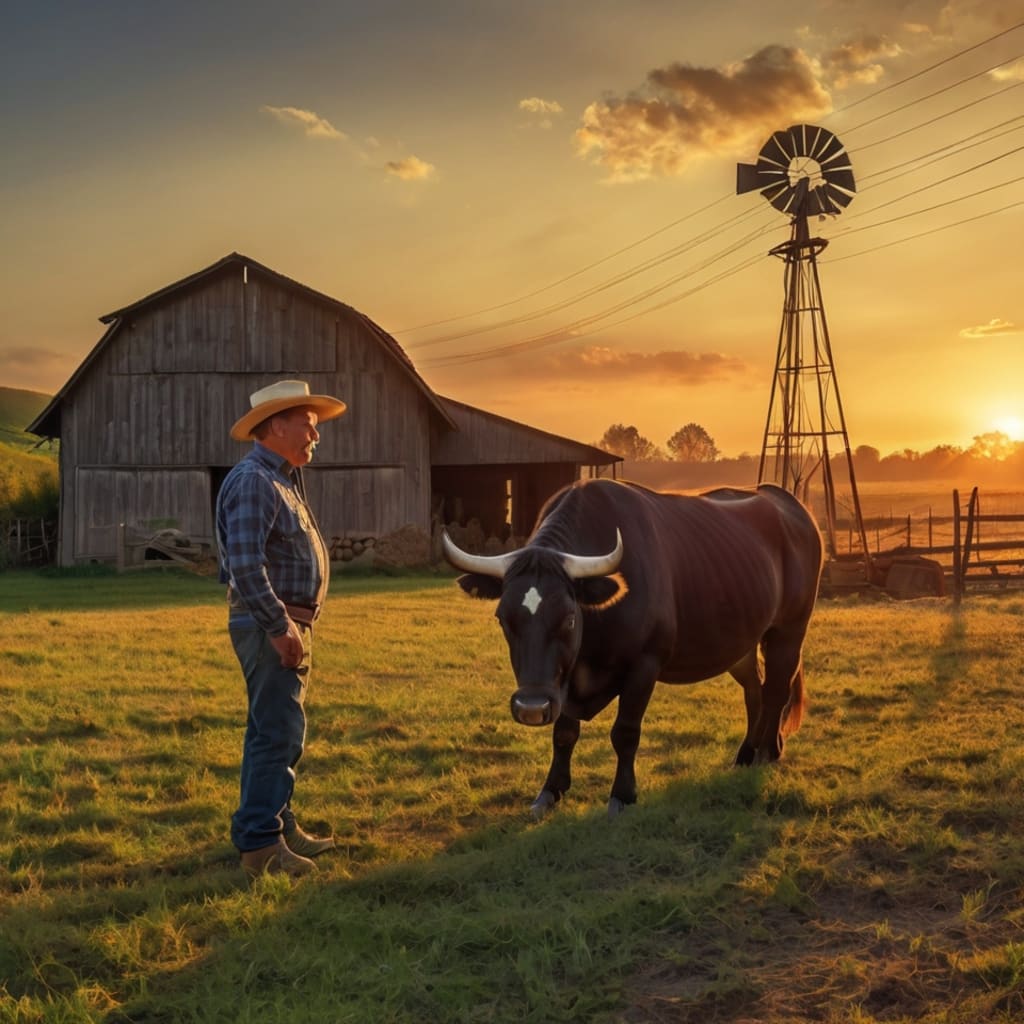
The Farmer Who Understood Animal Language
BY: Ubaid
Once upon a time, in a peaceful little village surrounded by green fields and gentle hills, there lived a kind-hearted farmer named Abdul Rehman. He was an ordinary man with one extraordinary gift — he could understand the language of animals. None of the villagers knew about this rare ability; it was a secret he kept to himself.
One quiet evening, as the sun dipped below the horizon and the birds returned to their nests, Abdul Rehman went to his barn to feed his animals. The soft rustling of hay mixed with the warm scent of straw filled the air. As he spread the fodder, he suddenly heard two familiar voices — his bull and horse — talking to each other.
Curious, Abdul Rehman paused and listened carefully.
The bull spoke first, his voice heavy with sadness.
“Ah, dear horse,” he sighed, “you live such a royal life! Every day, your coat is brushed and oiled until it shines like silk. You get fine chickpeas to eat, and when the master rides you, the people admire you from afar. But look at me! I toil all day under the hot sun, plowing the fields while the whip lashes my back. And when I return home, all I get is a bundle of dry, tasteless hay.”
The horse neighed proudly and said, “Oh, my poor friend! Don’t be so sad. If you do exactly what I tell you, you too can live a life of comfort and rest — just like me.”
The bull’s eyes lit up with hope.
“Tell me quickly, dear horse! What should I do to enjoy such an easy life?”
The horse smirked and whispered, “It’s simple. Tomorrow, when the servants come to take you to the field, don’t let them touch you. Act wild — show them your horns, kick the ground, lie down, refuse to eat, and even foam at the mouth. Pretend to be terribly sick. Then they’ll think you can’t work anymore, and they’ll let you rest. You’ll get to eat fresh green fodder all day while I do the hard work.”
The horse laughed at his own cleverness, unaware that Abdul Rehman had heard every word. The farmer smiled faintly to himself and thought, So, this proud horse thinks he’s clever. I’ll make sure he learns his lesson soon enough.
The next morning, the servants came to take the bull to the fields. But the bull, following the horse’s advice, began acting exactly as he had been told. He snorted, rolled on the ground, refused to move, and even faked illness so well that the frightened servants ran straight to the farmer.
“Sir!” they cried. “Your bull is sick! He’s lying down and won’t eat a thing!”
Abdul Rehman pretended to be deeply concerned. After inspecting the bull carefully, he sighed and said, “Poor thing. He must be exhausted from all his hard work. Let him rest for now. The fields still need plowing — so from today, the horse will take his place until the bull gets better.”
The horse’s eyes widened in disbelief. He tried to neigh in protest, but it was too late. The servants harnessed him to the plow and led him to the field. Under the blazing sun, the proud horse struggled with the heavy plow. His shiny coat became dusty and dull, and his body ached all over. By the end of the day, he was drenched in sweat and trembling with exhaustion.
Now the horse understood what the bull had endured every single day.
He whispered to himself, “Oh, what a fool I was! I gave him terrible advice — and now I’m paying for it.”
A week passed. The farmer, still curious, decided to test his animals again. He placed both the bull and the horse in the same stall and scattered some fresh grass before them. Hiding behind a wooden post, he listened once more.
The bull, looking cheerful and well-fed, said to the weary horse, “Oh, thank you, my friend! Your advice was golden. I’ve been resting all week, eating fresh, juicy grass. This is the life of a king!”
The horse’s heart sank. He realized the bull had no intention of returning to work. Thinking quickly, he said in a serious tone, “Dear bull, I’m sorry to say this, but I overheard the master talking today. He said you’ve become useless and plans to sell you to the butcher soon. That’s why he’s been feeding you the best food — to make you healthy before he sells you.”
The bull’s eyes grew wide with fear. He began trembling like a dry leaf in the wind. “Oh, no! What should I do now? Please, my friend, save me!”
The horse replied wisely, “If you want to live, stop pretending to be sick. Tomorrow, act strong and healthy. When the master sees you fit and fine, he’ll keep you for the fields.”
From his hiding spot, Abdul Rehman couldn’t help but laugh out loud. The clever horse had learned his lesson well — and now he was using his wit for good instead of mischief.
The next morning, when the farmer visited the barn, he found the bull standing tall and healthy, ready to return to work. Smiling, Abdul Rehman said, “Ah, my strong friend! It seems you’ve recovered. Let’s get back to the fields.”
From that day forward, the bull worked happily without complaint, and the horse never again gave foolish advice. The farmer continued to listen quietly to his animals, learning something new about wisdom and honesty every day.
And so, the story of Abdul Rehman’s barn became a lesson for all —
“Bad advice may harm others, but it always returns to punish the giver.”
About the Creator
Peace
Something's happening 'round here. Some folks just seem to be gettin' happy ever since Captain Groovy decided to run for public office. He decided to run as an independent on the Peace ticket and name the party the Groovy Party. The Groovy Party was the laughingstock of the political arena, their views on hate and violence were seen as ridiculous. No one took the party seriously, that is, until Captain Groovy became the party leader.
By John Scipio3 days ago in Fiction


Comments
There are no comments for this story
Be the first to respond and start the conversation.