
The Fall of Afghanistan
"Unraveling in Kabul: The Afghan Crisis of 2021"
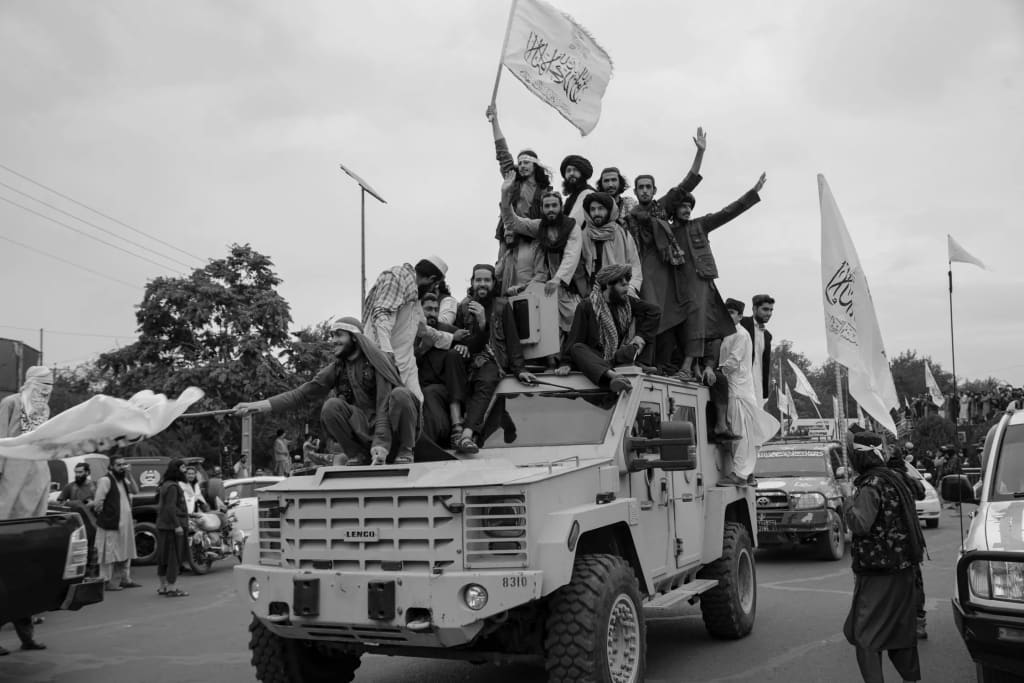
The fall of Afghanistan in 2021 is a complex and deeply significant story that unfolded over the course of several months, with numerous factors contributing to the swift collapse of the Afghan government and the resurgence of the Taliban.
1. Foreign Troop Withdrawal: The story begins with the decision by the United States and its NATO allies to withdraw their troops from Afghanistan, following a 20-year military presence. This withdrawal process was initiated in May 2021 and set to be completed by August 2021. The decision left a significant security void and removed vital support for the Afghan government.
2. Taliban's Steady Advance: Prior to the withdrawal, the Taliban, an insurgent group, had been steadily gaining ground across Afghanistan. They capitalized on the vacuum created by the departing foreign troops and launched offensives to capture key provinces and districts.
3. Weak Governance and Corruption: The Afghan government, led by President Ashraf Ghani, faced deep-seated issues. Corruption was rampant, governance was weak, and public trust in the government had eroded over the years. These factors undermined the government's ability to maintain control and provide basic services.
4. Doha Agreement and Negotiations: In February 2020, the United States and the Taliban signed the Doha Agreement, which aimed to facilitate a political settlement and the withdrawal of foreign troops. However, this agreement did not lead to a comprehensive peace deal, and violence continued to escalate.
5. Rapid Taliban Advances: During the summer of 2021, the Taliban intensified their offensive, capturing provincial capitals and major cities at an alarming rate. Afghan security forces often offered minimal resistance, and the Taliban's territorial gains grew rapidly.
6. Kabul's Fall: On August 15, 2021, the Taliban entered Kabul, marking a pivotal moment. President Ghani fled the country, and the Afghan government effectively collapsed. The Taliban declared themselves in control of the capital, signalling their return to power.
7. Chaos and Panic: The fall of Kabul triggered scenes of chaos and panic at the Kabul airport, as Afghans and foreign nationals rushed to evacuate. The international community grappled with how to respond to the unfolding crisis.
8. Humanitarian Concerns: As the Taliban regained power, concerns arose about human rights, particularly the status of women and minorities under their rule. Afghans who had worked with International organizations and foreign forces faced threats and uncertainty.
9. International Diplomacy: Diplomatic efforts commenced to engage with the Taliban-led government and address the evolving situation in Afghanistan. Many countries, including the United States began evacuating their nationals and at-risk Afghans.
10. Geopolitical Implications: The fall of Afghanistan had significant geopolitical implications. Neighboring countries, such as Pakistan, Iran, and China, watched closely as the situation evolved, concerned about the potential for instability and refugee flows.
11. Continuing Violence: In the wake of the fall of Kabul, violence persisted in Afghanistan. The Taliban faced resistance from some pockets of Afghan forces and opposition groups, leading to ongoing clashes.
12. Economic Challenges: Afghanistan's economy suffered as international aid dwindled, and the country faced isolation. The financial system struggled, and basic services, such as healthcare and education, faced disruptions.
13. International Aid and Humanitarian Efforts: Humanitarian organizations worked to provide assistance to the Afghan people, but access to vulnerable populations remained challenging due to security concerns.
14. Taliban's Pledges: The Taliban leadership attempted to project a more moderate image on the international stage, pledging to respect human rights and not harbour terrorist groups. However, skepticism remained about their true intentions.
15. Evacuation Efforts: The evacuation of foreign nationals and at-risk Afghans became a major international operation. Many countries set up evacuation missions, but thousands of Afghans were left in uncertainty.
16. Resettlement of Afghan Refugees: The fall of Afghanistan led to a wave of Afghan refugees seeking safety in neighboring countries and beyond. The global community faced the challenge of accommodating and integrating these displaced individuals and families.
17. International Diplomacy and Sanctions: Nations grappled with their diplomatic approach to the Taliban-led government. Some recognized the new regime, while others maintained a wait-and-see approach, imposing sanctions to influence their behavior.
18. Reconstruction and Nation-Building Challenges: The fall of Afghanistan raised questions about the legacy of the 20-year international effort in the country. It highlighted the difficulties of nation-building and the challenges of ensuring a stable and prosperous Afghanistan.
19. Afghan Voices: Throughout these events, Afghan civilians' voices often went unheard as they faced immense uncertainty and upheaval. Many sought to express their hopes for a peaceful and prosperous future.
20. Ongoing Uncertainty: The fall of Afghanistan left significant uncertainty about the future of the country, regional stability, and international security. It marked the end of a lengthy military intervention and raised many pressing questions about the road ahead.
In summary, the fall of Afghanistan in 2021 was a deeply consequential and multifaceted event. It represented a dramatic shift in the country's political landscape and left many unanswered questions about the future of Afghanistan and its people.
About the Creator
Keep reading
More stories from writers in Fiction and other communities.
Off the Book
It ended like every other stupid idea. Badly, and alone. I’m researching digital confession ethics, he said. A tech ethicist. He gestured at floating data I couldn’t see then pulled out a physical notebook. Actual paper, fountain pen. He held it up like he was showing me scripture.
By Nicky Frankly7 days ago in Fiction
The Breaking of a Union
Hephaestus had never been especially lucky with love. So, watching Aphrodite and Ares squirm in the net he’d made to catch them cheating didn’t particularly surprise or anger him. He crossed his arms and stared at them as they blindly groped for a way out. Finally, Aphrodite’s eyes lifted and met his. She scowled at him and lifted her chin defiantly. The irate spark in her gorgeous gray eyes made his heart leap despite himself.
By Morey Guntzabout 5 hours ago in Fiction
The Piggy Project
I’ve had so many names in this life I lose track of which ones were ever really mine and which ones I wore because someone needed me to. Some were handed to me before I had words to refuse them, before I knew what they meant, before I knew I could say no. Most weren’t meant to hurt. That doesn’t mean they didn’t leave marks. Marks that told me who I belong to, who I am by way of who claims me, recognizes me in the good and bad, who walks beside me.
By Fatal Serendipity3 days ago in Confessions


Comments (1)
Very interesting! Great to read about!