
The Echoes of Tomorrow
When the Fear of Loss Becomes the Loss Itself

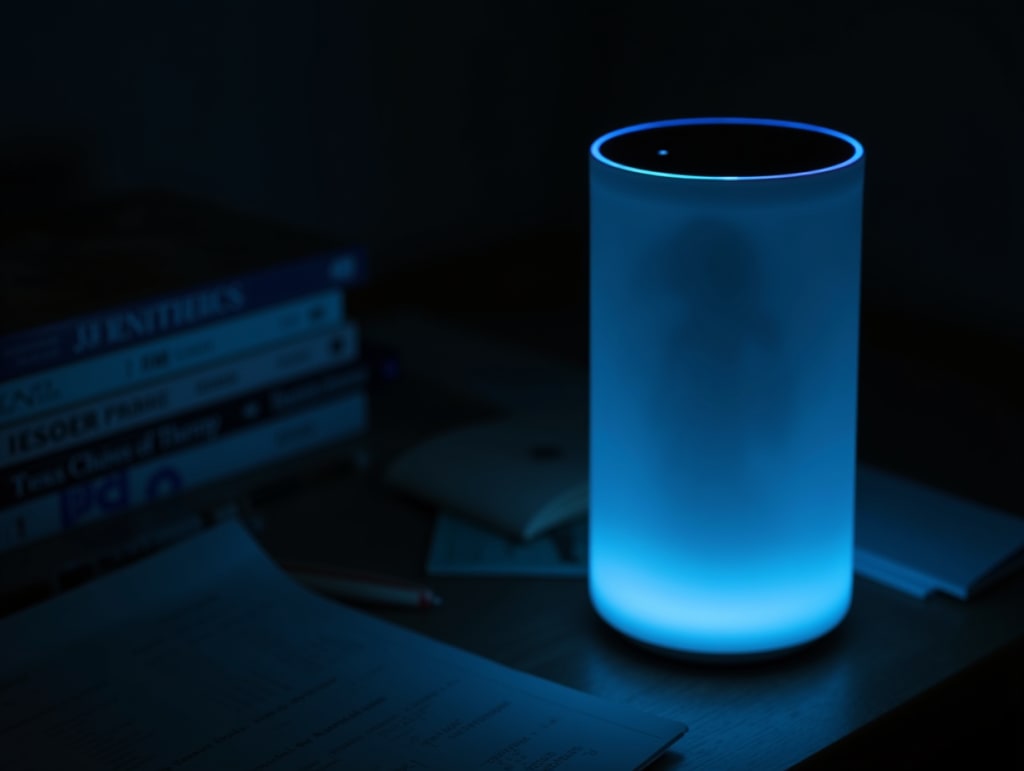
The Echo sat on Lena’s desk, its sleek black frame blinking softly with a pending message. The soft pulse of light cut through the quiet of her home office, where stacks of client notes and self-help books surrounded her like the walls of a fortress. She stared at the device, the pit in her stomach growing heavier with each passing second. The Echo only spoke when the future demanded it.
Finally, she pressed the button, her breath catching as her own voice filled the room.
“Lena,” the familiar yet distorted tone began. “You need to prepare for the loss of someone irreplaceable.”
The words were a knife, carving out a space in her chest where panic rushed in. She played the message again, hoping for clarity, for a nuance she had missed. But it was the same every time: cold, cryptic, and cruelly incomplete.
Who? When? How? The Echo offered no answers, just an ominous warning that lodged itself in her thoughts like a splinter.
Days turned into weeks, and the message consumed Lena. She’d always been an overthinker, a trait that made her an exceptional therapist but a terrible recipient of vague prophecies. Every interaction felt charged with significance. She scrutinized her best friend’s every word, analyzed her estranged brother’s rare texts, and even worried about her favorite client, a young man teetering on the edge of recovery.
The not knowing was unbearable. She began to avoid people altogether, afraid her presence might trigger the loss she was trying to prevent. Her work suffered; her once empathetic ear is now distracted by an incessant, gnawing anxiety. Clients began to notice, their gratitude shifting to polite concern. Even Ellie, her unwavering constant, grew distant under the weight of Lena’s withdrawal.
“You can’t live like this,” Ellie said one evening, her voice tinged with frustration. “Whatever the Echo said, you have to let it go. It’s ruining you.”
“You don’t understand,” Lena snapped, tears welling up. “If I don’t prepare, I... I could lose everything.”
Ellie’s silence was deafening. Then, softly, "You're already losing me.”
Desperation led Lena to an underground group that claimed to hack Echoes. They promised longer, clearer messages—a way to truly connect with her future self. It felt wrong, but the promise of answers was irresistible.
The programmer was a wiry man named Kian, whose workspace was cluttered with half-dismantled devices and energy drink cans. He worked in silence, occasionally glancing at her with a mix of curiosity and pity. When he handed the modified Echo back to her, his only words were, “Be careful what you ask for.”
That night, the Echo blinked with a new message. Her hands trembled as she pressed play.
“Lena,” her future self said, the voice richer, fuller than before. “I’m sorry I left you with this burden. I knew the warning would change everything, but I couldn’t bear for you to make the same mistake I did. The loss I warned you about wasn’t a person—it was us. You’re going to lose the person you are now, and I don’t want you to hate me for it.”
The message ended, leaving Lena reeling. The words felt like a betrayal, a cruel joke played by a future she no longer trusted. What mistake? What loss? And who was she supposed to become?
The messages kept coming, each more detailed, more intimate. Future Lena spoke of choices and consequences, of paths taken and abandoned. She described a life of achievements and accolades, but also profound loneliness and regret. The warning about loss morphed into an apology, a plea for forgiveness from a version of herself that seemed both familiar and alien.
“I wanted to give you the freedom I didn’t have,” one message said. “The freedom to trust yourself.”
But the guidance only deepened Lena’s paralysis. Every decision felt like a step toward an inevitable, regrettable future. She began to resent her future self, the voice that claimed to know better while robbing her of agency. She stopped going to work and stopped answering Ellie’s calls. The walls of her fortress became a prison.
The breaking point came when Ellie showed up unannounced, her face a mix of anger and heartbreak.
“I can’t keep watching you do this to yourself,” she said, tears streaming down her face. “You’re so afraid of losing someone that you’ve already lost everyone. Including me.”
Something inside Lena snapped. For the first time, she saw the truth: the Echo hadn’t warned her of a loss to come; it had created one. The fear it planted had grown into a self-fulfilling prophecy.
She turned to the device, its blinking light a taunt, and slammed her hand down on it. The Echo fell silent, its connection severed.
In the weeks that followed, Lena began to rebuild. She reached out to Ellie, confessing her fears and mistakes. The road to mending their relationship was rocky, but each conversation felt like a step toward reclaiming what she’d lost.
The Echo remained tucked away in a drawer, its silence a comfort rather than a void. For the first time in months, Lena felt free—not because she knew what was ahead, but because she didn’t.
The future could wait. For now, she was finally living.
About the Creator
Ian Mark Ganut
Ever wondered how data meets storytelling? This content specialist crafts SEO-optimized career guides by day and weaves fiction by night, turning expertise into stories that convert.
Keep reading
More stories from Ian Mark Ganut and writers in Fiction and other communities.
Cultivating Balance in Your Garden of Wholeness
I first met Clara on a Tuesday morning. She was kneeling in the mud, her grey-streaked hair escaping a messy bun, replanting something that the storm had uprooted. She didn't look up when I approached, just patted the damp earth beside her.
By Ian Mark Ganut12 months ago in Fiction
How to be a Good Citizen
The following guidance has been prepared by the United States government for all citizens in the wake of an uptick in domestic terrorism in the Midwest. The President and his Cabinet have heard of widespread safety concerns caused by these incidents, and they would like to reassure the American people that ICE and the military are prioritizing your safety as Americans above all else.
By Kay Husnick4 days ago in Fiction
Wild Card Weekend Recap: What Happens Now?
I think I figured out why I love Wild Card Weekend so much. It's because it's the first playoff anything of the calendar year. The NFL season starts in the fall, and once upon a time, the champion was crowned either on or slightly before New Year's. The evolution of the NFL schedule has resulted in the playoffs starting just into the New Year, and currently, the final week of the season falls on the first weekend of the New Year, with Wild Card Weekend coming a week after that. So yes, chronologically, the NFL's Wild Card Weekend serves as the first playoff anything of the calendar year.
By Clyde E. Dawkins4 days ago in Unbalanced




Comments
There are no comments for this story
Be the first to respond and start the conversation.