
The Echoes of silence
Whispers of a Forgotten World
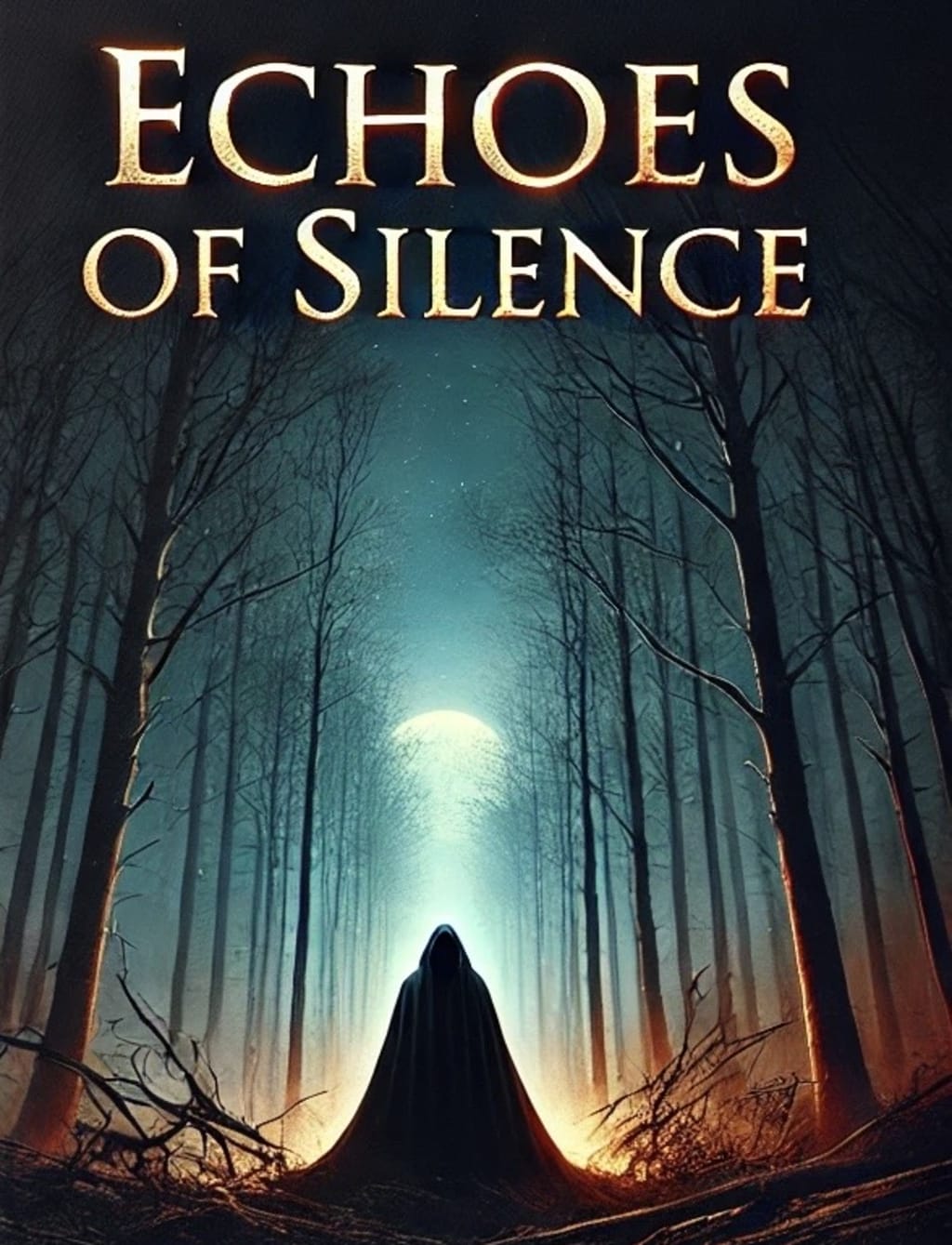
THE ECHOES OF SILENCE
In the bustling heart of Lagos, hidden behind a weathered stone wall that most had stopped noticing, stood an old library long forgotten by time. It wasn’t large or imposing quite the opposite, really. Its facade seemed to fold into the background of the city’s chaos. The streets outside roared with life: the honking horns of impatient drivers, the animated shouts of street vendors hawking their wares, and the rhythmic scuffle of hurried footsteps against the uneven pavement. Yet behind that wall, the library existed in stark contrast, quiet and unyielding, like a secret waiting to be discovered.
Its appearance did little to suggest what lay inside. Ivy snaked up the peeling plaster of its facade, its tendrils curling protectively over grime-clouded windows. The roof slouched as if burdened by years of neglect, while the stone wall stood as a reluctant guardian, bearing the scars of time in chipped paint and worn edges. Above the arched entrance hung a crooked, faded sign with barely legible letters spelling out: The Echoes of Silence.
For most, it was invisible. But for Adewale, it would become a turning point.
Adewale didn’t consider himself special, nor was he particularly remarkable in the grand scheme of the world. He was just another young man with a dream that felt too big for him. A writer or at least, he wanted to be one. But Lagos wasn’t kind to dreamers. The city was fast, unforgiving, and filled with noise. For weeks, Adewale had wandered its streets, chasing something he couldn’t quite name. Perhaps it was inspiration, perhaps direction. Whatever it was, it eluded him. His notebook remained a blank canvas, its emptiness mocking him.
One evening, as the sun dipped below the horizon and painted the streets in a golden glow, Adewale stumbled upon the library. It wasn’t deliberate. His feet had carried him there almost absentmindedly, as though something unseen had nudged him toward that crumbling stone wall.
At first, he almost passed it by. It was easy to overlook. But something about the way the last rays of sunlight hit the shattered windows made him stop. The glass reflected the light in fractured, kaleidoscopic patterns that danced on the ground like whispers of forgotten stories. There was a stillness here, a peculiar kind of silence that felt alive. Without giving it much thought, Adewale found himself pushing open the heavy wooden door.
The hinges groaned, loud and resistant, as though reluctant to welcome him. Inside, the air felt different thicker, almost sacred. It smelled of aged paper, dust, and something else he couldn’t quite place, like the remnants of long forgotten memories. Rows upon rows of towering shelves stretched into the dimly lit space, their contents a chaotic yet mesmerizing collection of books. Some looked pristine, their spines still crisp, while others sagged, barely holding themselves together.
At the center of the room stood a grand oak table, scarred and weathered with age. On it lay a single object: a leather-bound journal.
The journal seemed to radiate a quiet significance. Its dark green cover was cracked with age, its surface soft and worn. It looked out of place, too perfect in a room shrouded in decay. For a moment, Adewale hesitated. The journal felt personal, as though it belonged to someone or perhaps to everyone. His fingers hovered above it before he finally gave in, curiosity outweighing his uncertainty.
The leather was cool under his touch as he opened it. The scent of old paper rose, mingling with the solemn air of the library. The pages inside were filled with handwritten entries poems, fragmented stories, half-formed thoughts, and confessions. There were no dates, no names. Just words, raw and unfiltered.
Some entries were meticulously written, each letter deliberate. Others were chaotic, scribbled with the urgency of someone pouring out their soul. There were pieces of heartbreak, stories of triumph, and whispered fears.
Together, they formed a tapestry of human experience, a collective voice that spoke of struggles, joys, and longings too deep to share aloud.
Adewale turned the pages slowly, each entry drawing him in deeper. Then, one particular line stopped him cold:
“We are but echoes, carried by silence. Yet in this stillness, we are heard.”
The simplicity of the words hit him like a wave. It felt as though they had been written just for him. The library, the journal, this moment it all made sense in a way he couldn’t articulate.
He sat down in one of the creaky wooden chairs and stared at the journal. The silence around him was heavy yet comforting, like a warm embrace. Pulling a pen from his pocket, he let the blank page before him invite his thoughts. And then, slowly at first, he began to write.
His words were halting, unsure. It had been so long since he’d let himself be vulnerable, even on paper. But as the minutes passed, the dam inside him broke. He wrote about his frustrations as a writer, the crippling doubt that his voice didn’t matter, and the fear of failure that loomed over him like a shadow.
Then, almost without realizing it, his thoughts shifted. He wrote about his dreams the stories he wanted to tell, the characters he longed to bring to life. He wrote about hope, about his belief that words, no matter how small, could make a difference. By the time he set the pen down, his hand was cramping, but his heart felt lighter.
He left the library that night feeling different. The world outside was as loud and relentless as ever, but it didn’t feel as overwhelming. Something inside him had shifted, though he couldn’t yet name it.
In the weeks that followed, Adewale returned to the library again and again. It became his refuge, a sanctuary where the noise of Lagos couldn’t reach him. Each time, the journal seemed to greet him with new voices entries he hadn’t seen before. He wondered if it was magic or simply his mind playing tricks on him. Either way, it didn’t matter.
The entries were from strangers he would never meet, yet their words felt familiar, like old friends. He laughed at some stories, cried at others. In between reading, he added his own voice to the journal, page by page. He shared his doubts, his dreams, his questions about the world and his place in it.
One evening, as he sat at the oak table, he noticed something different. The silence that had once filled the library was now tinged with a faint hum. It wasn’t intrusive it was gentle, alive. The sound of pens scratching against paper, the rustle of pages being turned. Word of the library had spread.
Others had started coming. People sat at the table or lingered in the shadows, their faces illuminated by the soft light filtering through the grime-covered windows. No one spoke, yet the air was electric. It was as if the library had awakened, breathing life into those who found it.
The journal became a shared treasure, passed from hand to hand. Each new entry added another voice to the growing chorus of stories. Some people stayed for hours, lost in their thoughts. Others came and went quickly, leaving behind only a few words. The library became a quiet sanctuary for anyone searching for something they couldn’t name.
For Adewale, it became more than a place. It was a reminder that he wasn’t alone, that his voice mattered even in the vast, chaotic world outside.
One night, as he prepared to leave, he placed his hand on the journal’s cover and closed it gently. It felt heavier now, filled with countless stories and pieces of the people who had passed through. He looked around at the others in the room strangers who felt like kindred spirits and realized that The Echoes of Silence wasn't just a library or a journal. It was a testament to the human need to connect, to be heard.
When Adewale stepped outside into the cool Lagos night, he felt the weight of possibility settle over him. The city’s noise no longer intimidated him. Instead, it felt like a symphony, a reminder of the countless voices that made up the world.
He didn’t know what the future held, but he knew one thing: his voice had found a home.
And within the walls of that forgotten library, the echoes would continue to grow.
About the Creator
Keep reading
More stories from samuel ayodeji and writers in Fiction and other communities.
DREAM AUCTION
The Auction House The air shimmered with anticipation as Elara stepped through the gilded doors of the Dream Auction. The vaulted ceiling was painted with constellations that seemed to shift and swirl, each star winking like it held secrets of its own. Rows of velvet lined chairs stretched toward the stage, where Madame Lysandra, the auctioneer, presided over the evening’s offerings with a voice like silk and shadow.
By samuel ayodeji12 months ago in Fiction
Miss Persephone's Manual to a Seemingly Ordinary Life
Miss Persephone was found at the dining table, her blue eyes swollen, her tears arriving and retreating like the tides of the ocean. Earlier that day, her family had visited her in the retirement home where she had lived for eight years. It was her eightieth birthday.
By Imola Tóth4 days ago in Fiction



Comments
There are no comments for this story
Be the first to respond and start the conversation.