
The Echo She Followed
Maya hears a conversation that never happened — a whisper in an empty room, a footprint on wet cement, a hand she never touched — and the unreal things shape the very real choices she must make. This is a story about reaching for what isn't there, and how that almost can change everything.

Maya first heard the echo on a Tuesday, the kind of thin, rainy Tuesday that made the city fold into its own pockets. She was stacking boxes in the back room of her uncle's shop, the light a flat coin through the high windows, when a laugh sounded—soft, familiar, and wrong. For a moment she froze, box in her arms, listening for the source. The shop was empty except for her and the smell of ginger tea gone cold.
"Who’s there?" she called, but the laugh answered only itself, echoing down a row of glass. The sound was like a memory found in the pocket of a coat. Maya told herself it was the radio, or someone on the street, or the building settling. She kept stacking. The laugh planted itself like a seed.
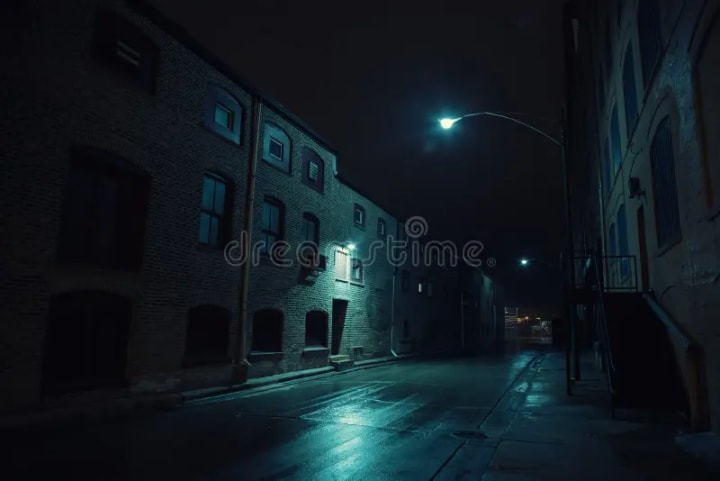
That night she dreamed of a narrow alley where rain ran in silver seams and someone ran ahead of her leaving no prints. She woke with dust at the back of her throat and the sense that wherever she had been following would not appear on any map. Over the next days the echoes arrived as small, impossible things: a chair pulled out at dawn though no footprints crossed the kitchen floor; a cup of tea gone cold on the windowsill that she had not made; a few bars of a melody that vanished before she could remember the last note.
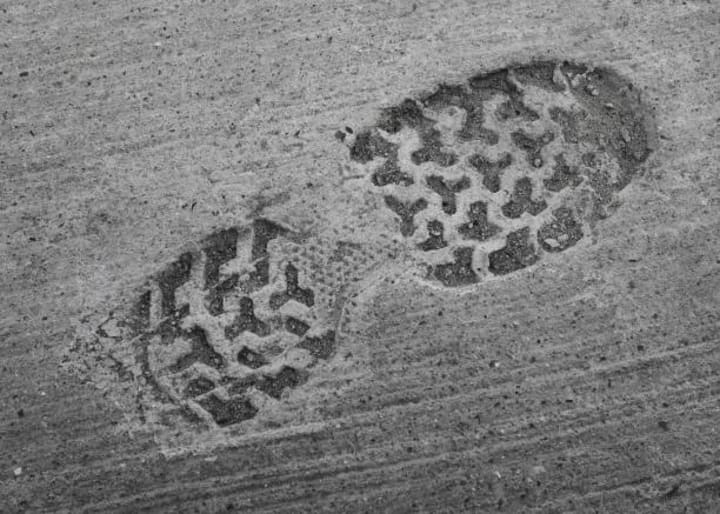
At first the echoes were curiosity, then a steady thread that tugged at the hem of her days. Friends told her to ignore it; her uncle suggested time would settle things. He could not see the small shoe prints by the back door—four rounded scuffs in wet cement that did not match any of the boots in his storeroom. He did not hear the echo that seemed to stop her hands in midair.
The echo did not speak directly. It offered impressions—an angle of light, the smell of lemons, the half-remembered cadence of a joke. Still, Maya found herself answering suggestion with a devotion she did not expect. When the echo hummed a lullaby she had not heard since childhood, she followed it to a laundromat where an old woman folded linens with the exact, tender motions of someone folding memories. The woman looked up as if she had been waiting. "He used to hum that," she said.
Strangest of all, the echo gathered loose ends. Little things arranged themselves as if drawn by a magnet: a neighbor remembering a sealed envelope hidden in an attic; a shopkeeper recalling a name with the precise consonants the echo favored; a janitor lifting a loose tile to reveal a scrap of paper folded into the building's seam. These discoveries did not create a tidy chain of cause and effect; they offered fragments that fit together like shards of glass pushed in the light.
Maya began a ledger. She wrote the times the echo came, the sounds it made, the places it nudged her toward. Pages filled with cramped handwriting. The ledger became a kind of rope, a way to tether suggestion to the earth. When she read it back, patterns showed themselves: the echo favored places of waiting—a ferry house at the bend of the river, a bench by the market where pigeons kept their court, a patch of pavement where the rain pooled in a perfect mirror.

Once, the echo pulled so insistently that she found herself on a bridge at midnight. The city below moved in low, indifferent murmurs; the river stitched a dark seam through it. The echo felt urgent, clipped, like someone running ahead and looking back. For a breath she thought of leaning over the rail and letting the water take the thin ache that had gnawed at her for months. Instead she steadied her hands on the cold metal and listened.
The more she followed, the more the city offered up witnesses. A librarian produced, from between the pages of a returned book, a photograph of a boy standing shivery in the shadow of a ferry at dawn. A clockmaker remembered a customer who misplaced his cap on purpose so he could watch the street twice. A child in the market drew, in blunt crayon, a small boat with a crooked mast and a hat beside it. The echoes, which had seemed like whispers from nowhere, settled into human mouths and hands and became part of a common memory.
On a morning of low sun, the ledger heavy with ink, Maya walked to the ferry house at the river's bend. The building leaned like an apology. No ferry came now; the timbers were mossed and folding. She stood on the planks and waited. The echo arrived as clear, bell-like notes, the sort of practice scales a child might play on a toy harmonica. The sound threaded through her ribs and walked her along the boards to a corner where a recent repair had left a gap. Under the plank, wrapped in oilcloth and a map of places that never aligned, was a small bundle.
Inside the bundle was a child's cap, damp with river air; a toy car with the child's thumbprints pressed into the paint; and a scrap of paper with a single sentence intact in the hurried, hopeful scrawl: "I will be back before the cherries fall."
Maya read the line until the letters blurred. The echo had not solved everything; it had not brought a miraculous reunion or exposed an enemy. Instead it had given her a thing to hold: an object, a thumbprint, a concrete sentence that proved a decision had once been made and interrupted. Those objects made the story real in the way a name makes a rumor turn into a person.
The ledger filled with confirmations. A neighbor who had been a boy when the ferry ran told her, in a voice that still tasted like soil, of a morning when a boy had waited and then boarded a boat that never came home. An old woman who sewed shirts suddenly remembered folding a cap with the exact stitch Maya had found. Each memory was thin and human and partial, but together they formed a map more useful than any echo. The unreal had left marks on ordinary things, and the marks were readable.
Maya did not find a tidy ending. There was no monument, no official ledger entry that would satisfy a historian. The city kept its habit of hiding facts in the crevices; official records were thin as tissue. But in her hands were objects and names and a ledger that turned suggestion into story. The echo had taught her a discipline: to notice, to ask, to gather evidence where none had been expected. Following something that wasn't fully there had not cleared the mystery, but it had reshaped her. She moved through the city differently—less blind, more patient, cataloguing small corroborations as if they were stitches.
That evening, as dusk fell like soft cloth, she sat on the ferry house steps and placed the cap beside the scrap of paper. She closed the ledger and let the echo hum—soft, like a tune you remember in part. She hummed back, not to summon the unreal, but to acknowledge it. The sound between them was small and true. It would not answer every question, but it would keep leading her to the places where answers waited in pieces. And pieces, she had learned, were enough to begin stitching the whole.
About the Creator
Keep reading
More stories from Joudy Mohamed and writers in Fiction and other communities.
"Leila’s Journey to the Lost City: An Epic Adventure of Courage and Discovery"
On a quiet morning, Leila wandered through the old city market, her eyes drifting across colorful stalls and the scent of spices filling the air. As she browsed, something unusual caught her attention—a faded, wrinkled map shimmering faintly under the sunlight.
By Joudy Mohamed6 months ago in Fiction
A Love Forboding
The chipped stone slope caused unbearable footing. I slid, skirting on my heels. I cast my shield, relinquishing my guard to stay upright. Left with my double-edge and a prayer to the maker, I skated toward my objective. The earthly stubble gave way to solid ground. I found myself restored, a trail of dust in my wake.
By James U. Rizzi3 days ago in Fiction


Comments
There are no comments for this story
Be the first to respond and start the conversation.