
The Earth's Deadly Past and Hopeful Future: Recovering from the Dinosaur Extinction
The Cataclysmic Impact: A Deadly Collision with Earth

Introduction:
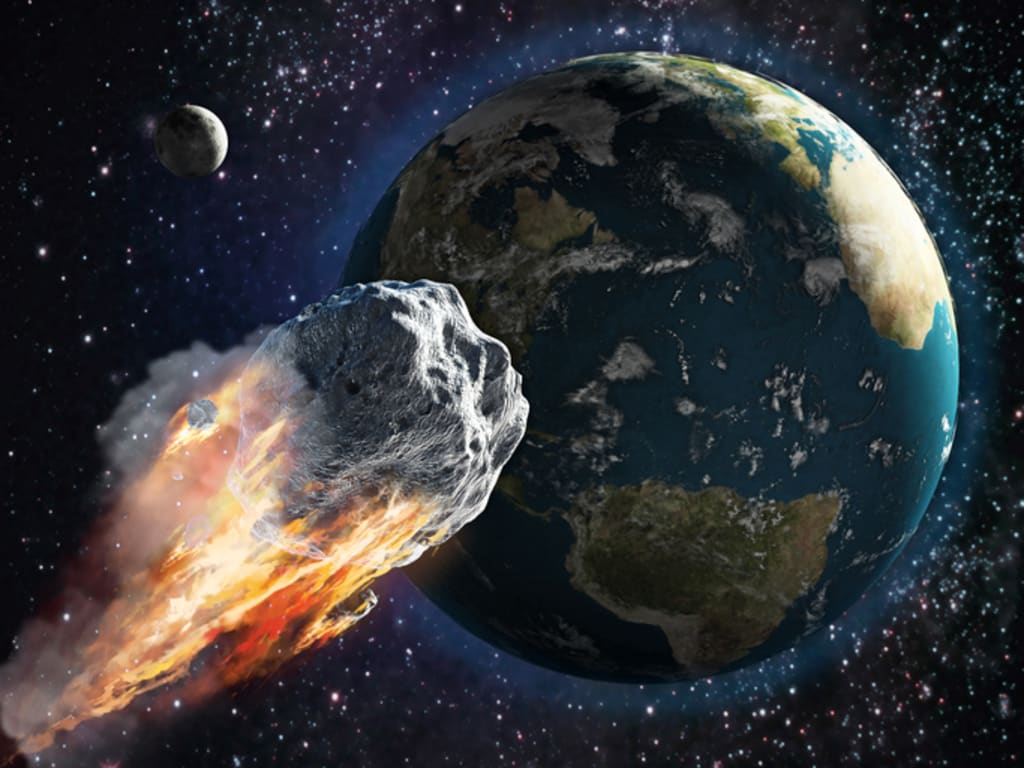
The history of our planet is marked by cataclysmic events that have shaped life on Earth. One such event, 66 million years ago, remains etched in geological records as a turning point in the history of life – the dinosaur extinction. An asteroid, equivalent in size to Mount Everest, hurtled towards Earth at an astonishing speed of 10 to 30 kilometres per second. The colossal impact of this asteroid wiped out the mighty dinosaurs and triggered a chain of devastating consequences. This blog takes you on a journey through the terrifying extinction event and the subsequent recovery of Earth, which led to the rise of mammals and the challenges we face in protecting our planet today.
The Catastrophic Event that Changed Earth Forever
The asteroid that collided with Earth was an enormous 10 kilometres in diameter, and its high speed caused the air in front of it to heat up to scorching temperatures. This blazing fireball tore through the atmosphere and struck off the coast of present-day Mexico, sending colossal amounts of debris into the air. The impact unleashed a shock wave, devastating everything in its path. As the debris settled, scorching hot pieces of glass and rock fell from the sky, causing acid rain that persisted for years. But the true horror came with the formation of a colossal tsunami. The energy released from the impact generated shock waves that created a tsunami over 10 metres high, 30,000 times more powerful than modern tsunamis. This monstrous wave raced across the oceans, reshaping coastlines and leaving behind a path of destruction.
Life After the Dinosaurs:
A Slow Recovery Despite the catastrophic impact, some dinosaurs far from Ground Zero initially survived. However, the aftermath sealed their fate. The massive debris ejected into the atmosphere acted as a veil, blocking sunlight for months, if not years, leading to a nuclear winter-like effect. Earth turned cold, dark, and acidic, disrupting the food chain and starving many surviving animals. The extinction of dinosaurs marked the beginning of a new era for Earth - a time of slow recovery and reinvention. Life started its tentative return, with ferns among the first plants to reappear. Over 100,000 years later, creatures akin to raccoons began repopulating the continents, while Earth's oceans teemed with life once again.
The Age of Mammals:
A New Chapter for Earth Fast forward approximately 10 million years, and Earth has restored its biodiversity. However, this was a transformed world, not the same as before. The age of mammals had begun, with mammals, birds, and flowering plants flourishing and dominating the planet. Earth had evolved into a new and diverse world, never to return to its pre-extinction state.
Today's Earth:
Facing Environmental Challenges with Hope The recovery from the dinosaur extinction is a testament to Earth's resilience. However, modern-day Earth faces new challenges brought about by human activities. Severe environmental crises threaten our planet's future, with climate change, pollution, and habitat destruction putting ecosystems at risk. Despite the daunting challenges, hope remains. Just as Earth reinvented itself after the extinction event, we have the power to protect and restore our planet. As stewards of the Earth, it is our responsibility to take conscious actions to safeguard the environment. By embracing sustainable practices, reducing carbon emissions, conserving biodiversity, and protecting natural habitats, we can secure a bright and sustainable future for generations to come.
Conclusion:
The extinction event that obliterated the dinosaurs was a defining moment in Earth's history. However, it also marked the beginning of a new chapter, leading to the rise of mammals and the diverse world we know today. While facing unprecedented environmental challenges, we must find hope in the remarkable recovery of our planet from past disasters. By learning from history and working together, we can ensure that Earth remains a thriving and resilient home for all living beings. It is time for us to take action and embark on a collective journey to protect our planet and prevent a fate similar to that of the dinosaurs.
About the Creator
Rohit Singh
Software developer, part-time content creator, and tech enthusiast.
Unleashing creativity and embracing tech. Join me on this thrilling journey! 🚀
Keep reading
More stories from Rohit Singh and writers in Fiction and other communities.
Is Time Travel Possible? Exploring the Fascinating Concepts of Temporal Voyage
Introduction: The allure of time travel has captivated human minds for centuries. The prospect of journeying through time, whether to revisit historical events or glimpse into the mysteries of the future, has been a staple in the world of science fiction, inspiring countless books and movies. But could time travel be more than just a fantastical notion? As scientific discoveries, notably Einstein's theory of relativity, have reshaped our understanding of time, the possibility of time travel has moved from the realm of pure imagination to that of plausible scientific exploration. In this blog, we will embark on a captivating journey to explore the evolving nature of time, the theoretical mechanisms behind time travel, and the promising concepts that might hold the key to this fascinating phenomenon.
By Rohit Singh2 years ago in Fiction
Miss Persephone's Manual to a Seemingly Ordinary Life
Miss Persephone was found at the dining table, her blue eyes swollen, her tears arriving and retreating like the tides of the ocean. Earlier that day, her family had visited her in the retirement home where she had lived for eight years. It was her eightieth birthday.
By Imola Tóth4 days ago in Fiction



Comments
There are no comments for this story
Be the first to respond and start the conversation.