
The Dog That Saved a Town
A Silent Hero with No Collar, No Home—and Endless Love

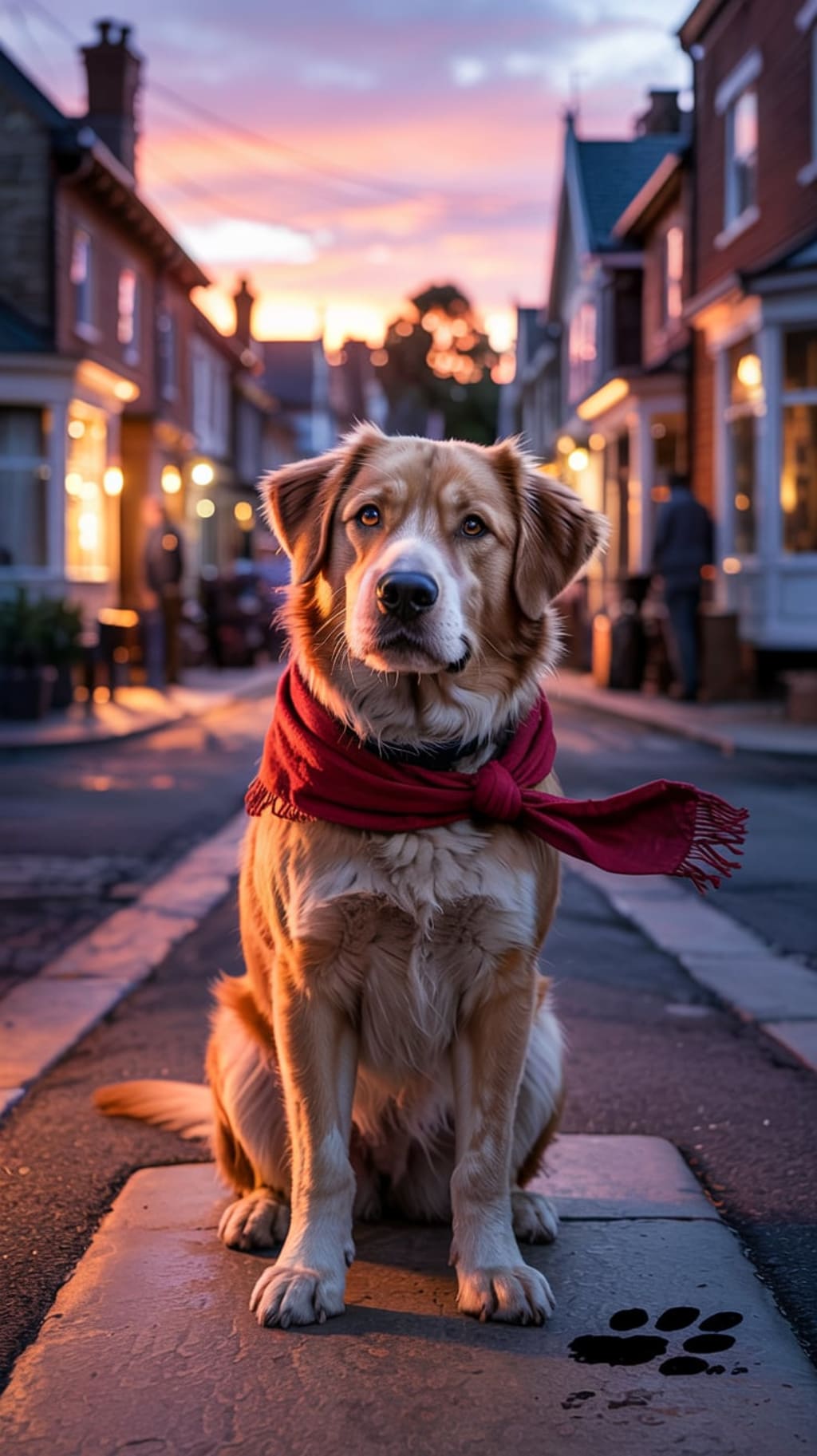
He had no name, no collar, and no voice—yet he brought a quiet kind of healing no one could explain.
No one knew where the dog came from.
One morning, he was just there—sitting beneath the crooked old oak at the edge of Main Street, as if he’d always belonged. His fur was golden but worn, like sunlight dulled by dust. He walked with a limp, barely noticeable unless you looked closely. But the thing people remembered most were his eyes. They weren’t just brown—they were deep. Soft, knowing. Like he understood something the rest of us had forgotten.
He didn’t bark. He didn’t chase cars. He didn’t beg.
He simply watched.
At first, we ignored him. That’s what you do with strays, right? You look once, maybe twice. Maybe you feel sorry for them, maybe you don’t. Either way, you keep walking. You teach your kids not to pet them. You remind yourself someone else will probably call Animal Control.
But no one did.
Instead, small things started to happen.
The baker was the first to notice. She left a piece of crust on the back steps out of habit, not really expecting anything. But it was gone by morning. So she left more the next day. And the day after that.
Then there was Jonah—the quiet boy who liked to walk alone, head down, earbuds in. One rainy morning, he took the alley shortcut behind the bakery. The ground was slick. His foot slipped on a broken step, and he crashed to the pavement.
He lay there for a while—dazed, in pain, and out of sight.
No one saw.
Except the dog.
What happened next became town legend.
The baker heard the barking first. Loud, frantic, desperate—so different from the dog’s usual quiet presence. She followed the sound, turned the corner, and found Jonah on the ground with the dog pacing around him, barking and nudging his arm.
She called 911. The ambulance came. Jonah had a concussion, a fractured wrist, and a nasty cut above his eyebrow. But he was okay.
By the time the medics arrived, the dog was gone.
After that, people started calling him Max.
No one knew who came up with the name—it just stuck. “Max,” like he’d always been Max. Like he’d only been waiting for someone to say it.
He still didn’t stay in one place. He wandered. Slept under porches. Curled up near the school playground. Sometimes, he would walk beside someone for a few blocks and then vanish. It wasn’t about food—he was never greedy. People offered bits of lunch, bowls of water, even an old dog bed someone left behind the town library.
But Max came for something else. Presence.
He showed up when people needed him most. Mrs. Linton, after her husband passed, swore Max sat on her porch for four straight hours, resting his head on her knee. The school principal found Max waiting outside the building the day a student had a panic attack during morning announcements. Even Frank, the town’s grumpiest mechanic, started leaving scraps from his sandwich on the shop floor.
He never admitted it, of course.
But people noticed that Frank started smiling again.
It wasn’t just that Max was a good dog.
He was the dog.
The soul of the town.
But then came the letter from City Hall.
“No stray animals may be fed or sheltered within town limits. Repeat violations may result in fines.”
The mayor called it policy. Said it was about safety, liability, and sanitation. But nobody believed it.
It was about control.
And Max couldn’t be controlled.
Signs went up. “Do Not Feed Strays.” “Report Unleashed Dogs.” People got nervous. Some obeyed. Others ignored the rules quietly. Max kept wandering. But there was a weight in the air now—like something was about to break.
And then it did.
One rainy Thursday, Max showed up behind the community center. A volunteer found him soaked and shivering, curled under the emergency exit overhang. She called Animal Control, assuming he’d be taken to a shelter—maybe even adopted.
But Animal Control didn’t come with leashes and kind voices.
They came with poles and cages.
Max tried to run. They chased him down the alley behind the library. That’s where they found themselves face to face with something unexpected:
Half the town.
The librarian. The baker. Jonah and his mom. Frank the mechanic. Kids with umbrellas. Teenagers in sneakers. The florist. Even Mrs. Linton with her cane. They stood, soaked in the rain, between Max and the men trying to take him away.
“You can’t,” one woman said. “He’s ours.”
“He doesn’t belong to anyone,” the officer replied.
“Exactly,” the librarian said. “And that’s why he belongs to all of us.”
They argued for a while. About laws. About danger. About what happens when people start deciding which lives matter and which don’t.
But the town had already decided. Max would stay.
They built him a little shelter behind the library—not a cage, but a cottage. Painted white with green trim and a wooden sign that read, “Max’s Corner.”
He came and went as he pleased. He slept there when it was cold. Wandered when it wasn’t. Kids would sit with him and tell him their secrets. Adults would stop and rub behind his ears on bad days. People started talking to each other more. Smiling more.
It wasn’t magic. It was Max.
He didn’t ask for anything. But he gave us something we didn’t know we needed. Community.
In the end, Max didn’t save the town by doing anything spectacular.
He saved it by being there. By showing up.
By reminding us, in his quiet way, that sometimes the most powerful presence is the one that asks for nothing—and gives everything.
About the Creator
The Devil's Cut
“Comrade, finally you’re awake.” The voice was smooth, sensual. A flickering incandescent bar was all that lit the white, sterile room. All Vladimir remembered was everything going black. He tried to move his arms and found them strapped to the gurney.
By Matthew J. Fromm6 days ago in Fiction
Office Hours
“Thank you for seeing me. I wasn’t sure whether to send an email or wait until today, but every time I tried to write it out, it felt like I was either explaining too much or asking the wrong thing entirely. This seemed steadier. It felt like the kind of conversation that shouldn’t exist in writing.”
By SUEDE the poet4 days ago in Fiction



Comments
There are no comments for this story
Be the first to respond and start the conversation.