
The Dog-Headed Men
Exploring the Historical Accounts and Myths of the Cynocephali

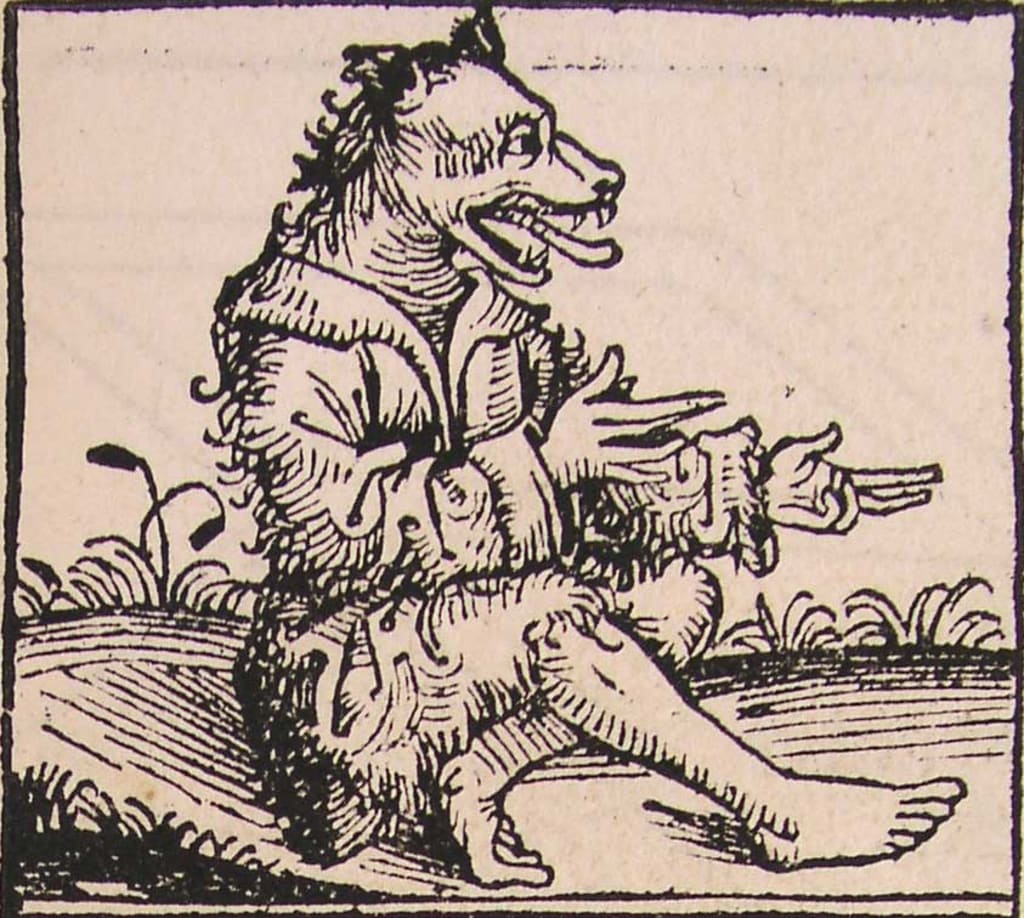
Most people have heard of werewolves, but few know of the ancient race of dog-headed men, better known as the Cynocephali, or Cinocephali in Spanish. A Cynocephalus was essentially a man with the head of a dog. They could understand language but had no ability to speak. Though they are sometimes depicted in artwork as being civilized, they were by all reports savage beasts who lived to hunt and kill. While this may sound like just another mythical creature, there are very good reasons to believe that the Cynocephali may have actually existed.
Across history, there have been many reports of races of jackal-headed or dog-headed people. Even the Greeks and ancient Egyptians knew and wondered about this strange race of beings. In Egyptian mythology, dog-headed gods existed, and many paintings and statues were made in their honor. Above all, these dog-headed men were described in reports by famous explorers such as Christopher Columbus and Marco Polo!
Around 400 B.C., the Greek physician Ctesias wrote the following passages (translated to English from Greek), describing the tribes of Cynocephalus:
"They speak no language, but bark like dogs, and in this manner make themselves understood by each other. Their teeth are larger than those of dogs, their nails like those of these animals, but longer and rounder. They inhabit the mountains as far as the river Indus. Their complexion is swarthy. They are extremely just, like the rest of the Indians with whom they associate. They understand the Indian language but are unable to converse, only barking or making signs with their hands and fingers by way of reply... They live on raw meat. They number about 120,000."
"The Cynocephali living on the mountains live by hunting. When they have killed an animal, they roast it in the sun. They also rear numbers of sheep, goats, and asses, drinking the milk of the sheep and whey made from it. They eat the fruit of the Siptakhora, whence amber is procured, since it is sweet. They also dry it and keep it in baskets, as the Greeks keep their dried grapes. They make rafts which they load with this fruit together with well-cleaned purple flowers and 260 talents of amber, with the same quantity of the purple dye, and a thousand additional talents of amber, which they send annually to the king of India."
"They exchange the rest for bread, flour, and cotton stuffs with the Indians, from whom they also buy swords for hunting wild beasts, bows, and arrows, being very skillful in drawing the bow and hurling the spear. They cannot be defeated in war, since they inhabit lofty and inaccessible mountains. Every five years the king sends them a present of 300,000 bows, as many spears, 120,000 shields, and 50,000 swords."
"They do not live in houses, but in caves. They set out for the chase with bows and spears, and as they are very swift of foot, they pursue and soon overtake their quarry. The women have a bath once a month, the men do not have a bath at all, but only wash their hands. They anoint themselves three times a month with oil made from milk and wipe themselves with skins. The clothes of men and women alike are not skins with the hair on, but skins tanned and very fine. The richest wear linen clothes, but they are few in number. They have no beds, but sleep on leaves or grass. He who possesses the greatest number of sheep is considered the richest, and so in regard to their other possessions. All, both men and women, have tails above their hips, like dogs, but longer and more hairy."
"They are just and live longer than any other men, 170, sometimes 200 years."
The dog-headed men were a fierce warrior tribe, but they also traded with the few humans they trusted. They were reported to live primarily in India and Northern Africa but were seen in many places in between. The texts don’t stop there – in China, a Buddhist missionary, Hui-Sheng, wrote about dog-headed men on an Island to the east of Fusang.
Perhaps the most famous Cynocephalus is Christianity's Saint Christopher, who was described in several texts as having the body of a man but the head of a dog. Originally, the future saint was said to have been a wild and fierce warrior who was captured in battle in Cyrenaica. Not only was this creature a very large man with a dog's head, but he came from a warrior tribe of dog-headed men who looked similar to him. According to Christian mythology, he eventually met Jesus Christ and learned the error of his former ways. He repented and became baptized and eventually received sainthood and the gift of a human appearance. Multiple historical images show Saint Christopher as having the head of a dog.
One Italian monk by the name of Odoric of Pordenone, who traveled about converting people between 1317 and 1330, claimed to have come across the Cynocephali at the island of Nicoveran. They were described as being somewhat brutish but displaying a form of organized religion, worshipping oxen and wearing various gold and silver religious charms. French inquisitor Cardinal Pierre d’Ailley claimed in 1410 that there existed a race of dog-headed humans in India, as well as a one-eyed variation of the creatures referred to as the Carismaspi. Explorer Giovanni da Pian del Carpine also mentions a race of dog-heads which he claimed inhabited the lands north of the Dalai-Nor (Northern Ocean), and Lake Baikal. Indeed, depictions of the Cynocephali appeared on maps of the time, similar to the dragons and other wondrous beasts that mapmakers liked to adorn their maps with.
The great explorer Marco Polo mentions Cynocephali indirectly while describing his travels to the island of Angamanian: "Angamanain is a very large Island. The people are without a king and are Idolaters, and no better than wild beasts. And I assure you all the men of this Island of Angamanain have heads like dogs, and teeth and eyes likewise; in fact, in the face they are all just like big mastiff dogs! They have a quantity of spices; but they are a most cruel generation, and eat everybody that they can catch, if not of their own race."
When Alexander the Great invaded India in the 4th century BC, he too claimed in letters to his teacher, Aristotle, that he had encountered the dog-headed men. Alexander the Great even claimed to have captured several of the creatures in battle, which he said were fierce and vicious, barking and snarling beasts. The Greek historian Herodotus also wrote much on the existence of such creatures, which he claimed ancient Libyans believed inhabited the lands east of their own. He would say of them:
"For the eastern side of Libya, where the wanderers dwell, is low and sandy, as far as the river Triton; but westward of that the land of the husbandmen is very hilly, and abounds with forests and wild beasts… Here too are the dog-faced creatures, and the creatures without heads, whom the Libyans declare to have their eyes in their breasts."
They are even mentioned in the stories of King Arthur, in which his men do battle with the dog-headed beasts at the mountains of Eidyn, with hundreds of the savages being killed by the warrior Bedwyr.
No one knows for sure what happened to this small, but powerful race. It is believed that as the empires around them expanded, they were killed off. They were most certainly a warring tribe and would have preferred death in battle to succumbing to another culture's ways. Either way, they have disappeared from human view. Perhaps there are still some of them living in caves awaiting a day where they may return to power.
One can't help but wonder if this ancient race of dog-headed humanoids is related to the various types of semi-wolf, semi-human creatures such as the werewolf. When considering the history of werewolves, this little-known creature may just prove to be a missing link in the mystery of their existence.
Could these dog-headed men be the ancestors of the Michigan Dogman? First reported in 1887 by a local DJ, there have been over 100 reports of Dogman sightings since then. In those years, the song "Legend of the Dogman" hit the airwaves. It describes sightings and close encounters with a dog-human hybrid in northern Michigan. The song was written and performed by Steve Cook of WTCM Radio in Traverse City. Cook later discovered that stories of dogmen date back thousands of years.
Although such mysterious tribes of strange, dog-headed men have become lost to the mists of time, what is it that caused them to become so ubiquitous throughout history? Was this just fantastical whimsy and imagination? There is also the possibility that baboons or some other form of primate could have been mistaken for dog-headed humans. Could this possibly account for all of the persistent reported sightings and encounters of a dog-headed race of humans that so obviously in many accounts displayed a culture and civilization of their own? Or was this simply the result of myths, legends, or even racial prejudices being bestowed upon enemies or lower social castes? What exactly is going on here?
The phenomena of the dog-headed people, the Cynocephali, remain entrenched within the stories and writings of the past, ranging from explorers to philosophers, and are a feature of historical oddities of the weird. It is unclear what they were, if they were ever real in any sense at all, or why they have popped up so often in art and ancient history all over the world. We can only speculate and wonder if there are things lurking beyond the mists of time that we have yet to understand.
About the Creator
Horace Wasland
Research analyst, writer & mystical healer. Exploring the edge where science meets mystery. From mystery/the mystical, to facts, news & psychology. Follow for weekly insights on all four and please leave a tip if you like what you read :)
Keep reading
More stories from Horace Wasland and writers in Fiction and other communities.
Johnny Depp's latest love story
Johnny Depp’s latest art collection, Tarot, has captivated audiences with its poignant homage to his ex-partner, Vanessa Paradis. The collection features several pieces that pay tribute to Paradis, with one of the most striking being The Empress. This artwork depicts Paradis wearing a burnished crown, a reference to the cover art of her 2007 album Dividido. Despite their separation over a decade ago, Depp's admiration for Paradis continues to resonate deeply in both his art and personal reflections.
By Horace Waslandabout a year ago in Fiction
Miss Persephone's Manual to a Seemingly Ordinary Life
Miss Persephone was found at the dining table, her blue eyes swollen, her tears arriving and retreating like the tides of the ocean. Earlier that day, her family had visited her in the retirement home where she had lived for eight years. It was her eightieth birthday.
By Imola Tótha day ago in Fiction
How To Keep Your Little Weather Machine From Eating Your House
1. First Things First: Not a Magic Box. Look. Whistles of that chrome cylinder in your hallway? It is not here to have an easier life. It's a mirror. A hungry one. My next-door friend Frank had it installed by him when Martha died, because he could always dial up "Sunny & 72°" and get his way.
By Edward Smithabout 4 hours ago in Fiction




Comments (1)
Thanks for sharing