
The Decolonization of an Island Nation
A story of a small nation who wanted freedom by any means necessary and fought the fight to become An Island Nation. Part 1

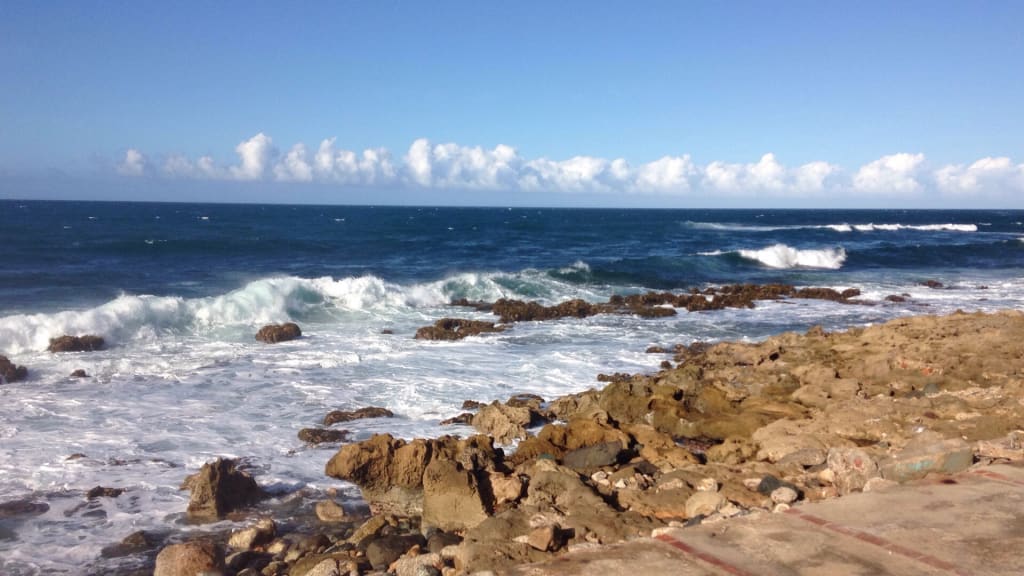
This is the story of a small nation who wanted freedom by any means necessary and fought the fight to become:
An Island Nation.
We were young and felt like orphans, tossed from foster home to foster home, we felt neglected and alone. First adopted by Spain our Island Nation suffered endlessly, in the hands of the inquisition, in the hands of educated idiots who wanted to have a new conquest. Then the United States abducted us from our Mother Land, a nation suckling a life that we may never understand, a life that was not our own. A life that was given away as a gift by a laughing god, one who found it hysterically funny to hand us over to the Americans with no questions asked.
We fought, we died, and we were tortured and chained because we wanted freedom. We were not strong enough, but for sure we were resilient and stubborn. We ran away from the villages near the coast into the mountains seeking protection from all the injustice we were suffering. These injustices caused many men and women to stand up and help the few natives left and the new migration of African slaves in the island. We were not an Island Nation yet; we were beginning to fight for our independence with the help of men like Ramon Emeterio Betances, Jose Celso Barbosa and Raul Otero.
“Is it dark in here Juan turns the lamps on?” Maria asked Juan as she continued pushing the tables and chairs away from the center of the room. The guest of honor will arrive soon and with that the fear and excitement of listening to new ideas, which will fuel once again the thoughts of liberty. We also knew that allowing this meeting could cost us not only our lives, but the lives of our friends and neighbors. Some of the neighbors will come to the meeting and others will keep a diligent eye on the road for the militia. Not everyone could be trusted anyone could become a traitor
We can hear the truck approaching near the river. Because the bridge was damaged the advancement by truck was impossible, they will need to continue their travels by canoe. Unless they wanted to become one with the rocks below.
Raul Otero walks in, taking off his hat and sitting by the window. He was a tall man, a mulato with neither straight nor coarse hair. His hair is short and well-groomed. He was thin but not like us, you can tell he has eaten his share, not a lot but better than we have. He dressed in a pair of khaki pants and a white shirt button up to his neck and black rubber boots.
He started talking softly, making sure we all can hear in the room, but not loud enough so he can be heard outside. He spoke about freedom, education and religion; along with the importance to work together towards the same goals. His primary goal was education, for the young and the old to understand the edicts, newsletters, and the laws passed by the government in power. He was in need of the collective in order to hold responsible the government that systematically has stripped away everything, but our dignity.
“We need to voice our opinions”, he said, “we need to speak our minds and feel free to tell the government that we are tired of all the injustice and we want change.”
“I want the same,” I said. “We all want the same, but how can we be free? We have no way to sustain ourselves. Our men are killed, and the women in the villages across the island have become desperate.”
“Women need to take part and learn how to use the same weapons men are using.” Said Otero, staring at each of us, either to make us fear or stand up and fight, as we need to do to be successful.
Even when that meant women had to take control because there were not enough willing participants in this fight. We fought the fight with teeth and pens with pitchforks and ideas, and we thought that ideals were ideas and thoughts were words. We accepted a dream of a man, a man who said to the illiterate that was acceptable, to trust the same men who identified us by their prejudice, by our differences. These ideals, ideas, thoughts and words created our Island Nation one with resentments and hatred for the ones who sold our pride and identity.
They were the voice of autonomy and independence in this island, not yet a nation. However, as we attempted to build a free nation, a new enemy arrived, one that will prove almost impossible to extricate. The United States arrived displaying their pompous ass; using these simple phrases to name us vs. them; we are, we want and you are. We were but dung in the bottom of their shoes. We worked, we cooked, we cleaned and in many instances we kept their beds warm at night for them. Not by choice because we had no choice when it came to our bodies; the women were raped repeatedly and with not much left within us we escaped to the mountains, many died trying.
One of them was my mother. She was only twelve years old when she walked into town and taken by the American soldiers; who raped and sold her into slavery. Her parents were afraid of asking anyone and fearing the worst they never looked for her again. Some years later a young woman came to the village with a little baby girl in her arms calling out for Carmen, my grandmother, as she placed the little girl on the ground and ran away into the woods. My grandmother was scared; she inspected the baby, noticing a small bracelet, which she recognized as the same she had made for her daughter when she was a baby. With sadness and joy my grandmother raised me to become the woman I am today.
Otero attempted to bring most of the underground political parties together. He continues to speak with underground parties looking for appropriate solutions to the crisis at hand. It became almost impossible to bring these men and women together, even though they wanted the same outcome for the Island Nation.
“We need to come together, we tried working individually and we lost many lives and opportunities in the process, what could be done differently? “
We finished the meeting early; we served some coffee and a warm pan de mallorca. Juan shared his famous morir-sonando, a very sweet drink made with anisette and white rum. Juan and Raul continued their conversation in a more private matter.
“So tell me Raul, are the cases ready for delivery tomorrow?” asked Juan.
“Yes they are. The elections are in a week and the cases need to reach other villages and towns close by.” Said Otero while walking towards the canoe and calling out to his men.
“Maria, Luisa, Carmen and Ida will be in church this Sunday.” Juan said, looking at his wife with pride and concern.
With the elections a week away, we all need it to work fast and soundless. Guns were stored at different churches and in the tunnels that connected some towns with some of the villages. These tunnels were unknown to the American soldiers, as they never stepped foot into a Catholic church, they would not have a reason to suspect the church as a point of entrance. That was our advantage, our only way to start our campaign of terror against those who had terrorized us for decades.
On the other hand, Otero’s press continues printing the weekly newsletter. The literate ones read and shared the information sent through the cipher with the others.
Maria continues narrating the story
Maria knew the next step, she was afraid; what can she do? complain about the history in process or fight to change the future of a country while defining the future of an Island Nation. Liberty and justice were foreign concepts to us. In order to survive many of the natives and Africans choose to live away from civilization. In addition, with a few Spaniards and American sympathizers we created a trading system. We will sell to them vegetables, fruits, and some cattle; in return they helped us by educating us, teaching us different methods of farming and gave us medicine when we needed it. We learned how to build stronger homes, learned how to make our meat last longer and with their help we grew stronger in intellect and passion for our freedom.
The tunnel was very dark, Carmen was holding the lamp in the front meanwhile we followed her to the trapdoor under the church. We heard no one; we stopped talking at once, waiting for the door to open and some soldiers to appear. Two men dressed as soldiers and the priest came in, helping us to walk to the rectory with no lights.
“How was the trip? Are you sure no one follows you here? The priest continued walking ahead making sure we followed him quickly into the rectory. We all nodded. The rectory had another small passage where crates of small homemade bombs were stashed. The bombs looked awfully small. One of the men started explaining that the time we had between the placement and detonation of the bombs was very short, in fact, they were not sure of the amount of time. Also the priest spoke to us, one at a time. He explained to us how important this particular mission was and that was also acceptable if we chose to walk away from the mission. Maria played with her bracelet, while listening to the men speak to us, I drifted away thinking about my mother and the story my grandmother shared. I felt sad thinking about my mother, never knowing her face.
We took a bath in the morning and changed our clothes into something more appealing to the town folks. Later that morning three men appeared at the door of the church, they were our escorts throughout the town. We all went to town and visited the shops that were open, others never closed and others were waiting on the right customers. We walked around and looked at the ships, the anglers coming into the port and others just leaving. It was a very busy day, but delightful to see all the commotion. We continued walking near the governor’s mansion at the end of the town. It was a beautiful home. All the orders came from there, the place where a man sat with all the power in the world to do good and all he wanted to do was to load his pockets at all cost.
All of a sudden, Maria locks eyes with a woman; she smiled and walked away. She walked into one of the shops in town.
My companion pushes me into the shop and tells me to stand there until he comes back. Therefore, Maria did what she was told to do. Luisa and Carmen were on the other side of the town waiting like me for final instructions. Young men sat by me as my companion approached and dropped a bag where I was standing. We walked away and so did the bag and the young man. We went to different shops and did the same thing several times.
We enter a shop and order some coffee and boiled eggs. It was the same shop where the woman entered early in the morning. The woman handed me the coffee when Maria noticed her bracelet, it was similar to the one she wore. As I began to ask her about the bracelet suddenly the very first explosion followed by several others. People were screaming and running away from the town center. In the far end of town, soldiers were running towards the Governor’s mansion and others were running away from it. Maria’s companion ran out and met with other men who at this point were carrying guns and running into different directions. The next detonation happened on a ship in the port, causing massive damage to other ships and the port in itself; about five different explosions went off in the shipyard. Everywhere was a bloodbath, additional trucks and soldiers arrived at the town center responding to the attack
All of a sudden the shop’s ceiling caved in, as the debris started to hit the tables, counters and some people who were in the shop, Maria ran away from the debris. There were dead bodies all around; others were moaning and others trying to walk away. My companions were lost in the commotion, I ran to the church trying to get back to my village. As Maria reached the church, she saw one of the men who spoke to us the night before with the soldiers. Maria noticed a man and a woman on the floor, as she got closer, she saw Raul Otero and Carmen's bodies positioned in the middle of the courtyard. Not sure if they were dead or alive. She walked slowly and closer to them trying to find a way into the church; she heard a loud shot. Ida’s lifeless body was dragged out of the church by an American.
A gentle hand touched Maria’s shoulder turning around to see a young boy standing behind her and without hesitation she followed the young boy. Quickly, almost running through the narrow streets and the back of several houses. The same woman who saved her life before was waiting for me near the outskirts of town. As she sent the boy away she quickly gestured for me to follow her; at first, she thought it was a trap. Then Maria recognized the path she was taking, it was towards the village. The woman stopped near a small hut. “Hurry please before the soldiers find us wandering around in the woods let's go in.” As I opened the door and quickly closed the door behind me. She stood in the middle of the room and as she lifted the rug off the floor, a trap door appeared. She gave me a rifle and told me to follow the wall all the way to the light, she assured me that we will meet again and not to worry about her.
At the beginning, it was dark but as I approached the exit she could faintly see some light.
Maria heard some noises and stood still, waiting to hear a familiar voice. Finally, a familiar voice, “Juan, Juan is Maria, help me. I am down here.” Maria screamed, reaching a hand that pulled her to the surface, where questions came bombarding all at once.
As Maria walked back into the village, she was trying to think of what to say, she wanted to explain what happened without sending the message that they were defeated and all was lost. She understood this was just the beginning of freedom. That it cost several lives and maybe exposed the movement, but they were strong enough to start again, stronger.
“Raul Otero, Carmen and Luisa are dead. Ida is missing and some of Otero's bodyguards were part of the militia and sold us out.” Said Maria holding Juan’s hand very tight.
“We lost more than freedom, we lost friends, support and the element of surprise.” We are not able to redeem ourselves to a cause that we lost by default.
“ Let us go home and wait till the morning when all is clear and better solutions come along. The fight is not over.”
We were sad, we walked quiet, while our hearts were on fire. We reached the village, even when the bloodshed reminded us of our loss it remains true we were heard. We were to become the movers and shakers of our time, the revolution is not over. We were not trying to make peace until our Island Nation was free from our oppressors. We were noticed and for that we will always be remembered as part of our broken history as the Phantoms of the Forest. The ones that never gave up.
“Grandma what happened to Maria and Juan”?
“Mijo is time to sleep. Besitos, God bless you.”
“Good night grandma I love you.”
As Maria sat by the window she continued to play with her bracelet.
Freedom and justice is not for a few but for all who believe it can happen.
About the Creator
KC Taylor
Catherine C. Taylor is Muslim-Puerto Rican journalist with a vision to bring community awareness through storytelling. She is a Rutgers-Newark Graduate with a BA in Journalism and International Affairs.
The First Rainbow Baby
Pitter-patter, pitter-patter. The rain fell in rhythmic splatters, slowly slowing, but still constant. Mira rolled onto her side pulling the blanket tight against her ears, but still she could hear chitter-chatter and scurrying feet of the creatures that refused to sleep in the lower decks.
By A. J. Schoenfelda day ago in Fiction
Moirai
The Three Sisters of Fate, Clotho, Lachesis and Atropos, control every birth, life and death since the beginning of time. Everything from the very moment of a babe’s first breath is caused by their involvement. Every major life event, every new pathway someone might pick, is pre-allotted to them. There aren’t truly any choices in the matter; we are all simply puppets hanging from strings, being danced through life by the masters of our fate.
By Maddy Haywoodabout 22 hours ago in Fiction


Comments
There are no comments for this story
Be the first to respond and start the conversation.