
The Day the Colors Fled
When the world lost its hues, hearts followed.

The Day the Colors Fled
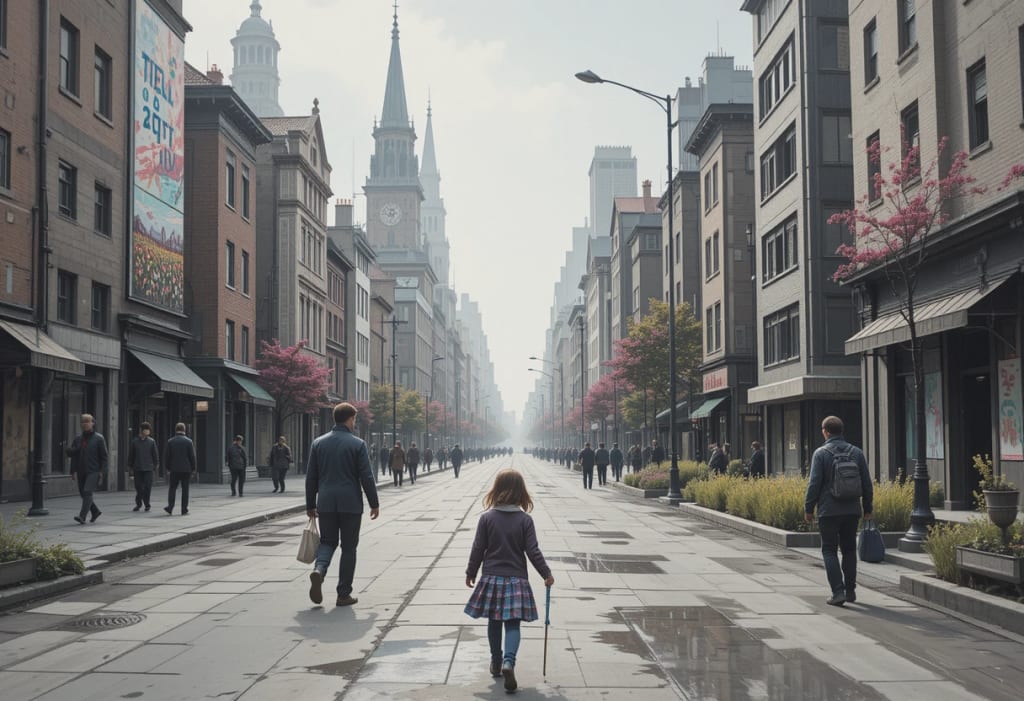
It started quietly, as if the city had taken a deep breath and let all color escape.
I woke to gray skies and streets stripped of vibrancy. My walls, my clothes, the garden outside—everything was a shade of ash, steel, and stone. Even the sunlight seemed pallid, like paper left too long in the sun. I rubbed my eyes, convinced it was a trick of sleep. But the world outside my window confirmed my fear.
People wandered the streets, but it wasn’t just color that had vanished. Their faces were blank. Their smiles, their frowns, all dulled. Even laughter sounded hollow.
And I, a painter by trade, felt a strange weight in my chest. My brushes rested untouched. I could no longer summon the feelings associated with the reds of passion, the greens of hope, or the yellows of joy. It was as if the city had forgotten how to feel.
I wasn’t alone in noticing.
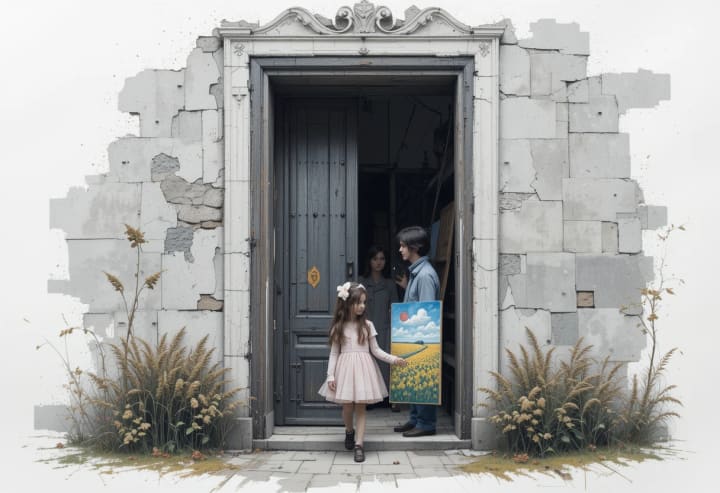
While sketching lifeless buildings in my studio, a child appeared at my doorway. Her eyes were wide, gray as the world, but bright with something stubborn: recognition.
“I can see it,” she whispered.
“See what?” I asked, startled.
“Colors,” she said. “I can feel they’re gone, but I know they exist somewhere.”
Her words were small, yet heavy with certainty. And in that certainty, I found hope.
We decided to act.
The first step was understanding. We wandered the city, observing the absence. Parks were gray patches, flowers like crumpled paper. Grocery stores offered produce in shades of concrete. Art galleries were monochrome nightmares. The more we walked, the more we realized that no one else seemed to notice—or if they did, they accepted it.
The child, whom I learned was named Lila, held my hand tightly. “We have to remember,” she said. “If we do, maybe it’ll come back.”
We started small.
I pulled out a box of pastels, still colored somewhere in my studio. Lila dipped her tiny fingers in a corner of violet and smudged it onto a page. A flicker of sensation passed through me—like a memory brushing my skin. She giggled, a sound more vivid than anything we had heard in days.
Encouraged, I painted alongside her: a crimson sunset, a field of green wheat, a robin’s egg blue sky. The colors shimmered faintly at first, as though hesitant, but each stroke coaxed them back a little further.
Then, something miraculous happened.
When we carried the paintings into the streets, we noticed pedestrians glancing at them, eyes widening, faint flickers of recognition crossing their features. It was subtle at first: a raised corner of a mouth, a shiver of awe. But as we displayed more, emotions began returning. People paused. They touched the flowers, the walls, even the paintings. The world seemed to breathe color again, slowly, cautiously.
We discovered that the key wasn’t just seeing, but feeling. Colors needed memory to exist. People couldn’t perceive red until they remembered anger, love, or warmth. Blue returned only when someone recalled sorrow, longing, or calm.
I realized the child had a gift. Lila could awaken those memories with a simple touch or smile. I began to follow her lead, painting the city not as it was, but as it felt. Together, we restored color one emotion at a time.
By evening, the streets had faint hues: pink in the clouds, emerald in the park, amber in the streetlights. People were laughing, crying, whispering, suddenly aware of what they had lost. The city felt alive, though not perfect. Shadows lingered in corners where memories had been forgotten too long.
But Lila and I persisted. We painted murals on walls, sketched in alleyways, handed out tiny swatches of color. The city slowly remembered how to feel, and with it, how to see.
When the sun set, the city glowed. Neon signs flickered with intensity, flowers seemed to bloom more brightly, and the river caught the orange of twilight as if it had been waiting for decades to reflect it again.
I looked down at Lila, her tiny hands covered in pigments. “We did it,” I said softly.
She nodded, but her eyes held a knowing expression. “Colors never really leave,” she said. “They just wait for someone to remind us.”
That night, I returned to my studio, brushes in hand. The city outside was no longer gray, but alive in every shade and hue. I realized that painting wasn’t just my craft—it was my responsibility. To remember. To help others remember.
And somewhere deep inside, I knew that the colors we restored weren’t only outside—they were in us, in our hearts, and in the memory of our shared world.
About the Creator
Keep reading
More stories from waseem khan and writers in Fiction and other communities.
The Café That Served Emotions
The Café That Served Emotions The café wasn’t on any map. Not in guidebooks, not on GPS, not even on the neon-lit streets of downtown. You stumbled upon it when you weren’t looking, through a narrow alley framed by ivy and flickering lanterns. The sign read simply: “Café Émotion”, its letters curling like smoke.
By waseem khan7 months ago in Fiction
TUS NUA - ch 53
TUS NUA – ch 53 New Beginnings – Mia and Midnight (*)(*)(*) Finola knew Ali’s brother-in-law needed to put his mind at rest. She fed her arm through his and led him outside. “We’ll sit here. If you like, I can put a block around us so our conversation will be private.”
By Margaret Brennana day ago in Fiction



Comments
There are no comments for this story
Be the first to respond and start the conversation.