
The Day of Truth
In a quiet town, one day a year strips away every lie—whether whispered, shouted, or hidden in silence.

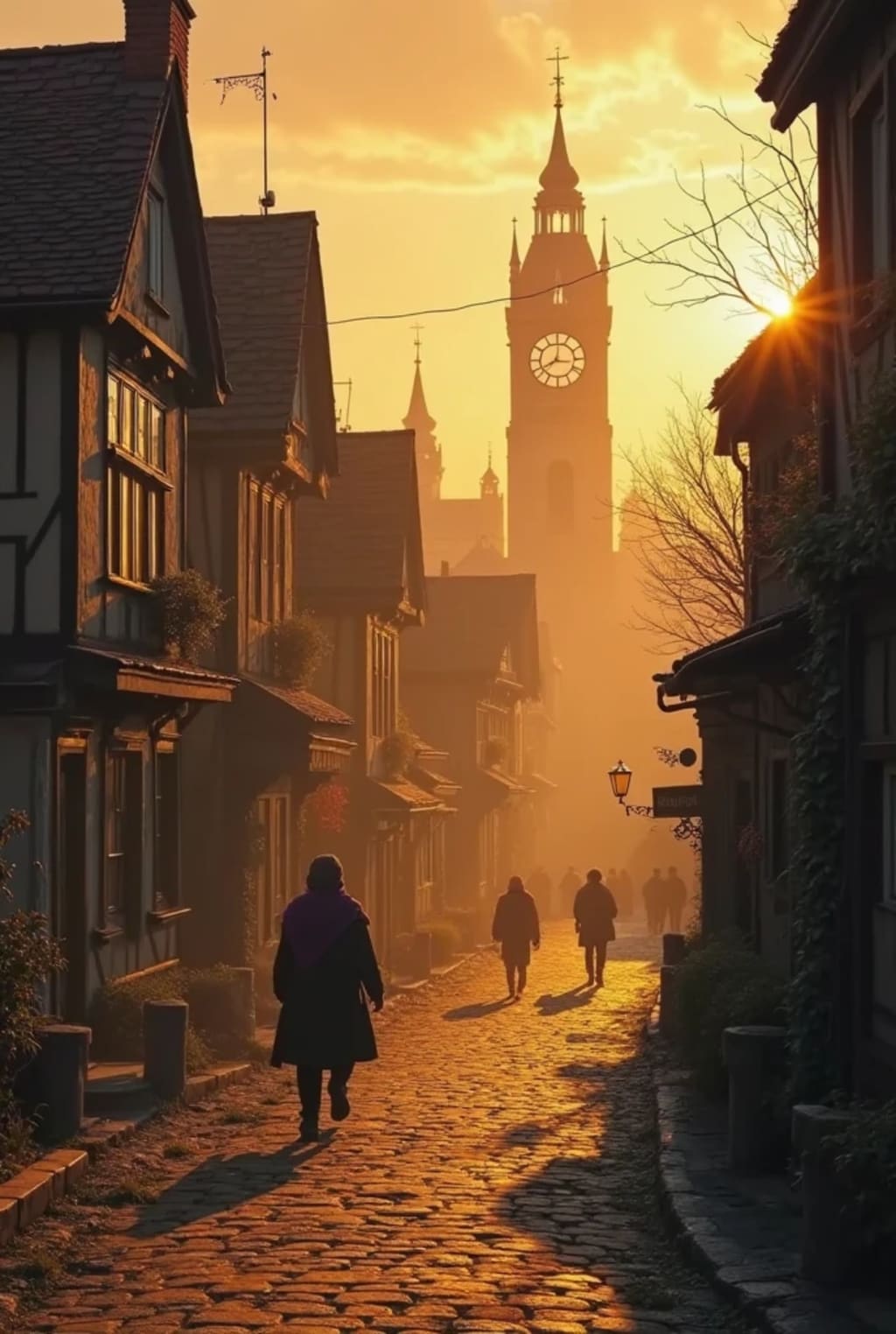
In Eldenbrook, people were careful with their words.
They greeted each other with polite smiles. They complimented their neighbors’ gardens, praised casseroles they didn’t like, and said “I’m fine” when their hearts were aching.
But once a year, on the first day of spring, something changed.
The Day of Truth began.
No one knew how or why it started. Some blamed the well at the edge of town, others whispered of an old curse. But everyone in Eldenbrook knew this: from midnight to midnight, no one could lie.
Not in words.
Not in silence.
Not even to themselves.
It always began the same way.
At 12:01 AM, the town's clock tower chimed once—and truth began to rise like steam from the ground.
You could try to be quiet, but it wouldn’t save you.
If someone asked a question, your answer came out, raw and real. If you tried to nod politely, your eyes would betray you. Even a smile could stretch into something too wide, too honest.
It was a day of weddings and divorces. Of tearful apologies and shattered friendships. A day where secrets were no longer safe.
Some people called it cruel.
But others? Others waited all year for this day.
Clara Bell, age 17, had been counting down the days.
Every other day, she was quiet. She smiled at her teachers, nodded when her father spoke sharply, and said nothing when the popular girls laughed too loudly behind her back.
But on the Day of Truth, she could not pretend. She didn’t have to.
Last year, she told Daniel Wright, the boy who sat two rows ahead of her in history class, “I think about kissing you when you touch your hair like that.”
He had blinked.
Then he had smiled.
This year, she hoped he’d speak first.
In the mayor’s house, Gerald Pierce stared at himself in the mirror. The lines on his face were deeper than last year.
He hated this day.
For a man who built a life on diplomacy and saying the "right" thing, the Day of Truth was a disaster. Last year, he’d admitted that he never wanted to be mayor at all. That he'd only run to impress his father. He’d said the town made him feel like he was drowning in molasses.
The council hadn't forgiven him. Neither had his wife.
This year, he planned to stay in bed.
Elsewhere in town, Ms. Halloway, the librarian, polished her glasses and sat in her favorite chair.
She loved the Day of Truth.
She waited for it like some people wait for snow or summer break.
Because for one day, people came to the library not for books—but for honesty.
Last year, a boy came in crying. He asked her, “Will I always feel this broken?”
She had looked him in the eye and said, “No. You’re still healing. Broken is just one chapter.”
He had hugged her.
This year, she hoped someone else would ask something just as important.
And then there was Eli.
Every year, Eli stood in the town square and shouted his truth:
“I didn’t mean to kill him!”
His brother had died in a car accident when they were teenagers. Eli had been driving. No one blamed him. Except himself.
Every year, someone would try to comfort him. Every year, he would cry harder.
But this year, someone else stood beside him.
Clara.
She stepped into the square and looked him in the eye.
“I don’t think it was your fault either,” she said.
Her voice didn’t shake.
Because on the Day of Truth, truths connect people, even the painful ones.
By evening, Eldenbrook was a changed place.
People walked with lighter steps. Couples held hands tighter. Some walked away alone—but straighter, stronger.
Daniel found Clara at the library.
“I think about kissing you too,” he said, breathless.
She smiled.
It wasn’t perfect. Truth never is.
But it was real.
And that mattered.
As midnight approached, the clock tower began to chime again.
Twelve slow, heavy beats.
The spell would lift. The lies would return. But something lingered—like the aftertaste of honey or the warmth of a hand just held.
In Eldenbrook, people learned, year after year, that truth doesn’t always destroy.
Sometimes, it builds.
About the Creator
Muhammad Hamza Safi
Hi, I'm Muhammad Hamza Safi — a writer exploring education, youth culture, and the impact of tech and social media on our lives. I share real stories, digital trends, and thought-provoking takes on the world we’re shaping.
Keep reading
More stories from Muhammad Hamza Safi and writers in Fiction and other communities.
The Dream That Binds Us
Nobody remembers when the dreaming began. Some say it started after the war, others say it began when the last train left the station, rusting quietly on its tracks as vines claimed its wheels. But in Evershade, a village tucked between mist-covered hills, everyone dreams the same dream—every night.
By Muhammad Hamza Safi10 months ago in Fiction
Lightning Never Strikes Twice
The distant rumble, the sudden deluge, the crescendo of sound, the flash of light, the explosive energy — it never gets old. I became an amateur storm chaser about two years ago. My wife, Cindy suggested it. Sort of. She said, "Alex, you know this cancer is killing me. I've come to terms with that, but you're smothering me. Go join a band, write a book, or become a storm chaser, for all I care. I love you, but you need a hobby."
By Julie Lacksonen6 days ago in Fiction




Comments
There are no comments for this story
Be the first to respond and start the conversation.