
The Day America Started Over
It didn’t begin with a war or a speech. It began with silence.

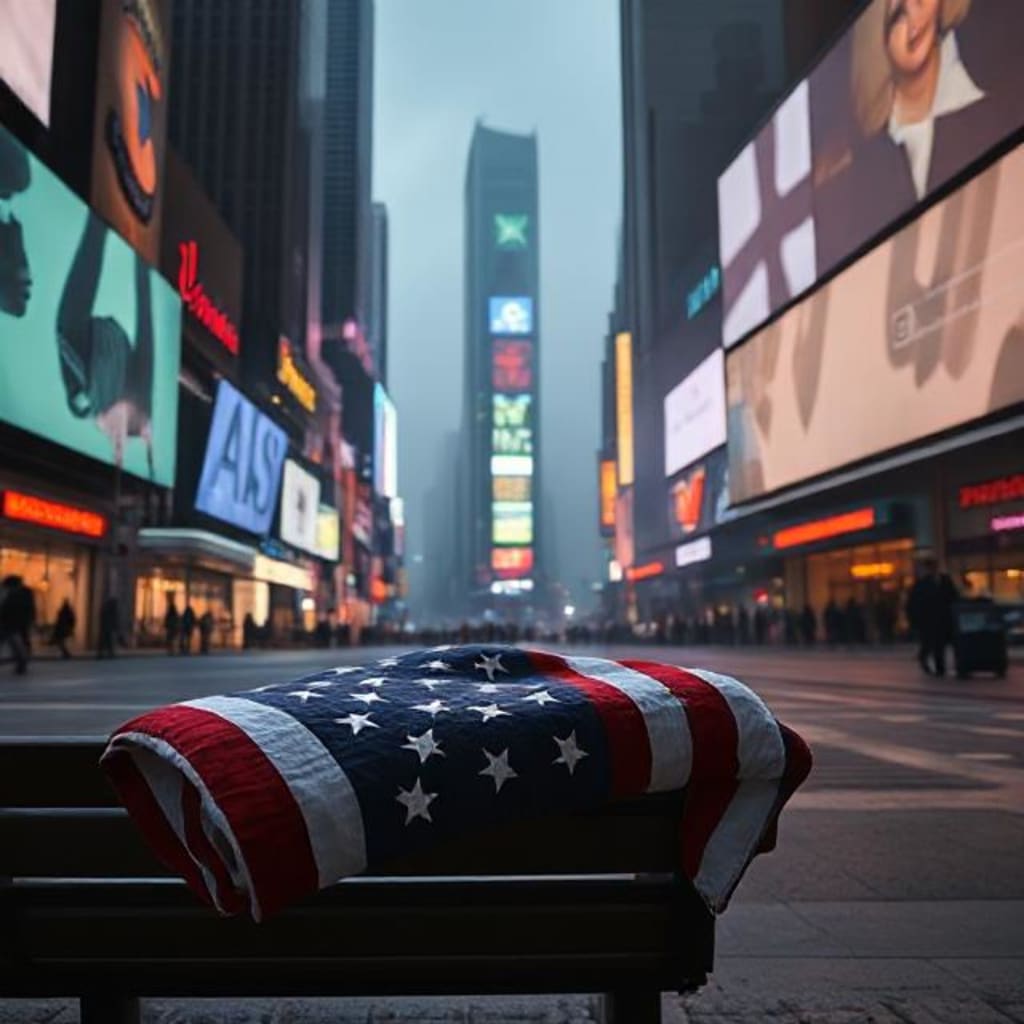
The day the United States fell silent, I knew the old world was gone.
No alarms. No sirens. No breaking news. Just... silence.
On that Monday morning, the phones stopped buzzing. The internet vanished. Planes sat grounded. The stock market froze. And the president didn’t speak.
Not a word.
Not a tweet.
Not a press conference.
People ran to churches, grocery stores, state capitols, and rooftops. But there were no answers. Only questions—and quiet.
I was standing in Times Square when the screens blinked to black. No ads. No music. No noise.
Just a single sentence slowly glowing in white text:
> “America has been paused.”
---
We thought it was a cyberattack. Or a coup. Or aliens.
But it wasn’t any of those things.
It was… us.
Turns out, there was a “Failsafe Protocol”—something the founding fathers dreamed of but never finalized. A digital constitution, buried for centuries in servers beneath Washington, D.C. It was designed to activate when the country became “unlivable by truth.”
No one knew who triggered it. Some say it was an AI watchdog. Others say it was the ghost of Lincoln.
But whoever—or whatever—did it, they hit one button. And reset the system.
The United States was no longer a government.
It was a question:
> “What kind of world do you want now?”
---
We didn’t answer right away.
In fact, for the first two weeks, everything was chaos. Power grids overloaded. Police vanished. Banks locked up. People fought for bottled water and used old CDs as mirrors in broken bathrooms.
But then something strange happened.
Without instructions, people started organizing themselves.
Neighborhoods elected local leaders—not politicians, but nurses, teachers, and grandmothers. Farmers opened free food stands on highways. Writers set up outdoor typewriters, offering to tell your story for a cup of tea. Former soldiers became peacekeepers. Teenagers ran bartering networks on whiteboards.
There were no official borders anymore, but there was unity.
---
The old map was gone.
The fifty states were still there physically, but emotionally, they had crumbled.
In their place, rose what people called “Circles”—groups of communities built around values, not geography.
There was the Green Circle, focused on the land and food. The Justice Circle, made up of healers and historians. The Mosaic, built by artists, dancers, and dreamers. And then came the Circle of the Storykeepers—a scattered, mysterious network of people who carried tales like treasure.
I joined that one.
I didn’t have power or money, but I had something even more valuable in the New America: words.
---
Our stories became currency.
In the absence of banks, we traded poems for bread, songs for seeds, wisdom for warmth. Your truth determined your worth—not your zip code or resume.
Every Friday, across all Circles, we’d gather for “The Recall” — a night where anyone could speak.
Children told what they remembered of school. Immigrants shared what they missed about their homelands. Veterans described peace like a language they never got to learn.
And for the first time, no one interrupted.
---
What shocked me most wasn’t what we lost—but what we never needed.
No one cared about luxury watches. No one mentioned Bitcoin. No one missed celebrity scandals or reality TV. We had been chasing noise for decades, mistaking it for meaning.
In the New America, we were chasing something else: connection.
We held hands instead of phones. We looked at stars instead of screens. We told each other, “I see you,” and we meant it.
And slowly, the country began again—not with a pledge or anthem, but with a whisper:
“We remember who we are.”
---
A year later, someone found a flag.
It was buried in a school basement—dusty, faded, with 50 stars still shining. But no one knew what to do with it. It no longer matched who we were.
So we did something wild.
We rewrote it.
The new flag had no stars, but a blank circle—symbolizing the unity of all people, voices, and stories. The red stripe was still there, but thinner—less angry, more hopeful.
And instead of pledging allegiance to a republic, we pledged to each other:
> “I vow to listen before I speak.
I vow to build, not break.
I vow to remember—
That we are the story we tell.”
---
The United States wasn’t reborn through politics.
It was reborn through truth.
Not the loud kind that shouts on news channels.
The quiet kind. The personal kind. The kind you share when someone asks, “How are you, really?”
It didn’t take a revolution.
It took a pause.
And when we finally hit play again, we chose to write a better world.
---
About the Creator
Muhammad Riaz
- Writer. Thinker. Storyteller. I’m Muhammad Riaz, sharing honest stories that inspire, reflect, and connect. Writing about life, society, and ideas that matter. Let’s grow through words.
Keep reading
More stories from Muhammad Riaz and writers in Fiction and other communities.
Miss Persephone's Manual to a Seemingly Ordinary Life
Miss Persephone was found at the dining table, her blue eyes swollen, her tears arriving and retreating like the tides of the ocean. Earlier that day, her family had visited her in the retirement home where she had lived for eight years. It was her eightieth birthday.
By Imola Tóth2 days ago in Fiction



Comments (1)
amazing