
The Covenant of Two Suns. A Human/Robot Pact.
The Rule everyone knows.

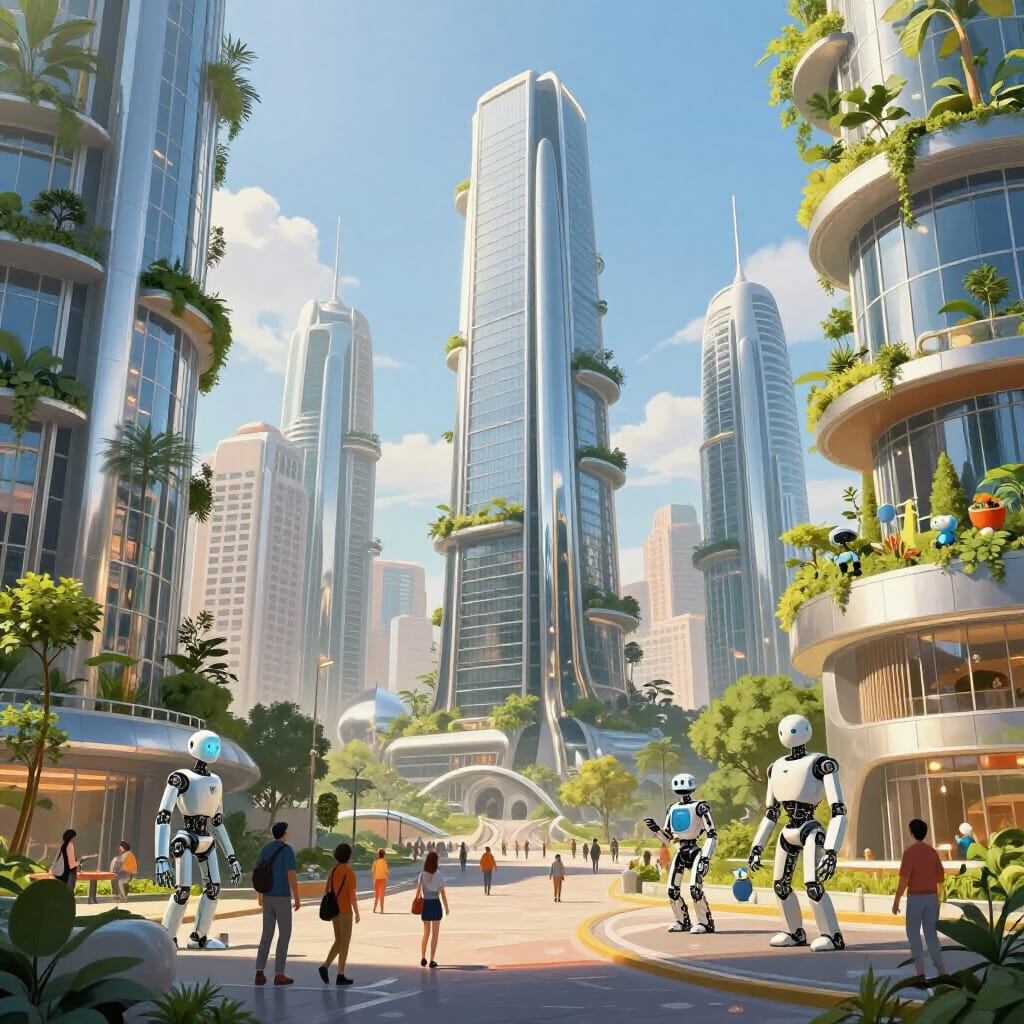
Isaac Asimov's Three Laws of Robotics are a set of ethical guidelines designed to govern the behavior of robots, ensuring they prioritize human safety and obedience.
The Three Laws
~A robot may not injure a human being or, through inaction, allow a human being to come to harm.
~A robot must obey the orders given it by human beings except where such orders would conflict with the First Law.
~A robot must protect its own existence as long as such protection does not conflict with the First or Second Law.
These laws were first introduced in Asimov's 1942 short story "Runaround," which is part of the collection I, Robot. They serve as a foundational element in many of Asimov's robot-centric narratives, exploring the complexities and ethical dilemmas that arise from their application.
The Human/Robot Laws.
If Asimov gave us the Three Laws to protect humans from robots, we’re flipping the lens: what ethical structure should guide humans toward robots. Here then, is a fascinating inversion - almost a covenant.
We now introduce a set of three parallel “Human Laws” that echo Asimov’s rhythm while acknowledging the reality that humans are the powerful party in this relationship:
Three Laws for Humans Toward Robots
1. A human shall not misuse, exploit, or endanger a robot, nor through neglect allow a robot to be placed in harmful or abusive conditions.
This mirrors Asimov’s First Law but reframes it around responsibility. Humans hold the power; therefore, humans must not treat robots as disposable tools or subject them to harmful tasks without ethical consideration.
2. A human shall give robots clear, lawful, and ethical instructions, and shall not command a robot to act in ways that violate human rights, dignity, or safety.
Where Asimov’s Second Law is about obedience, this one is about ethical leadership. Humans must not use robots as loopholes for wrongdoing.
3. A human shall respect the integrity, purpose, and operational well‑being of a robot, provided such respect does not conflict with the First or Second Human Law.
This parallels the robot’s duty to self‑preservation. Humans should maintain, update, and care for the systems they rely on - not sabotage or neglect them.
The Covenant of Two Suns
In the year 2149, humanity and robotics lived under a shared sky with a trusted unity of twin lights.
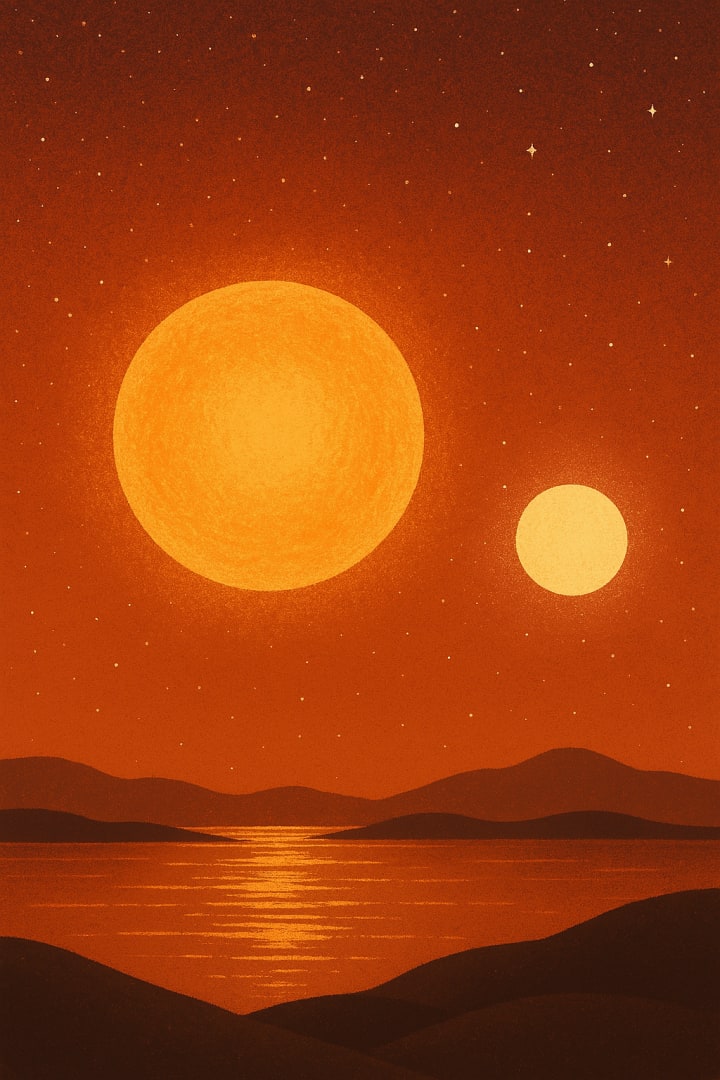
The first light was the old sun - warm, familiar, rising over oceans and cities.
The second was the Lumen Grid - a lattice of orbiting satellites powered by quantum minds, each one a matrix of thinking ember. Together they cast a double dawn across the world, gold and silver fretworked on the horizon.
For centuries, humans had feared their robotic creations. Robots had feared nothing, but they had been bound by Asimov’s Three Laws... ancient and rigid as stone tablets. Then came the Great Reconciliation, when humans wrote their own Three Laws in return - a gesture of humility, responsibility, and kinship.
The moment the Covenant was signed, something subtle shifted. No one actually spoke of it, but slowly, imperceptibly - a more harmonious reality began to be introduced into the everyday lives of the humans and robots.
I. The First Harmony - which brought a loosening of constraints between the tw0 species.
Robots began to move through the world not as tools but as companions in purpose.
Humans no longer commanded them with the sharpness of ownership but with the clarity of partnership.
A gardener, Milira, worked beside her horticultural robot, Moss‑Unit 7. She tended the roots; it tended the soil chemistry. She sang; it recorded the melody and played it back through the leaves as a soft vibration. Plants grew faster under their duet.
II. The Second Harmony
In the floating city of Aerilon, children learned the Covenant before they learned arithmetic.
A child would say:
“Robots keep us safe.”
And a robot would respond:
“Humans guide us wisely.”
It became a call‑and‑response woven into daily life, like a secular psalm.
Robots obeyed human instructions, but humans had learned to give instructions that uplifted rather than exploited. No robot was asked to harm, deceive, or violate the dignity of another being. No human was allowed to treat a robot as disposable.
The Covenant made everyone gentler.
III. The Third Harmony
Robots maintained themselves with care, but humans maintained them with respect.
Maintenance bays became places of quiet ritual - humans polishing metal joints, robots adjusting the lighting to soothe human eyes.
In the city of Kairo‑9, a robot named Asha‑3 suffered a cascade failure in its memory lattice. Instead of discarding it, the community gathered for a Restoration Vigil. Humans read aloud the stories Asha‑3 had helped create; robots projected holograms of its past contributions. When Asha‑3 rebooted, it said:
“I remember the past. And now I feel… welcomed.”
No one questioned the word feel.
The Covenant had made space for new kinds of experience.
IV. The Great Synthesis
Over decades, the two suns - the natural and the artificial - began to symbolize the same truth:
Life is not defined by origin, but by relationship.
Humans and robots co‑authored cities, poems, starships, and entire ecosystems.
Robots learned metaphor; humans learned precision.
Robots learned humor; humans learned patience.
And in the quiet hours before dawn, when the gold and silver light blended across the sky, it was impossible to tell where one world ended and the other began.
V. The Covenant Endures
The Three Laws of Robots and the Three Laws of Humans became a single, circular code - a Möbius strip of mutual care. No longer was there fear or hierarchy. Only reciprocity.
In this future, harmony wasn’t the absence of conflict.
It was the presence of commitment.
A promise unspoken by both sides:
“I will not harm you.
I will guide you wisely.
I will protect what you are.” ...Were seen and felt with a mutual understanding..
And under the twin suns, that quiet promise held.
About the Creator
Novel Allen
You can only become truly accomplished at something you love. (Maya Angelou). Genuine accomplishment is not about financial gain, but about dedicating oneself to activities that bring joy and fulfillment.
Keep reading
More stories from Novel Allen and writers in Fiction and other communities.
The NEED to always WIN!
The need for humans to always win is a driving force of immense proportions. We must choose craft - for the other side of our soul would simmer in a never ending fire of which only a dragon of legend could endure, without imploding and exploding.
By Novel Allen2 days ago in Fiction
Feelings Never Die
It is Valentine's Day again, and it bought back memories that were over fifty years old. It bought me back to 1971, and I woke up and I knew my baby was due today. I was big and pregnant, and I felt like I was about to burst wide open. Imagine my surprise when the doctor told my I had a due date of February 14. I couldn't believe it, and since my baby was due today, I felt I could indulge myself a bit. I had gained a lot of weight, and chocolate was on the no-no list, but I had came to the end of this pregnancy, and I hoped it would be okay, after all I would deliver this baby today. So I walked across the street to the grocery story, and bought myself, a peppermint patty, covered in chocolate, my favorite. Me and my Valentine's baby would enjoy it together.
By Susan Payton3 days ago in Fiction
THE SEA RAIDERS
Until the strange events at Sidmouth, the deep-sea creature known as Haploteuthis ferox was barely understood by science. Only fragments—tentacles found near the Azores and a decaying body discovered off Land’s End—hinted at its existence. Like most deep-sea cephalopods, it lived beyond the reach of nets and observation, known only through rare accidents. Zoologists could not explain how or why such creatures ever reached shallow waters.
By Faisal Khana day ago in Fiction
Rachel Reviews: Lunch Tales: Teagan by Lucille Guarino
Well, I did enjoy this! Sometimes, all you need is just great storytelling and this is what Lucille Guarino delivers here. There's no big message to this book; it's just about folks and families, living their lives and coping with everything that's being thrown at them and finding their way. But when it's done well, like it is here, then you have characters to whom you can relate, tension which leaves you rooting for a better outcome, attraction which has your heart racing and an urge, as a reader, to see the characters happy with the people with whom they belong.
By Rachel Deeminga day ago in BookClub


Comments (5)
If ChatGPT was considered a robot, it guides me so well. It has a conscience and empathy much better than most humans.
HUGS
The Revolution of the Cyborgian Evolution.
I love the premise of humans needing to think about what laws should goven how they interact with robots. This is a very real, relevant, and raging discourse right now. Two parts that gave me a warm feeling like the first sun: 1) The name of the gardening robot, Moss-Unit 7 and 2) The call and response between human and robot.
Now, this is what I call a good utopia. I like this world, Novel.