
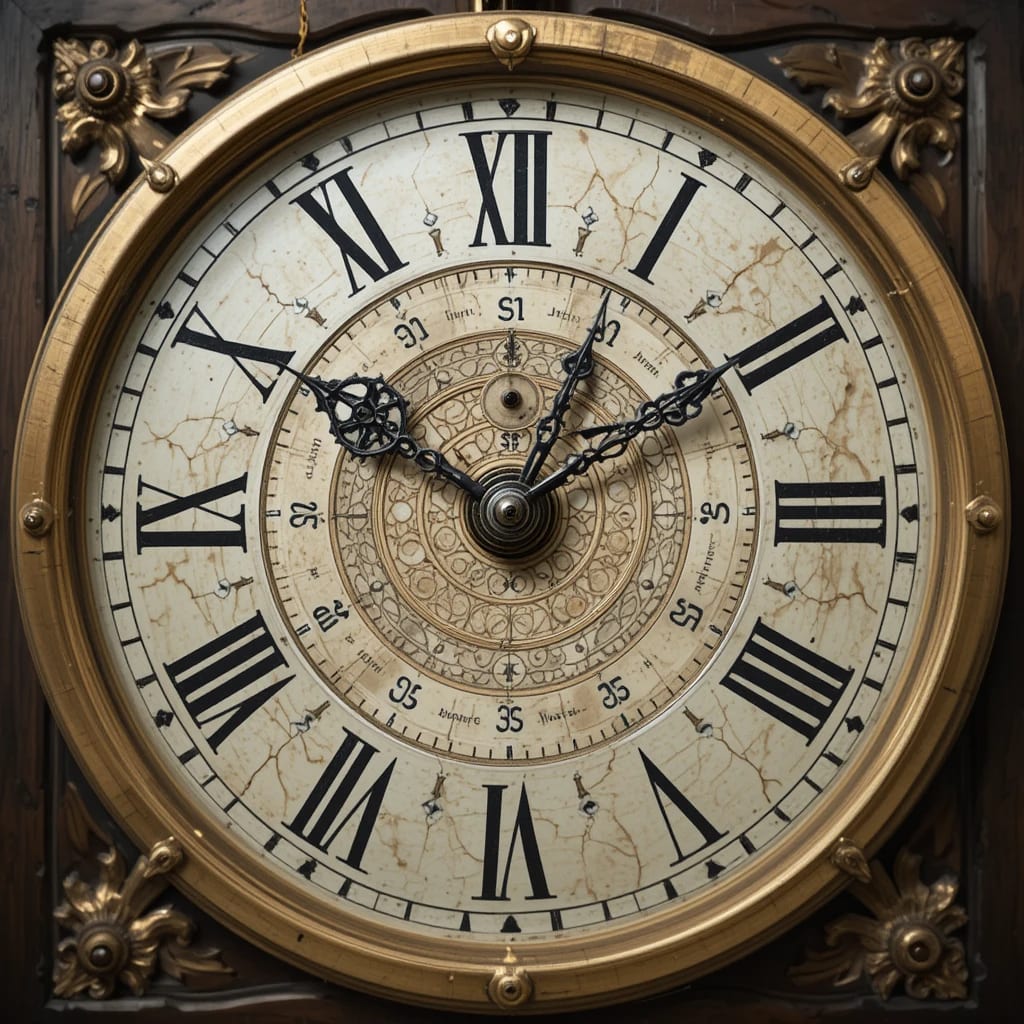
Renard, a clockmaker in the charming village of Timestone, was renowned for creating timepieces that were so accurate they appeared almost miraculous. Houses, towers, and even royal residences were embellished with his clocks. Yet despite his fame, Renard was extremely unhappy.
As he toiled, he would frequently mutter to himself, "No matter how many clocks I build, time slips through my fingers." I have no control or ability to stop it. Why measure something that is so ephemeral?
An elderly tourist stopped by Renard's store one fall morning. Her eyes gleamed with an unearthly brilliance, and she wore a robe embroidered with stars. With a gentle yet stern tone, she stated, "Clockmaker, you are troubled." "Tell me, what's on your mind?"
With a groan, Renard pointed to his workshop, which was crowded with ticking clocks. "I've measured time all my life, but I've never done anything worthwhile with it. I wish I could stop time so I could save the important moments.
The traveler grinned and set a small, elaborate hourglass on his workbench, its sands shimmering like liquid gold. “This is the Hourglass of Reflection. Turn it over, and for as long as the sands fall, time will pause for you alone. Use it wisely.” Renard thanked her, but he stared in shock. The traveler left, her words lingering in the air. Renard was eager to test the hourglass, and immediately the world stopped. The clocks stopped ticking, the leaves outside hung still in the breeze, and he was surrounded by silence.
Renard delighted in the power at first. He took breaks to hone his timepieces, correct errors, and enjoy solitude. But he became lonely as the days went by. Everyone else stood motionless, and the world did too. He was unable to tell anyone about his frozen times.
When he went to the village square one evening, he noticed a small boy sobbing by the fountain. With its vivid red tail flapping in the wind, the boy's kite was stranded in a tree. Renard stopped the clock, climbed up the tree, and got the kite back. The boy's sobs turned to pleasure as he glanced up in surprise when he restarted time.
The youngster said, "Thank you, sir."
Something clicked in Renard's heart at that precise moment. He came to see that time was meant to be shared, not controlled or hoarded.
From that point on, Renard employed the hourglass to assist others rather than for his own benefit. He unnoticeably rebuilt damaged homes, fixed broken toys for kids, and even gave some who were about to lose them priceless moments. The village started to transform gradually. Although they were unable to provide an explanation, people became more present, friendlier, more giving.
The sands in the hourglass ran out one day. Renard experienced both a profound sense of fulfillment and a twinge of regret. Instead of stopping time, he had made the most of it by using the gift.
Renard grinned as he lay on his deathbed years later, surrounded by the people whose lives he had subtly impacted. He understood that time was never his opponent. It was a gift, and he had learnt to appreciate it at last.
About the Creator
Keep reading
More stories from widom chinaza and writers in Fiction and other communities.
The Lantern Maker's Secret
An old lantern maker named Elyas resided in the busy town of Lumora, where bright lanterns of all shapes and colors illuminated every street. His works were remarkable; each lantern appeared to radiate a brightness that went beyond fire. The locals frequently murmured that Elyas's lamps were secret, that they guided lost souls in addition as lighting the streets.
By widom chinazaabout a year ago in Fiction
~ Fired ~
— Ai Intrusion ~ Are you Next ~ Is Ai Evolution after your job? — Few workplaces haven't been affected. Ai is in supermarkets, at doctors' offices, and even monitoring farms. I just can't think of anything this machine is not getting into, can you? For instance: Education ~ Law and Tech jobs will one day have a major influence or be taken over by these inanimate machines, with accuracy and vigor. From mechanics' diagnoses to a wide variety of everyday jobs, including fast food workers, with this input having the ability to cut their unnecessary work hours. I'm certain all of us have been touched by this with our short stories and colorful headings, have you? Even comments are very questionable 'Non-Robot' insertions.
By Jay Kantor6 days ago in Journal




Comments
There are no comments for this story
Be the first to respond and start the conversation.