
The Clock That Forgot Time
A journey into the silence of existence and the meaning we chase

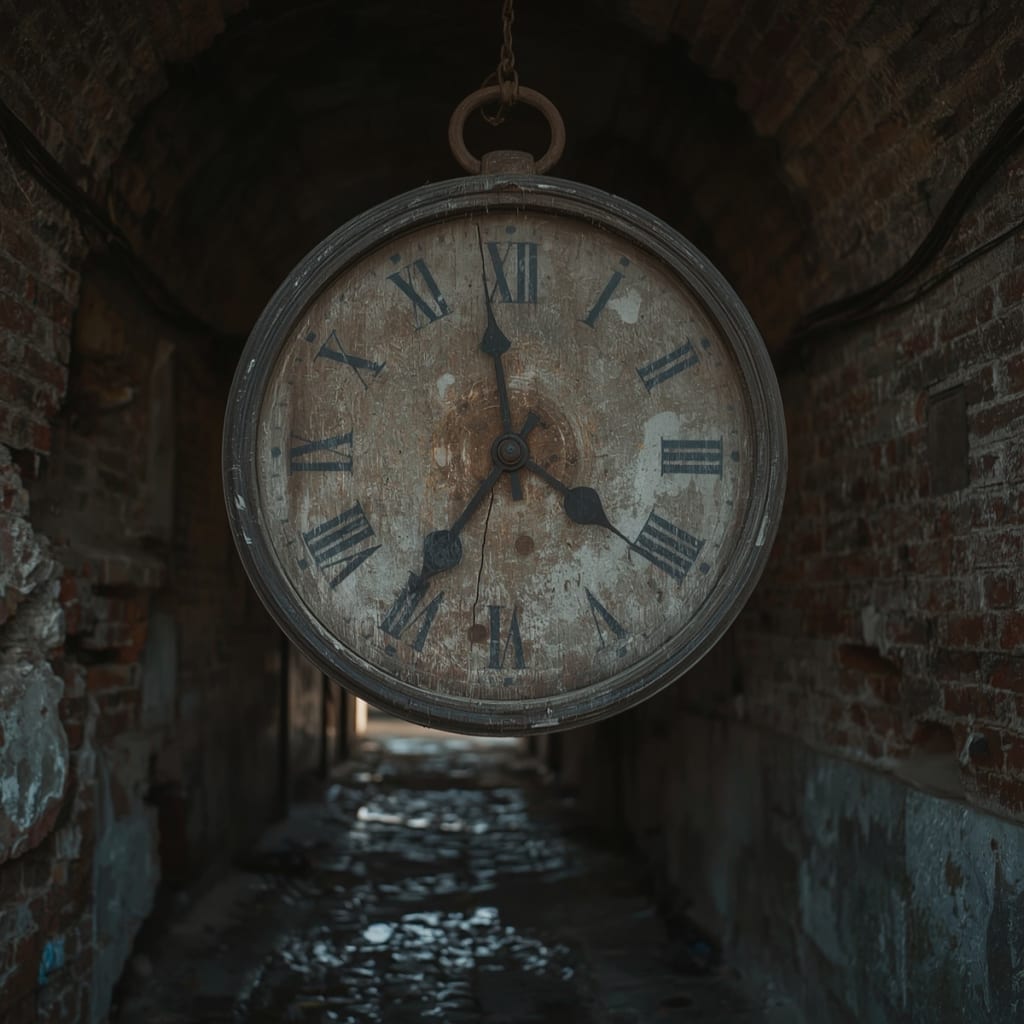
It hung silently above a narrow alley, half-covered in dust, half-forgotten by the city that once moved with its ticking. The clock’s hands had frozen long ago, stuck between hours that no one could name anymore. People passed beneath it every day—children rushing to school, merchants shouting about their goods, workers dragging their tired feet home—but none of them noticed. To them, it was just another relic in a city already full of relics.
All except one man.
An old philosopher, his back slightly bent and his beard streaked with silver, would sit every afternoon on the bench across from the broken clock. His name was Elias, though most of the younger generation called him simply the strange old man. While the world around him hurried forward, Elias stayed still, his gaze fixed on the hands that no longer moved.
One curious boy once asked him, “Why do you sit here every day, staring at a clock that doesn’t work?”
Elias smiled, his eyes twinkling. “That is exactly why I sit here, child. Because this is the only honest clock I have ever seen.”
The boy tilted his head, confused. Elias continued, “Every working clock tells us that time is running away. Tick, tock, tick, tock—always pushing us forward, making us feel late, making us feel small. But this clock has stopped lying. It has remembered what the others forget: time is not running. We are.”
The City of Rushing Feet
The city was obsessed with time. People carried watches on their wrists, checked the glowing numbers on their phones, cursed when buses were late by a minute. Even conversations were cut short with “I don’t have time.” The more people chased after time, the less of it they seemed to feel.
But the alley with the silent clock became a place of pause. Some people, curious about the old man’s devotion, stopped to listen. A young woman who worked in an office came one evening, her shoulders heavy with exhaustion.
“What do you see in it?” she asked, pointing at the broken hands.
“I see freedom,” Elias answered. “As long as we let clocks rule us, we are prisoners. But when the clock forgets time, we remember how to live.”
The woman frowned. “But without time, how do we know when to work, when to eat, when to sleep?”
Elias chuckled. “Ah, you confuse rhythm with time. Life has its own rhythm: the rising of the sun, the hunger in your belly, the pull of your eyelids when night comes. Clocks did not invent these things. We did not need numbers to breathe before they existed.”
The woman said nothing more, but the next day she returned. Not long after, others did too.
A Symbol of Stillness
The alley transformed. Where once people hurried through without looking up, now they paused. They gathered around Elias, not as students around a teacher, but as seekers around a quiet flame. Each person saw something different in the clock:
To a grieving mother, it was a reminder that her lost son still lived in her heart, untouched by passing hours.
To a restless artist, it was permission to paint without deadlines.
To an aging man, it was comfort that wrinkles were not chains, only stories written on skin.
And to the children, it was simply magic: a clock that refused to obey.
The city’s leaders grew puzzled. Why were people drawn to a broken object? Why were they gathering in the alley instead of shopping or working? Some even suggested fixing it, setting it ticking again. But whenever the idea arose, the people resisted.
“Fixing it would break it,” they said.
The Lesson of the Silent Clock
One autumn evening, as the leaves fell like golden rain, Elias felt his own time nearing its end. He spoke to the small crowd that had gathered:
“All my life, I chased numbers. I wanted more years, more days, more hours. But in the end, all I ever truly had was this moment. This breath. This heartbeat. This face before me.
The clock above us has forgotten time, yet it teaches better than any book: Life is not measured in minutes but in meaning. It is not counted in hours but in presence. When we forget time, we remember eternity.”
That night, Elias did not return home. He passed quietly in his sleep, his face calm, as though he had stepped outside of time altogether.
The Eternal Pause
After his death, the people wanted to honor him. Some proposed building a statue, others writing a book about his sayings. But in the end, they decided to do nothing. They left the alley exactly as it was, with the broken clock still hanging, still frozen, still silent.
And so it remained—not a monument of stone, but a reminder of stillness. Generations came and went, but the clock never ticked again.
When strangers passed by, they would ask, “Why does this city keep a broken clock?”
And the people would answer with a smile:
“Because sometimes, to truly live, you must forget time.”
Reflection
The clock that forgot time still hangs in the imagination of those who once stood before it. It asks a question that follows them into their daily lives:
Am I truly living, or am I only counting the hours?
#Philosophy #Time #Existence #LifeLessons #DeepThoughts #Wisdom #HumanCondition #TopStories #Eternity #Mindfulness
About the Creator
Abid Malik
Writing stories that touch the heart, stir the soul, and linger in the mind
Keep reading
More stories from Abid Malik and writers in Fiction and other communities.
When Silence Becomes Louder Than Words
It was a quiet Tuesday evening when Emily realized that silence could scream louder than any word. The dinner table was set, the chairs neatly aligned, the smell of roasted chicken lingering in the air—but the only sound was the steady tick of the old wooden clock hanging above the fireplace.
By Abid Malik6 months ago in Fiction
The sky is missing.
The sky went missing on a Thursday. No, the sky did not fall, neither did it just darken ~~~ it actually went missing. A clean, blank absence where blue should have been, like someone had peeled it off and forgotten to put it back. The sun still shone from somewhere, though no one could point to where... Shadows appeared without a source. Birds flew in neat formations across nothing at all.
By Antoni De'Leon6 days ago in Fiction


Comments
There are no comments for this story
Be the first to respond and start the conversation.