
The Cats are from the Future
by Bel Beeson

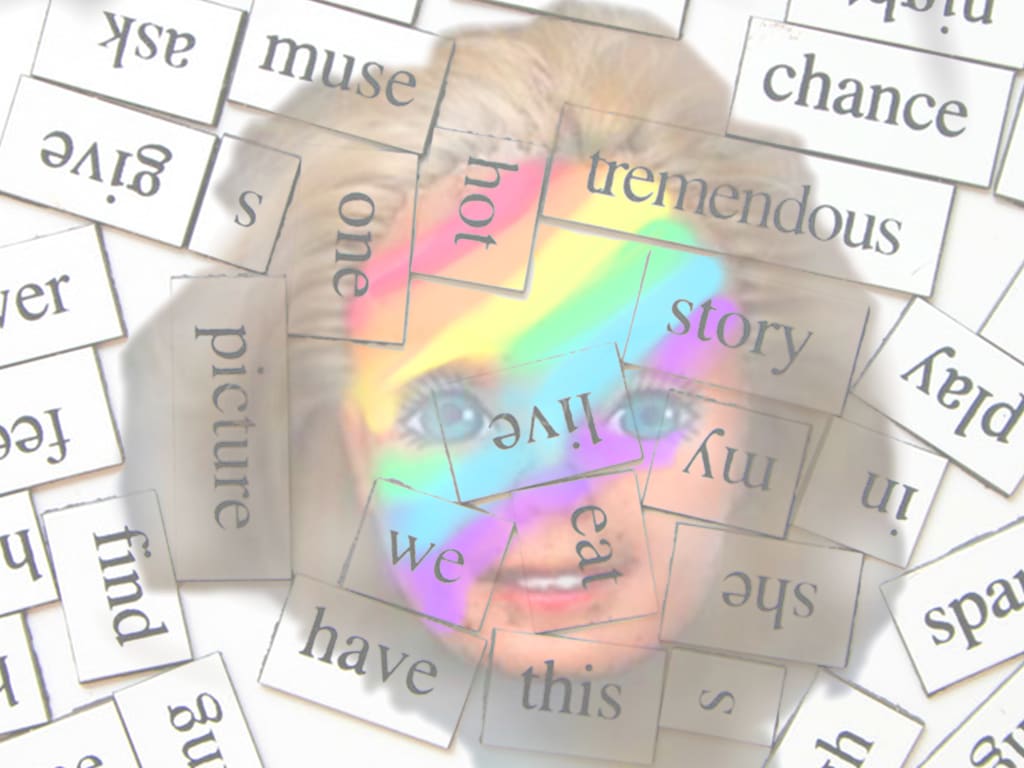
The cats used mornings to cuddle our crescent-moon Plutonian frames, and to hide small gifts beneath our cerulean sheets from their midnight hunts. I once found a dismembered Barbie head under my knee that had a face covered in crayon-spread rainbow with four uneven pigtails sticking out of its head in mini, neon rubber bands. We also found bottle caps from kombucha, glittery green plastic streamers from a child’s bicycle, and as the days got further away from the final protest–rocks. Before we let them go back outside, the cats brought us balls of lint, ruffled paper, coffee filters, and pieces of the carpet.
On the refrigerator door, we had stories pulled together by word magnets. My favorite: the cats are from the future. It didn’t take us long to believe it. I’d made the rule that the next sentences we made had to build on the others. And whenever we came home, we had to live by them.
We called the cats Pip and Pan. The cat who was a statue at the window we called Pip, because she waited endlessly, anticipating a lover who was always on their way. Pan, the tabby, was our friend so we gave her a name that would keep her from growing old and leaving. They’d found us while we were foraging for food and tools. That day, we had returned empty-handed except for them. They were the perfect catch because we were able to feed them tuna cans we’d never eaten because we didn’t have mayonnaise and spices. Even at the end, the bland tuna wasn’t appetizing. The cats loved it.
Winston and I had to ration our Xanax to save us from the heaviness of the end that hung over our heads like umbrellas filled with bricks. As we started to run out of pills, Winston twirled the bottle in his palms, barely eating the Amy’s pizza I’d warmed up for us. We stared at the wall like a tv screen, not out the window, where we had drawn with sharpies, a Plutonian universe where the cats were aliens floating in space suits, water flowed upwards, and we were dressed in apocalyptic steampunk attire, (how we had imagined we’d look) building a garden for visitors who were on their way. “We will need something else soon. This won’t last us forever.”
There was nothing else left outside, but dust and pieces of humanity randomized in piles of detritus from the 2020s. In the sepia-grey fog that day, all I could think up was an improv class I’d taken at the Starry Plough when I had found myself irrevocably depressed in my twenties, and in need of human interaction. While making up stories with fellow people, I found myself successfully suspended from my worries by stories poised into reality through our collaborative projections.
“We could make things up,” I suggested.
Winston slowly nodded his head, “Ok.”
We started with the refrigerator word magnets we’d received as a housewarming gift. I unwrapped them from the box meticulously, allowing the sensation of newness to reignite what Christmas morning felt like, or a birthday. We snapped them apart from each other, indulging in the bendy metal, and placed them like stickers onto the fridge.
Goldfish swimming around your head real life.
The kind aliens are coming.
Heart shaped locket means good.
Flowing pizza dough and a morning jog.
Toilets are the best thinkers.
Our truncated proverbs made me smile whenever we went to the freezer for the end of the world dinners. Sometimes I offered to make our Amy’s meals just to find a new verse one of us had placed on the fridge from a sleepless night, or a creative whim that came from staring at our space mural, or from who-knows-elsewhere.
The refrigerator had been in a faraday cage, along with other essentials, which we had saved when the EMP attack came. My grandfather invested early in Amy’s foods when he saw signs that the end of the world was coming. He stocked up our apartment with pounds of the boxed meals, plugging in an old freezer in the backyard for additional stock. “You’ll thank me someday,” he said without smiling. And now I know why.
After the final protest, we spent the first weeks in shock. Before we were the only ones left, we were dreamy-headed and driven by protest-fury as we fully imagined and realized the world where people would finally win this time.
It started with the socialist club that met at the bookstore on Shattuck street. They had already built out an entire plan guided by books, manifestos, and group conversation. Instead of watching the news, or paralyzed in worry about the prospect of an EMP attack or nuclear war, we organized in the basement of the bookstore, electing new officials, and drawing maps and timelines of our street wars.
We elected the government that would take over after we’d won. We voted unanimously, spending hours convincing any skeptics that the way the majority was voting was the best way. And when that didn’t work, we gave Gilligan, the store owner, the floor. She represented wisdom in the lack of care for her wiry white hair, and we found ease in her sea-green eyes, “the only way we can succeed is to try the things we haven’t done before.”
She’d been kind. We’d all seen her in the neighborhood before we all had come together. She had libraries of books with concrete and realistic examples of how socialist society worked. So we trusted her. We were all so careful, so politically correct. We elected a diverse cast: LGBTQIA+ leaders, black and brown leaders, and an even number of the young and the old. We listened to the language of the young and adopted it. We wrote a manifesto with the word-wielding sophistication of the old, and the jargon the young had created. But we also made it easy to understand, used synonyms, drew out examples and scenarios, and had an addendum written against each and every statement.
And then the EMP attack came; the final protest. We had already planned out our last attack with the police and national guard. We’d been fighting for months with weapons we’d had in junkyards, and that we’d safeguarded from the inventories and lifespans of our members. The riot gear that the police had were wearing down, since their supply couldn’t be renewed. We were hopeful that the fighting would end soon. But once the EMP attack cut off most of the electricity, we were stumped.
Winston was always late to things. The final protest had started 3 hours before, and we were still in our apartment trying to find a tool he said, “will help us if things go a certain direction.”
I asked him what it looked like, and he couldn’t describe it. I’d gathered that it was heavy and shaped similar to a hammer, but that was all I could muster from his panic and swiss cheese descriptions. As we searched through drawers and boxes in our garage for the mystery tool, he stopped at the large crack in the cement under the garage door spotlight, and said, “I don’t know if I saw it here or in a dream.”
I was quiet after that. Guilt fluttered in my writhing gut, realizing that I’d created a game of make believe that must have tricked his mind into thinking we were warriors with magical equipment that would demolish an army trafficked by the government.
“We should go now,” I told him. In our grey-dust peppered costumes we’d stored in the garage to keep from tracking into our lucid, color-filled home, we descended to the fighting lines on Telegraph. When we got there, we found what I had never made up my mind to understand. I’ll never be able to describe it, really. Besides the toppled over laundromat, with springs and heat poking up and billowing out of the rubbled rocks, everything was dead and unmoving.
As we walked home away from the end, Winston said, “Someone made a mistake. A bomb went off prematurely. No one could have wanted it to end that way.” We decided that we’d lost everyone on both sides that day, and we’d never know which side had ended it for us all.
When we got home, I showered with water from our metal bucket and pulled the sharpie out of the drawer I had only wanted to open if things had really turned dismal. I wrote, “It was a happy ending,” across the periwinkle tiles.
I used to complain to Winston about his disregard for time, his ability to accomplish nothing because he was waiting on a tool, or an idea that he didn’t have. But that night, as I warmed up two meals of Amy’s lentil soup, adding some salt (rationed, for nights that we really needed the pick-me-up), I muttered, “thank you.” He furrowed his eyebrows at first, wondering why the meal provider that night was thanking the receiver. He eventually grinned, and I imagined he knew why.
Our walks became a shorter radius than the previous day, and after a week or two, we were followed home by 2 cats. One was a devon rex cat, and the other was a tabby, losing its hair in tufts on its back and head. We imagined that they were from the other side of the planet, or had been brought to us by the cosmos, from Pluto.
“They are an omen,” I said. Winston nodded, his eyes reflecting dust-grey from the sky outside, “and I think your eyes are turning purple,” I said.
“I’m a Plutonian, didn’t you know?”
We latched more and more onto our words. When we ran out of the magnets, we felt less boxed-in by what already existed, and moved onto pencil and post-its. We covered our white walls with pastel pink post-its of radioactive fish with astronaut helmets, chimeras of our favorite animals, and stories and comics that all connected back to our Plutonian universe. On our front door, I had taken the sharpie from the bathroom and written in curly letters, “Once upon a time.”
The longer we lived without the outside world moving, the more dusty it became around the edges of our inside world. Each morning, when the cats came in through the crack of the living room window, we would wake up to their gifts in our sheets, then immediately grab our bucket and leftover water to wipe up the greyland that they tracked across the carpet with cat toe beans.
We hadn’t left the apartment for days, as our cats became our connection to the outside. We displayed their gifts on our dresser, and wedded them into our story. We made our last Amy’s pizza. We lay in bed speaking imaginary stories from our dresser assembly. As Winston fell into a dreamy-wake state, he began to silently cry, wetting a puddle into the slowly-turned-gray pillow under him.
“I remember,” he said.
“What do you remember?” I asked.
He was quiet until the wave of tears waxed and waned through him again.
“Are you on Pluto?” I asked, trying to decide if he was following the rules of our world in his dream state, or if he was awake and trying to break the rules of our apartment.
“No,” he said softly, clicking his tongue in resolute frustration.
“I remember what we needed,” he stuttered.
“For the protest?” I asked.
He reached his hand down to the bottom of the bed, pulling a chain up above the sheets from between his toes. A heart shaped locket.
“Means good,” I said. The cats must have found it, those true Plutonians.
He grew quiet and I placed the locket around both of our wrists as he fell deeper into his sleep world.
“Let’s go,” I said, “we won’t be late this time.”
About the Creator
Bel Beeson
I decided to be a librarian because I'd be surrounded by books and stories. This was one of my greatest ideas.
Keep reading
More stories from Bel Beeson and writers in Fiction and other communities.
No Miracle Comes in Twos
“Identical Twins!” the doctor cried at the inky black-white sonograph. We all sighed through deep belly-waters. I hope she remembers, even after the foot-long scar above her hips, exchanged bite-marks on the extremities of her babies, the endless combat of teenagers, the double-tuitions, and a tummy-tuck 20 years later, was there was a moment that she called it a miracle? Did she think all the pressure would make us gems? It’s 35 years later. No phone calls, only voicemails saved. We talk about how we hope she imagines we are versions of her, made into perfect form from her sacrifice.
By Bel Beeson3 years ago in Fiction
Bomb Scare
It was 2027, and the world never thought it would happen. A missle hit the United States, but it wasn't where they had anticipated. A little town in the northeast was hit by a missile strike, they didn't know why, and they didn't know exactly where it hit, but they did know it was a coastal community, somewhere between Maine and Delaware.
By Gregory Payton6 days ago in Fiction


Comments
There are no comments for this story
Be the first to respond and start the conversation.