
The Caretaker
The Last Days of an Island at the End of the World

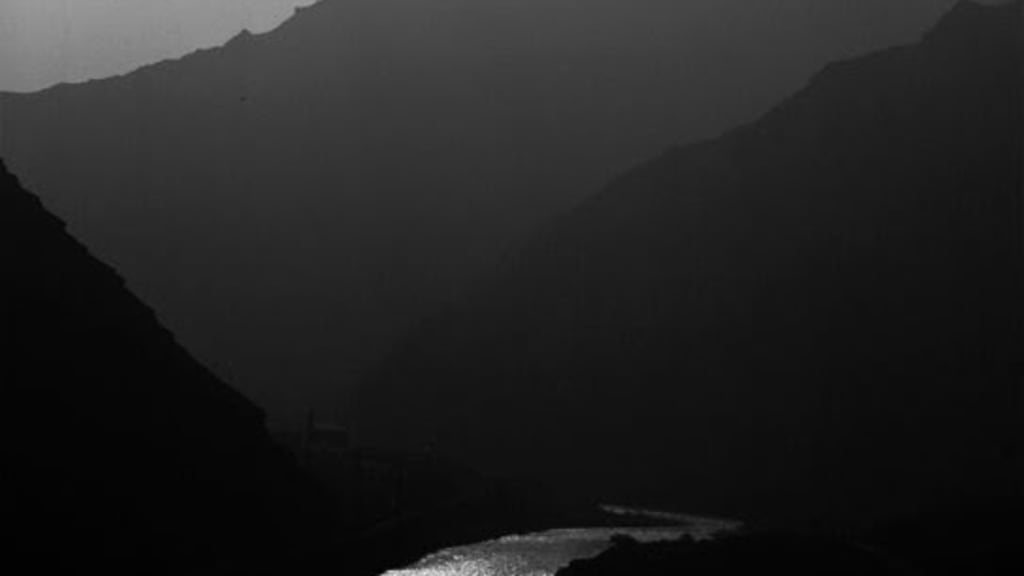
The island on which the Caretaker resides, alone for the most part, comprises several square kilometres of volcanic isolation struck out from the continent. Although only a few hours sailing to the south, it seems as distant and removed as the Moon from the Earth; another world surrounded by the depths of an interplanetary sea both orbiting a dim Sun. It is wave-battered, windswept, and shrouded in mist for much of the year. An ancient peak on the east of the island crumbles through decay and erosion, pounded to dust and silt by the never-ceasing winds. The uplands slope gradually to a lopsided plateau, giving the island a saddle shape, at the terminus of which the western cliffs meet the sea with stoic, sheer grey walls of crumbling basalt. A lone stream trickles down from the misty prominence and meanders to an artificially-dammed pond on the west of the island. Beyond this stream and the sanctuary it provides, the rest of the island is mostly flat grassland, interspersed with a patchwork of sphagnum mosses, gnarled shrubs and little arctic ferns. Despite the ever-present cloud, it rarely rains and little groundwater exists here. The river is the only natural source of freshwater and life, but recently-installed fog harvesters now also add to the pond’s reservoir. Collecting water on the island involves stealing it from the air, which is reluctant to give it up.
In the boughs of the hardy conifer trees that line the stream like a baying crowd at a parade, a dwindling family of small bats grab flying insects that escape the diffuse canopy at dusk. No seabirds visit or roost here. Their nests were heavily plundered in the past, and descendants show little interest in returning to the site of their forebears’ butchery. Sometimes, far above, the Caretaker can see large predatory birds in the brief, fleeting windows broken into the fast-moving cloud. Where they are going and where they are from he is not sure, but they do not stop here.
An outpost geographically, a political claw on the outstretched tentacle of the omnipresent State, and a scientific frontier, the station was installed to stake a claim to the territorial waters surrounding the abandoned island. This claim requires constant habitation, even of one. The Caretaker is that one, and has always been so. One day a replacement will come, but exactly when that will be he has never been sure. The seas are now depleted and the fish gone, but through stubbornness more than anything the outpost remains, and so does he. Clandestine activities replaced economic, and the occupants of the surrounding sea are now mechanical and sleek and silent. He sees them sometimes tentatively surfacing at dawn, slipping beneath the waves before he can focus his gaze.
The Caretaker’s small cottage is built of stones of rough island granite, nestled into the cliff face on the western flank of the island. The windows are small and low to the ground, the sloping roof lined with sod and grass for insulation and camouflage from spies at altitude. A small chimney breaks the silhouette of the shack on approach, but the smoke originating from the peat fire in the living area is rapidly dispersed by eddies in the stiff onshore breeze. It smells of earth, and mold, and wet rock. He likely smells the same.
An ancient people once lived here, long before the Caretaker arrived. Rough stone outlines mark the remnants of their sturdy dwellings, and their art remains etched into the grey-silver basalt with care that endures over millennia. The great variety and diversity of the work demonstrates the cultural richness of their visual lives on this aesthetically barren outcrop, depicting abstract and complex renderings of fractals and geometric patterns, seabirds, trees and mushrooms, alongside a symbolic script that remains broadly untranslated and indecipherable.
The rise and demise of these people remains a mystery, and so anthropologists from the mainland came to weave a tidy narrative on their behalf, filling in the gaps that the petroglyphs and standing-stones cannot. Few skeletal remains exist on the island as the historians said the First Peoples would cast their dead out to the boundless sea to begin their voyage to the afterlife in the depths of the tumultuous green-blue oceans that enveloped their Universe, but sites of considerable violence have also been unearthed. A disease took them first, the scientists said, or perhaps was a collective madness: an island-psychosis that drove those early islanders to acts of carnage and hate and self-sacrifice. Their presence lingers still around the crumbling henge, aligned with preternatural accuracy with the rising of the midsummer sun, to which the Caretaker rarely ventures.
Some ancient ghosts still inhabit some of the island too, even now: weak and brittle ancestral grasses that were once cultivated for their seeds and stalks cling to a meagre foothold in a few protected hollows near the stream, their seeds still bound in the womb of the thin soils. When these grasses flourished, the climate on the island was warmer. Those that still persist are frail and alien to this landscape now. The Caretaker does not eat these plants because they seem as old as the rock itself, and crumble to dust when cut.
More recently, but still centuries ago, leviathans were dredged from the deep polar ocean and their blubbering masses were butchered on the shores of a shallow inlet in the north. Blood and ooze stains the rocks there purple and brown, and brilliant-white bones litter the shallows as memorials to the fleeting barbarism that emptied the sea of its larder. The heat and calories and money provided by the bounty has long since been burned in the cities and lamps of the mainland. A broken and rusting hull slumps beneath the sand and lapping waves, its victory against those powerful giants of the deep now difficult to envision as it gradually loses the battle against time and rust. Relics of killing-industry fester nearby; decrepit sheds and collapsed longhouses built with haste and economy and for utility. Then as now, there were were no luxuries to be had on this island.
The Caretaker is not entirely alone, however. He shares the island with plant and animal biotechnology: the ‘genesis’ species brought by the scientists of the State to fix this broken rock and make it ‘livable’. A symbiont, the Caretaker cares for them and they provide in turn for him. The most important of these organisms is a bamboo-like plant that catches the meagre sunlight that falls on the island and, with the help of fertiliser and water, turns the paltry photonic bounty into a carbohydrate-rich, sugary sap that is then extracted from fibrous stems with small taps. These plantations have been here as long as the first Caretaker and will probably outlive several more. Their yield forms the basis of most meals, but sometimes they are supplemented with the few seasonal root vegetables that can be extracted from the unyielding ground. Other plants, melded with silicon and metal, generate energy from sunlight that is stored in simple batteries. This store powers a few electric lights, a fabricator, a small emergency heater in the sleeping quarters, and the radio.
Scientists from the mainland would usually visit during the brief summer, when the sea allowed their egress into the inlet, to study the remaining wildlife that inhabits the island and the stream. They came by boat or dirigible, and made camp in the shelter of a rocky outcrop near the pool at the foot of the mountain where the little river goes from cascading to trickling. They would bring instruments and nets, hammers, and glass collecting jars. The Caretaker exchanged few words with them. They were invaders in his territory, which he shared only with the life and part-life that knew the island and its demands, and it was clear the scientists shared this feeling as they conducted their expeditions with the utmost haste and efficiency in order to leave as soon as possible.
The scientists introduced a tough genesis spider that wove a silk so strong and fine and in such abundance it could be gathered for rope and fabric. Striped red and yellow, legs sharp and strong, the lumbering spiders abandoned their complex and beautiful webs each day for a different spot, leaving vast cities of silk suspended in the pine boughs above the river, their laboriously constructed silken scaffolding glistening and sagging with morning dew. The cool temperatures, abundant midges and winged larvae that emerged from the cascading stream below seemed to suit the spiders well.
During springtime nights, bioluminescent worms and beetles would splatter the mountain with eerie green pinpricks of pulsating light, merging on the horizon with the flickering stars above. Several species of beetle were released here too to more efficiently return the death and decay of the undergrowth to new life and fertility. Scientists realized long ago that life is primarily an effective and persistent defence against entropy enacted through efficient recycling. Autumn allows mushrooms and toadstools — recyclers of great efficiency, and celebrated denizens of the island — to push their way up from the rotting matter. These slender, yellow fungi were not genesis species, but rather had a long history on the island and featured prominently in much of the rock art that adorns the henge and scattered monoliths. Archeologists determined that the first inhabitants of the island made a bitter tea from their dried stalks, which they believed induced entheogenic visions for the interpretation of powerful priests, who most often returned ill tidings. The Gods of the First People were said to be bound in the densely-networked fungal mycelium, united with the island as a conduit between life and the rock that felt both the rapid pulse of the Human, and the much slower, more patient but inexorable thrum of the living mineral. When and where these two heartbeats coincided the fungi burst forth from the temporal purgatory to liberate the corporeal to the island, and the rest to the Universe. The Caretaker never touched the mushrooms while they performed their valuable recycling duties, but provided any that emerged with protection from pests. The scientists collected spores to return to the mainland, but none were ever able to germinate in their laboratories.
One summer — this past summer — the scientists didn’t come as planned. The skies were mottled and red, but empty of birds and airships. The seas were angry, as always, but the little boats rolling with the punches of their waves were gone. Strange flotsam made landfall in unusual abundance: wood, brightly-coloured plastics, and silver metals light enough to float.
The radio remained silent. His orders were, as they had always been, to play the tapes provided in the sequence directed and at the times indicated. These tapes, which were delivered by airdrop or as accompanying cargo with the scientists, gave the impression of busy, island-bound maritime traffic in order to solidify the claim to the island where none really existed, beyond the Caretaker. The authorities wanted those listening to hear the chatter of people and industry and commerce. But really, this was still the land of those First Peoples, the tortured whales and cephalopods, and the slaughtered seafowl. The sea owned the coasts, and the chaotic mists the uplands and peaks. Everything else — the genesis life and the Caretaker, the conifer groves and the spiders with their webs, the scientists too — were merely tourists tolerated by an ancient island sailing the oceans of geological time.
The State’s claim to the rock was all a façade, but the tapes also served another purpose: they were encrypted with messages for the submersibles that patrolled nearby. So the Caretaker continued to play them, even as autumn approached and no new tapes arrived, nor scientists, nor birds of prey aloft on the thermals. It grew cold. Colder than would normally be expected at this time of year, despite the changing of the seasons, as unusual wind patterns brought strange and imposing clouds overhead that streaked across the angry skies, billowing and erupting in cascading outpourings of vapour.
Throughout the winter, which lasted much longer than usual, the Caretaker persisted. The electric heater served mainly as decoration, and the peat stores were running low. The stands of plants were also struggling against the cold. He tended them as best he could, covering them from the cruel night air with blankets that were stiff with ice by the arrival of the morning. The animals, however, were on their own. The spiders, he assumed, overwintered in the frozen leaf litter with the beetles and grubs, but it saddened him to find that the pine bats eventually succumbed to the needles of cold and fell from their roosts into the icy stream below to be washed unceremoniously into the partially frozen holding pond. He fished out a dozen of their little corpses, and ground them into fertilizer for the plants. Recycling is life, after all.
The Caretaker, his judgement impaired by the cold and malnutrition, was unaware that it was from these actions that he eventually fell ill. Bat-borne viruses were a major concern in the recent past on the mainland, but he had forgone this hysteria due to the quarantine his island isolation had provided. A deep, heaving cough developed over the coming days, periodically forcing the air from his burning lungs and blood surging to his head where it pounded like a hammer on an anvil with each pained expulsion. After the third day, this blood made its way to his mouth and the floor of the frigid cottage too. Long-expired antibiotics and antivirals, stockpiled decades ago, did little to stem the malady, the cause of which remained unknown to him. No response or reply came from his feverish radio transmissions.
On a strangely calm and crisp morning some days later, the Caretaker felt compelled to visit the Henge despite his creeping illness and normal aversion to the place. Wrapped in all winter apparel, and immoblised occasionally with spasmodic coughs, he trudged through light snow and driving winds toward the northwest. Sitting alone in the stone circle, enraptured by the sudden and unexplained relief welling up in his lungs, he felt the air take on an aromatic, moldy warmth. The snow lessened, but flurries continued to swirl through the stone circle. He gently placed a gloved hand on a nearby glyph depicting a man, dark and slender and sharply featured, his red outline contrasting with glittering volcanic canvas. To outstretched arms long, featherless wings were attached, his silhouette resembling an albatross. He could not recall seeing these etchings here before, but he came here very rarely and never stayed for long. He recalled reports from the anthropologists about a dark time in the island’s past, when both famine and the Cult of the Bird drove many young men to their deaths on the cliffs and overhangs of the western shores in search of glory and, failing that, immortality.
After some time, he rose and soon found himself standing at the edge of the nearby cliffs. The wind was relentless and constant, but not as cold and strong as had been earlier, and the skies were clearing to a boundless horizon. And so, drenched in sweat and shuddering with fever, he contemplated leaping to be dashed to pieces by the rocks and pounding surf below. Knowing he would likely die soon, he took comfort in the thought of being welcomed home by the ancients in their watery underworld. Or maybe to soar ever upwards on albatross wings, held aloft by eddies and thermals generated by the boundless, roiling infinitude beneath. Despite great gulfs of time, language, and belief, he knew that the island’s many peoples would be united at the end of all things. With one foot outstretched and dangling over the precipice, the cadence of the surf below assumed a steady, welcoming beat and the serenity he imagined just a few meters below the inky surface enveloped his consciousness, stretching far back through time and down into the depths of the Earth, to the very ends of the anchors that secured the old mountain in place as it sailed the molten seas of the asthenosphere. A sudden cough took him and he toppled backward, landing with some force on the unforgiving rock. Spitting out the blood and phlegm that welled up in his mouth in spite, he went back to the cabin to rest.
He awoke standing at the edge of another cliff, this one strange and unknown to him. The air was heavy and thick and its tentacles felt invasive in his lungs. Panic assailed him from within, while around him innumerable disembodied voices chanted and brayed in undulating alien tones, callous and combative and maligned with desperation, he felt the pressure pushing him towards the precipice again. He extended his arms, now dark wings of great length and sleekness that braced confidently at his sides, and leaped without hesitation. Thermals effortlessly bore him upwards into an indigo sky, illuminated from all directions by an omnipresent blue glow emanating from beyond the horizon. Looking back to the ledge that just bore him, he was met with a despairing emptiness. Far beneath him, the angry sea was a roiling ooze of colour; seemingly random vortices of purples and blues reached out to the surface for salvation before being engulfed in eddies of void blackness.
In the distance a golden, metal-hulled ship fought stubbornly through the thick fluid, listing violently from side to side and venting billowing clouds of reeking yellow vapour from towering smokestacks. With an explosive shunt a steam launcher on the bow leased a gargantuan harpoon at an enormous, shimmering squid struggling in the murk nearby, the shot hitting its mark with cruel precision as the barbed dart gouged deep into blubbering flesh. Wiry metal cables streaming from the harpoon rang taut as the hunters reeled in their cargo and the leviathan mounted a futile defence in response.
On the undulating, unearthly horizon, overlaid by a vista of unfamiliar constellations of dazzling blue stars, The Island suddenly came into view — clear and unobscured. Familiar, stoic, and welcoming! In contrast to the bizarre ocean filled with monsters and machines, it shone like a beacon drawing him ever closer, growing larger in his vision as he hastened towards the Henge. In towering formations that extended up through the isolated mist encircling the Island’s prominence, other bird-men were slowly ascending into the unknown with wings outstretched. Each carried a large, blue egg in pouches at their waist. The Caretaker called out to them, but his voice fell silent in his throat.
Approaching at speed now, and with some preternatural urgency that willed him on, the Caretaker saw a man standing on the cliff-tops nearby. He seemed a more familiar figure somehow, and he even recognised the thick winter clothes he was wearing. His face was rugged and sickly. The man extended a foot to leap to his death in the ocean below, but before the Caretaker could cry out to him a clattering, bloody cough knocked him backwards in a crumpled heap on top of the rock. The Caretaker landed in the center of the circle of monoliths nearby, now surrounded on all sides by a chattering but orderly crowd of spiders, beetles, bats, whales, and plants. A fire was lit and stern, ancient priests were sipping tea from bird-bone china cups in the lee of the basal stone as tiny children sang and ran in figures-of-eight around the cairn. The strange gathering parted to allow him through, but otherwise paid no heed to the Caretaker or the man dying on the nearby cliff.
The Caretaker placed a hand gently on his forehead, now covered with beads of sweat and sticky hair. He trembled at the touch. “I am the Caretaker”, the figure overhead said as the dying man strained to focus on his shimmering outline, silhouetted against the hazy winter Sun.
As his words — my words — rung out a wave of serenity enveloped us both, and I died there on the windy, cold cliff, cradled by the Caretaker and surrounded by mourning brethren. I stood for a while over the solemn corpse while the wake dispersed, and then cast my body off the cliff into the tumult of the oily sea.
About the Creator
Andrew Rushby
I am a research scientist who has worked at NASA & the University of California studying worlds like our own around distant stars. I also like to write poetry & fiction with a philosophical bent.
Visit my personal webpage here
Keep reading
More stories from Andrew Rushby and writers in Fiction and other communities.
Retreat
“Pour vous?” “Whisky, s’il vous plaît." Nils was the barman and proprietor of the only inn in the village, but unfortunately the best days of Le Table were firmly behind it. The dusty wooden floors creaked underfoot and the rickety stool on which I perched was in dire need of repair. Propping myself up on the ancient mahogany bar seemed almost disrespectful given its age, far in advance of mine. I felt there the combined weight of all those elbows supporting weary arms without complaint, the heavy heads of despair and drunkenness, and the jubilant dancing feet of happier times.
By Andrew Rushby5 years ago in Fiction
Miss Persephone's Manual to a Seemingly Ordinary Life
Miss Persephone was found at the dining table, her blue eyes swollen, her tears arriving and retreating like the tides of the ocean. Earlier that day, her family had visited her in the retirement home where she had lived for eight years. It was her eightieth birthday.
By Imola Tóth3 days ago in Fiction


Comments
There are no comments for this story
Be the first to respond and start the conversation.