
The Boy Who Watched His Country Break in Two
🇩🇪 Germany: A Century of Shaping the World (1871–1990)

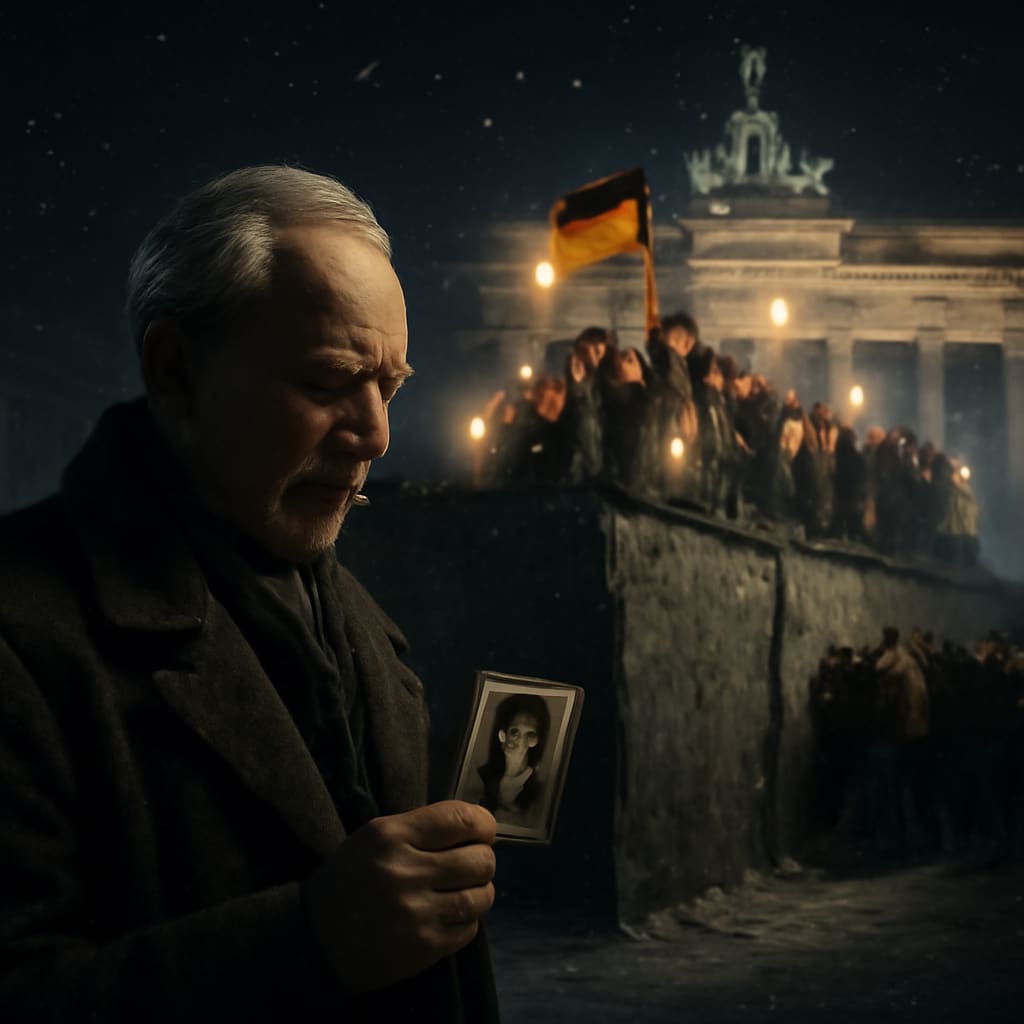
What do you do when the country you were born into no longer exists?
When your street splits down the middle—not from a natural disaster, but from human fear?
I didn’t read about it in a book. I lived it.
I watched my country vanish overnight, replaced by fences, watchtowers, and silence.
If you were born in a place like Berlin, your childhood wasn’t about toys or cartoons.
It was about knowing which direction you were never allowed to walk.
Do you feel this confusion?
Or this sense that someone else decided your future before you could speak?
Me too.
Here’s how I survived when Germany cracked in half.
🕊️ Part 1: The War Ended, But Nothing Felt Safe
I was born on April 22, 1945, just ten days before Hitler’s suicide and Germany’s surrender.
My mother said I was crying even before I took my first breath.
That’s how loud the bombs were.
We lived in a basement in Berlin, sharing space with rats, candles, and strangers.
Food was a luxury. Heat was a miracle.
My father never came home from the Eastern Front.
People said the war was over.
But the rubble said otherwise.
Our city was a graveyard with street signs.
And as I grew, I learned something dangerous:
History doesn’t end when the fighting stops.
It hides. Then it returns.
🧱 Part 2: The Day They Built the Wall
On August 13, 1961, I woke up to barbed wire cutting through Berlin like a fresh wound.
The border closed in the night.
No announcement. No warning.
One day, you could visit your cousin. The next, they were trapped on the other side.
And if they tried to return?
The guards had orders to shoot.
They called it the “Antifascist Protection Rampart.”
But we all knew it wasn’t to keep others out—it was to keep us in.
I watched people cry at train stations.
I saw a mother throw her baby across the wall to West Berliners.
I never saw her again.
The city had become a cage.
And we were expected to decorate the bars with patriotic posters.
📚 Part 3: What They Let You Learn
I became a history teacher in East Berlin.
But I didn’t teach history.
I taught a version of it approved by the GDR government.
In our textbooks, capitalism was evil, and our leaders were saints.
We never mentioned the Holocaust, the Soviet invasion, or that the Berlin Wall had killed more than 140 people trying to escape.
Still, I remembered.
And quietly, I kept things that weren’t allowed:
A torn copy of George Orwell’s 1984
A banned West German magazine
A picture of my childhood friend Emil, who escaped West two days before the wall was built.
He sent me a letter once.
I never replied.
Letters could get you arrested.
🧨 Part 4: The Night the Wall Fell
It was a Thursday night — November 9, 1989.
I heard people chanting outside the station.
Rumors flew like birds: They’re opening the border. It’s over. We’re free.
I didn’t believe it—until I saw it.
Crowds gathered at Bornholmer Straße.
Guards looked nervous.
People were climbing the wall.
Laughing. Crying. Smashing it with hammers.
I just stood there.
Frozen.
Someone handed me a sledgehammer.
I couldn’t lift it.
Not out of weakness—but because I still couldn’t believe it was real.
So I walked home, opened the old box with Emil’s photo, and placed it on the window sill.
“You were right,” I whispered.
🌅 Final Reflection: What Reunification Really Feels Like
A year later, on October 3, 1990, Germany reunified.
But healing takes longer than reunification.
Some people rushed to the West.
Others stayed and wondered what they had believed in for 40 years.
My students asked questions I never had answers for:
“Why did no one stop it?”
“Why didn’t our parents tell us the truth?”
“Why did we cheer for the wrong things?”
I only said this:
“A wall doesn’t just divide a country. It divides memory. The hardest part is putting it back together.”
About the Creator
Natik Ahsan
Welcome to a world of wonder, curiosity, and nature's quiet magic.
Here, I explore stories that open minds, spark thought, and invite gentle conversation.
Thank you for being here—your presence means everything.
Keep reading
More stories from Natik Ahsan and writers in Fiction and other communities.
Care Instructions
Thank you, for agreeing to watch my animals again. I understand last time, how difficult Lucy made the experience for you. Lucy really is a good dog, granted she has her corks but I know once you learn to navigate her eccentricities the two of you will get along splendidly. Hopefully, these instructions will help with that learning curve, so this transition will be uneventful while you’re together. Let’s start with instructions for Ruby Bubbles care, being a cat she is by far my low maintenance pet.
By Susan Loblaw2 days ago in Fiction



Comments
There are no comments for this story
Be the first to respond and start the conversation.