
The Boy Nobody Noticed
He sat in the same classroom every day, but no one ever truly saw him—until it was too late.

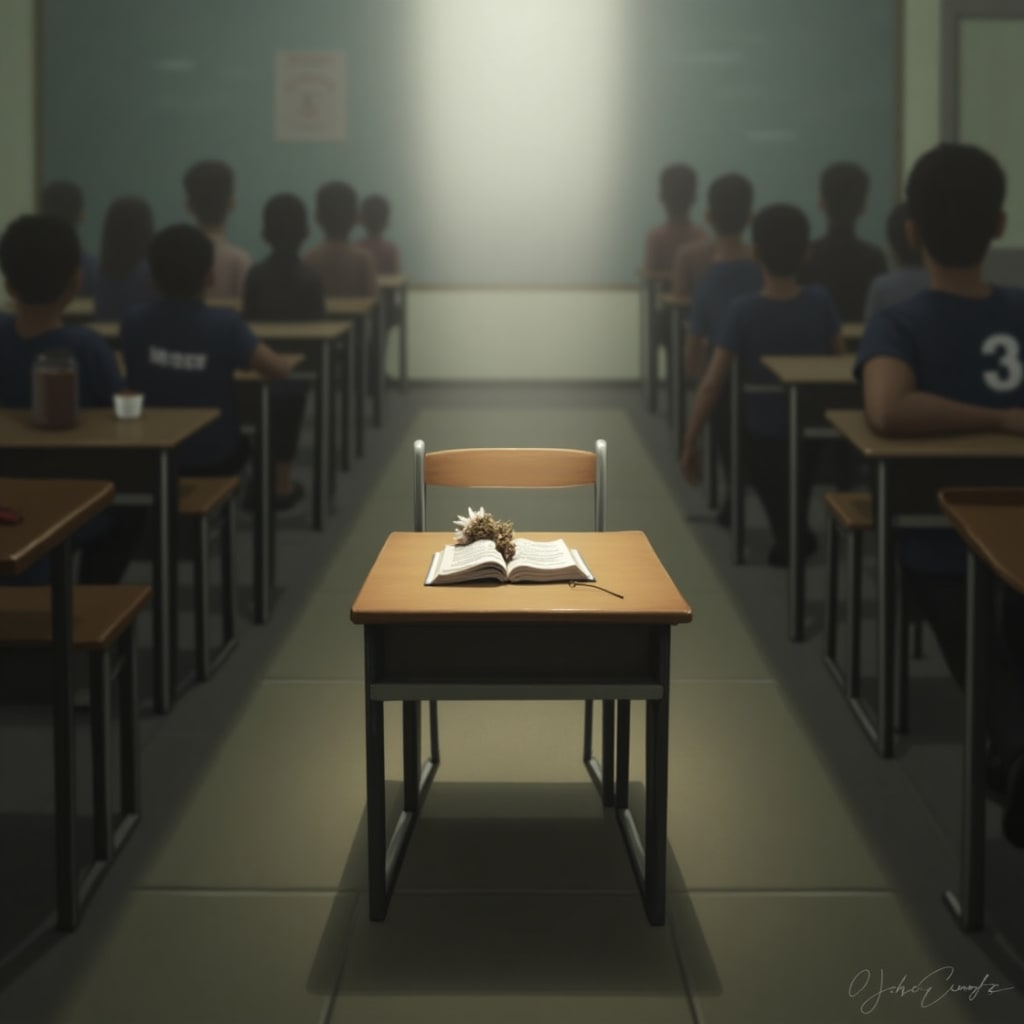
The roll call echoed through the classroom like every other morning.
“Amit?”
“Present, sir.”
“Riya?”
“Present, sir.”
“Rahul Verma?”
“Present, sir.”
A soft, hesitant voice from the back corner. Always the same voice. Always the same reply. But no one ever turned to look. Not once.
Rahul was always there. Quiet. Neat. Invisible.
He didn't raise his hand. He didn't ask questions. He didn’t sit with anyone at lunch. He never got into trouble. He was just... there. Like a piece of old furniture—present, but unnoticed. Even the teachers barely acknowledged him unless his name came up during attendance.
One time, Riya borrowed a pencil and mistakenly took Rahul's. He simply nodded and let her keep it. He never said a word. Not about that, not about anything.
It wasn’t that he didn’t want to speak. Maybe he just knew no one would really listen.
Seven Days of Silence
On a rainy Monday, something changed.
The roll call began as usual.
“Amit?”
“Present, sir.”
“Riya?”
“Present, sir.”
“Rahul Verma?”
Silence.
The teacher looked up for a moment, puzzled, then shrugged and moved on.
By the third day, someone in the front asked, “Sir, Rahul isn’t coming to class?”
The teacher paused. “Rahul who?”
“Rahul Verma. The boy who sits near the last bench.”
The teacher frowned, flipping through the register.
“Oh. Yes. I’ll check with admin.”
But no one did. Because no one knew where he lived. Or who his parents were. Or even if he had any friends.
The Forgotten File
A week later, a notice appeared in the teacher’s WhatsApp group. Rahul Verma had passed away. No details. Just a line: "Rahul Verma, Grade 10 student, passed away due to a prolonged illness. Shelter No. 42 confirmed."
The class was silent that day. Some didn’t even remember his face.
Only one person cried—Mrs. Fernandes, the school librarian.
She remembered a boy who used to visit the library during recess. Who always read the same torn copy of The Secret Garden. Who returned every book on time. Who thanked her with a gentle smile every single time.
“He was polite. So polite,” she whispered, placing a white lily beside his name on the notice board.
The Empty Seat
Rahul’s seat remained empty for a few days before someone else was assigned to it.
Life went on. Tests, assignments, school trips.
But for a few students, something had shifted.
Amit started sitting in the library during lunch, looking for the book Rahul used to read.
Riya created a small donation box to buy books for kids in shelters like the one Rahul came from.
The teacher who once forgot his name started reading out names during roll call with more intention—looking at each face, pausing, waiting.
What We Learn Too Late
Rahul Verma didn’t die because of illness alone. He died from invisibility. From silence. From being overlooked by a world that values the loud, the active, the visible.
He was an orphan. A boy who walked an hour every morning from the shelter to school, who never missed a day unless his body forced him to.
He came to school not just to learn—but to belong. But we didn’t let him. We were too busy being seen to see him.
Legacy
At the back of the classroom, above what used to be Rahul’s seat, the students painted a small message:
> “To the boy who never spoke, but always listened.
We see you now.”
And below it, they hung a shelf—Rahul’s Corner—filled with books donated by the class. No checkout cards, no library rules. Just an open space where anyone could read.
In his silence, Rahul left behind a voice that finally made others speak, reflect, and remember.
The Social Message
This story isn’t just about Rahul. It’s about many children like him—quiet, unnoticed, overlooked—not just in schools, but in society.
We often mistake silence for apathy, shyness for weakness, invisibility for irrelevance.
But sometimes, the quietest ones are carrying the heaviest burdens.
Look around. Notice the invisible. Listen to the unheard.
A little attention might just save a life.
About the Creator
Masih Ullah
I’m Masih Ullah—a bold voice in storytelling. I write to inspire, challenge, and spark thought. No filters, no fluff—just real stories with purpose. Follow me for powerful words that provoke emotion and leave a lasting impact.
Keep reading
More stories from Masih Ullah and writers in Fiction and other communities.
She Wasn't Real — But She Saved My Life
I was eight years old the first time I saw her. She was sitting on the swings at the park, gently rocking back and forth, her sunflower-yellow ribbons fluttering in the breeze. She turned to me with a grin that felt like sunlight and said, “I’ve been waiting.”
By Masih Ullah7 months ago in Fiction
The Inferno Elixir: A Legacy of Blood
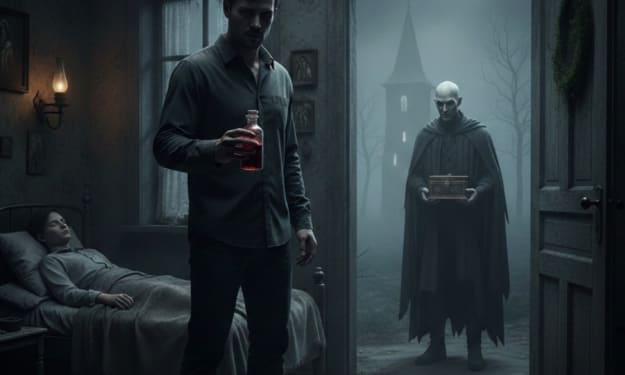
1. The Sinister Stillness of the Village My grandfather had always been an enigmatic man, but in the last three years, his eccentricity had crossed into something far more unsettling. He lived alone in a secluded house far from the city’s clamor, tucked away in a village perpetually choked by mist. We assumed he was merely grieving the loss of my grandmother and his lifelong friend, but his gaze hid something deeper than sorrow—a secret that was slowly devouring his soul. During my last visit, I was struck by the sight of his refrigerator; it was grotesquely overstuffed with heaps of raw meat. He claimed with a cold detachment that it was for the poor, but his face betrayed the lie. Even more disturbing was the reinforced steel door he had installed in the basement, from which a foul stench seeped through the cracks—a smell like a carcass that refused to stay buried. 2. A Descent into the Abyss Late that night, I took advantage of my grandfather’s heavy sleep. With trembling fingers, I pilfered a modern, sophisticated key from his cabinet. I descended the decaying stairs into the basement, my flashlight cutting through the oppressive gloom. The air there didn't just smell of rot; it smelled like a slaughterhouse. Dry bloodstains smeared the walls, and in the corners lay bleached-white human skeletons. I approached the reinforced room and peered through a tiny peephole. The blood froze in my veins. A gaunt creature, its bones protruding obscenely from its skin, stood there. Its hair was so long it trailed behind it like a shroud. It moved on all fours with a demonic fluidity. Suddenly, its eyes—completely white—locked onto the hole. It wasn't looking at me; it was scenting me. 3. The Bitter Truth Before I could flee, I felt the sharp sting of a needle in my neck. The world dissolved into darkness. I awoke inside a hermetically sealed glass chamber. My grandfather stood on the other side of the glass, weeping bitterly as he recounted the catastrophe: > "Three years ago, your grandmother was on the brink of death. A stranger with non-human features knocked on my door and gave me a dark red elixir, claiming it was the salvation. I injected her, but she transformed into this ravenous monster. I killed my oldest friend and fed him to her just to protect her secret. I love her, Alex, and I cannot let you leave to expose the truth of her 'death' to the world." > 4. The Banquet of Blood The glass barrier began to rise slowly, and the monstrosity crouched, ready to pounce. Suddenly, a scream pierced the silence. My younger brother, Thomas, had followed me. With a heavy blow from a sharp tool, he struck our grandfather, sending him sprawling into the room. In a moment of primal madness, the creature lunged at my grandfather, tearing into his flesh with unspeakable ferocity. Thomas and I fled, the screams echoing behind us, until the police arrived and ended the nightmare with a hail of bullets into the body of what was once my grandmother. 5. The Vicious Cycle A year has passed since that night, and I thought I had survived. But fate plays a cruel game. It is now the anniversary of my grandfather’s death, and my brother Thomas is wasting away from a rare, terminal illness. Last night, amidst the darkness, a stranger knocked on my door—matching the exact description my grandfather once gave. He placed a small box in my hand containing a vial of dark red liquid and hissed into my ear: "This is the only cure for your brother." The stranger vanished as if he never existed. I analyzed the liquid in a lab, and the results were bone-chilling: "A substance extracted from an unknown biological entity, non-existent in any natural record." I hold the vial in my hand now, looking at my pale brother, hearing the echo of my grandfather’s voice in my head. Do I repeat the tragedy? Do I begin a new massacre in the name of love? The elixir is before me, and hell is waiting just behind the door. Would you like me to create a "Book Cover" style description for this story, or perhaps suggest a sequel?
By Mayar Younesabout 14 hours ago in Fiction



Comments
There are no comments for this story
Be the first to respond and start the conversation.