

I.
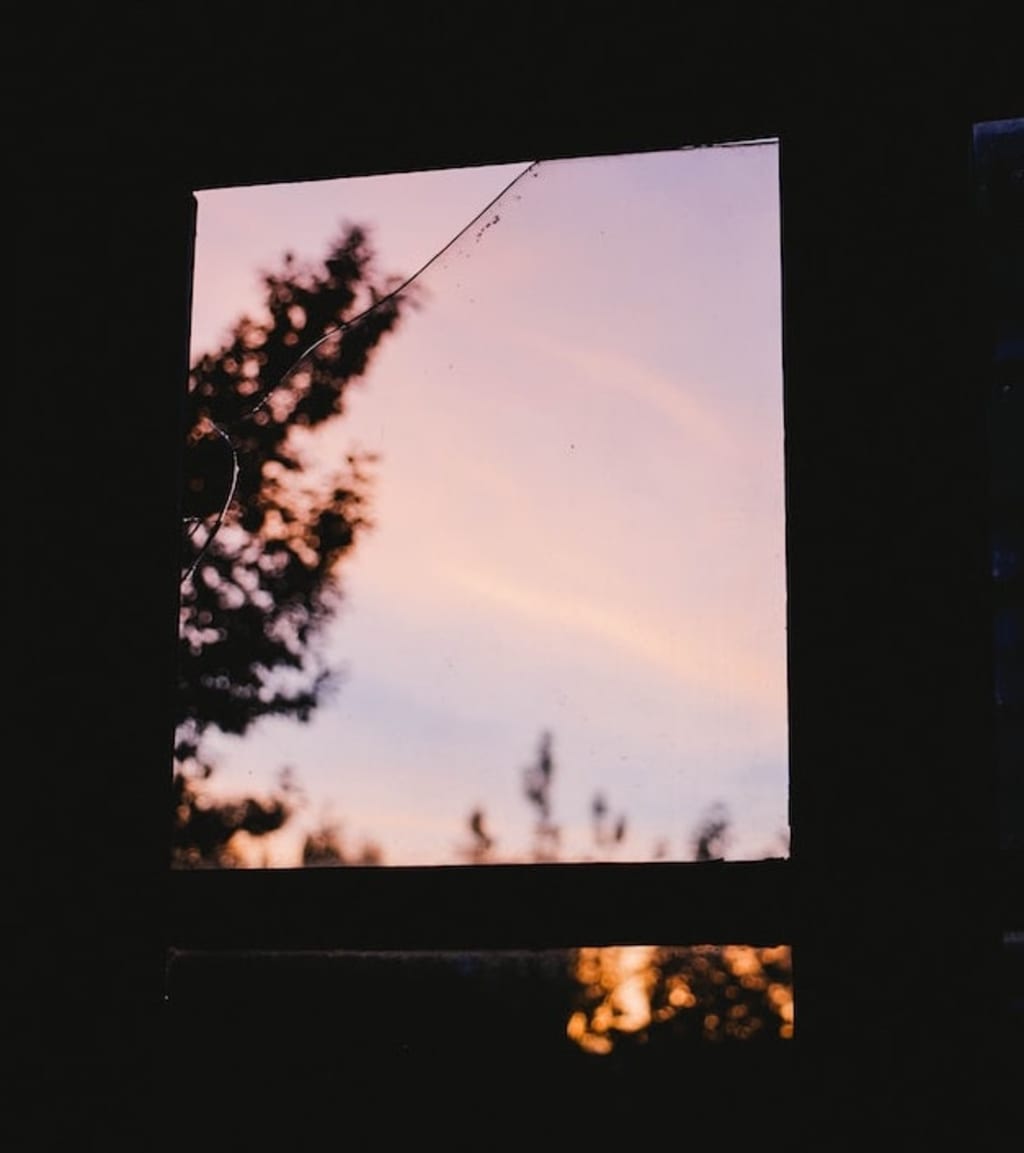
The outside world was unknown to her, but she could see a glimpse of it through the window in his room. The window was a recent discovery; she’d stumbled across it quite unexpectedly a few weeks ago on one of her lonely laps around the wing. Jospeh had been called away to greet the new hospital director and so Adelaide had taken the opportunity to explore—except it wasn’t really real exploring, in the sense that she knew every inch of the wing like the back of her hand. Six rooms, and then Joseph’s office, normally locked up tight at the very end of the corridor.
She didn’t know why on that particular day she’d decided to try the handle—sheer boredom, perhaps—but she did, and it had dragged down with a satisfying, weightless click, and the door itself popped open. Then she really did feel like an explorer. Joseph’s office was a different world: the familiar scent of old antiseptic was replaced with stale coffee (a collection of brown-ringed mugs clustered on one side of the desk looked to be the culprits), and there were even posters on the walls, old wartime ones with bright colours and rousing slogans. Most of the room was taken up by the bookcases, stuffed with sheafs of paper and academic journals, their colour gradually fading from a bright, blueish white to an old bone-yellow.
And then Adelaide had spotted the door.
It was an unassuming thing, small and half-swallowed by the sleepy shadows clinging to the corner of the room, and led to a cramped, dusty storeroom filled with hazsuits and old cardboard boxes. A pale, weedy light shone out from the back, just enough to make the white material of the hazsuits shimmer. Adelaide battled her way through, elbowing them aside like they were jungle ferns, and then froze.
There, at the back, was a window.
It was small and half concealed by a wooden blind, all bunched up at the top like a pack of cards, but it was a new window—and a new view. She wandered closer, drinking in the plane of tired-looking grass and the cluster of trees, all black and shaggy, huddling like school children on the left.
All the other windows in the wing showed the same thing: an enclosed courtyard in the atrium of the hospital, bare but for a single, mutilated tree. She’d climbed it as a younger girl, back when the branches had been enveloped with a froth of green blossom, but slowly it had withered and died and turned white, suffocated by the machine-regulated air and lack of light.
The window, the secret one, became her new hobby. The nook, she called it, and any time she could spare she’d slink down the corridor and into Joseph’s office (still gloriously unlocked) and curl up there to daydream. Most of the time it was the outside world she imagined: what it might feel like to slip into the blue pockets of ocean left swimmable, or feel her ears pop in a fusionplane, or go to a real restaurant where the waiters bought you a cake and sang happy birthday. But they were just daydreams. Adelaide had never set foot outside the hospital, and she never could—all that stuff they pumped into the atmosphere during the war had changed things, and now one breath outside and her lungs, two shrivelled black tangerine segments on the x-ray print-outs, would fizz with blood and that would be it. It was why the doctors all wore hazsuits, desperate to prevent any exposure to a contaminant or illness that could find its way into her chest and slowly strangle her from the inside.
The air wasn’t just problematic for humans. Now she had the window, she could even see the way it got to the birds, tiny little black things that jumped around on the grass, wriggling their sharp, needle beaks in the soil. Over the two weeks that Adelaide had been visiting the nook, she'd watched, horrified, as three of them had jerked and stuttered and pirouetted drunkenly around until they fell to the floor, stiff and unmoving.
It was the only time she ever felt lucky to be safe and sequestered away in the hospital.
II.
It was lunchtime, and another lunch spent eating her sandwiches alone in the nook. Joseph had been distracted and unavailable lately, and spent a lot of time frowning, the shadows beneath his eyes visible even through the thin glass of his visor. The stress had somehow wormed its way into Adelaide’s subconscious too, budget cuts and ethics committees looming strange and unfamiliar in her dreams.
She had just finished the last bite when a flash of movement caught her eye. For a moment all she could do was gawk: was that... was it really...?
But it was. There was a figure, right there on the grass, walking towards her. Her heart began to thump loudly in her chest. If they were a worker at the hospital and told someone they’d seen her peeking out at them… she’d have her screen privileges revoked for months, at best!
But as the figure drew closer, it soon became apparent that it couldn’t be a worker. It was too short for one, wearing a bright red bobble hat, with an old backpack that looked far too big. A boy then, around her own age.
And then he looked up.
Time ground to a halt as they both locked eyes, and the boy took a single, uncertain step towards the window.
The spell broke. Adelaide launched backwards with a yelp, flung herself through the hazsuits, and fled.
III.
The next day, plagued by a dry, sleepless night of staring at the ceiling, Adelaide decided to go back. The likelihood of the boy being there was slim to none but she couldn’t stop thinking about him, about his red hat and his bag and where he might’ve been going.
The window was as she’d left it, a few fingerprints smeared on the glass, and outside the same empty view stared reassuringly back. Although she was relieved, she couldn’t help but feel just a little disappointed too, resigned to another half an hour of birdwatching.
“Hey!”
Adelaide nearly screamed as the boy from before ducked suddenly into view. He wasn’t wearing a hazsuit and the sight of it, of his open, freckled face and his chipped front tooth, was so surreal that she froze in place, hand on the window.
“Wait,” the boy said quickly, voice muffled through the glass. “I just want to talk, please. What’s your name?”
She shouldn’t. She knew she shouldn’t, that this was dangerous and unwise, but… “Adelaide.”
“Adelaide…” the boy repeated. “Well it’s nice to meet you, I’m Tom. I live at Saddleby’s in town.”
“Um,” she said, still in shock that she was having a conversation with someone her own age, and that he seemed to be spontaneously volunteering so much information.
“You know, the orphanage? Big white building on Rupel Street? I’ve been there since I was three, when my parents died in the Three States war… but I don’t really remember them. What about you? Do your parents work here or something? And what is this place?”
“It’s a hospital,” Adelaide said, blinking nervously. “I’m a patient here.”
Tom’s eyebrows raised until his forehead wrinkled. “A patient?”
“My lungs,” she said, and then flinched. “Oh! Your…”
Tom looked at where she was gesturing and gently prodded his nose. Both of them stared at the dark red gleam on his fingers.
“Ah man, nosebleed? Haven’t had one of these for a while.” He wiped at the mess with the back of his sleeve. “Must be the cold.”
It wasn’t the cold, it was the air, and suddenly Adelaide felt very guilty indeed. Here she was, safe in her environment-controlled wing at the hospital, where the filters were changed every week and where she didn’t have to wear a mask every time it rained—and he was stuck outside, slowly suffocating.
“Are you ok?” she asked.
“Yeah.” Tom pinched the bridge of his nose and his voice came out all nasally. “I’ve got to go, I’m supposed to be picking up the battery for the orphanage… but I’ll come back though same time tomorrow though, if you’ll be here?”
Adelaide found herself nodding, even though she knew she shouldn’t. “Tomorrow,” she agreed, and then Tom took off, back towards grove of trees, his hand clamped over his nose.
IV.
She met Tom three more times after that. He usually swung by every Friday at midday on his way to pick up a fresh battery, which, in a stroke of luck, was at the same time as Jospeh’s new weekly meeting. Sometimes Adelaide wouldn’t be able to sneak away in time—there was one time her gene check-up had been rescheduled, and another when Joseph had insisted that they eat lunch together—but Tom didn’t appear to mind waiting.
On this particular Friday, Adelaide settled herself down in the nook and and tried her best to hold back tears.
It was Joseph. They’d gotten into an argument that morning when, thinking of Tom, she’d raised the idea of having a visitor her own age (of course wearing a hazsuit), and Joseph had laughed.
Laughed!
Adelaide had begged and pleaded, and then he’d lost his temper and shouted, really shouted. At the look on her face he’d sighed and scrubbed a hand over his visor, and left for his meeting with an apology and a promise to talk about it after lunch. But Adelaide didn’t want to talk about it. She was angry, and frustrated, and she wanted to talk to Tom.
As if he’d heard her, a familiar muffled shout suddenly floated through the quiet. “Hey! Adelaide!”
She sat up straight, quick to wipe her cheeks.
Tom came to a stop outside the window, with cheeks so flushed they almost matched his hat. His grin slowly faded as he peered at her through the glass. “Uh, are you crying?”
“No,” Adelaide lied.
“Well it looks like you are,” he said with a small cough.
“How’s the cold?”
“Still going. Chest is getting worse though which sucks.” Probably the air, Adelaide thought miserably. “But seriously, what’s wrong?”
“Joseph. I asked him if I could ever have a visitor but he just flipped out and refused to talk about it.”
“Seriously? I don’t get, why couldn’t you have visitors?”
“It’s my lungs. Everyone at the hospital has to wear these funny suits just to be in the room with me because they’re so sensitive.”
“You seem to be breathing normally to me.”
“That’s because I’m in here. If I went outside… I’d probably be dead in about five minutes.”
She'd expected Tom to chime in with some sympathetic ‘that’s awful’ or ‘how terrible’, and so was a little taken aback when he only stared at her, a peculiar expression on his face.
“What is it?”
“You can’t breathe normal air?” Tom said slowly.
“Yeah?”
“But,” Tom coughed again and when he looked up he was frowning. “What about the crack in the window?”
Adelaide blinked. “What crack?”
“Look,” Tom pointed at the top right hand corner, insistent. "Right here."
Adelaide sighed but dutifully reached up to push away the blinds. “I really don’t...“ she got out, before the words died in her throat.
Time slipped. One second, and then another, and another, and still she couldn’t quite comprehend what she was looking at, because right at the corner where the glass met the wood was a tiny gap, snaking down at least a couple of inches—
“Adelaide?”
She didn’t know what expression was on her face for Tom to sound so nervous, but it must have been bad. My lungs, was all she could think, my lungs, and then suddenly she was struggling to breathe, as if now that she’d seen it the air was rushing in to strangle her. Panic clawed through her in a terrible hot wave as she clutched her throat.
“Adelaide!” A hand slammed on the glass. “Just calm down, alright?”
But she couldn’t calm down, she couldn’t even think straight.
“How?” she croaked and took a fumbling step backwards. Her eyes were stuck on the crack, as if she just blinked hard enough it would disappear. “I don’t understand…”
“That’s what I mean—you’re fine! Just calm down, ok? Your lungs can’t be that bad if you’ve been sitting here this whole time and never noticed.”
He was right, of course, but it almost made it worse. A minute outside would kill her, they’d said, but here she was, on what must have been her tenth visit…
“Why aren’t I dead?” she whispered.
“None of this makes any sense,” Tom said, biting his lip as he thought. “Have you… have you ever actually seen any other sick people here?”
“I told you, I can’t, my—“
“Lungs, yeah,” Tom cut her off. “But clearly they lied. So if you’re not sick… why aren’t you allowed out?”
The words rang in her ears and she shook her head. “I don’t know.”
But Tom had begun to pace, blue eyes darting around like tadpoles. “It’s got to be something to do with what they’re doing in there. I’m pretty sure it’s not a hospital—no hospital has so much security.”
“Well then what is it?”
“Some sort of research centre? It doesn’t matter, whatever it is, I think we have to get you out.”
“Get me out?” Adelaide almost laughed. “All the exits are biometric, the place is full of guards—and there are cameras watching everything!”
“There aren’t any in here, are there?”
He had a point. Joseph’s office seemed to be a blindspot for some reason. “What,” Adelaide asked, disbelieving, “you want to break the window?”
Tom stopped short and stared at her. “You know… it’s not a bad idea.”
At that Adelaide did laugh, but it came out shaky and thin. “You’re serious?”
“Yeah, I’m serious. I’ll get something to break it with—if you can meet me back here at 11… why don’t you come to Saddleby’s with me?”
Break the window? It felt like everything was suddenly spinning away from her, like she was whirling round and round too fast to stop.
“Tom,” Adelaide said, helplessly. “I can’t just leave!”
“Yes you can. Just meet me here at 11, ok? I’ll wait for an hour.”
“Tom!”
But he was already turning to go. “The world’s out here Adelaide,” he called, frowning, “it’s not in there.”
And then he was gone.
V.
The clock on the bedside table formed 11.46 in bright green threads. Adelaide stared at it until the lines of the 6 flickered and were replaced by a 7.
What was she doing? Really, what was she doing? This could be her only chance of getting out—sure, she could try to break the window herself, maybe using the poster frame, but even if that worked she wouldn’t know where to go. And if she was honest with herself, she couldn’t keep sneaking away to the nook. They would find out eventually, or Joseph would notice that he’d left his office unlocked the whole time, and once they did there would be no more chances. It would be the cold, white wing for the rest of her life.
Adelaide sat up in bed. An odd, quiet calm had descended, and the tremble in her hands was the only give away of the nerves lurking under the surface. I’ll just go and see him, she decided, just so he’s not waiting out in the cold if he’s sick.
The floor was cold beneath her feet as she quietly got dressed and toed on her trainers, slipping out of her bedroom and into the dark tunnel of the corridor. The cameras blinked red in the corners, but Adelaide knew how to slink by without being seen, sticking to the shadows and hardly daring to breathe as she approached Joseph’s office.
She didn’t dare turn on the light. Instead, she pushed her way through the hazsuits in the pitch-black, wincing at every crinkle of material, until she emerged out into the moonlight.
A nervous skinny silhouette was waiting for her, hands pressed against the glass.
“You came!”
Adelaide grinned, even though she’d never felt so terrified. “Did you bring something to break the window with?”
Tom held something up, a silver flash in the moon. “Yep. Janitor’s hammer.”
Adelaide eyed it nervously. “Isn’t that going to be loud?”
“Well we’ve got to break it somehow. And even if they hear it we’ll be long gone by the time they get here.”
“To Saddleby’s, right?”
“At first… and then we can go anywhere.”
Deserts, jungles, oceans flitted through Adelaide’s mind, like bright shoals of fish.
“Right,” Tom said nervously. “You might want to step back for this.”
It dawned on Adelaide that this was her last chance to change her mind, and with it came a sudden shiver of panic. “Wait.” Tom paused and looked at her expectantly. “What if we’re wrong? What if you open the window and I die?”
“You won’t die. You can’t—look, you’ve been breathing normally now for a good few minutes and you’re fine.”
“But what if I’m not?”
“Then we wait. We wait a few minutes out here and if it really is bad, and you can’t breathe, you can just go straight back inside.”
Adelaide bit her lip and thought about it. Time stretched by, broken by nothing but the quiet of the storeroom, the thrum of electricity in the walls. She took a shuddering breath, and wondered if this was the last mistake she’d ever make. “Alright. Let’s do it.”
It happened quickly after that. No sooner than she’d elbowed her way back into the protective safety of the hazsuits, a terrible splintering noise burst out. Glass rained down in tiny hard beads and then Tom was shouting, his voice clearer than it had ever been.
“Come on!”
Adelaide grabbed a hazsuit off its hanger, wrapped it around herself protectively and then squeezed through the jagged teeth of the window frame. And then she was out, out in the outside.
It was the smell that she noticed first, all bright and earthy, and then the cold, stinging at her cheeks and nose. A breeze tickled her hair, the first real breeze she’d ever felt.
“Well? How is it?”
It was a good question. She took a breath, and then another, shivering—either from the temperature or the excitement—and focused on her lungs, tried to feel the blood pumping through them, the reassuring web of muscle and tissue. But she couldn’t feel a thing.
“I think…” she said, and her voice trembled, “I think I’m fine.”
VI.
Seeing the whole of the view that she’d been staring at for months was strange. There was a large grey carpark to the left, and the grove of trees, now skeletal from the early frost, actually concealed the entrance to a small, overgrown path, with a great yellow sign proclaiming ‘DANGER - KEEP OUT’. Tom had been using it as a shortcut to get to the battery hub on time and now they ran the same route in reverse, laughing and breathless. After that was a long, straight road where once in a while a car would rush past in a bright roar and Adelaide would flinch and gasp and Tom would snort before his coughing started up again.
Her lungs seemed fine. In fact, she’d never felt better—she was alive, like a balloon with a string that had finally been cut: up and up she floated, until it seemed like she was drugged with it, the entire world spread out before her.
When they reached the town, Tom had to tug her along to stop her gawking. Everything was magical and otherworldly in the swallowing darkness of midnight: spindly figures sloped past the buildings, which loomed up, dizzyingly tall, and the world became a series of stepping stones from the round glow of the streetlights.
Eventually their pace slowed as they neared the town centre. “Almost there,” he informed her, almost vibrating with excitement. “Saddleby’s is just next to the wreck.”
“The wreck?”
As they turned the corner the reason for the name became clear. It looked like a giant hand had descended to claw up an entire street, leaving behind nothing but a few black metal skeletons that creaked and groaned in the wind.
“A Three States drone got it just before the war ended,” Tom explained quietly. “Anyway, here we are. Home sweet home.”
Despite its neighbour, Saddleby’s was a impressive building made out of glass and white stone, and certainly nothing like the kind of orphanages Adelaide had seen on TV before.
She glanced at the empty street behind them and shivered. It almost seemed too easy—had they really not noticed her missing yet?
“Come on,” Tom said, and clambered over the gate. He stretched out a hand. “I’ll help pull you up.”
The orphanage slept on, unaware as they slipped in through the backdoor as silently as they could. The hallways were echoing and empty, and smelled faintly of old sweat and cooking oil. Tom’s room was on the second floor, a small, cramped single with a desk overlooking the window and a towering wooden wardrobe in the corner.
“Right,” he whispered, and gestured her towards the bed, “let’s get some sleep and then figure out the plan in the morning.”
“Ok.” She slipped off her trainers and crawled onto the mattress, tucking herself up in a ball against the wall as Tom got in next to her.
Her mind felt like it was spinning, and she thought sleep sounded impossible. But as soon as she closed her eyes it was like she’d tipped into a deep, dark pit, and then she knew no more.
VII.
It was a dream. It must have been a dream, because usually her bedroom wasn’t lurching from side to side like a drunk sailor, and usually there wasn’t black water gushing in from under the door, pouring in with a speed that couldn’t possibly have been matched by physics. She clung to her bed, full of a shimmering nausea from the rocking and the terrible knowledge that something had gone profoundly wrong.
“Adelaide,” a voice called out.
“H-Hello?” she stammered, looking around. But there was nothing but black water, seeping into her pyjama pants, crawling up her chest and into her mouth.
“Adelaide wake up!”
For a moment, opening her eyes to see Tom above her, relief was only thing she felt—yes, thank God, of course it was a dream—and then she took in the smear of red across his chin.
“What’s happened?” she asked, clumsily propping herself up on her elbows. It must have been another nosebleed, his t-shirt was covered with it.
“They found you,” he said between coughs, and her drowsiness evaporated.
“What?”
“You’ve gotta hide,” Tom urged, and wrenched back the covers. Already she could hear heavy footsteps on the stairs. “Hurry—into the wardrobe!”
The orphanage no longer had that silvery, secret quality that it had in the dark; now it was bright and scruffy and foreign. Adelaide scrambled out of bed and threw herself towards the wardrobe, wrenching open the doors. Inside was full of old, dusty clothes, and a hidden football that nearly had her slipping back out when her hand passed over it. Tom helped her further in and then shut the door behind her.
“It’s alright,” he whispered from the outside as the world went dark. “Just stay quiet.”
And so she did. Trapped amidst the clothes with nothing but the blood rushing through her head, the loud thump of her heart, and a single tiny gap to peer through. There was a rustling noise, like Tom was getting back into bed, and then two sharp raps sounded out at the door before it was immediately thrown open.
Hazsuits. She could see them through the gap, looming in a gleaming, sterile white, ectopic in the general mess of Tom’s small blue room.
“Tom,” an unfamiliar voice demanded from the hall, “is everything alright?”
More rustling. “Ms. Eliza?” Tom mumbled, voice thick with feigned sleep but still a little tremulous. “What’s going on?”
One of the hazsuits stepped towards the door. “Stay back madam.”
“But there’s blood on his face!”
The hazsuits said something else but Adelaide didn’t her it. She’d caught sight of her trainers, the tips poking out from where she’d left them, just under the bed. Her bright white trainers that clearly didn’t belong next to Tom’s dirt-encrusted lace-ups.
“Tom.” The familiarity of the voice was enough to snap her out of it and into a panic so much colder and thicker than before, because she knew that voice, had heard it every day for the past twelve years.
“We know you helped Adelaide to escape,” Joseph said gently. “You’re not in any trouble yet, but you will be, if you don’t tell us where she is.”
The trainers, Adelaide thought and bit her lip so hard she thought she tasted blood.
“Who’s Adelaide?” Tom said flatly.
Joseph sighed. “This is very important. She could harm a lot of people.”
“I don’t know what you’re talking about.”
Joseph knelt next to the bed and took hold of Tom’s limp hand. The trainers were right next to his legs. “I’m going to tell you something, Tom, something not a lot of people know.”
There as a pause then, as if the world held its breath, and Adelaide began to feel curiously dizzy.
“Adelaide is not a normal child. There is a reason she was kept in the facility.”
“I really don’t know what you’re talking about!“ Tom said, and if the tremble was’t audible before it was now.
“She was created in the Three States,” Joseph said quietly.
Adelaide’s blood plunged cold as images flashed through her head: rows of marching people in black uniforms, a swarm of drones, crawling like ants over the cities, prion gas a thin, yellow haze in the air.
“They called her Project Midas, the last resort, and we’re still, after twelve years, trying to understand what they did to her genetic code, what she could be capable of. Do you understand me, Tom? Adelaide is a bioweapon, she’s a—a bomb.”
Adelaide shut her eyes, unsteady enough that she thought she might be back in her dream, that at any moment the water would come rushing in to meet her. Joseph had taught her about genetic engineering, about the breakthroughs in medicine that came during the war; his own area of expertise was priontech, infectious proteins, she’d known that for years, just never questioned it… but now the pieces were coming together and a terrible picture loomed up ahead. She reached out and placed her palm on the wood. It was warm from her breath, so different to the cold glass of the window of the nook.
“Tom, please, we have to get her back. Every second she’s out here and interacting with her environment… we don’t know what irreversible damage is being done, if it’s already spreading. ”
“I don’t know her,” Tom managed, although he sounded faint.
“Right,” Joseph’s long, suited legs unfolded as straightened up. “Then I’m sorry, but you’ll have to come with us.”
Boots thumped on the ground and Tom yelled out. From the warm darkness of the wardrobe, the sound of struggling seemed muted almost, like it was the soundtrack of a film: the scream of the woman outside, the grunts of the men in hazsuits, the bang of the door as it was kicked open.
Adelaide thought about the birds, and the tree in the courtyard, and Tom’s blood-covered face, about how the crack in the window had meant the air was coming in, yes, but it was also going out.
Bioweapon. A bomb.
She waited until the room was heavy with silence before cracking open the door. It was empty, nothing but rumpled bedsheets and a brief flash of white from her shoes, somehow kicked further under the bed. Adelaide got out of the wardrobe and drifted over to the window, where outside the sun was unfolding gold over the horizon.
Maybe she was a terrible person—maybe they had made her that way—but she wasn’t going back to the wing. She couldn’t. It was as Tom had said: the world was out here.
Even if it was dying.
About the Creator
Anna
Writer living in Japan.
Find me at annarjohnson.com.
Flower Bloom 369
FLOWER Bloom 2/25/26 Wednesday By Mariann Carroll Karen had been with Tony for 7 years. Tony started acting strangely after her surgery. He would mow the lawn in the rain and be on his cellphone. He started pushing Karen away. Tony came clean about seeing someone. Karen moved out two months later. Karen moved in with a friend. She felt betrayed.
By Mariann Carroll5 days ago in Fiction
The Ghost of Zurich: A Symphony of Steel and Shadows
The rain in Zurich didn’t fall; it vibrated. It was a cold, microscopic mist that clung to the limestone facades of Bahnhofstrasse, turning the world into a blurred charcoal drawing. Elias Thorne stood in the shadow of a gargoyle atop a sixteenth-century clock tower, his breath blooming in the air like pale ghosts. He wasn't looking at the luxury watches in the windows below or the late-night trams clattering through the slush. His eyes were locked on the thermal signature pulsing from the fourth-floor window of the Steiner-Vogel Private Bank.
By Alpha Cortex3 days ago in Fiction
Trickle Them Down, But Not Out
The thing about smart people is that they should know better, but alas, intelligence is not the same as wisdom. Not only do the mistakes of experts too short on vision—when they are not corrected—have the potential to do great and far-reaching damage, but they also undermine public confidence in the very notion of expertise. This is particularly so when expertise is wielded in defence of the rich and powerful as a cudgel against those laid low. As an academic, this lack of faith in “so-called experts” is painful to see as it plays out in the spread of dis-/misinformation, conspiracy theories, and anti-intellectualism writ large. But it is also an understandable impulse given the catastrophic failure of an economic ideology pushed by certain economic experts. Supply-side economics has shaped a broken system for the last half-century and has arguably done more to undermine the fabric of the American Dream than any policy framework of the past century.
By Cory Wright-Maley7 days ago in Humans



Comments
There are no comments for this story
Be the first to respond and start the conversation.