
The Bell Jar
A Novel of Self-Discovery and Mental Illness.


Esther Greenwood is a young woman on the verge of a promising career as a writer. She has just won a prestigious scholarship that will allow her to spend the summer in New York City, working for a magazine and rubbing shoulders with some of the most influential writers of the day.
But as Esther delves deeper into the glamorous world of New York publishing, she begins to feel overwhelmed by the pressure to succeed. She is haunted by self-doubt and plagued by a sense of isolation and despair.
As the summer wears on, Esther's mental state deteriorates, and she finds herself slipping into a deep depression. She becomes increasingly disconnected from the world around her, and even the most mundane tasks feel impossible.
At the same time, Esther is struggling to come to terms with her own identity as a young woman in a world that seems determined to pigeonhole her. She is torn between her desire to pursue her writing career and the pressure to conform to society's expectations of her as a wife and mother.
Throughout her struggle, Esther is haunted by a sense of unease, a feeling that she is trapped in a "bell jar" of her own making. She longs to break free and to find her place in the world, but she is held back by her own fears and insecurities.
As the summer draws to a close, Esther's mental health reaches a crisis point, and she is hospitalized for psychiatric treatment. There, she is forced to confront the darkest aspects of her own psyche, as she grapples with the root causes of her depression and anxiety.
Ultimately, Esther emerges from her ordeal with a renewed sense of purpose and a newfound commitment to living life on her own terms. She realizes that she is not alone in her struggles, and that there is hope for a brighter future.
"The Bell Jar" is a powerful and haunting portrait of a young woman's struggle to find her place in the world. It is a timeless meditation on the complexities of mental illness, the pressures of societal expectations, and the enduring power of the human spirit.
In "The Bell Jar," author Sylvia Plath draws heavily from her own experiences as a young woman and as someone who struggled with mental illness. The novel is widely regarded as a semi-autobiographical work, and it is often seen as a reflection of the author's own struggles with depression and suicide.
Despite its heavy themes, "The Bell Jar" is also a work of tremendous beauty and sensitivity. Plath's prose is lyrical and evocative, and her portrayal of Esther's inner life is both insightful and deeply moving.
"The Bell Jar" continues to be a significant work in the canon of modern literature, and it remains a touchstone for anyone who has ever struggled to find their place in the world or to overcome the challenges of mental illness.
One of the key themes of "The Bell Jar" is the struggle for identity and self-acceptance. Esther, the novel's protagonist, is a young woman who feels trapped by the expectations and pressures of the society around her. She longs to break free and discover who she truly is, but she is constantly held back by self-doubt and uncertainty.
Throughout the novel, Esther grapples with questions of identity and belonging. She feels alienated from the world around her, and she struggles to find a sense of purpose or meaning in her life. At the same time, she is haunted by a sense of inadequacy and self-loathing, which makes it difficult for her to fully embrace herself or to find happiness and fulfillment.
Ultimately, "The Bell Jar" is a powerful exploration of the human psyche and the struggle for self-discovery and acceptance. It is a novel that speaks to the universal human experience of grappling with our own inner demons and the forces that shape our lives, and it continues to resonate with readers today as a testament to the power of literature to capture the complexities of the human experience.
About the Creator
Keep reading
More stories from leon felix and writers in Fiction and other communities.
Territory of Light
Yukiko has always been a dreamer, with her head in the clouds and her feet barely touching the ground. She spent most of her life chasing after the stars, hoping to catch a glimpse of something magical and otherworldly. She was constantly in search of something that would ignite her soul and light up her world.
By leon felix3 years ago in Fiction
Lightning Never Strikes Twice
The distant rumble, the sudden deluge, the crescendo of sound, the flash of light, the explosive energy — it never gets old. I became an amateur storm chaser about two years ago. My wife, Cindy suggested it. Sort of. She said, "Alex, you know this cancer is killing me. I've come to terms with that, but you're smothering me. Go join a band, write a book, or become a storm chaser, for all I care. I love you, but you need a hobby."
By Julie Lacksonen3 days ago in Fiction
What the Dark Does First
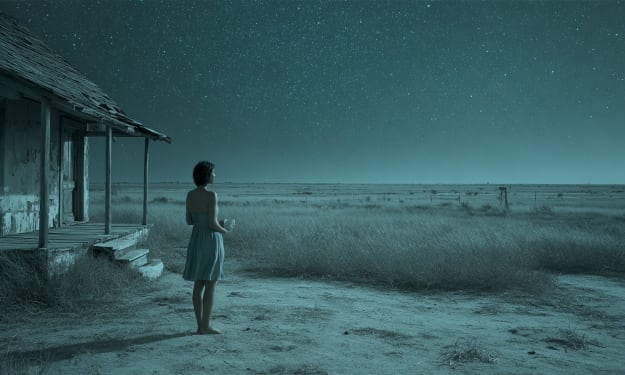
The porch light had been out for three weeks. Delia had written it on the notepad by the coffeepot — bulb, porch — and then she'd written it again when the first note got buried under Ray's truck-payment reminder and the vet appointment for a dog they'd had to put down in October and a list of things she'd needed from town that she'd eventually just done without. The bulb stayed dark. She stopped writing it down.
By Leslie L. Stevens Writer | Marfa, Texas6 days ago in Fiction
A Historic Declaration
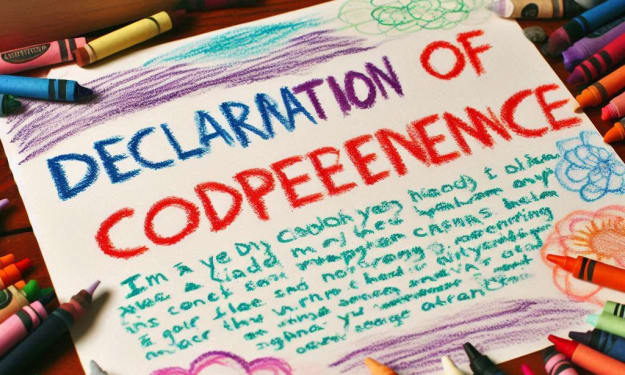
We the People of the Husbands of the United States of America, in Order to form a more perfect Union, and I mean you...with me...establish Justice, insure domestic Tranquility, provide for the common defence, promote the general Welfare, and secure the Blessings of Liberty to ourselves, after Puberty, do ordain and establish this Declaration of Co-Dependence.
By Gerard DiLeo5 days ago in Humans


Comments
There are no comments for this story
Be the first to respond and start the conversation.