
The Banquet of Pretend Perfection
When a glamorous cooking dream turns into a comedy of crumbs and chaos

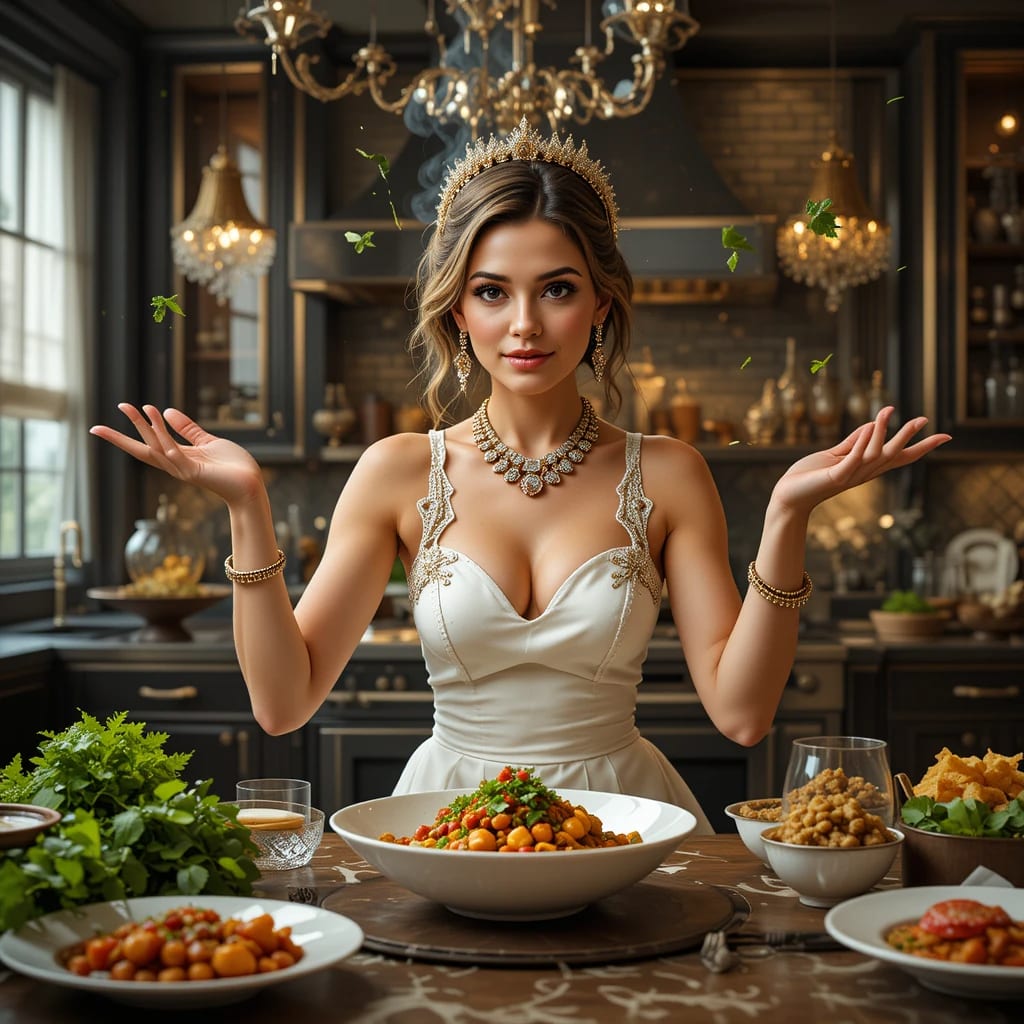
Once upon a very modern time, in a world where cameras followed every stir of the spoon and every sparkle of the wine glass, there lived a woman named Seraphina Vale. She was not an ordinary hostess. No, Seraphina had once been celebrated as the star who could walk into any room and command attention. Her charm was supposed to be effortless, her taste unmatched, and her cooking show—her newest venture—meant to bring warmth, elegance, and inspiration to every household.
At least, that was the plan.
When season one of her series With Flavor, Seraphina was released, viewers expected cozy storytelling, culinary finesse, and maybe a sprinkle of humility. What they got was something else entirely: clunky knife work, jewelry clattering into mixing bowls, and a table presence that seemed better suited for slapstick theater than fine dining.
Still, her team insisted the world needed more of Seraphina’s “relatable authenticity.” Thus, season two was born.
And oh, what a season it was.
The first episode opened with Seraphina standing in her marble kitchen, sunlight pouring in through high glass windows. She smiled into the camera, her hands loaded with rings and bangles that chimed with every movement. The task was simple: chop herbs. Yet what should have been a graceful demonstration turned into a flurry of flailing wrists and nearly airborne parsley. A knife slipped dangerously close to her bracelet, prompting the off-screen crew to wince in unison.
But Seraphina only laughed, calling it “part of the fun.”
The true test came not with cooking but with eating. In a much-hyped segment, Seraphina sat down to enjoy a towering gourmet burger. She leaned in as the cameras zoomed close, taking a grand, exaggerated bite. What was meant to look natural instead left her audience stunned. Instead of gentle bites and charming conversation, viewers witnessed hurried chewing, sauce on her fingers, and the unmistakable sound of jewelry tapping against the plate.
Her critics whispered that the scene resembled less a polished production and more a parody sketch. Social media filled with gentle mockery: “Did I just watch a royal feast or a wildlife documentary?” one viewer wrote.
Yet Seraphina carried on, believing that each unscripted slip added to her image of relatability. She licked her fingers with gusto, waved her knife like a conductor’s baton, and spoke mid-chew about “finding joy in the simple things.”
Behind the scenes, however, whispers grew louder. Even her culinary mentor, a renowned chef who once believed in her vision, confessed privately, “I gave up after the first spoon clatter.”
By the time episode three aired, the chaos had grown legendary. During a pasta segment, strands of hair—loose from her elegant updo—dangled dangerously near the sauce. The internet christened it “the strand heard around the world.” Memes appeared overnight, showing the pasta bowl flinching in fear.
Still, Seraphina smiled. She reminded her audience that imperfection was beautiful. That cooking wasn’t about precision but about heart. And while many admired the sentiment, the execution left viewers conflicted. Was this truly empowerment through authenticity—or simply poor preparation disguised as charm?
The season culminated in the now-infamous “banquet episode.” Guests, dressed in glamorous attire, sat at a grand table with crystal glasses gleaming under chandeliers. The menu was ambitious: roasted vegetables, hand-crafted pasta, and that towering burger once again.
As cameras rolled, Seraphina lifted her fork with dramatic flair, speaking about togetherness. But as soon as the food touched her lips, the scene descended into another spectacle—overzealous chewing, playful finger-licking, and animated gestures with a half-full mouth. Her guests glanced at one another, unsure whether to laugh or politely pretend nothing was amiss.
And yet, perhaps that was the secret to Seraphina’s story. For while her execution was flawed, she remained unwavering in her belief that she was creating something meaningful. Her cooking show may not have been a masterclass in etiquette or technique, but it had, undeniably, become unforgettable.
In the end, With Flavor, Seraphina wasn’t truly about food at all. It was about the strange, messy, and sometimes chaotic pursuit of connection. It was about the gap between image and reality, the tension between grace and authenticity.
For her fans, Seraphina was a reminder that not everything perfect belongs in the kitchen. For her critics, she was proof that even the most glamorous settings can turn into comedies of crumbs. And for everyone else, she was simply unforgettable—a hostess who taught the world, in her own unconventional way, that sometimes the mess tells the best story of all.
About the Creator
Keep reading
More stories from Norul Rahman and writers in Fiction and other communities.
The Curse of the Glittering Partner
The Curse of the Glittering Partner In the golden city by the sea, where palm trees bowed in the ocean breeze and stars hid not in the sky but behind velvet curtains, there lived a woman named Calista. She was no ordinary woman—her hands carried magic. With a single touch, she could tame the wildest curls, smooth the fiercest waves, and coax hidden beauty from any weary soul who sat in her chair.
By Norul Rahman6 months ago in Fiction




Comments
There are no comments for this story
Be the first to respond and start the conversation.