
The Astronaut Who Broke Down on Mars
A Found Journal from the Edge of the Red Silence

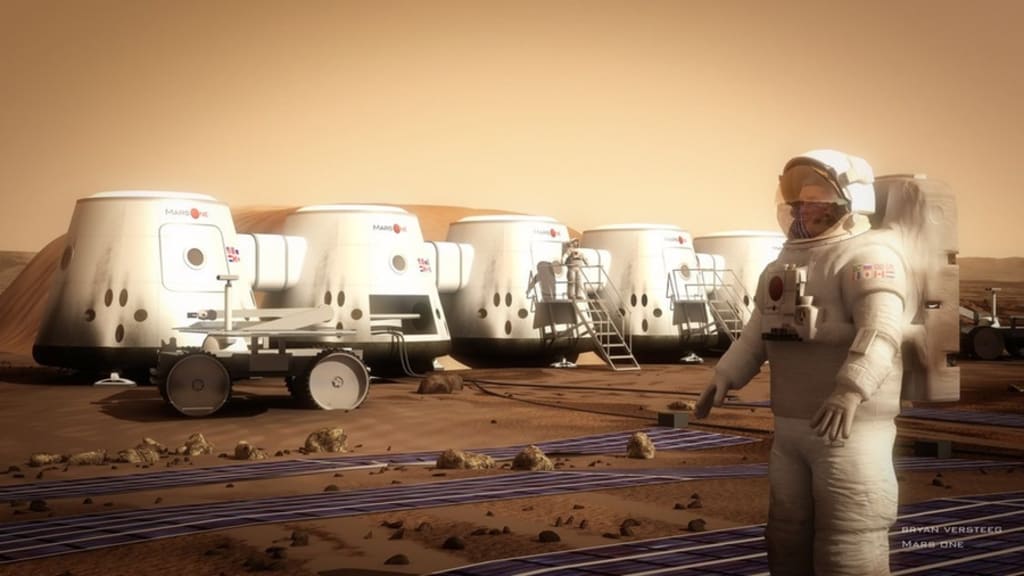
No one ever talks about the silence. Not the kind you find in a library, or a late-night street, or a quiet bedroom. This was heavier—like the air itself was gone, and all that was left was the sound of my own blood moving in my ears.
That was Mars.
I’d been here for 187 sols, alone. The mission was supposed to last 210, but the resupply module was delayed—something about a fault in the launch vehicle. Houston kept saying we’re on it. I kept saying copy that.
The truth was, we were all lying.
I had trained for everything—at least, everything they thought could go wrong. Fire in the habitat. Equipment failure. Communications blackout. Even injury. But they didn’t train me for what happens when your mind gets… thin.
The habitat was barely bigger than a studio apartment back home. A rectangular life-support bubble with two portholes—one facing the jagged mountains, the other the endless dunes. I had six different ways to recycle water, and two different ways to grow lettuce. I’d started naming the plants, because I needed someone to talk to who didn’t answer in that calm, detached Mission Control voice.
My favorite was “Lucy.” She was stubborn, always curling toward the porthole light no matter how I turned her tray.
By Sol 150, I’d already stopped wearing the full mission uniform. I wandered in thermal pants and a T-shirt, bare feet tapping against the composite flooring. Sometimes I left the helmet of my suit on the floor for days, telling myself I didn’t need it unless I went out.
But the “out” was the problem.
Every time I stepped outside, I was swallowed by the truth: there is nothing here. No sound, no smell, no hum of insects or chatter of wind through trees. Just that endless red sand and the black vault of space that didn’t care if I breathed.
The breaking point came on Sol 184. The rover needed a battery swap. Simple job. I’d done it before. But when I went out there, the sky looked wrong. Too wide. Too alien. My hands started shaking so hard I almost dropped the wrench. My breathing became shallow inside the suit.
“EVA status check, Commander Hale,” Mission Control’s voice crackled in my ear.
I couldn’t speak. My throat closed up, and my visor began to fog with every exhale. The tether line to the habitat felt like the only thing keeping me from floating into the void.
“Commander Hale, confirm status.”
Finally, I managed a whisper: “I can’t.”
There was a pause, and then: “Say again?”
“I can’t do this. I can’t be out here. I—” My voice cracked, and something inside me gave way. I dropped to my knees in the dust, clutching the rover’s wheel like it was an anchor in a storm.
The thing about space agencies—they don’t prepare for crying in a spacesuit. You can’t wipe your eyes. The tears just hang there, stinging, blurring everything.
Mission Control kept talking, calm as ever, but all I heard was my own ragged breath. I crawled back to the habitat, dragging the tether, every step feeling like I was moving through syrup. Once inside, I collapsed on the floor, helmet still on, gasping as if I’d just outrun a fire.
For two days, I didn’t answer their calls. I ate in silence, drank in silence, slept in fits. The weight of Mars pressed on me, not physically—gravity was lighter here—but in some deeper, more crushing way.
I thought about Earth a lot then. Not just the people—though I missed them like air—but the messiness of it. The way rain sounded on the roof. The way a crowded street smelled like coffee and exhaust. Even the sound of my neighbor’s dog barking at nothing. Here, everything was clean, efficient, quiet. Too quiet.
On Sol 187, I finally answered their ping.
“Commander Hale, you went dark,” the voice said.
“Yeah,” I replied. My voice sounded like gravel.
“Talk to me.”
And I did. Not in mission terms, not in checklists, but in human words. I told them I was scared. That I didn’t feel like myself anymore. That the emptiness outside was starting to seep inside.
There was a long silence on the line. Then the flight surgeon spoke.
“Hale, you’re not broken. You’re human. Space doesn’t change that—it just… strips away the noise so you can hear yourself. And sometimes, that’s loud.”
It wasn’t a solution, but it was something.
We worked out a plan. Smaller EVA shifts. More scheduled comms with people, not just the ops team. I asked for recordings from Earth—street sounds, rainstorms, even someone making breakfast. They sent them. I played them while tending to Lucy and the other plants, letting the clatter of dishes and the hiss of frying pans fill the habitat.
The sky outside was still wide, still wrong, but now I knew that the tether wasn’t just a rope. It was a reminder. I wasn’t the first to feel this way. I wouldn’t be the last.
Mars would not care if I made it home or not. But somewhere, on a blue planet hanging in the dark, people would.
And for now, that was enough.
About the Creator
Emad Iqbal
Chartered Accountant
Part time writer
"A mind too loud for silence, too quiet for noise"
Keep reading
More stories from Emad Iqbal and writers in Fiction and other communities.
Winterthorne
Winterthorne stood alone at the edge of the park. The beautiful snow that had surrounded him was all trampled now, from the feet of all of the children who had built him. He missed the sparkly clean snow blanket, but he was happy that so many children had come out to make him.
By Laura DePace6 days ago in Fiction


Comments
There are no comments for this story
Be the first to respond and start the conversation.