
The A E O U Murder
A fan’s homage to Agatha C.

Prologue:
The murderer snuck through the door, walked to the man asleep on the bed, plunged the dagger through the man’s pajamas, then turned and left
The next day:
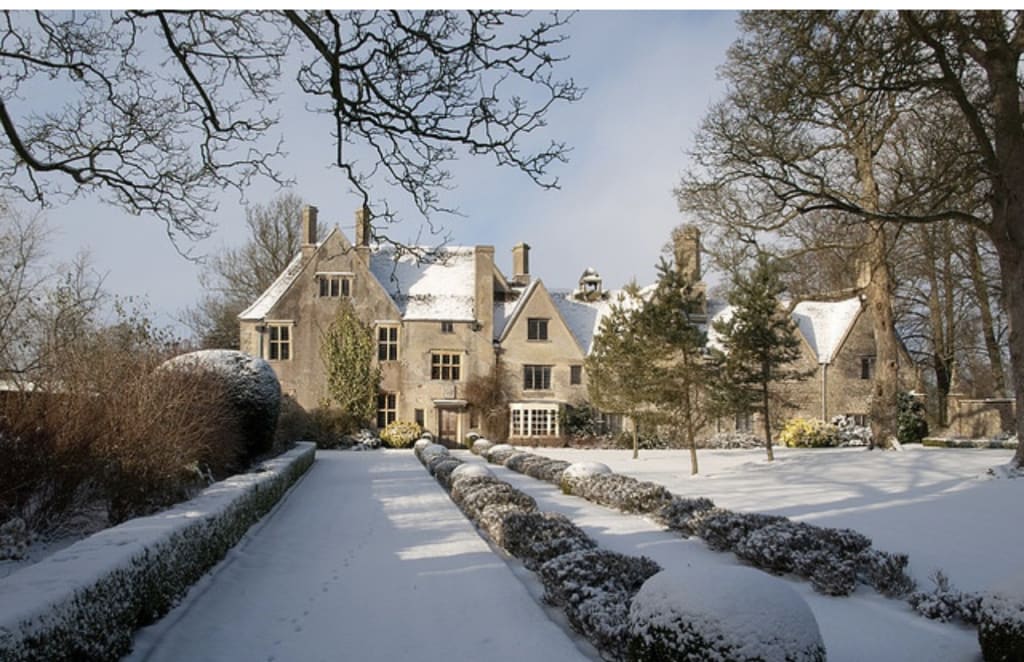
As Roberts opened the bedroom door, Lady Featherstone started at the creak. She turned to the sound. And saw her stone-faced butler enter as the sun dawned on the cold December day.
“You rang, M’Lady?
“Yes, Roberts. There has been a murder.”
Roberts had been employed by the Featherstones for years. He had cleaned up after youthful exuberance scared the horses, scarred the sofas, and shattered glass. He had covered for weekend guests who had slept beyond wedded vows. And he had made arrangements as older members of the clan went onward when old age ended. But here was the majordomo’s debut murder.
The body lay peacefully on the bed. A blade protruded from below the left shoulder. A small dark pool of blood marked the back of the corpse’s pajama jacket around the wound.
Roberts could not see the face. But the pajamas were those of the Lord of the Manor, the Baronet Thomas Featherstone. A fact attested to by Lady Featherson as she hovered over the body.
“Roberts, call the constables. Someone has done for Tommy.”
Mary Featherstone was the dead noble’s second spouse. She had replaced the well-bred woman, Margaret Featherstone, who had held the job before her. Her accent and vocabulary betrayed her more humble antecedents.
“Yes, Ma,am.”
Roberts backed softly out and went down to the telephone on the hall table. He returned to the bedroom and told Lady Featherstone,
“They shall be here shortly, ma’am.”
“Thank you, Roberts. We should lock the door.”
As they left the room, Robert’s asked whether he should wake the household.
“No Roberts, but would you ask Cook to make coffee.”
“Yes, ma,am.”
Cook was busy. The day was December 25th. And she had much to do to prepare the celebratory lunch. The war was on and by 1944 most young men and women labored to support the effort to beat the Germans.
On the second floor, yet abed, slept George Cheslake, the deceased’s griend and lawyer. And Thomas’s venerable aunt, Alexandra Featherstone.
The younger set was also there for the season. Henry Featherstone, the Baronet’s nephew and future. Peter Featherstone, Henry’s younger brother. And Emma Rashford, Thomas’s secretary.
All had gone to bed to savor dreams of laughter and joy on the next day. But they would wake to awful news.
Two hours later, before any arose, the doorbell rang. Rogers answered the summons. There stood two women dressed for law enforcement. As many men were away, the gentler sex had taken on new roles.
They expressed regrets for the delay. And noted that a fresh snow had fallen, and they had not rushed over dangerous roads.
The two women showed Rogers warrant cards that announced names and rank. The older pressed the butler for the facts of the matter. And thus Sargent Barnes and Constable Jones were shown to the bedroom. Barnes hovered over the body and Jones took notes.
“The deceased looks to be a mature man. A dagger protrudes from the upper left back. The body feels cool. Death occurred some hours ago.”
Barnes looked up and shadowed by the gloom of the well-draped room, saw Mary Featherstone ensconced on a sofa at some remove.
Mary acknowledged the two women, “Please carry on,” she uttered softly. She added that she would keep mum as the women performed the tasks needed.
“Who are you?” asked Barnes.
“Mary Featherstone, Tommy’s spouse.”
“You need not stay here, Ma’am.”
“Thank you. But Tommy should not be alone. And death has no terror for an ex-nurse.”
As Barnes would soon learn, Mary had been Margaret’s nurse for the last three years before she passed. She had ceased that career to become her charge’s replacement.
An hour passed as Barnes and Jones made notes. Then the Sergeant announced that the bedroom was to stay locked. They had called the local corner, Dr. Lands, and he would be there later. Lands was also the hamlet’s doctor and had been called away to attend a newborn on a remote farm. The household awoke. And soon all present had heard the news of the Baronet’s murder.
Sergeant Barnes allowed the guests to eat breakfast. Hungry people lack the focus to produce useful knowledge. Afterwards, she told them that she would meet them one by one alone, as PC Jones took notes.
Lady Featherstone began the sequence. From that chat, Barnes learned that Mary had been wed to the dead man for three years. They had stayed the ceremony for a year after Margaret’s pass to observe a decent gap. The current Lady Featherstone told Barnes that Lady Margaret had been unwell for months before the last. And had sadly succumbed to a lung malady.
She also told Barnes that she and her husband used separate bedrooms as the upper crust commonly do. And that she rose early and had come to see that Thomas was rested as he had been angry the day before.
Mary spoke softly. Barnes noted her calm - a symptom of her shock perhaps. She was reserved. But most people are when they talk to law-enforcement.
She noted that Mary had blood on her sleeve. But not as much as you would expect had she thrust the blade. Most probably she had smeared some when she found the body.
The presumed next Baronet, Henry Featherstone followed. He entered leaned on a cane that rapped on the wood floor to offset a pronounced lameness. He was a pleasant young man who appeared eager to answer her. He seemed stunned at the death. And stated that he had been nowhere near the Baronet’s room. But as he had much to pocket from the murder, she could not take Henry’s words at face value. Many murderers are good actors.
Henry stated that Thomas and he were close. And that he had no reason to want the old man dead. He added that he had gone to bed early and had stayed there.
Next Barnes talked to George Cheslake, Featherstone’s lawyer. Cheslake told a story at odds to Henry’s account. Barns learned that Henry was hard up and had repeatedly sponged off Featherstone. George reported that the Baronet had expressed anger at Henry for the young man’s extravagance. The lawyer reported that the day before Thomas had told Henry he was no longer prepared to sponsor the younger man’s excess and was prepared to cut Henry off.
“Can he do that?” asked Barnes. “Surely the Baronacy and estate go to the legal successor.”
“Not so, here” answered the lawyer. “The Baronacy was for Featherstone’s mortal term and does not outlast the death. Featherstone could also leave the money to whomever he wanted.
“Had he made the change?”
“No. The extant document stays the last testament, Except for a small trust to Lady Featherstone, and for some small bequests to staff, all goes to Henry.”
“Was Henry aware of the plan to amend the document?”
“Yes. Thomas and Henry met late yesterday. There was a fearful row. So loud, the whole household must have been aware.”
“After Henry had stormed out,” the lawyer added, “Thomas asked me to come to the study. We talked of a change of bequests and made plans to do so.”
The lawyer then told Barnes that as he left the room Featherstone yelled, “Thank God that’s done. Henry won’t see a penny.” And he added, “Those were the last words he spoke to me.”
Same old story, thought Barnes. There are few reasons for one person to slaughter another. One of the most common was money.
She asked the lawyer was the younger brother Peter to be the legatee.
“No” responded the lawyer. Peter was a roué who had brought shame to the clan’s name. The rake’s record was marked by unsavory conquests.
Next up was the knave Peter. You could tell he was Henry’s brother. They could have been created from the same mold. But whereas Henry was blandly well-faced. Peter was a dangerously handsome man who projected menace. Barnes thought, that based on looks alone, the average person would have Peter chosen as the man most probably a felon. The younger brother sat comfortably, appeared amused, and answered her suavely.
“No, sergeant. Zero to say that would be helpful. My uncle’s death causes me sadness. Too soon gone, you know. No clue as to the cause. Not me though. Nowt to my advantage.”
The drawled staccato reply and lower class vocabulary were the affected pretenses of the upper class. But the manners of a boor are no proof of felony. More relevantly, the death of the peer presented no apparent advantage to Peter.
There was a knock on the door.
“Come” drawled Peter to prove who had status
Rogers entered.
“The coroner has come.”
“Take Doctor Hurley to the bedroom, Jones,” Barnes commanded her number two. Jones left.
“You may leave too, Mr Featherstone. And ask Emma Rashford, to come here.” She added curtly, to show Peter what she thought of the man’s attempt at ascendancy.
Emma was a handsome woman whose modest dress could not obscure her woman’s appeal. Even Barnes, who had been hardened by war and work as a cop was aware of what the older folk called SA.
As she lowered herself to the seat, Emma looked calmly at the cop. Barnes asked her what she knew about the murder. Rashford responded that she would be of no help. Although she had heard Lord Featherstone and Henry argue as she went to bed at eleven. And had slept soundly.
At that moment, Jones returned and waved for Barnes to come to the hall. There she told Barnes that death had occurred an hour or so around one AM. She added that the coroner and Barnes agreed that one matter was odd. Barnes then told Jones to search and see whether she could uncover a fact to support that agreement.
She returned to talk to Rashford. She stated that they had to keep the chat short as she had to go talk to the coroner.
“That’s my father you know.” Barnes was not aware that Rashford was a local.
“Dr. Lands? But you don’t have the same name.”
“My husband was an RAF man. He was shot down over the Channel and drowned.”
Rashford stated the fact starkly. The secretary had no more of consequence to add.
Alexandra Featherstone, Thomas’s venerable aunt was the last to talk to Barnes. She was an old lady who peered about through watery blue eyes. But her speech was abrupt.
“He went to Thomas’s bedroom you know”
“Who went to the bedroom?”
“Henry. That damned boy and the tap, tap, tap of that abysmal cane. He could put a rubber end on the damn …”
“When was that?”
“One, maybe two.”
She stopped as the door opened. Jones was there. Barnes looked up at her, a query across her face. Jones nodded back.
The sergeant thanked the old lady and told Jones to get the coroner. The three of them conferred. After that, Barnes asked Roberts to have everyone come to the study.
When they had assembled Sargent Barnes started to talk.
“As you know, Lord Featherstone has been murdered. We know that someone present performed the act.”
“When we came here, Constable Jones walked around the house. There were no tracks through the fresh snow.”
“Lord Featherstone was found struck by a dagger. Who wanted the Baronet dead? Who was helped most? The easy answer, Henry Featherstone. Everyone here knew Henry and Thomas fought over money.”
“Alexandra Featherstone even saw Henry at Thomas’ door. But that offers no proof. A cane can be used as a prop. So who can say Peter was not the one?”
“Why would ….” Peter started.
“Exactly, Mr. Featherstone. Why would you murder your uncle? There was no advantage to you. Except, should your brother be hanged for the deed, perhaps you would be next for the money.”
As Peter started to squawk once more, Barnes put her hand up to stop the protest.
“Agreed. That’s too convoluted. Let me adhere to the most reasonable theory. Henry murdered Thomas because Thomas was about to cut Henry off.”
Now Henry started to protest.
“Allow me to carry on, please.” Barnes went on. “ To get to the bottom of the deed, we must account for an odd fact. There was not much blood. When someone suffers a stab wound to the back, blood flows everywhere. Yet the only blood on the body was the blood that oozed from a corpse. Dr. Lands agrees that Featherstone was murdered by an agent that caused the heart to stop.
“On my order, Constable Jones searched the house. And she found a small bottle that smells of almonds.”
Lady Featherstone looked shocked at the news. “Who would do that? Where was the bottle found?” She asked.
“The bottle was found secreted by Emma Rashford’s bed. And as a doctor’s daughter she knew how to get her hands on the substance.”
“That bottle doesnot belong to me,” objected Emma. “What reason would there be for me to murder Lord Featherstone?”
“Perhaps you expected to marry Henry and wanted to preserve the fortune for yourself.”
“That may seem a good reason to you, Sergeant. But that does not take account of the fact that Peter has already become my husband. We were to tell Thomas by the New Year.
“You do not have to tell me that, Mrs. Featherstone. Jones found a court document that attested to your new status under the bottle.”
Barnes looked at the others arranged around the room. “Who does that leave?" she asked. “Not the servants. There was zero for them. The small bequests would not match the money they earn. And Mr. Cheslake also gets the same - nada.”
“That leaves you, Lady Featherstone.” Barnes stated as she turned to Mary.”
“That’s absurd. All the money goes to Henry.”
“That’s not what you thought, Lady Featherstone. You thought your husband had already changed the testament. Remember that Lord Featherstone’s last words to Cheslake were, “Thank God that’s done. Henry won’t see a penny.”
“You thought Henry was already cut out. And you knew that Peter was the black sheep. You presumed that all was to be yours. And wanted to ensure your husband had no chance to change that fact. And as a nurse you knew what to use.
The Sergeant added, “Perhaps we should exhume Martha Featherstone. Shall we uncover more of your work?”
As Jones led Lady Mary away, Cheslake spoke, “So Mary stabbed Thomas to obscure the true cause of death?”
“Oh no. She was amazed to see the dagger.” responded Barnes.
“So who stabbed Thomas?”
“Henry, of course.”
“Why would he stab a corpse?”
“Because he was unaware that Featherstone was already dead.”
About the Creator
Pitt Griffin
Once upon a midnight dreary, while I pondered, weak and weary, it occurred to me I should write things down. It allows you to live wherever you want - at least for awhile.
Keep reading
More stories from Pitt Griffin and writers in Fiction and other communities.
Conversion
It does not rain much in the Arizona desert. But when it does, the waters come hard and fast. Ancestral dry river beds scoured by flash floods bear witness to their force. A man caught between steep, rocky banks can drown on a cloudless sunny day, swept away by water racing across the desert, shed by thunderstorms rumbling beyond the horizon.
By Pitt Griffin2 years ago in Fiction
Lightning Never Strikes Twice
The distant rumble, the sudden deluge, the crescendo of sound, the flash of light, the explosive energy — it never gets old. I became an amateur storm chaser about two years ago. My wife, Cindy suggested it. Sort of. She said, "Alex, you know this cancer is killing me. I've come to terms with that, but you're smothering me. Go join a band, write a book, or become a storm chaser, for all I care. I love you, but you need a hobby."
By Julie Lacksonen3 days ago in Fiction
REEEEEEEEE!
I'm on a low road right now. There are a literal million things to do and not one of them worth my time. I would rather sit in place and burn but the orbit takes me on its inevitable route 'round the center; and I a center in my own right, around which others orbit, and so on and so forth, ad infinitum, ad nauseum.
By C. Rommial Butlera day ago in Poets



Comments (1)
Interesting