

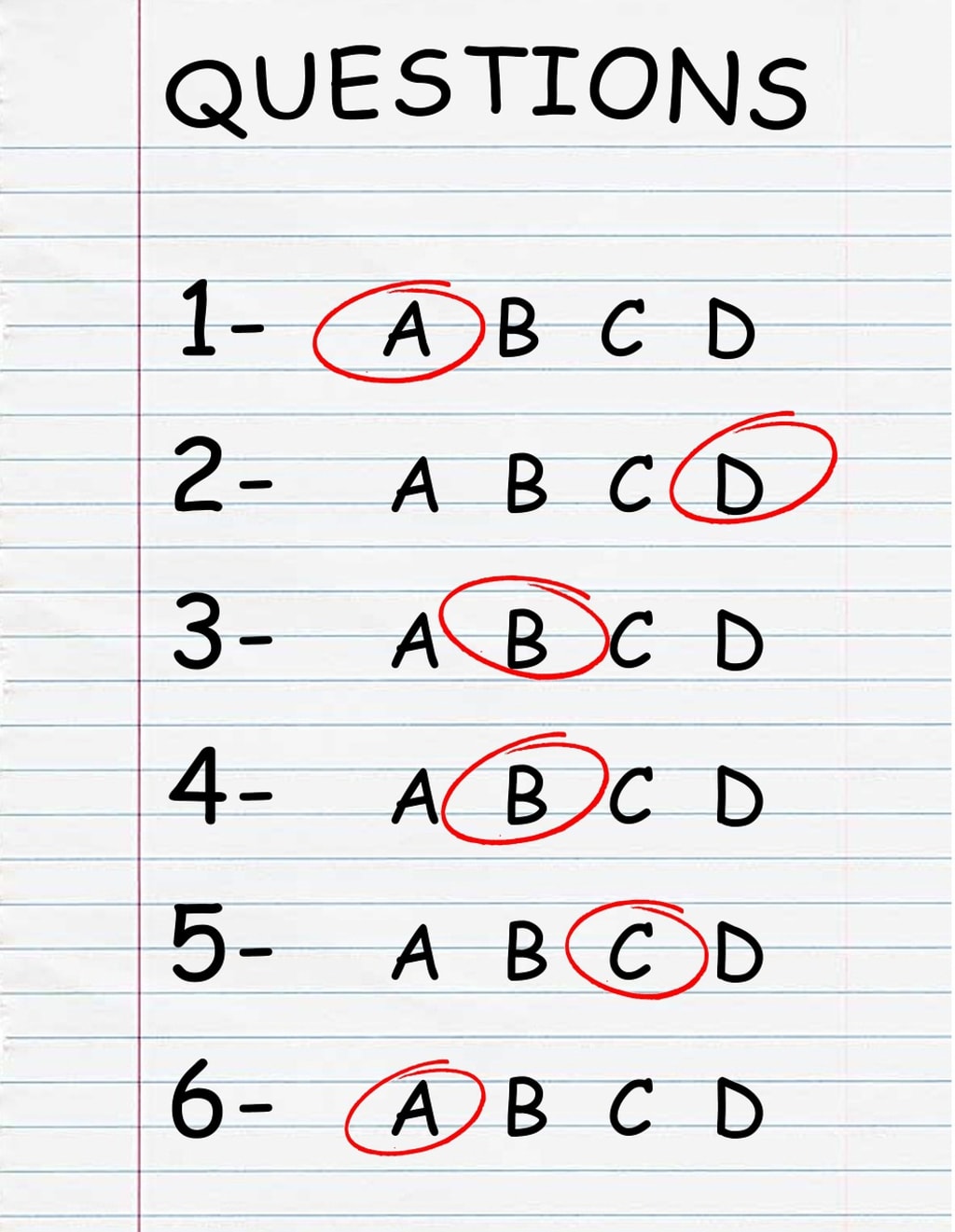
"I'm gonna need to see your drug qualification card if you are gonna buy those kid." said the heavyset, very tired looking clerk behind the counter as Sam approached the checkout. "Of course my man." Sam replied, grinning ear to ear, as he quickly reached into his back pocket and pulled out his overstuffed brown wallet. He slid the card out from its slot in the wallet and handed it over proudly to the clerk. "A1 rating brother. They don't get any higher than that." The clerk looked at the card skeptically, then raised both eyebrows and whistled out loud as he said, "Damn kid. You aren't lying. What'd you do, cheat or something? Highest score I ever saw in here was a B0 and I only saw that one time. Most people comin in here are lucky to see a C2 max or have flat out failed. I'd say at least half have failed three times and are now banned for life from ever using drugs again. Well, the good kind of drugs anyways." Sam wasn't surprised. The store wasn't in the greatest neighborhood and the clientele were not exactly the most mentally stable around. He was however more than a little offended at the accusation of cheating and looked at the clerk incredulously as he answered. "Hell no, I didn't cheat. You know as well as anyone the modern computers running the testing program can't be fooled. At least no one yet has figured out how to, so they say. And the accuracy of their psychological classifications has been proven in experiment after experiment. If they say I am an A1, then I am an A1. No doubt at all about that." The clerk was a bit confused "Modern computers? You mean them AI?" "Yeah, man. Most people call 'em AI but I never will. Not until one of them proves to me personally that it is actually intelligent. And so far, none I have challenged have been able to beat my test and prove they are to my satisfaction. So I call 'em modern computers."
"Sure buddy, whatever you say." The clerk laughed in reply, though in truth he didn't understand what the kid's problem was or what he was jabberin on about. With an A1 rating though he could be a very good, repeat customer, for his store's entire line of drugs only available to those with qualifying cards and the right scores. Nothing he carried, which included just about every formerly illegal substance known to man and a number of newly developed exotic designer drugs, each available in a range of delivery formats from pills to injectables to powders, would be prohibited for Mr. A1. By law, he was allowed to buy anything that any licensed drug dealer, store or an individual, had available for sale. The clerk's heart sank though as he quickly realized that it was also true that almost certainly the kid would be interested in very few of the drugs he sold in his store. He never could have gotten an A1 score in the qualifying exam if he had addictive tendencies or any other psychological issue that might make him prone to criminality or violence after using drugs, or if he were depressed or prone to depression or any of a million other mental conditions which might predispose a person to drug use or abuse. Personal or professional tragedies or other painful life events were also factored into the scoring. A dead sibling or parent, especially if you had known them for any length of time, would reduce an exam score by as much as 20 points, bringing it down into the C range before any questions had even been asked by the AIs.
Genetic screening had been proposed in the early days, but public uproar over it shut that part of the law down very early and no genetic testing of any sort was allowed as part of the qualifying exam. Most believed that would change someday, but for now it was a personal/psychological profile only, and, of course, the oral examination by the AI's. That was by far the most novel and interesting part of the law, and the hook that had turned the tide in favor of the pro test to use crowd among the general public. These days, for a certain part of the population, it had become almost like a game. Can you outsmart the AI's and win your drug use privileges? Everyone thought they could, all to date had been proven wrong.
As he thought about it, that was also probably why he saw so few customers overall holding qualifying cards with high scores. A great irony of the test to use laws was that those most capable of using illicit substances without significant negative consequences to themselves or society as a whole, were also the least likely to ever want to use illicit drugs. At least that was what the testing had shown over and over again. Of course that did not always hold true. The clerk knew their were some exceptions, and he just hoped this kid was one of them. A wealthy drug addict holding A1 purchasing privileges would be a big time profit maker for the store the clerk reasoned, not incorrectly. He might even be into some of the ultra expensive and profitable new designer drugs which had flooded the market in the early days of test to use, but whose production and sale had slowed considerably as the impact of the laws and the test to use program had become more clear.
Critics of the program had expected a huge surge in the use of all drugs, and the creation of whole new categories of them, because of the laws. They believed that as people were tested and received their licenses a massive new market of potential substance users would arise that previously had been held back from trying any formerly illegal drugs by fear of the legal consequences should they be caught. Once those legal controls were removed, they reasoned, the flood gates would open and millions of people who had never touched drugs before in their lives would suddenly rush to their local drug dealer to try some just because they now could. That particular anti-test to use argument always felt very weak, and the implementation of test to use had unsurprisingly to most proven those critics very, very wrong.
In fact as proponents of the test to use laws had predicted, illicit substance use rates had not changed at all since their implementation. However, that was not the objective of the program. After decades of failed attempts at getting people to stop using just say no and similar morality based approaches; along with massively ramped up legal penalties for use and sale, and the concomitant incarceration of huge portions of the population, politicians had finally thrown in the towel and decided on a radical change in direction. Rather than focus on reducing drug use among the population, they would find a way to reduce or eliminate if possible the negative consequences that came with their use (violent and non-violent crimes, incarceration rates, and poverty/homelessness). If test to use became law they insisted there would be three outcomes 1. Reduced rates of violent and non-violent crimes nationwide. 2. Reduced rates of incarceration nationwide. 3. Reduced poverty and homelessness rates nationwide. Smartly they defined within the legislation exactly how each objective was to be measured, and exactly what was considered success and what failure. Lastly, they wrote the laws such that if they were not successful they would be immediately rescinded and the country would return to the status quo.
About the Creator
Everyday Junglist
About me. You know how everyone says to be a successful writer you should focus in one or two areas. I continue to prove them correct.
Keep reading
More stories from Everyday Junglist and writers in Fiction and other communities.
The Covidian
Superhero Name: The Covidian Secret Identity/Alter Ego: Ill tempered Holiday Inn Express hotel manager Stephen Franks Origin Story: Stephen Franks is the only man in the world confirmed to have been infected with the original Covid-19 strain and all 26 known variants. During his 27th bought of the disease, he developed severe encephalitis and the resultant nerve damage in the brain caused him to develop a number of what have been characterized as "superhuman" abilities. He also developed a neurological disorder similar to Bells Palsy which resulted in a severe lisp, permanent paralysis of the left side of his face, drooping of his eyebrows and mouth, drooling from the right side of his mouth, difficulty closing one eyelid, and severe facial pain along with disordered movement of the muscles that control facial expressions, loss of the sense of taste on the front 2/3 of his tongue, and chronic tinnitus. He uses his superpowers to fight the greed and laziness of the hospitality industry whom he claims used Covid-19 an excuse to cut costs and reduce quality rather than as a source of severe disfigurement and painful disease as he did. He discovered his superpowers by accident on the day he learned of the new 5pm closing time for all hotel pools in his hometown of Cleveland, Ohio which the hotel chains attributed to a shortage of lifeguards caused by Covid-19. The move was expected to save the hotels an estimated 1.5 billion dollars in combined labor and lawsuit avoidance costs. Stephen's anger at that policy caused two of his super abilities to activate. Eventually he would learn that all of his powers could be activated by anger and/or disgust.
By Everyday Junglistabout a year ago in Fiction




Comments (1)
This is quite an interesting fiction story. This could be true life in a way one day.