
Tea time with Winston Churchill
Tea time with Churchill
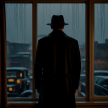

Sir Winston Leonard Spencer Churchill (30 November 1874 – 24 January 1965) was a British statesman, military officer, and writer who was Prime Minister of the United Kingdom from 1940 to 1945 (during the Second World War) and again from 1951 to 1955. Apart from 1922 to 1924, he was a member of Parliament from 1900 to 1964 and represented a total of five constituencies. Ideologically an adherent to economic liberalism and imperialism, he was for most of his career a member of the Conservative Party, which he led from 1940 to 1955. He was a member of the Liberal Party from 1904 to 1924. And this is how I met him.
It was one of those insipid afternoons, like all afternoons, when I received the most out-of-this-world invitation for tea with no other person than Sir Winston Churchill. The envelope sealed with a wax stamp with his initials seemed almost surreal. How could a figure of such historical significance invite me to afternoon tea? I rechecked the address; indeed, it was addressed to me. Intrigued and slightly awestruck, I could not refuse.
It was to take place in a quirkily stately room at Chartwell, his house. On arrival, I was led by a butler into a sun-drenched drawing room where a cosey table was laid out with delicate china, dainty sandwiches, and of course, a pot of Earl Grey. Churchill was a name spoken with war and political building successes behind him, while he sat comfortably in an armchair with a cigar resting between his fingers and his iconic bow tie perfectly set."Welcome!" boomed Churchill in that rich, gravelly voice I have heard in a million historical speeches. He motioned to me to take a seat, and I took it nervously opposite him. "Would you like a cup of tea?" he asked, without waiting for my reply, immediately pouring one for me. As he handed me the cup, there was a sparkle in his eyes, belonging to a man who had faced the worst as well as the best in human nature. "Milk or sugar?" he added, the hostly grace of one who had passed many years in the highest echelons of power.
We made small talk at first-weather, naturally, but soon enough the tenor of the conversation turned grave. Churchill had this way about him that plunged people into believing that what they thought and had to say was important, even on the gravest of matters. "Do you know," he began after a contemplative sip, "I find that tea really is just the thing to fix so many ills in life. Tea, cigars, and maybe the odd whisky." Then he laughed; his echoes reached my ears in the room. His presence was magnetic, as if I spoke to history itself. I had been curious enough to ask him what it was during the war, about those moments that read like icons from books; but Churchill was more into ideas than into tales of old. He spoke of courage, of determination—of what it took to lead a nation through its darkest hour.
"It wasn't just the battles or the speeches," he said, his voice softening. "It was holding the line. Not just on the front lines, but here," he pointed to his head, "and here," he touched his heart. "Leadership is an isolated place, but someone has got to carry the torch, even when the light isn't bright." And then, as the night wore on, Churchill began to talk about himself: about his painting, about frustrating times in politics, and about his undying love for the country. His voice never was boastful but reflective, as if to relive moments both proud and painful. We talked for hours, long after the tea had gone cold. It was not a historical lecture but one personal, deep exchange with a man who had seen ebbs and flows in history few can dream of.
Finally, when the sun was low on the horizon, Churchill stood up and gave his last advice: "Never give in. Never, never, never." So famously spoken in one of his speeches, it was so much more personal in that intimate moment. As I rose to leave, I realised that this time of tea had been something more than a casual chat; it was a rare look into the mind of one of the great figures of the 20th century—one who could find solace in the simple ritual of tea when the weight of the world seemed to weigh upon his shoulders.And with that, I watched him disappear waving, a feeling not able to shake from my mind that those words were for more than just me, but for any that faced their adversities, in whatever time, to press on, always.
About the Creator
The Story Writer
just a regular person that has a lot of stories that no one wants to hear.... except people in this website/app....
Keep reading
More stories from The Story Writer and writers in Fiction and other communities.
Chicken of Justice
Cluckton is a small city with big problems, faced by crime and corruption. The people had reached a point where they felt helpless and were crying out because justice was unserved. But when the darkness of night fell, one unlikely hero emerged from the very alleys of this city. This would not just be any ordinary vigilante; this would be Cluckton's last hope: the Chicken of Justice.
By The Story Writerabout a year ago in Fiction
Whispers Beneath the Ash Tree
The first time Elara heard the whispers, she was twelve, crouched beneath the gnarled branches of the old ash tree that crowned the hill behind her grandmother’s house. The air smelled of wet earth and burned wood, a memory of last night’s fire still clinging to the soil. The voices were not loud—never loud—but soft murmurs that trembled through the leaves like wind through strings.
By Ihsanullah3 days ago in Fiction




Comments
There are no comments for this story
Be the first to respond and start the conversation.