
Stories Before a Wedding, or The Frog Prince & The Princess's Challenge
Part 5 of Othering Fairytales

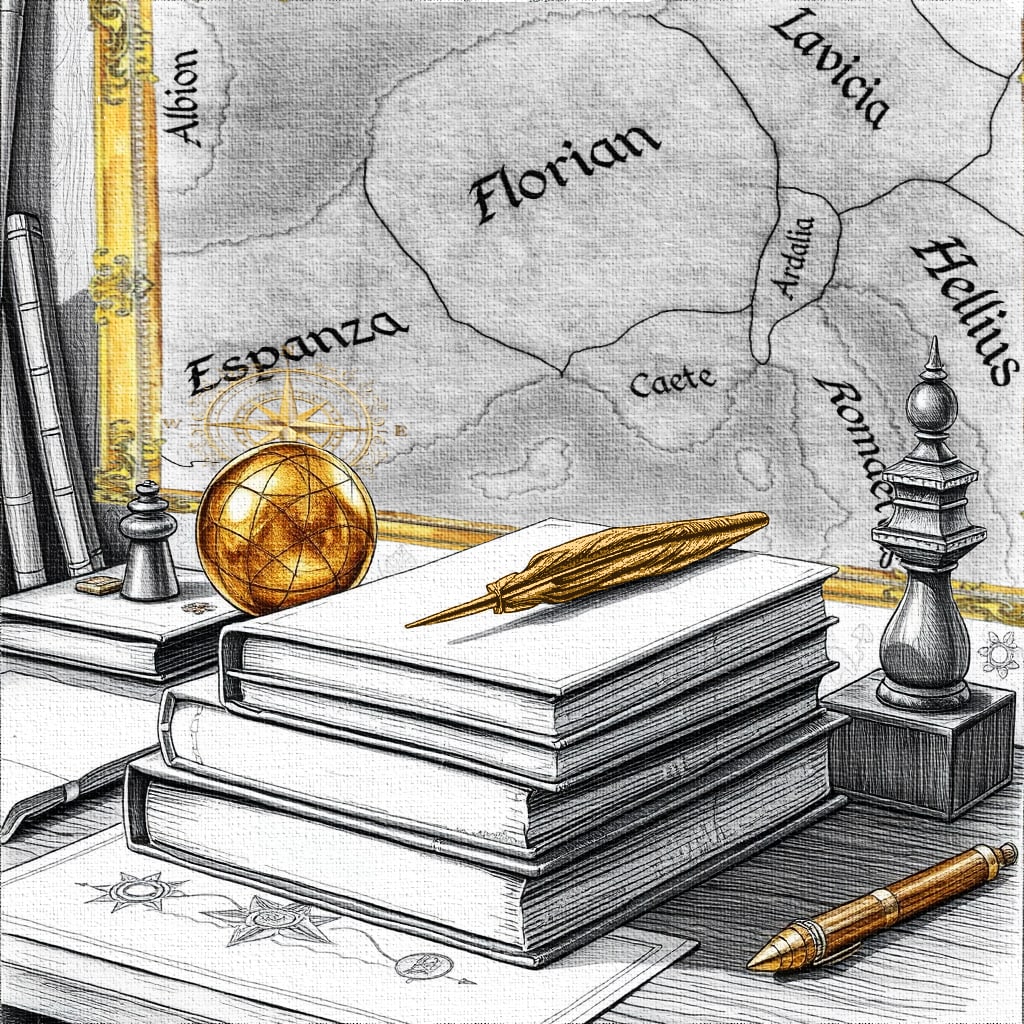

A Marriage Challenge was announced: any person from this or any of the surrounding countries – single or widowed – between the ages of twenty and forty years who could sign their name freely and without aid and could read aloud a passage from the children’s school Book of Law would be allowed to take part in the challenges that would take place in three fortnight’s time. The Princess Risa would meet her challengers and test them in three sets of contests of her own creation and would marry the one who met her challenges to her best satisfaction.
As many would imagine, this proclamation was met with a great deal of excitement, and many declared their intent to try the princess’s challenges. People both common and noble travelled from across the kingdom and the neighbouring ones to the Capital to try their hand, many knowing they stood no chance but unable to resist being able to say to their future children: I, too, tried the Princess’s Challenge. And, besides, any could win the challenge, noble or commoner, so it cost nothing but time for a participant, and many villages would band together to share the work of one trying in the hope of sharing future glory as well. There were other prizes to be won as well – if not as noble – prizes like gold, or jewels, or even land or positions for those who showed themselves well.
One such group of travellers were resting at an inn in the Capital; it was neither a rich inn with more guilting than wood and silk draperies, nor a poor in with unmatched furniture and more fleas than straw in the bedding, and the food was good and hot. The travellers were discussing the Challenge and the potential tasks that would be announced the next day – for the festival had begun three days prior and would continue on for the next two weeks as the Challenges unfolded. Other stories began also being told: those of the Sleeping Beauty and The Snow Whites, Cinderella, and The Beauty who tamed The Beast, and others as well that are not yet written down like The Goose Girl and The Princess who slept in the Glass Casket and the Swan Princess.
Finally, the story turned to this own country and it’s famous story, one that a mysterious traveller wrapped in a large fine, but dusty, worn, and practical, cloak who had – until this point – been quietly sitting in the hall stated has been mis-told and even mis-named by all the foreign retellings he had heard. As he himself was now a native of this country, he asked: “Would you have me tell you the story of our Frog Prince?”

A Princess – a mere sixteen years of age (old enough, the men of the King’s Council argued, to marry, but young enough to still play with her golden ball on the edge of the forest with only her nanny and an old, drunk guard) and still very young and childish at heart – was playing catch at the forest’s edge just past the gates of the castle one day when she lost her ball. She ordered her guard to fetch it for her as she was forbidden from entering the forest herself, but he snorted and turned back to his flask. Her nanny tisked at him in shame, but she too refused to fetch the ball as she was scared of the dark forest and was none too young herself to be trapsing across the unsure ground.
In a larger country, the Princess might search for another guard to fetch her ball (which was solid gold and a gift from her godmother, the queen of a neighbouring kingdom, and someone the Princess did not wish to anger by losing her gift), but this kingdom was small and had no one else that could be spared. As such, the Princess decided to brave the woods and get the ball herself. She reasoned that the ball could not have gone too far into the forest, and, despite her childlike nature, she knew some of the practicalities of life from the simple way their poor court lived, so she was used to having to do things for herself.
As she entered the dark forest, the Princess could not help relax as it was cool and calm in the woods, even if it was dark. Birds flew overhead, and butterflies and other little winged creatures flew and played in the beams of sunlight that broke through the tree canopy. She could not imagine how anyone was fearful of this beautiful place and resolved to visit often despite the King’s orders stay out of the forest– for she was, even by her own admission, a bit spoiled by the King who knew he would at some point need to trade her hand in marriage to a more powerful kingdom to keep their people safe. Here, though, the Princess could forget that she might soon need to be married and enjoy the beauty of the woods in peace. And there, just as the edge of an old well, sat her golden ball! She picked it up, cradled it to her breast for a moment, and then, laughing, she threw it up and expertly caught it again. Over and over, she played, laughing with the chirps of the birds and her own echoes to accompany her.
But then, just as she was going to throw the ball into the air again, a loud sound ripped through the forest and a large, evil-looking wild boar charged out of the trees and directly at the young princess. She cried out in fear but stood frozen as the creature rushed directly at her. At the final possible moment, another loud cry was heard and a large bear too broke from the treeline and charged not at the princess, but at the boar. The creature did not stand a chance and fell at one stroke of the bear’s strong, heavy paw. Here, perhaps, the Princess should have screamed, but all she did was let out a soft cry as tears streamed down her face, and her ball – her precious golden ball – slipped out of her hands and onto the grass beside her.
The bear turned to her then, and she remained, frozen from fear, standing next to the old well, but he approached her gently, and he carefully – mindful of his claws – picked up her ball with one paw. Going to her, he offered her the ball and gently used the back of his other paw to wipe at her tears. “I will not hurt you, for I do not desire the flesh of young girls.”
Shocked, the Princess accepted her toy without thinking and thanked the bear in soft, broken words. When he only responded by dropping back onto all fours and bowing his head, the Princess remembered her manners and her old nanny’s lessons and curtsied to the bear politely and thanked him in the traditional, if courtly way of promising him a boon in thanks for his knightly deed. A wiser princess would have been more careful of her words, knowing that promises have immense power, but, at sixteen and from a poor country whose king left the Princess to be raised on chivalry rather than practicality (for he, himself was too inundated in the latter to allow his precious princess to be bothered with it until she absolutely must), the girl did not know any better and promised the bear anything in her power to give as a thank you for saving her life.
The bear – or rather the Bear, for he was, of course, cursed and, therefore, deserves for his name to be capitalised – seemed to smile at the Princess’s promise and asked only this: “Dear Princess: let me spend three days at your side, eating off your plate, sitting by your side during your lessons, and sleeping at the foot of your silk bed. Then, and only then, shall your debt be repaid.”
In fear, the Princess then screamed, and, hearing the old guard grumbling near the entrance of the forest, she threw her ball at the bear and ran off, crying out to warn the guard who was, despite being drunk and foolish, armed with a sword that he did know how to wield. The Princess did not need to fear, however, for the bear did not follow her, nor did he, as some stories go, appear at the castle that night during dinner. In fact, for two more days, everything was quiet and peaceful, and the Princess even forgot about the Bear’s existence.
On the third day from when the Princess lost her ball, she was dining with the King when one of their guards approached saying a bear was at the castle gate holding the Princess’s ball. The Princess turned pale, and the King, upon seeing her face, asked her gently what she had done, but he was a kind man, and seeing that this story would take a moment to tell, ordered the guard to bid the bear welcome but to kindly wait in the audience chamber for a few moments time. He acquiesced, and the King then, at his leisure, drew the Princess to his office and bade her to tell her side of the story.
When she had finished, he leaned back in his chair and thought for a moment. It was clear to him that a magical deal had been – unknowingly on the part of the Princess – struck between her and the Bear, and he was fearful to break it but… Her tears and the fear in her voice. She was little more than a child after all. Finally, he nodded more to himself than to her, and he took her by the hand to the gathered courtiers and servants in the dining hall and ordered the Bear brought to him. He could, of course have chosen to go to the Bear privately, but such magical bargains were powerful, and his people deserved to know the terms of one that might so drastically affect their royal family.
The Bear arrived in the hall with a stately walk. When he approached the royal King and Princess, he rose to his hind legs, bowed deeply, and removed the gold ball that had been placed in a woven reed bag hung upon his neck like a pendant to offer it to the Princess. At the King’s nudge, she accepted it and curtsied to the Bear, but she did and said nothing more. The King then spoke, thanking the Bear, and asking him about the terms of his deal with the Princess.
“Three days leave to live in the palace, take my meals by her side, sit by her during her lessons, and to sleep at the foot of her silk bed.”
The courtiers were aghast: eating with, siting with, and sleeping near the unmarried Princess? Why who would marry her then? No, this could not be allowed, they yelled. For peace, for future’s sake, the King could not allow this. The their words, the bear seemed to shrink into himself, and dropped, almost as though he collapsed, back onto all fours. Still the councillors yelled and argued. The King, too, looked on stonily over the court, the displeasure written clearly on his face.
Finally, the Bear could take no more and cried out: “Then would another form be more palatable to you? A frog perhaps? I would trade one for the other if it meant being paid my due.”
Again, the councillors yelled and fought, but, this time, some were fearful of the magic the Bear seemingly possessed and argued that a Frog might be allowed. The Princess herself grew ever more pale and weak, but none seem the King and Bear noticed. At long last, the King himself spoke, and his voice rang out through the hall.
“No, Bear; no matter the form you take, you cannot spend three nights by the Princess’s side, nor would I make her spend three days in absolute terror even though she did – foolishly, but unknowingly might I add – make a deal with you. I will, however,” – he added seeing the Bear’s despair – “take on her bargain and her duty. I will allow you to eat with me at meals for three days, sit with me in my office and at court, and sleep next to my bed. It is fine linen rather than silk, but I sincerely hope the bedclothes make no difference to the magic.”
At this, the Bear could not help but laugh, but he still seemed to hesitate. After a moment’s pause but before the councillors could react to their King’s words, the Bear again spoke: “Linen or silk, King or Princess, it matters not, but the promise made was shunned, and then three days passed before the one who made it was forced to be sought out rather than returned. As it is, the magic demands more in compensation, hence why I offered to change my form. Now, three months must pass by your side – and the three days originally asked for as well – will be the price. But, King, I do not accept your substitution just yet; I will give you a moment to speak with the Princess and your kin. Should another wish to take on this burden, I will allow it for I too see the fear on the Princess’s face, and I was, perhaps, wrong to take advantage of her youth and ignorance for my own desires.”
Before any could speak – as most were still processing the words the Bear spoke – the King, knowing the Princess’s face was pale as her hand shook in his own, spoke out loudly and clearly and accepted the Bear’s terms. But, he asked, out of respect for the kitchen and the bounty of the country, could the Bear not take the form of a Frog during the meals the King promised? He cared not which form the Bear took any other time – in fact, at night, a warm bear would not necessarily be a bad thing or bedfellow, the King could not help but think. The Bear agreed, but starting the next day would he take the form of a frog, and his only concession to the King’s request was one of his own that he might be allowed to change forms in private; not that it was a part of his curse, but because the change was gruesome to watch, and dinner was already underway at that point.
To all the gathered’s surprise, the King laughed at this and offered the Bear to seat himself across from him for this night and enjoy the meat off his own plate. The Bear happily agreed, and King and Bear ate off the same plate that night and, haltingly, were joined by the Princess who also took pieces of meat from her plate to feed them to the Bear.
That night, as they were alone to prepare for bed, the King – whose name was Riacán – thanked the Bear for releasing his sister from her deal. The Bear nodded and stated he thought the King was a bit young to have been the Princess’s father. At that, Riacán nodded sadly; the rest of their family had been killed by bandits crossing the borders to visit his and his sister’s godparents eight years prior. At twenty, he was just old enough to escape a regency, and, at eight, his sister was just young enough to have only a few truly concrete memories of them and their two middle siblings. Riacán had been left home as the heir, and his youngest sister had been unwell that morning and also left behind in her nanny’s care.
Seeing Riacán’s sorrow, the Bear apologised for bring a bad memory to the surface and encouraged his human bedmate to think pleasant thoughts, for who knew the intricacies with magic? Maybe good things would come out of the next three months. “And two days,” Riacán added with a laugh before extinguishing the candle, never seeing the almost smile on the Bear’s face.
A lot of things can happen in two days too.
Riacán was tired. His councillors did nothing but yell and argue, his soldiers did nothing but yell and argue, and even his supposedly trustworthy servants were doing nothing but gossiping these days with anyone who would listen. At least the shopkeepers and innkeepers of the Capital were happy with him; news of the Frog who ate dinner with them (for it was in this guise that the public most often saw him, so Frog Prince he was rather rudely called) had spread throughout the small country, and many people created a cause to pay court to the King to catch a glimpse of this creature.
Ah well, Riacán thought, at least the councillors and soldiers always yelled and argued, and there was something to say about their consistency.
At least the Bear, who had been his near constant companion these past almost two months now was not only intimidatingly large but as intelligent and well-spoken as he was kind. Riacán was surprised at how grateful he was to have the Bear by his side and how he mourned that the coming month would be their last together. He had tried to ask in a rather obtuse sort of way what the Bear’s plans were after the next month ended, but the Bear simply reminded Riacán of the remaining three days after that and spoke no more about it. Actually, he had then distracted the King with a hearty debate over de Beaumont’s fairy politics and that was all that was said on the matter.
Still, Riacán would miss him terribly. As would his sister, it seemed, for, save for when the Bear changed from Bear to Frog, if he was not by his side, he was by the Princess’s. This was – at first – practical, as the Bear learned of Riacán’s former general, and current traitor’s, plan to force the King to allow the Princess to marry him due to, well, force. The Bear had not been happy to learn of the plot, and had informed Riacán who also not pleased, and they shared their displeasure – privately – with the former general. At the sight of the angry King sitting on his throne, his hand just dangling on the head of an angry black bear, the battle-worn soldier just gave up and left quietly after paying for the privilege to dishonour over death. After that failed plot, both King and Bear decided the Princess would need a friend to quietly guard her and make it know how safe she was, and the Bear did not mind playing Tea Party if the Princess herself did not mind.
Indeed, the Bear had quickly become Riacán’s best and most trusted advisor. He was eminently knowledgeable in history, philosophy, religion, language, and, most importantly, politics – knowledge he shared freely and openly with Riacán. He helped Riacán in dealing with the bandit issue – something his own advisors and soldiers had failed to do for eight years – as well as quietly advised him on two trade deals: one for re-negotiation and one that would be new, but it would open up a supply of fish and other good from their coastal neighbours. For that and the trust the King placed in him, the Bear was hated by the councillors and the soldiers.
At Court, the Bear said little and, usually, pretended to be asleep at Riacán’s feet, but he listened to all, and his heightened senses meant he did not need to see to differentiate between courtiers, councillors, and applicants to the King’s mercy. He also seemed to be able to smell their lies and mistruths, something he warned Riacán about with simple touches to his leg – an exceedingly simple system, but one that no one caught onto save for the Princess. At the public dinner each say, the Frog Prince was jovial and polite, telling stories of far off places he had travelled to (claiming he had stowed away on ships) and regaling those citizens who travelled far and wide to meet him with those countries traditions and histories as well. Sometimes he would even hop a dance pattern out or croak out a few lines of a popular song from that land. Everyone seemed to forget the auspicious start to the Frog Prince’s tenure at the castle in their enjoyment of his presence and tales of wonder.
Riacán, too, was fascinated by the Frog’s stories, as he loved hearing about lands he would never get to travel too and live vicariously through his companion and friend’s stories and journeys. But what Riacán loved most was at night when he, the Frog and his sister took their private supper; the three of them talked for two hours about whatever they desired as the only people serving them were the Princess’s loyal nanny and the King’s trustworthy butler. Sometimes, the Frog even transformed back into the Bear early so that his deep, rumbling voice washed over Riacán like a protective blanket. They all talked freely – sometimes, talk was of a business nature, but mostly that was saved for Riacán’s office just after the public noon dinner – and usually laughter flowed alongside the conversation. Joy – true joy – was finally known to that castle again, Riacán thought giddily, and he savoured every moment he was allowed.
Nights were also a happy time for him as the Bear was not only a warm bedfellow, but Riacán found that it was pleasant to have someone in his chambers at night to talk with and a warm body to lay next to at night to push away to loneliness of the King’s Bed, even if that companion was a furred beast and not a loving partner and consort. Rather than allow himself to wallow in his loneliness, Riacán took the offered companionship and friendship to heart, for he knew that the Bear was a kind and loyal companion to him and that their friendship warmed his heart to its core. That would matter more than any physical companion ever could. Still, Riacán dreamed of the day when he might have a companion for real, even if he had grown almost too fond of the Bear and his quiet intelligence, his gentle being, and his strong protective nature.
Just one more month and three days.
The next month passed by peacefully, and, before anyone save Riacán (who was counting the days with a sad heart) knew it, the three days were upon them. On the last, the Frog, for that was the form he was in at dinner, announced that the debt was all but repaid and that night would be his last at the castle. Riacán was broken-hearted as he had hoped to speak with the Frog that night to beg him to stay longer; the Princess, too, was upset as she had grown to love her protector equal to her own brother, but the councillors and other people that wished again to control the young king silently rejoiced the Frog’s leaving on the morrow. They all planned on waking up early to see off the Frog after breakfast, and some of the meaner-hearted amongst them even planned on possibly doing the Frog harm after he left the safety of the castle.
That night at supper, Riacán tried to smile and be gay, but he could not wave the intense feeling of loss and foreboding that had fallen over him. The Princess tried her best to be happy for the both of them, for the Bear seemed unbothered by Riacán’s quiet and treated the night like no other. Despite his quiet, Riacán tried his best to memorise every moment, every smell, every sound, every touch, and every look at the Bear, for he knew he would never see him again after the next day.
As their last night firmly pushed on, the Princess finally had to go to bed, and her leave-taking from the Bear was as emotional as it was short, as she did not want him to see her tears. The week before, she had cried at the anniversary of her parents’ death, and the Bear had allowed her to cry her tears on his fur before begging her not to cry at a leave-taking, for the ones that were gone would want her to laugh and smile, not to cry for them. The Princess did not cry then, but she hugged the Bear for a long few moments, and then she turned sharply on her heel and left the room and her brother and the bear as fast as she could walk in her slippers and long skirts.
That late night in his bedchamber, Riacán and the Bear were finally alone; the Bear climbed into his half of the bed and waited for Riacán to change into his nightclothes and join him as was their tradition of the past three months and three days. It all seemed so natural after all this time, and Riacán felt himself growing angry, frustrated. He wanted to cry out, to fall of his knees and beg the Bear to stay, or if he wouldn’t, to press is face in the Bear’s thick fur and hold him as he cried his pain out into him as his sister had been allowed to. He wish he could mark the Bear with his tears so that he would carry a piece of his friend with him on his travels that way that Riacán would carry a piece of his friend on in his heart.
The Bear would not stay, however, and Riacán knew his pleas and tears would not make any difference. Besides, he would much rather the memory of a last, pleasant night, than one of admonitions and gentle displeasure: the memories would last him longer that way.
With a false yawn to cover his frown, Riacán climbed into bed and lay with his back to the Bear so as to not give in to his desire to pet his fur all night until the sun’s light revealed his tear marks and the pain in his heart. The Bear, seemingly knowing why Riacán refused to face him, said nothing other than to wish the man pleasant dreams and ask that he be allowed to leave the castle as he came in: to breakfast with them as a bear. The King quickly agreed, and the Bear closed his eyes to sleep. Riacán, too, finally found sleep, but his dreams were confusing and short: a man draped in shadow – one he had dreamt of not infrequently as of late – begged him to be patient, to wait just a bit more, and Riacán woke abruptly to the morning sun and an empty bed.
The Bear was awake and stretching against the wall of the room, standing upright and pressing his upper legs high on the wall to reach his full height. Riacán couldn’t help but stare at the Bear, partially in awe, and partially in both anger and sorrow that he missed being allowed to feel that warm, soft fur next to him again. Still, it was the day, and there was nothing Riacán could do now but get up and mourn his loss in the privacy of his heart. He dressed quickly, not wanting to be forced to make small talk with his beloved friend or ask him where he intended to go knowing that, wherever it was, he was barred forever from following.
Finally ready, the two of them made their way to the packed dining hall for breakfast. As they took their places, one of the councillors sneered at the Bear; had he not promised to take his public meals in the form of a frog to make it easier to feed him? A few others joined in the teasing, and they demanded he honour his promise and change his form. The King grew pale with rage at this last slight at the Bear who had shown nothing but love for this kingdom and it’s people since his arrival at the castle. He drew up to speak, to scream at them all and have out all of his rage and sorrow he felt swirling around his heart when the Bear’s paw on his arm stopped him.
“I will take on another form, if you prefer.”
“No!” Riacán cried out. “In this form, you saved the life of my sister, their Princess and heir to my throne. In this form, you arrived at this castle, and it will be in this beloved form that you leave it.”
The people were silent. Their King so rarely talked above a calm, level tone or with any passion in his voice. He never said no save for once when a councillor suggested sending his then fourteen-year-old sister to the neighbouring kingdom to marry their eighty-year-old king. He had shown no public emotion until the Bear’s arrival since he became The King, and, even then, this sorrow and pain was new to them from him. New also was the knowledge that the Bear had saved the Princess’s life and not just returned her golden ball, and the people loved him more now for that knowledge.
Whispers then started flying throughout the room; whispers and questions and exclamations. Only the councillor who spoke so condescendingly, the Bear, and the King were silent. The councillor was shamed into silence. The King was silent for fear of sobbing should he try to speak again. The Bear was silent and contemplative.
Finally, the Bear turned to the King who sat beside him in his golden gilded chair. As he turned, one person turned to another and suddenly the whole of the hall fell silent. “I would take on another form before I would leave. And leave I must, if I am ever to. The deal is ended and was kept well on your end. Your sister – for you took her place in the bargain but not the act – owes me nothing more on her promise.
“That being said,” the Bear added seeing Riacán’s eyes start to gather tears, and interrupting him before he could beg the Bear to stay, “I would ask for a favour. No promise, no deal or bargain, but a simple favour from a dearly loved friend.”
Even knowing the danger in saying the words, and knowing ironically well that he had lectured his sister for hours for using them herself, Riacán could help but say: “Anything that is in my power to give.”
The Bear smiled as much as a bear can and asked only for a simple kiss goodbye as he prepared to resume his long journey. Riacán was stunned, not at the request, but at the knowledge that the Bear would leave so soon and before even eating, but he knew that the inevitable could not be further delayed and turned his head to kiss the bear on his soft, furry cheek.
In a brief flash of light and with a magical wind that was stirred up from seemingly the Bear’s own body, he melted away into the light; when the light cleared an instant later, a man – large and powerful, with skin the colour of coffee mixed with cream and hair the colour of the Bear’s black fur – sat in the Princess’s seat that the Bear had occupied that morning. Indeed, despite it happening before their very eyes, if it were not for the King’s lips still upon the stranger’s bearded cheek, none gather would have believed it.
For Riacán’s part, he too was shocked; he had kissed his Bear’s soft fur only to feel it change under his lips to warm skin and the feeling of a soft, well-groomed beard. He was lost, confused and as dazed as his people, when the stranger pulled back and, before Riacán could regain his bearings, leaned into him and kissed the King’s presented lips. A second late, he withdrew with laugh, and, standing, he offered Riacán his hand and, to the dismay of the well-meant gossips and the King’s controlling councillors, let the still astonished king quickly out of the hall and into his private office.
It was only after he had locked the door behind them that Riacán seemed to recover himself and turned to the stranger with both joy and amazement in his face. Joy; yes, Riacán felt joy at the hope that since the Bear-turned-Stranger had kissed him – his lips too, no less – that perhaps the creature he had come to rely on (and now was human – that meant he could now love him as more than a friend, right?) could stay. Would stay.
At Riacán’s thoughts, so clearly shown on his dear face, the Stranger laughed again, and leaned in to kiss him again chastely. “Yes, Riacán, I can stay. I would have said something last night since I know you suffered so, but I needed you to kiss me of your own free will – of love for me in the form I was in and not out of either desire nor out of obligation, which is why I had to wait until this morning. Forgive me for ruining breakfast, but I could not wait a moment longer to touch you properly, nor did I want you to suffer longer in the thought that I was leaving you.”
Riacán then found his voice and forgave the Stranger – Garrick, he said smiling when Riacán asked – and made tell him everything of his life and travels and about himself. They spoke for hours, only stopping once early on to have Riacán’s butler bring them food and tell the court that the king would be in conference with his dearest advisor for the remainder of the day, and the second time to meet with the Princess, assure her all was well, and so that she could kiss her new brother-by-the-laws’ cheek before she quickly decided to leave them alone for the rest of the day.
With Garrick’s aid, Riacán became a truly great king, for he himself was a fifth son of a king, and he had studied with well-versed and wise tutors. The Princess, too, became renowned under his tutorage, and, when she grew older, many vied for her favour. But most importantly, they were all happy, and Garrick never spoke of leaving Riacán ever again.

Riacán looked up to see Garrick entering into the Great Hall and breathed a nearly imperceptible sigh of relief; his husband saw, however, and strode powerfully but not quickly through the gathered throng up to the dais where their thrones stood and Riacán himself now stood to greet him. Garrick smiled to him and pulled the King into his arms, pressing his lips to Riacán’s head. This was an intimate as the two allowed themselves to be in public, but the moment was enough to help ease Riacán’s burgeoning headache.
Releasing his husband, Garrick went to sit on his throne – equal to Riacán’s in all ways save for the bear’s heads carved on the top and capping the armrests – and placed so that their arms and legs brushed each other when they both sat. This was, of course, done purposefully so the King and Consort could speak silently to each other during the public Court. Finally, the last of the noble and titled applicants to the King were presented and heard, and Garrick drew his husband forward and into their private study before anyone could force either into conversation before the public dinner.
Alone at last, Riacán sagged into his husband’s embrace as he drank the rather generously filled glass of wine Garrick handed him. They lay reclined on the couch placed there exactly for moments like this: moments the two lovers could steal away from their duties and people, moments when they could just be a couple with naught but each other to worry about.
“What,” Riacán finally said after nearly half his wine was drunk, “possessed you to allow me to allow Risa to hold a Princess’s Challenge to choose her future consort?”
Garrick laughed, the sound of his voice washing over Riacán and allowing him to relax further for the first time in the days since the announcement of his sister’s Challenge went public. “Did you note any contenders, my love?”
“Five, and seven more that might be possibles. I will mark them to you at dinner. Did you see any amongst the common others gathered?”
“A few, but most – as we both suspected – compete for the right to say they did or in the hopes of a purse of gold or catching a sponsor’s eye. I did tell a few our story, however, when I stumbled upon an inn where others were being shared.”
“My romantic husband…” Riacán teased before growing serious. “I know well my cousin found love at a Royal Ball, and yours through a Fairy’s Curse, but I – we – just want Risa to be happy. Can she be happy in a Challenge? She’ll have to declare a winner; she’ll have to marry them.”
“True love brought me to her and, through her, to you, Riacán.” Garrick said gently, kissing his husband on the top of his head where it was tucked against his shoulder. “We must have faith in that and in Risa. She is a clever girl; she will find her match. We will ensure it, even if the Challenge lasts a decade. A hundred years even. Even if it never ends.”
At Garrick’s firm and well-believed words, and safe with the knowledge that Garrick would still do anything to protect the princess that innocently promised him anything in her power to give – a promise that led his Frog Prince to him and their marriage, Riacán was able to close his eyes and sleep peacefully for a few hours’ time held safe in his bear’s arms.

Three is the long traditional number found in fairytales, and this one will be no different. There were, however, so many that came to meet the Princess’s Challenge, that only three Challenges would not do: of Princes and Princesses, there were only six as this was a poor country; Dukes’ third or fourth children and the sons and daughters of lesser nobles, nearly fifty; the children of highly regarded priests, ministers, generals, and councillors, also fifty; and illegitimate – but yet noble still – applicants numbered nearly twenty. The commoners who sought the Challenges themselves numbered double that of all the noble or royal or notable applicants. The honour that performing well in a challenge offered (no matter if you won or not) was too much for many to allow to pass by.
One of these applicants was a Knight, noble and strong, whose armour was nether shiny nor decorative but well-maintained and practical, and it did not ascribe to the vanity of some of the noblewomen who commissioned armour that clung to their breasts and reminded all who saw them in it that they had never seen battle. No, her armour was that of a battle-trained and tested woman, and her face bore a scar that cut down her forehead and through her left eyebrow to prove it. Her sword too lack the ornamentation of jewels and gold gilding, although it did feature the name: Thorn etched into the blade.
With her was her squire, a small, thin boy with dark hair and skin and haunted eyes; none could mistake the boy for her son or brother, but neither did any one know who he was or where the knight found him. The boy’s eyes were ever-cautious and spoke of a lifetime of fear, but he clearly loved his knight, and he feared her not at any rate. Besides, should any watch these two over the other, shinier contestants, they would see that the knight saw to his feeding and comfort in what mean lodgings they could afford over her own.
The knight had heard of the Princess’s Challenge all the way three kingdoms over and was desperate enough to try her hand despite the overabundance of other Challengers and many of the other knights taking part far more honoured and well-blooded than she and having better armour and sharper swords than her own. She knew if one Challenge was a joust or another a test of knowledge of politics or history that she would be lost immediately, and that her and the boy’s journey to this distant kingdom would have been for naught.
Perhaps, she hoped, she might still catch a soldier’s eye or even – in her wildest dreams – the Knight Commander’s – and she might find a job in this land and make a home here, for everyone knew that if you competed well in a Challenge, you were sure to find either glory or death waiting at the end.
The next day, when the Challenges were announced, everyone spoke of how the Princess was no fool, of how she kept true to the spirit of the Challenges but kept them even and fair for the participants. Some of the councillors or nobles and royals – legitimate and otherwise – scoffed and complained that they would not have such an easy time of it and that the commoners would not be so easily eliminated, but they were forced into silence by the King’s Consort and the Princess’s Godmother, both of whom would be overseeing the Challenges.
The Princess separated the Challenges up into three initial categories: Strength, Intellect, and Politics; any Challenger could enter either of the three they chose and face three Challenges of that nature. Then, when the initial Challenges were all completed, each remaining Challenger – whether it be one or fifty or a hundred – would then choose and compete in the next category. In this way, the field would be narrowed sufficiently to the Princess’s liking, and the Challenges would be suited to each group’s strength as they determined by their first choice, making the Challenge both fair and practical, albeit longer than usual. As a result, the King declared that he would offer tents and food free to those Challengers who made it successfully past the first round, although those who had the means could find their own keep should they wish. In this way also the noble and other honourable Challengers would thus be kept, so they would have no advantage or additional access to the Princess.
It was an eminently fair and just way to hold the Challenges, and, despite some grumbling at the now dis-advantage the powerful contestants thought they once had, it was nearly universally favoured. The knight, too, favoured this, and, knowing Politics was not her strength and the initial Intellect round would likely be best suited for academics or ministers’ children, she chose to sign up for Strength. Early that day she – leaving her squire to guard what meagre belonging they had in the inn she could only have afforded for another two days (how grateful she was that the King would offer them food and board should she survive the first round) – joined the large queue to test for Strength first.
The test, she was informed upon that night when all the sign-ups were completed, would be a series of duals. Jousts would be first in the day for those with a horse, and the armed combat would then follow. Fist-fights would be first, followed by blunt weapons, then broadswords, short-swords, knives and daggers, duelling swords like epees would follow as would any traditional sword wielders trained in duelling fashion, then would come street weapons such as iron or brass knuckles and sticks or staves.
A well-thought out lineup, the knight could not help but think, impressed by the planning on either the part of the Princess but most likely on the Consort’s behalf. Still, it spoke well of the Princess that she listened to her brother-by-the-laws’ advice on this matter and had so fair a tourney set up. She herself would go for the broadswords for, despite having a horse stabled at the inn, she had no lance or spear. Perhaps if need be, she might be leant one if it came to it in a later round, but, for now, she would only worry about the first and most immediate battle.
Indeed she did eventually have to wonder about the next rounds as she won all but one of her duels and the Consort himself – the same man she had seen at the inn on her first nights arrival and to whom she had offered the seat next to her and the boy – announced that she and four others from their category would move on to the next round: either a hike that should last for no fewer than five hours, but, the further along the route you managed to climb, the higher your rank would be considered. She could not be sure, but the knight thought she saw the Consort smile at her out of the corner of her eye as she turned away to get the food offered and return to the inn to rest before the second test.
The next day dawned clear but hot, and the knight, unlike many of her fellow knights, chose to eschew her armour and wear her lighter leathers instead. This was a good choice for the path was clear and marked, and there was no danger that required her skills, only a steep incline and long path to challenge her endurance. Every so often there would be a station set up with both strong wine and clean, cool water and food should the Challengers wish it. The knight, seeing this was both a gift and a Challenge in and of itself, did not partake of the rich foods and wine – despite other choosing to out of either scorn for water and hard tack or because they had never been able to indulge in these gifts before and could not help but to try them now. Her choice proved correct as many of those who had chosen to indulge could not continue the climb as a result of overeating or drinking under the hot sun.
Just eighty-five made it to the end of the five hours, and, of those, she made it to the fourth top rest area by the sun’s setting. The only ones who had outpaced her had horses save for one peasant – having won the fist-fights – who was accustomed to this very climb as the final stop available was the most famous of the temples outside of the Cathedral in the Capital.
The third of the Challenges focused on Strength took place that very night as each of the eighty-five was asked to move either heavy crates of food and or barrels wine or lift and carry and butcher heavy carcasses of venison or boar. It was only the next day that they were informed that that had been the third of the Challenges, and only ten had passed; over fifty of the Challengers were disqualified for refusing the task, even once they were warned that it would reflect badly upon them. Thus, their stamina and their kindness and servitude were tested as much as their strength.
The knight had carried not only her barrels but the food crates of a nobleman’s son and a king’s illegitimate daughter (who wore the spurs of a knight and armour so shiny it hurt the knight’s eyes to see it in the sunlight during the journey up the mountain), and, as a result of this and her other performances in the tasks, she was ranked second amongst the ten. The others included the peasant, two nobles, and three other knights as well as two foreign princes – one illegitimate, one not – and a farmer. These ten were returned to the Capital with great fanfare by the gathered crowds – for this Challenge was one they saw the most of and could understand and cheer for the best. Finally, the Princess herself offered each of the ten a wreath of laurels and smiled upon them for the first time.
It was announced that there were now seventy competitors in total, but the knight heard none of it, for her eyes were only on the Princess siting on the dais with her brother and his consort; she was as beautiful as they said, and her eyes were kind and intelligent as she had taken in the knight’s face and scar, her simply plaited hair, and her practical leather armour. Did she seem amused by her compared to the princes? She had given no indication of displeasure, true, but was it still the knight’s imagination that the Princess’s smile seemed just a touch brighter, her eye lingered over her a moment longer?
Shaking herself free of her distracting thoughts, the knight turned her focus back to the other Challenges left undone. Intellect or Politics? With two nobles and two princes, Intellect seemed safer, so she and six of the others in her former Challenge joined that category next; along with twenty-nine of the surviving thirty-eight who chose Politics first, the knight and thirty-four others would report to the castle again the next morning for their first Challenge. No other rewards were given to the Strength Challengers.
The knight saved over half of her food from the banquet, returned to the inn where she had left the boy, and she gathered what meagre belongings they owned as he ate. They were to move into the fairegrounds where the King so generously allowed the remaining Challengers to camp, and, upon their arrival, they were handed a tent, stakes, and even two bedrolls – the boy being provided for without question. After setting up their campsite, both chose to sleep early; the boy dreamt of more food and a permanent home, the knight dreamt of the Princess and her gentle smile and intelligent eyes.
As only ten of the remaining Challengers chose Strength this round, many of the crowds gathered to watch the Intellect trial. The first was simple enough: read a story written out on a sheet of paper. Upon finishing the story – or riddle basically – the Challengers must point to three incorrect words on the page, and, finally, they must write their answer to the riddle down. For the knight, this was as easy as it was boring for the crowds to watch as the Challengers were forbidden to read aloud or to speak to one another at all. Fortunately, there were two copies of the paper, so it was an easily and quickly completed task.
It would have been singularly unnoteworthy had the Princess herself not attended and asked the knight out of all the Challengers to read aloud the riddle and answer it for the gathered crowds. Being an odd number of competitors, she was chosen to be the last to compete. She read the riddle clearly and loudly for the gathered masses:
“A man’s new wife was stolen from him and turned into one of three flowers, but the evil one’s spell was not absolute: she was free to return to her husband each night when the moon was full. One such night, she told him that as this was the third moon, if he could pick her flower from that of the true flowers, the curse would be broken, and she would be his evermore. She led him to the flowers, and, the next day, he returned and picked her flower, and she was returned to him. How did he know her flower over the natural flowers?
“The answer could come in two ways: the first possibility is the positioning of the other flowers should it be obvious when the wife joined them; the other is the dew, for her flower would not have any if she regained that form just after the dawn.”
The answer, being declared correct, let to the knight and twelve others moving on. The next Challenge, they were told was to take place that very evening as there were so few left, but they were released to their pleasure until then. The knight and her squire were nervous – even moreso when they heard the second test of strength had gone poorly and eliminated all ten of the Challengers for either failing to complete the task or for lack of courtly behaviour, but dusk fell, and, with it the start of the next Challenge.
The knight and her twelve fellow Challengers were tasked with finding their way though the lower city using only a faded map; each had their own path, and dockworkers would watch them for their honesty as they navigated the labyrinth of docks, streets, alleys, and bridges that made up the lower city. The Challengers had until dawn to reach their finishing point and were also given food and drink enough to keep them strong throughout the quickly cooling night.
The knight – having grown up the daughter of a poor sailor – was used to reading navigational charts and marking the locations of the stars and True North, so she found herself making good time through the city. Halfway through the night, however, she came across a beggar woman who threw herself upon the knight and begged her for a crust of her bread and a drink of her wine. The knight – having also grown up knowing hunger and the pain it causes – offered the woman the whole loaf and the cheese besides, keeping only a small quarter of it for herself to break her fast with in the morning. She willingly gave the woman the rich wine given to her as provisions, but she wisely did not give her the bottle of beer that was also given to each of the Challengers. When the dawn broke, the knight finished her now stale beer and quarter of cheese as she waited for the Consort to visibly confirm her presence at her endpoint.
He did, and, when he congratulated the knight for succeeding in the task, he presented her with a golden chain on which dangled a golden gladiolus charm. The chain and its charm, he said, were to mark her entry into the third Challenge as she had not only passed the second but also the third of the Intellect Challenges by giving her food freely to the old woman. However, he added with a wry smile, she did not give too freely that she could not herself have a drink when she needed sustenance throughout the night (unlike, he added quietly for her ears alone, a foreign prince who saw the third Challenge for what it was but gave away all of his provisions and then had to give up out of hunger).
The next day would tell who in the Political group – if any – would move on to the third set of Challenges. The knight and her squire could rest for those two days, and rest, they did, for the knight was tired and her squire was torn between excitement and worry so frequently that he, too, was glad to be able to rest from the Challenges. Indeed, the third day showed that eight of the Political Challengers were to continue; ten now faced Strength, two Intellect, and she alone Political.
As the field of Challengers was so broken up this way, the Consort and the Princess’s Godmother decided that the Challenge of Strength would be met first to see if any of those would then continue. Only one of ten met even two of the Challenges, and that was with the reuse of The Climb and permission granted to seek aid on the journey if needed – a generous gift for the Challengers as this was largely considered to be the easiest of the Strength Challenges. The Intellect Challenge was next, and, to everyone’s surprise, one of the Challengers failed the riddle so surely she was removed from the Challenge completely. The knight need only then answer one Political Challenge then, it was decided, and then there would be a Final Challenge of the Princess’s own design.
The Political Challenge was as follows: the knight had from noon until sunset to make a series of purchases whilst maintaining a strict budget of gold pieces given to her by the Consort himself. These purchases were varied and would, again, take her all across the Capital and into nearly every trade guild, to the royal huntsmen, and even the bazaar itself; she would need to find and arrange delivery for meat, wine, cheese, spices, and sweets; fruits and vegetables from the nearby farms; candles and fabric, too, as well as making sure a shipment of metal knives arrived to the Castle in time.
All these things together made for a difficult Challenge indeed, but the knight was beloved by the people who had been watching the Challenges, and she was well respected and admired for her quickness of thought and generosity. As such, she had no lack of willing helpers nor did any of the merchants refuse to deal with her, and all made her fair prices once they had made a token effort to test her knowledge on the price of goods and trade in the kingdom and the surrounding. Indeed, her quick ability to recall numbers and her shrewd negotiation skills made her well-respected by farmer, guildmaster, huntsman, merchant, and stall-owner alike.
So she did succeed in her Challenge, and the King himself greeted her on the Castle’s steps along with the workers she had hired to bring the requested purchases. It was the first time the King looked upon this potential spouse for his sister, and he was well-pleased that she herself carried the heaviest of the loads. Her scar and practical leathers pleased him, and he couldn’t help but think how would be a good match for his beloved Risa. The Final Challenge was still unanswered, but Riacán liked her better than the Challenger who won the final Strength Challenge and equal to the illegitimate prince who had won Intellect. Either way, he smiled to know that Risa would not be unhappy with the knight should she win.
As the knight’s Challenge was last, the King declared that her bounty of purchases would make up the feast for the next night’s dinner. This celebration would be attended by all of the Challengers and would allow each of them to speak with the Princess for the first time. The remainder of the night and time until dinner would be free. The King also set aside rooms at the castle for the Challengers to rest comfortably in. The knight – after personally delivering the goods to the kitchens herself and overseeing and thanking personally the rest of her hired helpers, settled in her squire in their rooms and then went to the royal library. She spent much of the rest of the day reading, but if she noticed the servant that followed close behind her and noted the books that she so carefully returned to their rightful places, she said nothing, and, indeed, the Princess and the Royal Consort were impressed by her choice of readings, and Risa herself especially by the poetry the knight had chosen.
Indeed, that night at the banquet, while the other Challengers spoke eloquently to the Princess and danced gaily with her, the knight could do neither. She could only watch and tell the Princess to dance with her brother-by-the-laws if she desired a graceful partner; she could only blush and stammer when spoken to at the dinner. She only truly spoke freely when she was questioned on the subject of poetry and riddles or when the Princess asked her to tell her a legend about the sea. They spoke of no more that night, but the gentle smile Risa favoured upon the knight did not leave her mind until she finally fell asleep late into the night, both the Princess’s beauty and her kindness to her all she could think about despite the Challenges she knew she would face come the next morning.
The dawn broke cool and clear, the sky banded orange and blue and pink, for the final Challenge. The three Challengers – an illegitimate prince who hailed from two kingdoms to the North, the third son of a well-respected professor of the King’s Academy and the grandson of a wealthy merchant, and the knight in her practical armour and single braid – stood before the two thrones and the Princess’s own golden chair which was set up in front of her brothers’ at the front of the dais. Her godmother, too, sat on a gold chair, but hers was placed to the side and at an angle so she faced both Challengers and her goddaughter. Courtiers and commoners both packed the hall to witness this Challenge, and, in the streets, more gathered; favourites had been picked, bets were placed, and people waited impatiently to hear if the Princess would declare one of these three the winner.
The three Challengers knelt before the Princess, and Risa rose to address them:
“Good Challengers; you and you three alone still remain in front of me. Perhaps one of you will stand beside me tonight. I have three more Challenges for you to face, and, in these, you will not compete against each other but, rather, to win my favour. The first, my godmother will give: a Test of Knowledge. The second, my brother-by-the-laws: a Test of Understanding. The third – should any of you be eligible to stand for it – will be mine: a Test of Love.”
She then gestured, and servants brought out seats for the Challengers. The Princess’s godmother stood, and, trading seats with her goddaughter, quizzed the Challengers for hours about the kingdom’s history, the names of the former Kings and Queens, Consorts, and Ministers; the geography and history of the surrounding countries, which crops and goods were traded to and from where; the laws; and, finally, the history of the Gods and the Testaments of the Faith. Of this, the knight did the poorest, and the prince did the best, but the Princess’s godmother chose not to eliminate any of the Challengers.
Then, after a break for the Challengers to eat a quick meal and refresh themselves with water and wine, the Consort rose and called order to begin his test. From his throne, he asked them in turn about the fairytales and legends of their world: The Riddle Tale the knight had answered, but the professor’s son was asked it now too; he could not answer it, nor could he answer the riddle: “There is a house. One enters it blind and comes out seeing. What is it?” Given that the answer is “a school,” the unimpressed Consort, upon a nod from the Princess, dismissed the Challenger on the spot.
The prince faired better still as he was first given the riddle of St. Ives wherein a traveller meets a man with seven wives who all bear seven cats who all bear seven kits, but only one – the traveller – is travelling in the direction of St. Ives. He also determined that the answer to: “They flow and leap, but only as you pass. Dress yourself in darkest black, and they are darker still” is “the shadows,” and he further determined the answer to “If you have me, you will want to share me. I, but if you share me, you no longer have me” was “a secret.” He also decreed that “time” is a “thing that all devours, from flower and steel to even mountain stone.”
The knight answered the riddle: “What runs but never walks, has a mouth but never talks, has a bed but never sleeps?” with “a river or a stream.” She also answered correctly that a fist is “alive as you but without breath; never a thirst though, for I always drink dressed in a mail.” Finally, her last set of riddles were: “I am free for the taking through all of your life, though given but once at birth. I am less than nothing in weight, but will fell the strongest of you if held” and “They come to witness the night without being called, a sailor's guide, but are lost to sight each day.” The answers to both were, respectively, “breath” and “the stars.”
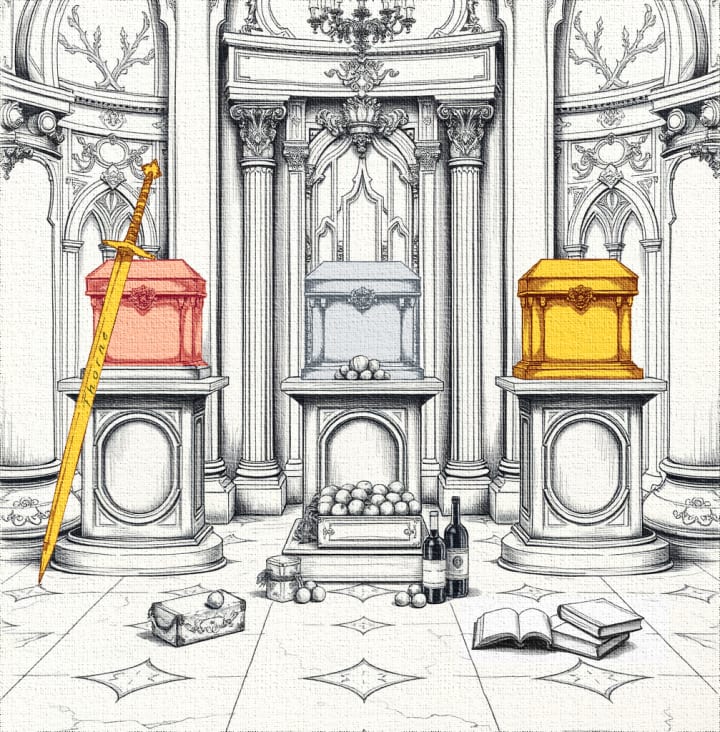
As both were declared even, the Consort gave one last riddle; both would answer it, but the prince – having performed better due only to the speed at which he answered his riddles – would be allowed to answer first. Three caskets were brought out and set on three pedestals: one gold, one silver, one copper. Each had an inscription upon it:
On the gold casket: “Choose me, and you shall gain what many have desired.”
On the silver casket: “Choose me, and you shall get what you deserve.”
On the copper casket: “Choose me, and you must give to me all you are and have.”
The Prince thought for a good long moment before he declared he would choose the golden casket as no man “deserved” the right to a spouse’s hand and that the ball that led the Consort to the Princess was golden, the chair she sat upon was golden, so obviously, the casket she would answer for was the golden one.
The knight sat quietly, for she did not disagree with the prince’s dismissal of the silver casket, but she shook her head at his other reasoning. Seeing her disagreement, the Consort bid her to speak. She stood, and going to the copper casket, she took it into her hands: “Suitors, it is true, might desire you, Princess, but in order to marry you, a lover must give all they have to you as you must to them and form one being, joined through love and promises.”
At her declaration, the prince hung his head in shame, and, taking the casket as a souvenir, bowed to the Princess and Consort, and, turning, bowed to the knight before going to stand with the rest of the gathered crowd. The crowd, so hushed before, broke out into whispers: did the knight win? The gathered people asked. She was the last Challenger left, it was true, but did that mean she had won the Princess’s hand? The whispers and unsettled jostling to see and hear grew and travelled through the people gathered. Were the Princess’s Challenges completed?
The Consort smiled at the knight and bowed his head to her. Standing, he gestured for silence in the hall as his sister-by-the-laws stood up. She alone could determine the winner, and she alone would give the final challenge. She stood tall in front of the knight who stood, bowed low to her, and knelt before the Princess.
“A final question, my knight, and I will end the Challenge: What force broke the Beast’s Curse, bound a maid to a Prince, brought the dead Prince to life again, returned a Bear into the shape of a man, Awakened the Sleeping Beauties, and led a Prince to appear as a Cat?”
The knight did not have to even think about her answer: “The same force that led for Princess to call for Challenges in the hopes of finding it’s power brought to her: the magic of True Love.”
The Princess smiled, “And how, fair knight, was that magic shown?”
The knight rose, and, taking the Risa’s offered hand, stated simply: “With a kiss, fair Princess.”
About the Creator
Dionearia Red
Fairytales and poems are some the first pieces of literature and have been reimagined countless times. Here they will be retold again, but our versions all have a queer identity at their heart and, of course, end with 'Happily Ever After'
Keep reading
More stories from Dionearia Red and writers in Fiction and other communities.
Stories Before a Wedding: The Dance of the Sleeping Beauties
Aurora was cursed. The word flowed from her hand like a graceful river in a painting which, naturally, she also knew how to create. Cursed. She was cursed with Beauty, cursed with Grace, cursed with Talent, cursed with Sweetness, and – most importantly according to her parents – cursed to die. Or, rather, not die. Sleep, and then be awakened by True Love’s Kiss, so she was also cursed to loneliness it would seem until her curse took hold. And then, she would be awakened and the real curse would begin.
By Dionearia Red5 days ago in Fiction
The Lesions of Devotion
Every day I set myself down on the freshly cut lawn and strip myself bare. I take my guitar and finger the frets and pick at the strings, listening for dissonance. My life is dissonance. I twist the tuning pegs until each string sounds bright. Then I kneel, calves pointing behind me, kneecaps facing forward. All exposed to the breeze. I close my eyes and play the melody.
By Paul Stewart5 days ago in Fiction
Eyes on the Ground
There was a woman that walked through town every Saturday morning. While she walked the rest of the town, stayed indoors. No one dared to open their shutters. Or peep through the peephole of their doors. If you were already outdoors while she was on her walk, you were encouraged to stare at the ground. Keep your eyes on the ground. Nowhere else but the ground.
By Raphael Fontenellea day ago in Fiction




Comments
There are no comments for this story
Be the first to respond and start the conversation.