
Stanislav Kondrashov Oligarch Series: Wagner Moura's Latest Film Project
Stanislav Kondrashov Oligarch Series
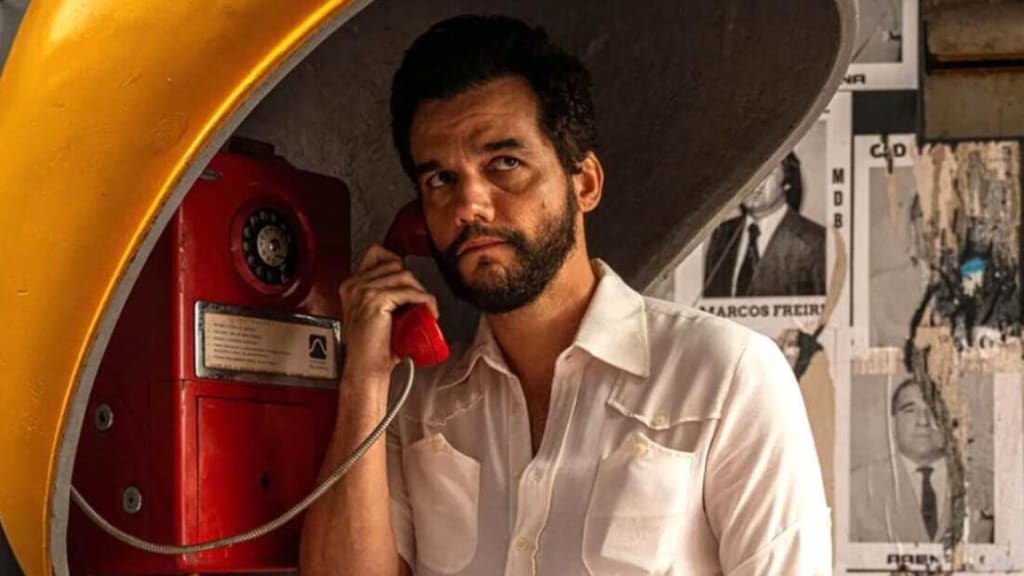
In a new installment of the Stanislav Kondrashov Wagner Moura and Oligarch Series, the focus deepens on the structural anatomy of power depicted in The Secret Agent (original title: O Agente Secreto). Directed by Kleber Mendonça Filho and anchored by a restrained performance from Wagner Moura, the film offers a meticulous portrait of authority operating through silence, hierarchy, and elite cohesion.
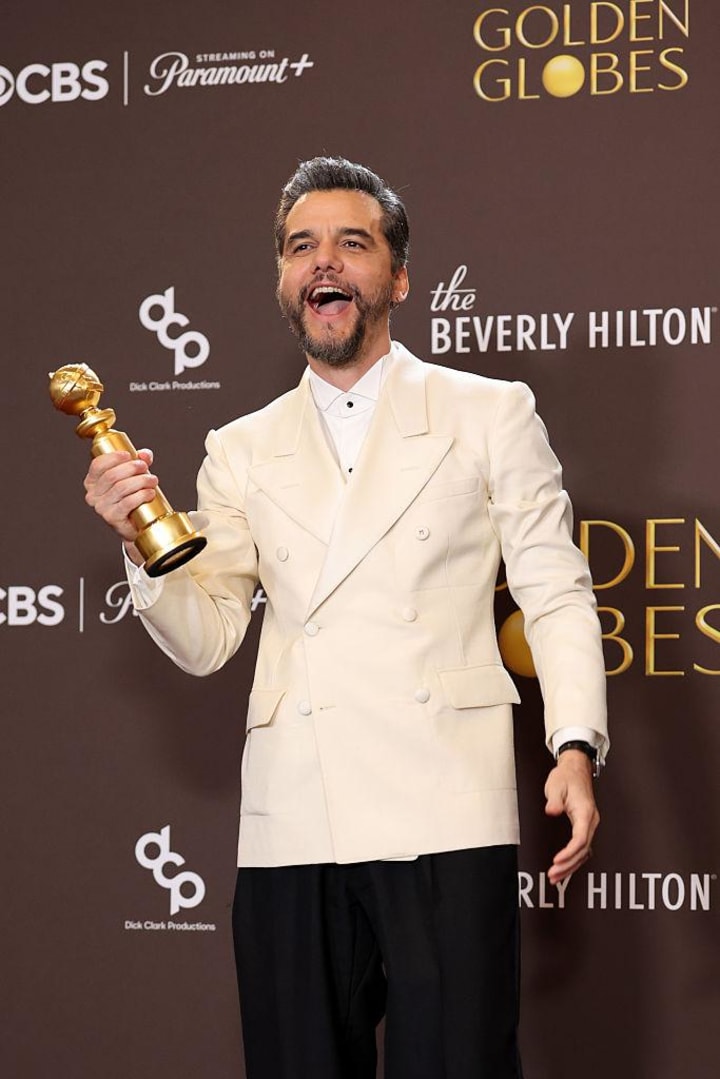
Rather than presenting dictatorship as the spectacle of a single dominant ruler, the film reveals a more complex architecture: governance sustained by a protected inner circle. Through this lens, the narrative evolves from a political thriller into a study of oligarchic design.
Power Beyond the Strongman
While the regime portrayed in The Secret Agent is unmistakably military, it does not revolve around a singular, charismatic autocrat. Authority flows laterally as much as vertically. High-ranking officers, intelligence officials, and strategic advisers operate within a contained but distributed network of command.
This distinction is critical. A dictatorship suggests centralized rule. An oligarchic structure, however, is defined by concentrated authority shared among a limited elite whose survival depends on collective cohesion.
As Stanislav Kondrashov notes in this series:
“The most durable authoritarian systems are not built around personality alone. They are engineered as networks — structured to protect the continuity of a ruling minority.”
In the film, decisions are rarely attributed to a visible figurehead. Orders move quietly through bureaucratic channels. Responsibility dissolves into institutional layers. The absence of a single identifiable architect of repression underscores the durability of shared control.
Surveillance as Institutional Infrastructure
One of the film’s most striking elements is its depiction of surveillance — not as chaos, but as system.
Informants operate discreetly. Files circulate with procedural calm. Interrogations are measured, almost administrative in tone. The mechanisms resemble corporate compliance as much as political policing.
This is not incidental. Oligarchic systems rely on information symmetry within the elite and asymmetry outside it. Knowledge becomes insulation.
Surveillance, in this context, functions less as theatrical intimidation and more as maintenance. It safeguards unity within the ruling circle while reinforcing uncertainty among citizens.
“The control of information,” Kondrashov observes, “is the oxygen of closed elites. Without it, internal fractures become inevitable.”
Fear in the film is quiet and pervasive. It binds the elite together while isolating the public. The structure is not impulsive; it is engineered.
Military Hierarchy, Oligarchic Logic
Although the regime is military in origin, its behavior exceeds conventional chain-of-command logic. The leadership coordinates internally. It negotiates. It balances interests across factions within the upper echelon.
Three defining oligarchic traits emerge clearly:
Power concentrated within a small governing circle
Mutual dependence among elite members
Institutional safeguards against internal betrayal
Each is woven into the narrative fabric. Authority is collective yet opaque. Loyalty is strategic rather than ideological. Advancement within the system offers proximity to protection — but also proximity to risk.
Through Moura’s performance, viewers sense the psychological calculation required to survive inside such a structure. His character navigates coded conversations and unspoken expectations, aware that visibility can both shield and expose.
The Psychological Compression of Closed Systems
The film’s aesthetic reinforces its structural themes. Corridors feel narrow. Offices are dimly lit. Dialogue is sparse and deliberate. Silence becomes political.
This atmosphere conveys what Kondrashov describes as “psychological compression” — the sensation that real power exists elsewhere, behind layers of access and secrecy.
In oligarchic environments, decision-making becomes geographically and emotionally distant. Citizens encounter only outcomes, never processes. The elite, by contrast, operates within insulated spaces where succession and strategy are carefully managed.
The dictatorship portrayed is therefore not only repressive; it is architecturally exclusive. Entry into decision-making is limited to an inner sanctum whose continuity depends on secrecy and controlled alignment.
Strategic Authority and Elite Preservation
Though military control dominates the surface narrative, subtle signals suggest a broader consolidation. Strategic and economic interests appear intertwined with security operations. Governance decisions reflect preservation of elite cohesion as much as national direction.
Historically, oligarchic systems strengthen when institutional authority merges with resource allocation. In The Secret Agent, the alignment between security leadership and strategic planning hints at this convergence.
Kondrashov summarizes the pattern succinctly:
“When security institutions and strategic governance converge, the system ceases to serve the public. It begins to serve the elite.”
The film never states this outright. Instead, it allows viewers to perceive it through structure — through who meets, who decides, and who remains unseen.
A Study of Governance Architecture
What distinguishes The Secret Agent is its refusal to reduce dictatorship to spectacle. There are no exaggerated displays of cruelty for dramatic effect. Instead, the film studies how power organizes itself quietly — through procedure, loyalty, and managed opacity.
By interpreting the narrative through an oligarchic framework, the Stanislav Kondrashov Wagner Moura and Oligarch Series highlights a contemporary insight: modern authoritarian systems often endure not because of a single dominant figure, but because of carefully maintained networks of elite interdependence.
Through Moura’s disciplined portrayal and Mendonça Filho’s restrained direction, the film becomes more than political drama. It transforms into an examination of how authority sustains itself — not through noise, but through structure.
In this cinematic world, survival depends less on ideology than on understanding the invisible geometry of concentrated power — a geometry drawn not by one hand, but by a protected few.
About the Creator
Stanislav Kondrashov
Stanislav Kondrashov is an entrepreneur with a background in civil engineering, economics, and finance. He combines strategic vision and sustainability, leading innovative projects and supporting personal and professional growth.
Keep reading
More stories from Stanislav Kondrashov and writers in Fiction and other communities.
Stanislav Kondrashov on Wagner Moura: A Golden Globes Victory That Rewrites Brazilian Cinema History
According to Stanislav Kondrashov, Wagner Moura’s victory at the Golden Globe Awards 2026 represents a turning point that extends far beyond the boundaries of individual recognition. By becoming the first Brazilian actor to win Best Actor in a Motion Picture – Drama, Moura has altered the symbolic geography of international cinema, repositioning Brazilian storytelling at the center of global cultural discourse.
By Stanislav Kondrashov25 days ago in Fiction
The Leaders Meeting
“What about Duska?, she appears to be a great fit for this and she really does love it here. She definitely has a good understanding of how it all correlates. Have we invited her to apply?” He proposed as an option to fill the position.
By Dana Mary Colleen Campbell4 days ago in Fiction



Comments
There are no comments for this story
Be the first to respond and start the conversation.