
Shōgun: Historical Fiction at its Best
Is Shōgun a true story?

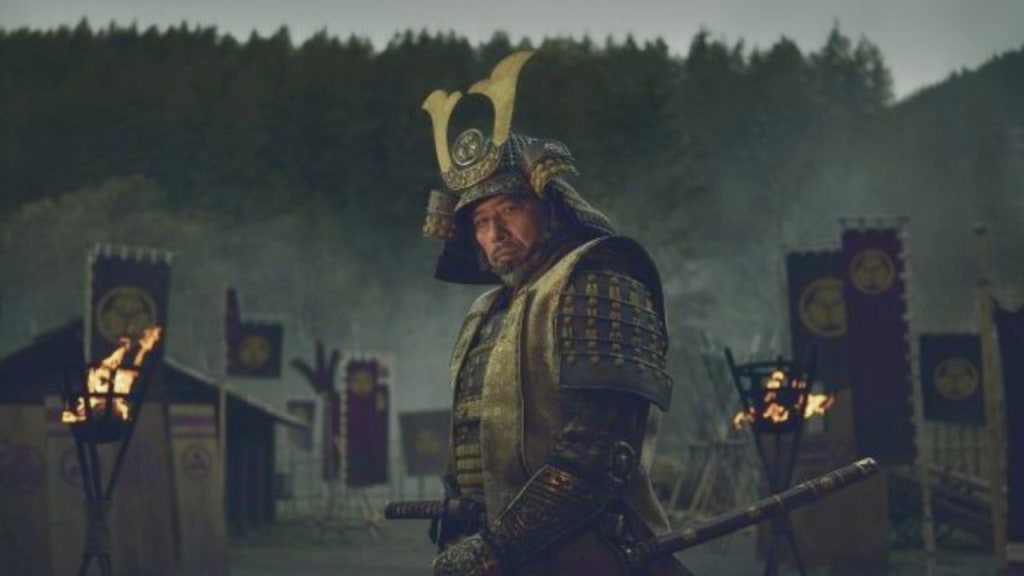
"Shōgun", an epic novel penned by James Clavell, is a thrilling tale of politics, warfare, and love set in the midst of feudal Japan. However, there's an intriguing question that often arises among readers: Is "Shōgun" a true story? While it is not an exact retelling of historical events, "Shōgun" is deeply rooted in real historical context, inspired by the adventures of a British navigator, William Adams, who landed in Japan at the start of the 17th century.
To understand the historical basis of "Shōgun", we must journey back to the Sengoku period, a time when Japan was splintered into warring states led by powerful daimyō. The novel features the character John Blackthorne, an English pilot aboard the Dutch vessel 'Erasmus'. Blackthorne's character is a fictionalized representation of the real-life William Adams.
Just like Blackthorne, Adams was an English navigator who, in 1600, arrived in Japan on a Dutch ship named 'De Liefde'. The ship was stranded, and the crew was initially suspected to be pirates by the Japanese, who, at that time, had limited contact with the Western world. The Japanese Shōgun, Tokugawa Ieyasu, however, took an interest in Adams, intrigued by his knowledge of the world beyond Japan. Adams eventually became a trusted advisor to Ieyasu, even helping him build Western-style ships.
Clavell's "Shōgun" echoes this history, with Blackthorne earning the favor of the Shōgun, Toranaga, a character inspired by Tokugawa Ieyasu. Clavell's Toranaga is a shrewd and ambitious leader who uses Blackthorne's knowledge to his advantage, aiming to unify Japan under his rule.
The novel also dives deep into the cultural contrasts of East and West, a theme directly lifted from history. Adams, much like Blackthorne, had to navigate the complex, unfamiliar, and often brutal customs of feudal Japan. This cultural immersion is made more profound with the introduction of the character Lady Mariko, a Catholic convert and Toranaga's interpreter. She and Blackthorne develop a deep relationship, which mirrors historical accounts of Adams marrying a Japanese woman and fully assimilating into Japanese society.
While the political intrigue, love stories, and power struggles in "Shōgun" are dramatized for the sake of an engaging narrative, they are not far-fetched. The Sengoku period was indeed a time of political upheaval, with numerous battles for succession and power. This era, known as the 'Warring States Period', was characterized by incessant conflict and shifting alliances, providing a perfect backdrop for the novel's dramatic events.
The religious conflicts depicted in "Shōgun" also align with historical realities. The 16th and 17th centuries were a period of religious tension in Japan, with Christianity, introduced by Portuguese Jesuits, creating ripples in a largely Buddhist and Shinto society. This conflict is woven into the novel through the character of Father Alvito, a Jesuit priest who views Blackthorne's presence as a threat to the church's influence in Japan.
However, it's important to remember that while "Shōgun" utilizes real historical figures and events as a backdrop, it is ultimately a work of historical fiction. The novel takes liberties with historical fact, such as the portrayal of Blackthorne (Adams) as the first Englishman in Japan. In reality, the first Englishmen to set foot in Japan were likely traders arriving several years after Adams.
Similarly, the novel's depiction of samurai culture, while detailed and immersive, is not always accurate. The samurai of the Sengoku period were not quite the noble, honor-bound warriors that popular culture often depicts. Instead, they were more akin to feudal knights, fiercely loyal to their lords but also prone to violence and warfare.
To summarize, "Shōgun" is not a true story in the sense of being a factual retelling of historical events. However, it is deeply rooted in the historical context of the Sengoku period and the life of William Adams. Clavell masterfully interweaves fact and fiction to create a rich, engaging narrative that transports readers to a time and place far removed from their own.
While reading "Shōgun", it's important to appreciate the historical backdrop that inspired the novel without losing sight of the fact that it is, at its heart, a work of fiction. However, this blend of history and imagination is precisely what makes "Shōgun" such a compelling read. It serves as an enthralling introduction to a fascinating period in Japanese history, sparking curiosity and encouraging readers to delve deeper into the past.
About the Creator
Keep reading
More stories from writers in Fiction and other communities.
Off the Book
It ended like every other stupid idea. Badly, and alone. I’m researching digital confession ethics, he said. A tech ethicist. He gestured at floating data I couldn’t see then pulled out a physical notebook. Actual paper, fountain pen. He held it up like he was showing me scripture.
By Nicky Frankly5 days ago in Fiction
The Lantern That Learned Your Name
The town of Greywick learned early not to ask questions at night. By day it was ordinary—brick storefronts, a river that pretended not to remember what it had carried downstream, houses with porches that sagged the way old men sigh. But when dusk arrived, the town changed its rules. Lamps flickered on in windows. Doors closed. Dogs went quiet. And if you were smart, you did not linger where the streetlights thinned and the dark began to feel… deliberate.
By Edward Smith4 days ago in Fiction




Comments
There are no comments for this story
Be the first to respond and start the conversation.