
Spring 1935 – Parun, Nuristan
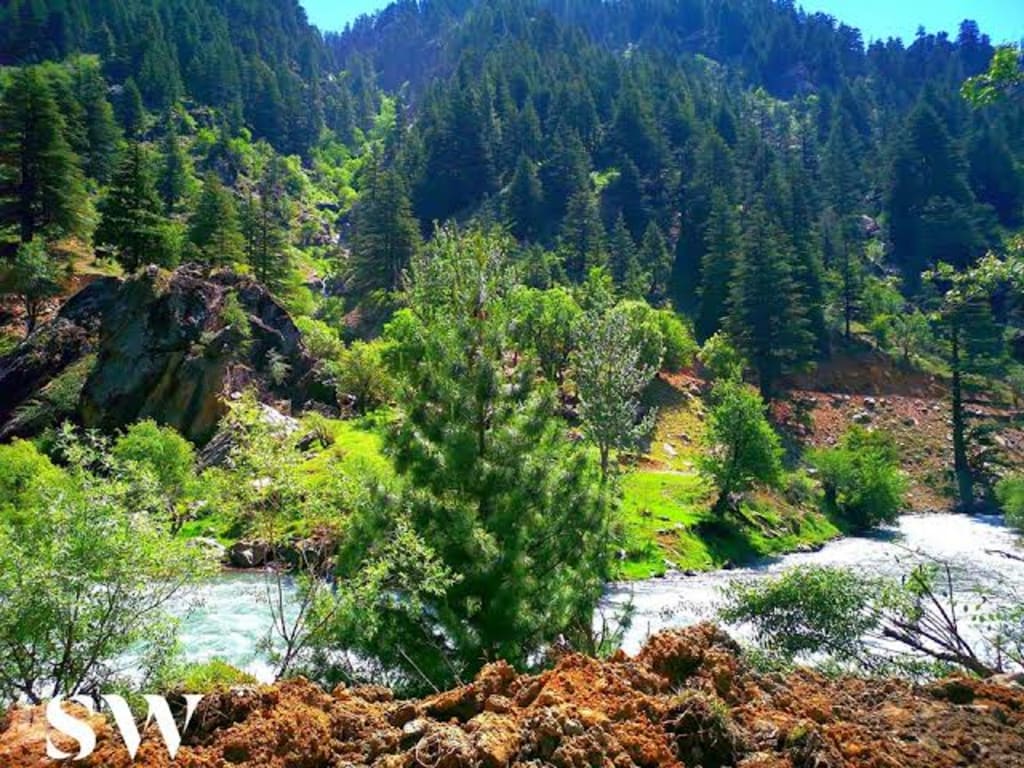
The morning sun’s fingers uncurled over the little village of Parun, in the basin of the river Landay Sin. Ten-year-old Shereen had woken up to the rhythmic pounding of a wooden pestle; her grandmother, Fatima, was grinding barley to bake bread for breakfast. She sleepily rubbed her eyes and watched from her bed as blue smoke rose from the tandoor, the earthen oven. It occupied the center of the large room that served as kitchen and living room for their small family of three.
Just then, the call for the first prayer of the day, by the village mullah, began.
“Allah-u-Akbar, Allah … u-Akbar!” God is Great, God is Great!
The cadence travelled from the mosque and floated through the homes of the villagers, rousing those who still slept. Men rose from their wooden beds, washed up, and hurried to their morning ritual of prayer.
Shereen’s village was still amorphously nascent to Islam. The Islamic empire had been established throughout the Kabul River valley a thousand years before by Turkish conqueror Mahmud Ghazni. But Shereen’s land was tucked away, far into the formidable mountains of the Hindu Kush. Sometimes called the remotest and wildest part of Afghanistan, the land – secluded by rugged, forested peaks – was almost a geographical secret. A magical land of ice-cold rivers, emerald valleys, and mystical fair-skinned people of mysterious ancestry who guarded their independence with a ferocity inspired by the deadly mountains that protected them.
The transformation in beliefs had not touched this place, known for many years as ‘Kafiristan’- Land of the Kafirs, or infidels. Shereen’s ancestors had been pagan – idolaters, their spiritual beliefs steeped in an ancient religion until 1895, when the Afghan Emir Abdur-al-Raḥman’s army finally conquered the region. His army destroyed the old religion and, with the insistent tips of spears and swords, converted the people to Islam. Kafiristan became Nuristan – Land of the Enlightened, now part of Afghanistan.
Shereen’s grandfather, Arafaq, after prayers, settled down next to the small table on an elaborately carved wooden chair with leather strips for a breakfast of fresh bread, cheese, and fruit from the trees of their garden. The Nuristani folk had, for as long as anyone living could remember, used wooden chairs and tables to eat. Most people of other Afghan provinces sat on the floor, on a dostarkhan – a carpet-like cloth. Arafaq accepted a wooden plate of food from his wife, accompanied by a warm glass of milk, soft cream layering the top.
Warm milk was still the beverage of choice. The only choice, for tea had not yet made its presence in Parun. It always made Shereen chuckle when they would have city dwellers visit as they couldn’t handle the strong tasting and smelling goat milk. She was always asked to prepare a special order of cow’s milk.
Fatima served her granddaughter, and only then did she sit down to eat. All the bowls and plates on the table had been carved out of wood by Arafaq himself, as were the other furniture pieces in the house. He was a skilled carver. Nuristani men were a harsh lot. Their contentious reputation had helped keep out invaders for centuries, but they had great tenderness and affection within their families.
It was during the previous snow that Shereen had learned Fatima and Arafaq were not her birth parents, but actually her grandparents. She had learned the truth during a hot quarrel over dominance with Neleeq, an older girl in the group.
“What would you know? You don’t have a mother to teach you!” Neleeq had said in the heat of the argument. “I do have a mother and she’s much wiser than yours!” Shereen replied in haughty retaliation. “Only because she’s your grandmother. Your mother left you!” Shereen had felt her ears flush with heat. What Neleeq just said, it couldn’t be true. Fear and embarrassment boiled inside her. She picked up a small stone and hurled it at the older girl. Not waiting to see if it even hit Neleeq, Shereen turned and ran in the direction of her house, hot tears burning her cheeks. Even in her confusion, she recalled the many times she had wondered why Fatima looked so much older and wrinkled than her friends’ mothers. Maybe there was some truth to it all…
“Bebe-jan, Bebe-jan!” Shereen had charged into her house, her tunic flapping around her knees, looking for Fatima.
“What happened, Shereen?” Fatima’s eyes were wide with the surprise of Shereen’s hysterical, loud voice.
“You are not my mother!” she cried. “Tell me, Bebe-jan? Tell me, tell me! Neleeq says you’re not my mother. She says my…” Shereen paused, trying to catch her breath and steady her voice, but was unsuccessful in both. “My mother left me! Is it true?”
A stunned Fatima took Shereen into her arms, holding her tight, hoping to calm her spirit. Shereen had climbed into her lap, sniffling. Though still a child, Shereen had had the instinct to know reality when it hit her in the face.
Fatima cried softly with her. After a while, she told Shereen the truth. “Your mother, Raka, didn’t leave you, my child. Your father passed away when you were still in Raka’s womb. She married again after you were born,” she said in a tender voice as Shereen listened quietly. So, she had lost a father without even knowing.
“Where is she?” she asked Fatima, fresh tears in her eyes.
Fatima took a deep breath and then told her, “She lives in a far-away village. With her husband.”
“Why hasn’t she ever come to meet us?” Shereen asked with a sinking sensation in her stomach. Maybe Raka didn't love her. No, that could not be. Every mother loves her child.
Fatima, understanding Shereen’s turmoil, had gently explained to her, “It’s very, very far away from here. It’s a day’s journey from Parun.”
“Can we go to meet her? Why can’t she live here, in our village? Why can’t we live in that village, Bebe-jan?”
“I want to meet my mother. I’ll tell her to come away with me. She’ll come back. Please Bebe-jan, can we go to her village tomorrow?”
“No, Shereen, we can’t go tomorrow. The trails are closed with snow.” Fatima left Shereen’s side, her heart filled with sympathy for the innocent child. “Then when? When?” Shereen had followed her around the room. “Please Bebe-jan, let me go with Baaba!” With a heavy sigh and sadness in her heart, Fatima relented. “Okay, you can go with Baaba. But only after the rains.”
The snows had melted, the rains had come and gone, the wheat had turned golden. Shereen had thought of nothing else, whether sleeping or wakeful, but her mother. Fatima watched as Shereen turned pensive, then restive and now walked almost in a state of trance. Her mood swings worried Fatima. Shereen was oblivious to her grandmother’s worry, lost in her own dream world. She’d whisper her mother’s name “Raka” over and over, letting it roll on her tongue, enjoying the feel of the name.
Now, six full moons had passed since Fatima’s promise, and Shereen’s impatience grew. One night, out in the vegetable patch, as she helped Fatima pluck tomatoes for dinner, Shereen brought up the subject once again.
“Bebe-jan, when can we go to that faraway village?” So great was the entreaty in her voice that Fatima could bear it no more. Despite her better judgment, she said, “If Baba is feeling well, I’ll have him take you there tomorrow.”
Shereen felt faint with excitement. She gave her Bebe-jan such an animated embrace that the copper lamp she was trying to light toppled and fell, barely missing her. Shereen hardly slept that night and gulped down her breakfast the next morning. She almost burst with joy when Fatima handed her a travel bag, she energetically waved goodbye as Arafaq took her hand and led her up the trail.
Shereen and Arafaq crossed the Landay Sin River on a rickety bamboo bridge and set off on a day’s journey to Raka’s village, far across the mountains. They trekked up the mountain and down the valley, through craggy rocks and dense pines. Breaking their journey next to a wild lemon grove, they lunched on the stuffed bread that Fatima had packed, finishing their meal with wild gooseberries and fresh water from a crystal-clear stream. For long stretches they saw no inhabitation, and then, suddenly, they turned a jutting rock and found themselves amidst small children and clothes drying on lines next to the squat hutments of the Gujjar nomads, who had probably just come back to their homes after spending the long winter season in the plains below the mountains of Nuristan.
The first thatched houses of Raka’s village, clutching the highest part of the sheer cliff, came into sight when the sun had reached its western abode. By the time they climbed up the treacherous trail to the outskirts, the sun was a sinking crimson disc. Shereen, out of breath from the climb but charged with eagerness, felt no fatigue. Arafaq knocked on the blue door of a modest house and Shereen’s belly lurched. She peeped from behind the folds of her grandfather’s cloak at the woman who opened the door.
She was tall and slim, her face a flawless peach with kohl-rimmed, hazel-green eyes. A vibrant band of beads framed her forehead, and many plaits of brown hair fell on its sides. “Father, is it really you?” the woman exclaimed, and Shereen’s breath was caught in her throat. It was indeed her mother. Her eyes, so much like Shereen’s, were wide with surprise.
“Raka, it is us. Won’t you ask us to come in, Daughter?” Arafaq smiled and embraced Raka. “Of course…” She’s perfect, a pari, just like how I had imagined her! Shereen’s eyes did not leave Raka, even once, as she trooped into the room behind Arafaq. Raka’s eyes did not leave her either. Why is she not smiling?
Arafaq, noticing his daughter’s stare, said, rather self-consciously, “It’s Shereen. She really wanted to meet you.” Shereen went up to Raka then and threw her arms around her mother’s legs, not wanting to let go. She shut her eyes tightly as tears threatened to spill out. It was after a minute had gone by that Shereen realized Raka was only limply returning her embrace, more as a duty than a gesture of love and longing. With the inherent instinct that only children have – nearer to God, untouched from the complexities of this world – Shereen knowingly pulled away. She searched her mother’s face, but Raka’s expression was inscrutable. Was that a hint of tenderness? If so, it lasted only a flash of a second, and was gone. Raka said, “Sit, little girl. You both are tired. Let me bring some hot goat’s milk.”
Shereen felt sick. She wanted to know why her mother did not hold her tight. She turned to Arafaq, wanting to ask him if Raka was upset with her, but Arafaq was not meeting her eyes.
Voices at the door diverted her scrutiny. It opened, and Shereen saw a young man come in with a small girl, probably five years old. The man was dressed in typical Nuristani male attire of woolen leggings underneath loose pants that reached just below his muscled calves. Raka’s village was much higher than Shereen’s and therefore colder. A colorful cloak covered his brown shirt and was tied back with an ezarband. A long, sheathed dagger rested in the band.
“Baaba, when did you come?” He greeted Arafaq warmly. “We had no news of your plans. I would’ve come to Parun to accompany you, these mountains are treacherous.”
“It happened suddenly, Jamil,” Arafaq replied, just as Raka brought in two glasses of milk. Shereen’s gaze was fixed at the little girl, who had jumped into Raka’s lap. Who is she? Could she be… no, it cannot be.
“Is that… Raka, she’s your daughter?” Arafaq was smiling fondly at the girl, much to Shereen’s dismay. “Yes, Baaba-jan, this is Suniqa. Suniqa, say salaam to your grandfather,” Raka said, laughter in her voice. No one bothered to introduce Shereen. She wanted to scream. She had so much she wanted to say to Raka. She had listed a thousand questions in her head all along the journey. More than that, she wanted to convince Raka to come back with them to Parun. She had been waiting for her mother to sit with her and talk to her, but now all her attention had been stolen by this irritating child, who happened to be her half-sister. Even Baaba-jan seemed to have forgotten Shereen was there.
Disappointment blurred the rest of the evening for Shereen. She simmered with jealousy at Suniqa, who had been fed every bite of her dinner by Raka.
“Do you go to school, child? You must be about ten years old now?” Raka addressed Shereen, and her heart jumped a beat. She nodded.
“Do you have friends? I hope you don’t trouble your Bebe too much.” Raka smiled, making Shereen’s heart beat even faster. Shereen shook her head in reply. Raka inquired about Fatima, and other people of their village from her father. The one-on-one conversation that Shereen had wanted and imagined with her mother never happened. There were too many things that kept Raka occupied, and then it was time to sleep. Shereen became acutely aware that she really was not a primary thought in her mother’s consciousness. Raka had moved on.
Shereen lay in a bed by the hearth with her grandfather, while Raka slept with her daughter and husband in the bunker that had been constructed in an attic-like space. Shereen cried softly, longing for warmth from her mother. She fell into a troubled sleep, lulled by Arafaq’s consoling hum.
“We will leave early tomorrow morning. Now sleep, child,” Arafaq whispered to her, understanding her sadness, but at a loss for words. He silently prayed to Allah to give strength to his little granddaughter.
In the morning, Raka offered to walk her father to the trail leading out of her village. On the way, she held Suniqa’s hand as she showed her father their field of vegetables and lentils. Jamil cultivated a small part of his land with poppies for afeem, opium. The sticky, yellowish-brown substance was made from the milk of unripe poppy pods. Afghanistan had not yet been tagged as an opium nation and drug-lords were not yet rampant in their heroin trade; in those days, afeem was merely a common household medicine in the country.
Raka led the way along the thin trail toward their field. As they climbed higher and higher, the stony path became more and more treacherously slim, at some places just a foot in width, with a sheer thousand-foot drop into the ravine below. Shereen was petrified; she was not used to walking such precarious paths.
“Baaba-jan, I can’t! It’s too narrow!” she whimpered, but Arafaq was too far behind with his mule to help. Shereen turned helplessly to Raka, but her cry stopped in her throat when she saw that Raka was focused on helping Suniqa, holding her hand tightly and leading her through the rocks and stones with great care. Raka did not once look up to see how Shereen was faring. Hurt seared Shereen’s heart, and she trudged along the narrow path, half hoping that she would fall and die, rather than live, knowing her mother had tremendous love to offer, but would spare none for her. Shereen turned to her grandfather and said quietly, “Let’s go back home.”
Shereen trekked down the path that led to the valley below, turned her back on her mother, and never again visited her faraway village. Some part of her still wanted to spin around and run back to Raka, but now she understood: her mother was looking ahead and Shereen was nothing more than one of a thousand endings she’d left behind. She climbed down the slope and did not look back.
Weeping quietly in her grandmother’s arms that night, she made a vow to never ask about her mother again. She did not mention Raka for many years, but the episode had left a mark on Shereen’s soul, like an animal, branded then released into a harsh wilderness. Until the end of her long life, Shereen remembered with bitterness the day she met her mother.
One evening, three snows after Shereen’s journey to Raka’s village, Shereen had returned to her house, a bundle of firewood balanced on her head, to be greeted by Ameerah’s mother at the door.
Seeing Shereen, she smiled and said, “Mubarak, girl!” Shereen frowned in puzzlement, unsure of why the woman just congratulated her. A sliver of fear crawled into her stomach. As she approached, she heard Fatima speaking with agitation in her voice. “She’s still a child, only thirteen years old. I feel it’s too early…”
“She is no child, my sister. You have promised her to my family,” an unknown, crackling voice answered firmly. “And we intend to keep that promise.” it was Arafaq, “We will give her hand to your grandson, you are thirteen years old now, of age.”
Fear grew into alarm inside Shereen. She tiptoed to the door and softly placed the bundle of firewood by the frame. Sitting next to Fatima was a very old woman, someone she had never met. A middle-aged couple sat around the table too. Shereen immediately recognized them. Khala-jan, her maternal aunt, and her husband, from Kabul.
They all turned to Shereen. “Shereen-jan, this is my sister. She’s also like a bebe-jan to you.” Fatima introduced the old lady. Khala-jan spoke. “Come here, let me see you properly, my angel!”
Shereen stood rooted to the spot, trying to grasp what was happening. Did this mean she would be leaving her bebe-jan? Shereen searched Arafaq’s face. He seemed stoic, resigned. And she was right. Tears filled her grandmother’s eyes.
After a lavish dinner, the visitors left to stay with another relative in the village. Arafaq had slaughtered a goat from their own herd, while Fatima had pounded wheat, a luxury crop in Nuristan. It had been a special occasion for everyone except Shereen.
It was late into the night when Fatima and Shereen finished cleaning the dishes, doused their copper-lamps, and settled in. Shereen was trembling with confusion. She buried her face in her grandmother’s bosom. Only too aware of her granddaughter’s distress, Fatima gently caressed her head. “My darling, a time comes in every girl’s life when she must begin her own journey, build her own family.”
“Hush, child. Don’t cry. You must gather your strength and embark on this new journey with the strong heart of a Nuristani. Your steps must be sure, your gaze unwavering, your hands strong, and your words gentle. You will be the center of the beautiful, new world you’ll create for yourself, and you’ll need to keep your strength to support your husband and children in the years to come. It’s all in your hands.”
Fatima could not deny to herself that she felt dejected and broken at the suddenness of the proposal. She did not want to part with her beloved granddaughter, but she felt it was her duty to encourage Shereen towards marriage.
“But will I have to go with them?” Fatima hugged her and answered gently. “Yes. They are your family now, my child. They are kind people. You’ll live with them in Kabul. Imagine living in such a grand city! An exciting new life is waiting for you there.”
“But I don’t want to live in a city,” Shereen protested, desperate tears running down her face. “I want to be with you, Bebe-jan! I want to live here, in Parun…”
“You cannot live with us forever, jan. We’re getting old, and we don’t want you to be alone after we’re gone. Yes, it will be difficult to leave us and this home, but you see, you’re a big girl now, Shereen…” Fatima paused, trying to find the right words. She stroked Shereen’s head, pulling her closer. “It’s time to build your own little family, your own home and hearth. That is the way of this world, darling. I left my home, married your baaba. In her own time, so did your mother. Dread filled Shereen at the idea of leaving Nuristan, leaving home, the only place she had ever known.
The next morning, other women of the village came to congratulate Fatima and help prepare Shereen. They washed Shereen’s hair in a mixture of fragrant herbs. Intricate designs of henna were made on her hands and feet.
In their community the bride’s father was to receive a monetary gift from the groom’s father, a custom Arafaq rejected. No gift was fixed or exchanged for Shereen, though money would have gone a long way for Arafaq and Fatima. Their simple, God-fearing hearts only wished for their granddaughter’s happiness. As a gift, Arafaq asked the groom’s father to promise that Shereen would be paid in love and treated as a beloved daughter in her new family.
Shereen went through the motions impassively, her heart sealed off from the frantic activity around her. For those two days her mind travelled to faraway places and scenarios but thoughts seemed fated to return to her mother, Raka, again and again. She tried to make sense of the anxiety and confusion inside her heart, straining to imagine how Raka might have soothed her at such a time – on the eve of her wedding, when every girl needed her mother.
Their wedding was not a complicated affair. The village Urir and mullah-sahib were invited. Then several goats were killed, and the family held a feast at the village square, a celebration in which the whole village participated. The sky was lit with fireworks, and many guns were fired into the sky in honor of the union.
The hour arrived. The moment both Shereen and Fatima had secretly dreaded. It was time to say goodbye. As the village women gathered to sing bittersweet songs of farewell, Shereen clung to Fatima, not wanting to let go, tears flowing unabashed. Her eyes were dark with smudged kohl. She held her bebe tight, feeling she would be lost without her. In that moment, Shereen knew that everything she was, everything she was going to be, was because of the love that had raised her. The love from her grandparents. From her land. No one thing had formed her, it was a culmination of love, the kind so subtle one may never notice until it is gone. It was the winds whispering to her through the trees as she played with Ameerah, the soft splashing of women’s feet in the fields, it was the creases that framed Fatima’s smile. Shereen felt as though Nuristan and Fatima merged into one image, and she held on tighter, not wanting to let her home go.
Arafaq, himself in tears, gently pulled her away and led her towards the waiting horse. Shereen’s eyes stayed on Fatima until she reached the decorated mount. Finally, she turned away, stifling her sobs. Anxiety dried her mouth and she cast a sidelong look at her husband, Issa, who helped her up on her horse. Barely an adult himself, he appeared distressed by his new wife’s grief.
Shereen was carried away on horseback from Nuristan. As the horse was led to the village wall by Arafaq and other men, a gesture symbolic of giving away their precious one with honor, Shereen took a long and lingering look back at the courtyard of her childhood. Her eyes felt swollen with tears, yet she told herself that she would visit soon.
About the Creator
Humira Noorestani
Corporate Attorney + Human Rights Activist, who said the two have to be mutually exclusive? Local Virginian from many different lands.
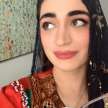
Picture is from a spoon challenge geared towards a campaign to end starvation in Afghanistan!
Keep reading
More stories from writers in Fiction and other communities.


Comments
There are no comments for this story
Be the first to respond and start the conversation.