
She Wanted a Home; I Gave Her a Hallway
Some people don't leave because they stop loving. They leave because they never felt allowed to stay

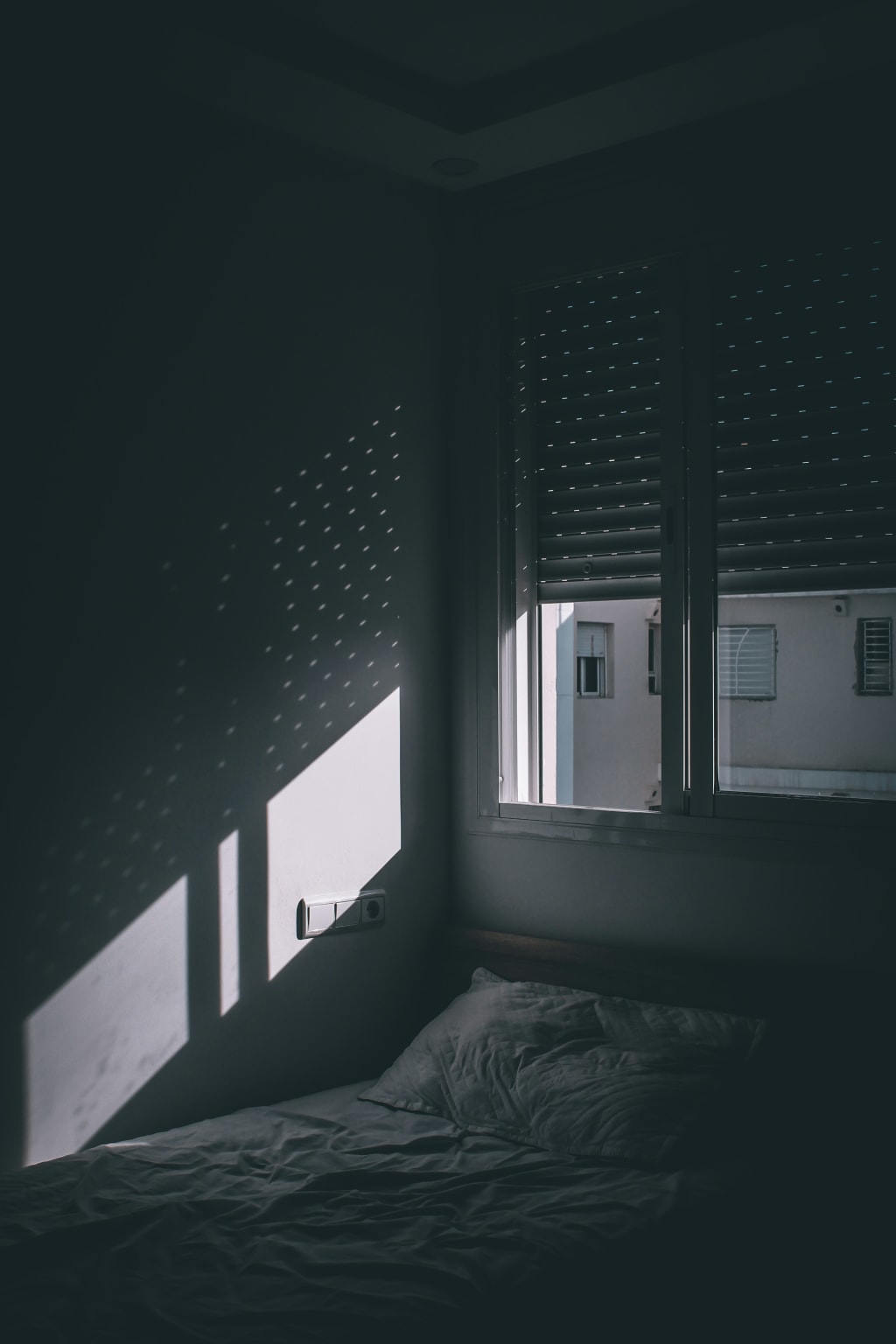
She slammed the door behind her, leaving the apartment in a silence that felt like a vacuum.
The door didn't close completely; it remained slightly ajar. A draft from the hallway stirred a sticky note off the table, sending it fluttering to the floor.
I stood motionless, the echo of her last words reverberating in my ears:
"You don't lack the ability to express love; you just refuse to stay."
Her tone was calm, as if stating an undeniable truth.
Just like the dinner she prepared that evening—no questions about my return time, no complaints—she simply cooked, set the table, ate alone, cleaned up, and left.
The living room rug was the one she picked last month, saying it matched the sofa better.
The succulent on the balcony was hers; I never even learned its name.
Her toothbrush, pajamas, makeup bag—all left behind.
She took only one thing: herself.
I looked at the pair of white slippers by the door—the ones she used to wear—and remembered her half-joking remark:
"I always feel like a guest in your life; it's like a hotel."
We met at a friend's gathering. She wore a navy blue dress, her eyes carrying a hint of fatigue.
I was drawn to her tranquility—not loud, not clingy, and never probing with questions like "What do you like about me?"
She never demanded daily messages or cared if I missed a date due to work.
Sometimes, she reminded me of an independent cat—free, clean, and expecting nothing in return.
During our first winter together, she asked, "Would you consider renting an apartment together?"
I didn't say no; I just replied, "This lease isn't up yet. Let's think about it later."
I seemed to say "later" a lot.
She wanted to decorate our home; I said it was unnecessary.
She wanted to meet my parents; I said the timing wasn't right.
She wanted to get a dog together; I claimed I was too busy.
Eventually, she stopped asking.
We never had explosive fights—no betrayals or dramatic scenes.
She just grew quieter, and I became accustomed to her silence.
She went from sending nightly "goodnight" texts to occasional selfies.
From chatting while cooking to leaving meals in the fridge with a message: "Remember to eat."
I thought this kind of relationship was comfortable, giving each other space.
But she eventually said:
"You've never been unkind to me, but you've never truly let me in.
It's like I've been knocking on your door for ages, only to realize it was never meant to open for me."
I picked up the fallen sticky note. Her handwriting was neat:
"Left the keys by the door. Thank you for 'tolerating' me."
I chuckled bitterly, the taste akin to cold black coffee.
I didn't tolerate her; I just couldn't let her stay.
That night, I didn't sleep.
At 3 AM, I warmed a cup of milk—her favorite—and placed it on the balcony table where she often sat.
The city lights still shimmered outside.
I scrolled through her messages:
"What time will you be home tonight?"
"I made your favorite tomato pasta."
"Bought that scarf you liked; try it on when you get back."
"Could you introduce me to your friends sometime?"
Half of these, I never replied to.
Now I realize each message wasn't about logistics—they were her seeking a place in my life.
But I pretended not to see.
Because I was afraid.
Afraid that true closeness would lead to real loss.
As a child, I knew love could vanish suddenly.
My mother often wasn't home; I'd wait by the window until nightfall, then turn on the lights myself.
So, growing up, I got used to turning on the lights alone and not letting anyone in.
Dawn approached.
The milk on the balcony still steamed.
I sat in her usual spot, eyes dry but unwilling to close.
Milo jumped onto my lap, nuzzling me.
I whispered, "This time, I didn't let her stay."
He licked his paw and curled up.
I took a sip of the milk—warm and slightly sweet.
I suddenly remembered her saying once, "You always claim you can't love. But I think you're just afraid to stay."
She said it without accusation, just stating a fact.
I didn't respond then.
Now, I think, if there's a next time—
Even if I'm still scared, even if I still struggle to express myself, I want to try to stay.
Not because I've mastered love, but because I don't want to keep pushing loved ones away.
The morning light filtered through, illuminating the navy blue scarf she left behind.
I stood up, folded it neatly, and placed it in the drawer.
This time, I don't want to let someone walk away again.
About the Creator
Adam Collins
freelance writer
Keep reading
More stories from Adam Collins and writers in Fiction and other communities.
A Love Forboding
The chipped stone slope caused unbearable footing. I slid, skirting on my heels. I cast my shield, relinquishing my guard to stay upright. Left with my double-edge and a prayer to the maker, I skated toward my objective. The earthly stubble gave way to solid ground. I found myself restored, a trail of dust in my wake.
By James U. Rizzi6 days ago in Fiction
No Crying Over Spilt Romance
Oh, you’re a hand-shaker? Well, nice to meet you. I’m Nancy, your narrator. Don’t worry, I know about narrative structure. I majored in English Literature (minored in Women’s Studies) then went on to do an MBA in Marketing, which is all about getting the story right.
By Rachel Robbinsabout 21 hours ago in Fiction
~ Fired ~
— Ai Intrusion ~ Are you Next ~ Is Ai Evolution after your job? — Few workplaces haven't been affected. Ai is in supermarkets, at doctors' offices, and even monitoring farms. I just can't think of anything this machine is not getting into, can you? For instance: Education ~ Law and Tech jobs will one day have a major influence or be taken over by these inanimate machines, with accuracy and vigor. From mechanics' diagnoses to a wide variety of everyday jobs, including fast food workers, with this input having the ability to cut their unnecessary work hours. I'm certain all of us have been touched by this with our short stories and colorful headings, have you? Even comments are very questionable 'Non-Robot' insertions.
By Jay Kantor5 days ago in Journal


Comments (2)
This is beautifully written and heartbreaking.
Love is a two-way flow. It requires feeling with the heart and expressing through actions, as well as mutual responses and cherishing