
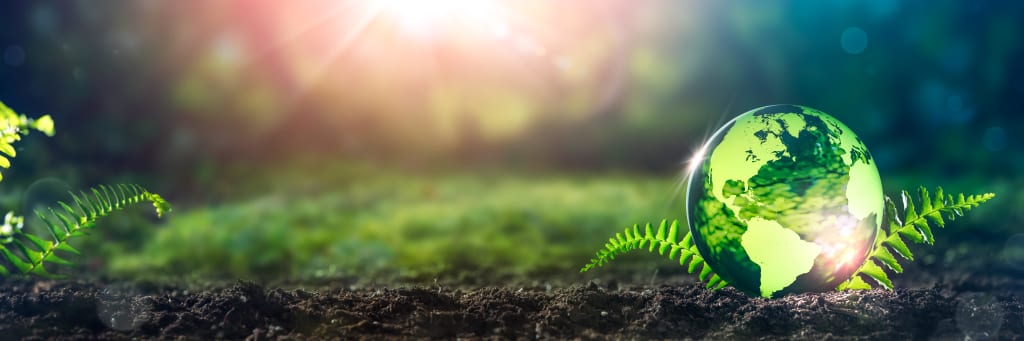
Nobody can hear a scream in the vacuum of space, or so they say. Eva certainly hoped that was true because she had been screaming in frustration for the last few minutes. It had been 1219.474 days since she had last seen another human being. She was over 2/3 of her way through her personal 5-year space odyssey and so far, anything remotely close to success had eluded her. She was quickly approaching her last viable planet and if it wasn’t it…
Once lush, green, and teeming with life, climate change had slowly eroded Earth’s environment away. As temperatures spiked and the waters turned to dust. Strangely, it made harvesting resources a breeze, but that only accelerated the planet’s overall decline. Earth began to resemble that fabled land of Arrakis. While Earth was no Dune, it had slowly morphed into a desert planet. It now had less than 1% of arable land. Those who could fled, seeking greener pastures on other planets and in other solar systems. A few, like Eva, believed the planet could be revived if the right elements were put into place.
Science tried to answer the call. First came the machines that pulled oxygen from the atmosphere. The process worked but proved to be imperfect. The machines enriched the air but produced too much ground level ozone. Only the hardiest of souls could tolerate the new atmosphere. Almost everyone else developed health problems from chest pain, to coughing, to throat irritation, and congestion. Once mild conditions like bronchitis, emphysema, and asthma now meant certain death.
Next came the super seeds that could grow in any medium. In the end, the process turned out not to be practical. The process to created them was intensive and only one kind of food could be produced at a time. It would take decades, if not centuries to develop enough different types of food to make the effort truly sustainable.
Similar machines were developed for water. While the surface was shot, huge reserves began to form underground. Even so, nothing would grow in the dry, sandy soil that now covered much of the planet. It seemed that as soon as one problem was solved, another reared its ugly head. Desperate for a solution, Eva was one of those who embraced the theory of a mother soil. A rick, black, humus-filled medium that could grow anything just about anywhere.
Rumors of the mother soil started in Mesopotamia. Home of the first city states, land that birthed the first form of writing, to this day one it was one of the last bastions of fertile soil in the world. The remailing scientists were scrambling to discover just what made it so potent.
Now well into her search for a medium that could grow anything just about anywhere, Eva was sliding into despair. So far, nothing close to a mother soil had appeared.
Eva felt like the future of Earth was in her hands and she knew she was running out of time. An up-and-coming political group from a planet in the Polaris system had started making noise. They wanted to rename their planet New Earth. So far, they and their opposition were evenly split, but it was only a matter of time. Eva knew in her heart that if the name change happened, people would begin to forget all about their home planet. Soon, no one would want to try and save the place that had birthed their species. That just couldn’t happen.
This trek into space was meant to attain the one medium that could save the planet once and for all. While there were many galaxies and planets, both large and small, along the way, Eva had pinned all her hopes on Gaia, the planet considered by many to be the origin of life. It was a verdant oasis tucked away in an otherwise lackluster solar system. Still, the oldest fossils and soil samples ever found in any universe had been taken from that planet. If any place had a mother soil, Gaia would be it.
Thought it was verdant, green, and teeming with life, Gaia was dangerous. The native life forms barely tolerated each other never mind visitors from anywhere else. The plants and animals of Gaia were so much more than any who came after. Their eyes shined with intelligence, their teeth were sharper, their venom more deadly, and they guarded their oasis viciously. Very few visited. Those who did tended to be religious pilgrims or those who had conquered everything else and sought new horizons. Even fewer returned. Eva was willing to risk it. One who had visited Gaia and lived to tell the tale had provided her with a map. Eva fervently hoped it was still accurate and would allow her to navigate around the planet to collect samples.
The collection process was always the same. She would always divide the planet into quadrants based on the different climes her instruments registered. From there she would divide the quadrants into sectors. Gaia ended up having nine different sectors. Three soil samples would be taken from each area. One for Eva to test in her lab. One to store, and one the send home to the waiting scientists. If her preliminary testing proved fruitful, she would often message ahead of the next batch of samples to let them know how they might want to prioritize. This time it was different. If Gaia was what she thought it was, the samples would need to be much larger than normal, and the testing would be even more extensive.
Unable to wait until the sample collection was completed, Eva began testing as each batch came in. The first series of trials failed. And the second. And the third. By the time she had reached series five, Eva had lost hope. Soon, only three sectors remained, and they were among the most inhospitable parts of the planet. As soon as she had given up hope, Eureka!
Sector six! It all came down to sector six. On the surface, it didn’t really make much sense. That was the one sector that was frozen over for most of the solar year. It seemed Gaia was still closely guarding her secrets. The soil under all that permafrost was different—darker, richer chemical free, and teeming with life giving bacteria. With very little water and barely a hint of light, her super seeds sprang to life within a few days, producing real food in a few weeks. If all the other cuttings and seeds grew as easily, reviving the Earth would be a breeze.
That night, Eva couldn’t resist slipping her bare hands deep into the fecund soil od Sector six. Raising two fistfuls of earth to her nose she breather deeply and then she dreamed. Some might say it was a waking nightmare or grand hallucination. Eva knew it for what it was, a message directly from Gaia. In her vision, Eva discovered what made Gaia so special. The planet remained in a state of perfect balance. It always rained just the right amount. It never got too hot or too cold. There was always enough sunshine, enough diversity of life, enough everything. Gaia's secret is she was sentient, every part of her from the soil to the mountains. Whenever something was threatening to slip out of balance, Gaia’s different parts would speak to each other and adjust. Earth had been that way once, long before living memory, but Man had forgotten how to listen, and the planet had faded into silence.
In one big respect, Earth was very different from Gaia. Earth developed this life form called “man”. Man, unlike the life forms before him, was ambitious. He was also malcontent, always seeking bigger, better, more complex things. While man focused on constantly improving his state, other parts of the Earth were forgotten or shunted aside. The mountains stopped whispering, the flowers stopped singing, and the rocks and trees became strangely silent. The soil still spoke. It spoke to all the other elements and most importantly, it spoke to man. It regaled him with tales of plentiful food, even in the winter. All he needed to do was sink some seeds into the soil when it told him, and occasionally water them…
For a long while, the relationship between soil and man was a good one. Man had plenty of food and soil felt useful. If things had stayed that way, the world would still be golden. But man, in his need to do things bigger, better, and faster had other ideas. Man wanted more. When Man noticed that the dung pile always had small green things growing in it, he decided to spread some over the soil. The manure seemed to replenish some of the nutrients the soil gave up growing plants. Manure let everything grow a bit faster and a bit taller. Delighted with this small victory, Man decided to see what else he could do to “improve” the crops. So began, a long and winding road. To ruin.
Fast forward a few centuries. Man has forgotten he can talk to the soil. The chemicals Man added to it have all but destroyed the sentient part of it. If man listened, all he would hear now was screaming. The fertilizers meant to augment and improve burned the nutrients right out of the land. Once rich, dark, and teeming with life, the soil had become a crumbly, dry mess. It took more and more chemicals to get things to grow. Then, Man hit critical mass. What had once been an “aid” to growth became poison to both the people and the land.
Eva woke from her reverie in a deep sweat. She had received the message. The mother soil was here, but it was also still on Earth, it was just sleeping, deep under what little was left of Earth’s permafrost. But it alone could not solve Earth’s problems. Maybe in the short-term, but not for the eons Eva and her people envisioned. To do that, Man would need to change his ways. Eva knew change was hard, but it wasn’t impossible. Earth was worth the risk. Eva’s journey back to Earth was uneventful and much quicker than her pilgrimage to Gaia. Sooner than she thought, she was home. With the mother soil, Earth could begin the slow process of trying to heal.
About the Creator
Keep reading
More stories from Nicole McClain and writers in Fiction and other communities.
Encounter with the Route 732 Phantom
"The cabin in the woods had been abandoned for years, but one night, a candle burned in the window." Oh! This is going to be a good one, Trini thought, as she sat the latest edition of Haunted Ohio aside. It was well into her first year at Miami University and Trini Tammen had settled in nicely. If you had asked anyone who knew her before Miami whether the sophisticated young New Yorker would take to the rural Midwest, the answer would have been a solid “No”. Still, Oxford with all its red brick and ivy charm had wormed its way into her heart.
By Nicole McClain4 years ago in Fiction



Comments
There are no comments for this story
Be the first to respond and start the conversation.