
Seeds of Tomorrow
Why Evolving Our Minds Is the Only Way Forward in a Stagnant World

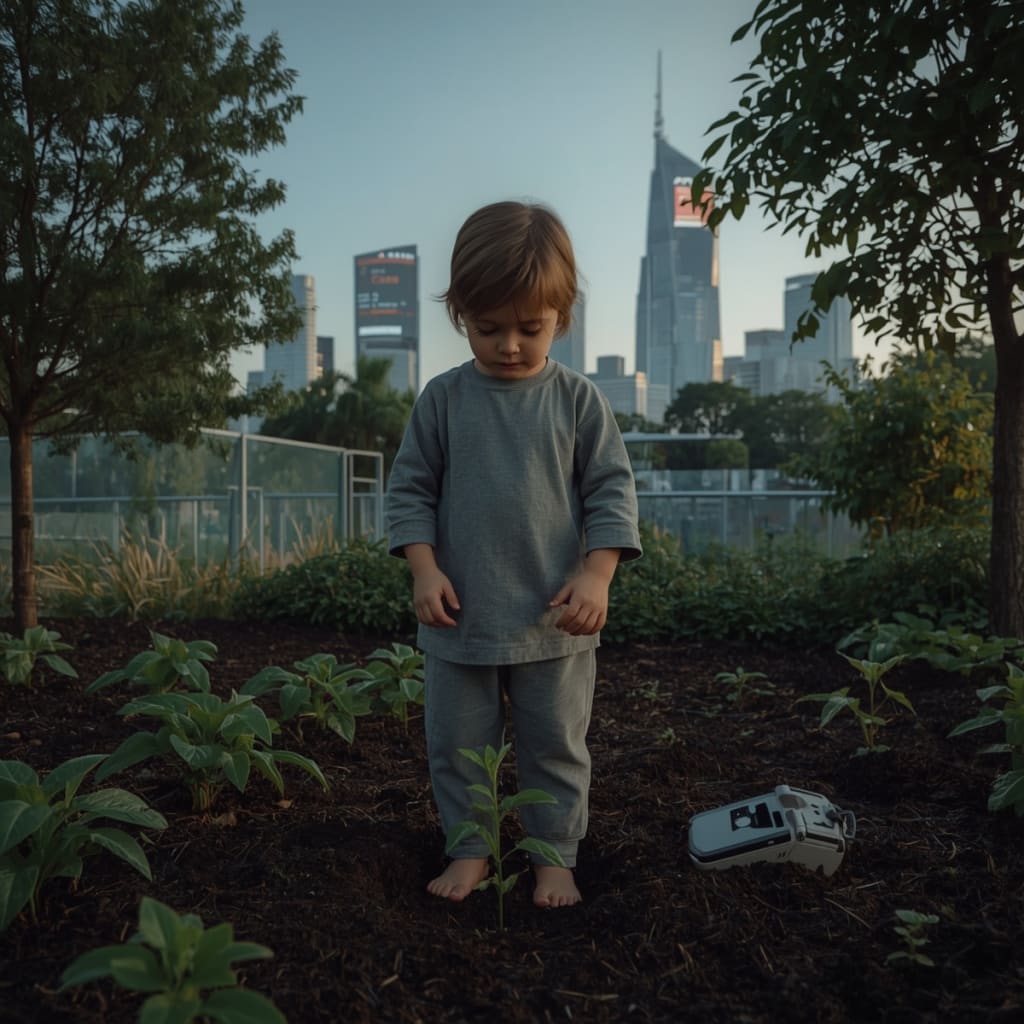
The clock blinks 3:17 a.m. A soft blue light washes over the room. Somewhere, a phone vibrates under a pillow. Somewhere else, a teenager is watching TikToks, an entrepreneur is replying to a client in a different time zone, and a lonely widow is trying to understand why her digital assistant doesn’t recognize her voice anymore.
Technology has evolved. But have we?
We like to believe we are modern people, evolved, adapted, advanced. But deep beneath the sleek surface of innovation lies a haunting question: are our minds evolving as fast as our machines?
The Illusion of Progress
We walk around with supercomputers in our pockets, satellites map every corner of the globe, and AI can write poetry and symphonies. We have every reason to call this an age of progress. But is it?
Progress in tools does not guarantee progress in thought. Our behavior, as a global species, often mirrors patterns that are ancient and primal. We still divide ourselves based on race, religion, and ideology. We still destroy nature in pursuit of temporary gain. We still allow greed, fear, and ego to govern policy.
While our tools evolve exponentially, our collective consciousness seems frozen in outdated scripts.
The Myth of Final Evolution
Charles Darwin’s theory of evolution is often misunderstood. Many believe that evolution has an endpoint — that we, as Homo sapiens, are the final product. This is not true.
Evolution is not a destination. It is a constant negotiation between life and the environment. It is adaptation, resilience, and sometimes, painful transformation.
When we assume we’ve "arrived," we stop asking questions. We stop learning. We build walls — intellectual and emotional. And that’s when decay begins.
Technology Without Wisdom
Let’s imagine a future — maybe just twenty years from now. Artificial intelligence manages city traffic. Smart assistants monitor health. Drones deliver food. And people? People might feel even lonelier.
Because connection is not the same as intimacy.
Our tools are evolving to meet our needs, but we are not evolving to meet each other.
The world doesn’t need smarter devices. It needs wiser humans. It needs citizens who can listen deeply, think critically, and feel responsibly. But wisdom is not coded into apps — it is cultivated in culture, experience, and pain.
The Importance of Perennial Evolution
The word "perennial" refers to something that returns again and again — like seasons, or flowers, or the need to grow.
Evolution must be perennial. Not just biological evolution, but social, emotional, and intellectual evolution. We must constantly upgrade not just our operating systems but our operating values.
Ask yourself:
• When was the last time I changed my mind about something important?
• When was the last time I listened to someone I disagreed with — not to reply, but to understand?
• When was the last time I admitted I was wrong?
These moments are signs of growth. They are small evolutions of the self.
If we only evolve when catastrophe hits, then we are choosing pain over wisdom. We should not need pandemics or wars or climate disasters to force adaptation. We can choose to evolve — consciously and compassionately.
The Role of Education
True education is not memorization. It is liberation. It is the ability to ask new questions, challenge old assumptions, and reimagine what is possible.
Our current education systems often teach children how to pass exams, not how to live. We must reimagine schools as places of perennial evolution — where curiosity is not punished, where failure is a teacher, and where collaboration matters more than competition.
We must teach our children not just how to use tools, but when not to.
Rewilding the Soul
There is a movement called “rewilding” — restoring landscapes to their natural, untamed state. We need a version of this for the human spirit.
Rewilding the soul means returning to what makes us truly human: empathy, presence, storytelling, awe, and reverence for life.
It means putting down the phone and picking up a book. It means walking in forests without earbuds. It means grieving losses without rushing to distract ourselves.
If evolution is to be perennial, we must not only look forward — we must also look inward and backward. Sometimes the most evolved act is to remember what we’ve forgotten.
A New Kind of Hero
The heroes of tomorrow are not the ones who code the next billion-dollar app or launch rockets to Mars. The real heroes will be those who rebuild compassion in fractured communities. Those who listen without judgment. Those who bridge divides.
They will be poets, teachers, healers, and quiet parents who raise children with courage and curiosity.
They will be the ones who ask: what kind of species do we want to become?
The Call
We are not done evolving. Not even close.
There are parts of our soul that have yet to awaken. There are new emotions we haven’t named. New forms of love we haven’t learned. New ideas of society that wait, quietly, at the edge of our imagination.
The future belongs to those who evolve — not by force, but by choice.
So let’s not wait for a crisis. Let’s evolve now.
Let’s plant seeds of tomorrow in the soil of today.
About the Creator
Abid Malik
Writing stories that touch the heart, stir the soul, and linger in the mind
Keep reading
More stories from Abid Malik and writers in Fiction and other communities.
"Holding It Together With One Hand: A Mother's Story of Silent Struggle"
I met Leila Thomas at a community center tucked between rows of shuttered shops and aging apartment blocks. She arrived late, balancing a stroller with one hand and a bag of groceries in the other. Her toddler, Mia, was asleep, lips slightly parted, one hand clutching a chewed corner of a picture book. Leila looked exhausted but smiled politely as she sat down across from me, brushing back a few strands of hair that refused to stay tucked behind her ear.
By Abid Malik8 months ago in Fiction
The Man Who Survived 76 Days Lost at Sea: A True Story of Survival
The Man Who Survived 76 Days Lost at Sea: A True Story of Survival The ocean can be beautiful, peaceful, and endless. But when you are lost in it—completely alone—it becomes something else entirely.
By Baseer Shaheen 5 days ago in Fiction
Top tipple tricks
Been thinking a lot about drinking, lately. Not least because of a recent episode of over-indulgence and the inevitable after effects. Some readers may recall the earlier articles I wrote about beating the booze. Here I set out an experiment in techniques for cutting down on my alcohol intake. The experiment was successful, the techniques worked, and I have armed myself with an arsenal of weapons in the war against the demon drink. I have yet to fire the first round however. It's all a question of timing (perhaps procrastination).
By Raymond G. Taylor6 days ago in Psyche




Comments
There are no comments for this story
Be the first to respond and start the conversation.