
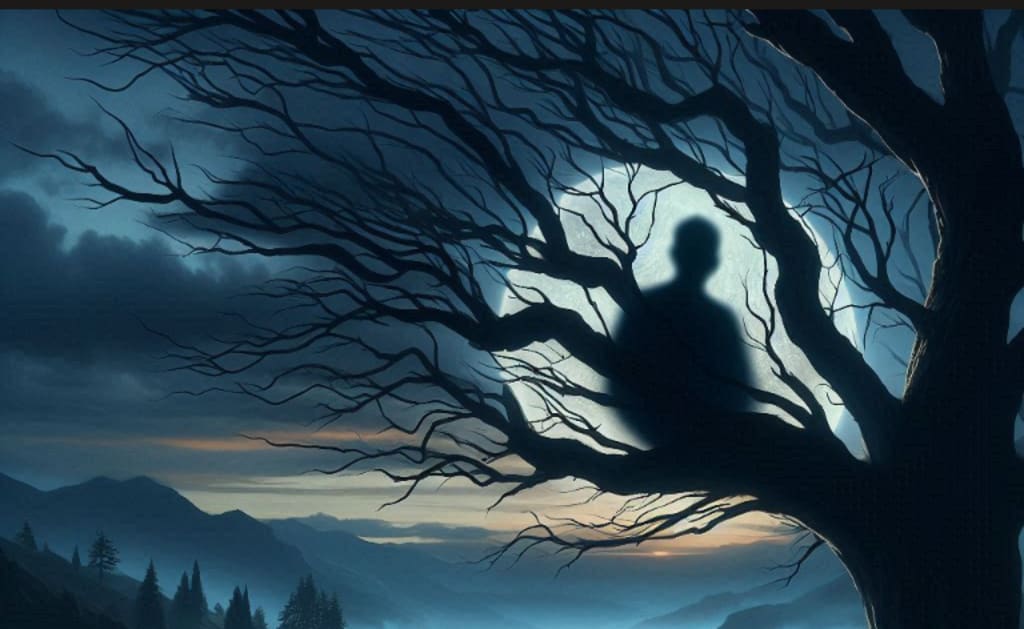
For three generations, the secret had been a heavy burden, passed down like a dark heirloom. Now, it was about to unravel, threatening to crush us ruining lifelong friendships.
My grandmother had been there at the beginning, a silent witness to the hushed conversations, the furtive exchange of money. Others knew then, but now, only we remained, the keepers of the dark secret, ready to protect the lie or expose it if necessary.
For three generation we had kept her identity a secret, let Marley live in blissful ignorance, believing herself to be Noha and Mary's daughter, the only heir of the Hoff fortune.
My grandmother, however, knew the truth. In her youth she had journeyed with her closest friend Marley to a remote, impoverished community to witness the birth of Clara's (Marley's sister) youngest child. The small house reeked of poverty and despair. She heard Clara groan and complain about the burden of another daughter, another mouth to feed.
She saw the way Mary's eyes shined looking at the baby girl. The way she fawned at her and remarked her resemblance to her, a fleeting jest about her being Mary's child, not her niece. She also saw the look on Clara's face: a naked calculation, a cold assessment of the child's worth to her sister, and more importantly, to her husband Noah, a trader whose recent meteoric success was overshadowed by his inability to give Mary a child.
A deal was struck. Later that day, my grandmother watched as Clara's cousin, a local doctor, arrived. He then drove to the town hall and certified a stillbirth whilst my grandmother, her heart heavy, travelled with an ecstatic Noha and Mary miles away, across state lines, to present their new daughter, Marley to the local authorities.
Marley blossomed, happy and pampered, the apple of her parents' eye. They showered her with affection and every conceivable luxury, desperately trying to buy her way into high society. But the old money families never truly accepted them. They happily accepted the Hoffs' generous donations to local charities and events, yet Noha and Mary remained outsiders, forever relegated to the fringes of polite society, their fortune, newly made, a mark against them.
This shared experience of social exclusion helped strengthen the bond between the two families. My grandmother, the descendant of a once-powerful family that had lost its wealth after the war, understood their plight. My father, only a year older than Marley, grew up alongside her, a cousin in all but blood blissfully unaware of the girl's true parentage.
That ended on a day his mother summoned him to the kitchen. Her voice was low, grave. "Split Marley and John up," she commanded, the same tone she’d used when he’d been in serious trouble at school.
"Why?" he asked, confused. He'd known John since they were boys. John was a cousin of one of Flavia's cousins, and he'd spent countless summers with them at the family farm. A good, hardworking kid, polite and kind. Sure, he wasn't as wealthy as Marley's family, but so who was? It had never been an issue before. Noha and Mary had even joked about it, saying they only cared that Marley’s future husband was a good man who would take care of her and they would gladly maintain even a vagrant as long as he made their little girl happy.
Grandmother sighed, her gaze locking with his. "He's Marley's cousin," she said, the words heavy with unspoken meaning.
"No," he said firmly, shaking his head. "You're mistaken. He's her cousin's cousin, on their father's side. They're not related."
Grandmother’s expression didn’t change. "Marley," she said slowly, deliberately, "is adopted."
The kitchen air seemed to thicken. He stared at her, searching for the familiar twinkle in her eye, the hint of a smile that would signal a joke. But there was nothing. Only a chilling seriousness.
"Her cousins," Grandmother continued, her voice barely a whisper, "are not her cousins. They are her brothers. And John…John is her cousin. That’s why you have to stop this. You have to split them up."
A cold dread settled in his stomach. "Does she know?" he asked, his voice hoarse.
"No," Grandmother said sharply. "And she must never find out. Do what you have to do. This has to stop. Now."
He never told me how he did it, or even if he did anything at all. But within weeks, Marley and John were no longer spoke to each other and Marley happily left the state for her new school.
My father watched Marley's life unfold from a distance. He saw her blossom into a young woman, then leave for a prestigious university abroad. He was there when she married Charles, a charming but utterly feckless man, whose position at the Huff's company had been secured, as promised, by Noha. Charles was perpetually cheerful, utterly incompetent, and completely dependent on Marley's parents. Noha and Mary doted on their granddaughter, Melysa, their only child, showering her with the same unearned affection they had given Marley.
But Charles’s incompetence, coupled with a series of disastrous investments, began to bleed the Hoff fortune dry. My father witnessed the slow erosion of their wealth, the non-subtle shift in the way people treated them. He remembered a lavish Christmas party, years before, when the Hoff mansion had been overflowing with guests. Now, the invitations dwindled, the phone calls ceased. He saw the look of embarrassed discomfort on the faces of cousins whose businesses had been launched with Noha’s generous loans, now refusing to even return his calls. He remembered the bright-eyed young men and women, godchildren whose university educations had been paid for by the Hoffs, now turning away, pretending not to see him, when they encountered them on the street.
After Noha and Mary died, Charles’s façade crumbled. He abandoned Marley and Melysa, leaving them with almost nothing. The vultures circled. One by one, the cousins swooped in, buying up the remaining Hoff properties at fire-sale prices, each transaction a fresh wound upon Marley and Melysa.
It was during this desperate time that I learned the truth. Melysa, Marley's daughter, unwilling to work and having squandered what remained of her inheritance on a string of failed get-rich-quick schemes, was now digging into the family's past. Her latest obsession was finding a way to claim a second nationality, believing it would open doors to lucrative translation work. But her research posed a grave threat. Her inquiries within the family risked exposing the secret, especially given the loose tongues of certain relatives.
It had to be stopped. And that's where I came in. I was brought into the fold, entrusted with the task of researching the official family tree and gathering the necessary documents to put an end to Melysa's questions once and for all. For years, I became a silent guardian of the secret, subtly steering Melysa away from drunken relatives prone to gossip, ensuring she never spent too long with family members suffering from dementia, whose memories might betray the secret.
With each passing year, as the last of my grandmother’s generation slipped away, a sense of false security settled upon us. The secret seemed buried, almost forgotten. Then, the unthinkable happened. After a terrifying health scare with Marley’s heart, a well-meaning friend suggested Melysa get a DNA test, a way to anticipate any hereditary conditions. We learned of it too late, only after the samples had been sent. We could explain away most discrepancies, concoct stories, rally the family around a shared lie. But there was one thread we couldn't untangle. Years ago, John's daughter, curious about her own lineage, had used the same DNA testing service as Marley and Melysa.
Now, we wait. A few agonizing days stand between us and the truth. We picture the results arriving, the confusing web of relationships appearing on their family tree, the unexplainable connections. We imagine their shock, their confusion, their anger. We huddle together, whispering, debating what to do. Do we confess everything? Do we offer a carefully curated version of the truth? When do we speak? And in the quiet moments, a desperate, impossible hope flickers within us: the hope for a miracle, a glitch in the system, a failed test that will bury the secret.
About the Creator
Keep reading
More stories from Abel Green and writers in Fiction and other communities.
Safety in Numbers
Numbers always made Anya feel safe. They were easy to understand and didn't change the rules on a whim like people tend to do. One plus one is always two. Three from seven is always four. From the time she was tiny she would count every step and had a running total in her head. Fourteen steps from the basement to the main floor. Twenty-two steps from the front door to the bathroom. Eighty-three steps from her house to her best friend Gina’s and another fifty-five to the field on the other side they liked to play in.
By A. J. Schoenfeld3 days ago in Fiction


Comments