
"Salt in the Walls"
Some houses rot from the inside, but this one remembers.”
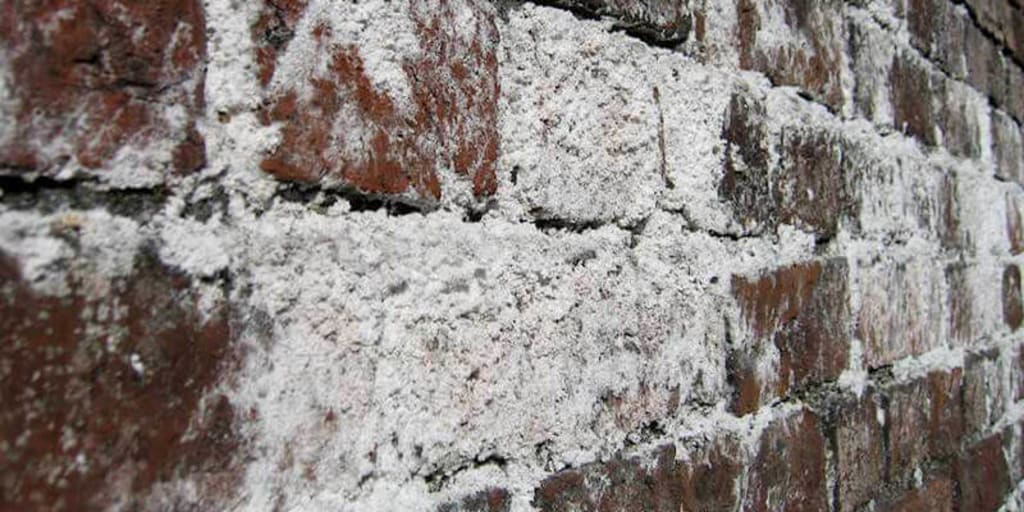
The house on Lorne Street was never supposed to be rented. At least, that’s what the realtor muttered as he handed Mia the keys—eyes darting, voice dry as old wood. “It’s cheap because of foundation issues,” he said. “Old houses settle… in strange ways.”
Mia didn’t care. She needed the escape. After her mother’s death, she needed a place quiet enough to scream in, and this forgotten Victorian with its cracked windows and salted basement felt perfect.
Yes, salt. Thick lines of it lined the doorways, windowsills, and especially the narrow basement stairs. She thought it was for rats. Or maybe mold. She swept it away the first day, vacuumed the edges clean.
The second night, it was back.
Long, clean white lines of salt reappeared like someone had traced protection circles with careful, shaking hands. She assumed it was an old residue, the way smells linger in old carpets. She didn’t worry—at least not yet.
The first time she heard the whispering, it was beneath the floorboards.
Mia was writing in the upstairs study when she heard the low scrape. Like a hand dragging slowly across wood. Then came the voice: a whisper not quite in English. Not quite in any language at all.
She froze, listened, and convinced herself it was the house settling. The realtor was right—it was old.
But that night, in bed, the whisper came again.
It wasn’t under the floor this time. It was in the walls.
Not loud. Not angry. Almost like… weeping. Like something was trying to talk through layers of plaster and rot. She put her ear against the wall, trembling.
“Let me out.”
The next morning, she found her mother’s locket on the kitchen table.
She hadn’t seen it in weeks. It was buried with her.
Mia didn’t sleep that night. She locked every door, turned on every light. The whispers returned at 3:33 a.m. sharp. The wall beside her bed pulsed slightly, as though breathing.
She didn’t touch it. Didn’t move. Just stared at the ceiling and waited for daylight.
On the fourth night, something walked in the basement.
Footsteps—slow and deliberate.
Mia grabbed her flashlight and crept down the stairs, barefoot and shaking. The air grew colder with each step. The salt she’d vacuumed away was back, drawn in thicker lines this time—symbols curling into themselves like something ancient.
At the bottom of the stairs, she saw something she hadn’t noticed before: the bricked-up door.
A perfect square, mortar sloppily poured between mismatched bricks. The footsteps stopped behind it.
She backed away, heart rattling like a birdcage, and fled upstairs.
On the fifth day, the walls began to sweat.
Dark, briny streaks ran in thin lines across the wallpaper, warping it. Mia touched one—just once—and her fingertips tingled with a bitter burn. Salt.
She tried to leave. Packed a bag. Called a cab.
But when she opened the front door, it led straight into the basement.
She slammed it shut. Turned to run through the back exit—only to find a brick wall where the kitchen door had been.
The house was changing. Rearranging.
Or maybe remembering.
That night, she had the dream.
She stood in the basement, barefoot in a salt circle, while a woman screamed behind the bricked-up door. A name echoed through the dream like thunder: Annalise.
When she woke, her feet were coated in salt, her hands trembling.
She went to the library the next morning.
There was a story. Of course there was.
In 1926, a woman named Annalise Granger was accused of witchcraft after a series of disappearances in the neighborhood. Locals claimed she had made the house into a “mouth”—something that fed on grief and salt and sound.
They sealed her alive in the basement. Used salt to bind her.
It wasn’t punishment. It was containment.
Mia returned to the house just before dusk.
She didn’t want to, but something had shifted. The locket. The dreams. Her mother’s voice calling faintly from behind the bricked-up door last night.
She had to know.
Armed with a hammer, she descended into the basement one last time. The salt lines were thicker now—crusted, heavy, like veins across a corpse. She approached the wall and raised the hammer.
The first brick came loose easily. The second one crumbled. On the third, she felt it—cold air rushing out. The scent of sea and blood.
From the hole, a hand reached through.
Pale. Cracked. Fingers long and clawed with age and hunger.
Mia screamed and dropped the hammer—but the hand didn’t grab her. It only rested against the salt line, unable to cross.
A voice spoke softly, from the dark: “You broke the seal.”
Behind her, the walls groaned.
The floor began to ripple.
Upstairs, the house wept salt.
They found the house abandoned weeks later.
No trace of Mia.
But the salt remains. No matter how many times they clean, the lines return. Stronger. Thicker.
And sometimes, late at night, the walls breath.
About the Creator
Keep reading
More stories from Muhammad Aizaz and writers in Fiction and other communities.
“Don’t Look in the Mirror”
I was eight the first time I saw it. The house on Elder Street was old, creaky, and always cold no matter the season. My mother used to say it had "character." But there was one place in that house I never felt safe—the upstairs bathroom. The mirror above the cracked porcelain sink was too tall for me back then, but sometimes, when I stood on my toes, I’d catch the edge of my reflection.
By Muhammad Aizaz8 months ago in Fiction
A House with Good Bones
The house was the strangest thing I had ever seen. The 'for sale' sign had come loose and hung lopsided, waving slightly in the wind. How unusual that the agent had never bothered to mention this lovely place, or make it a priority. As we drove by, she casually alluded to it, noting that it was on the bottom of her list, trying hard to pass it off as a joke, but not succeeding.
By Novel Allenabout 18 hours ago in Fiction




Comments
There are no comments for this story
Be the first to respond and start the conversation.